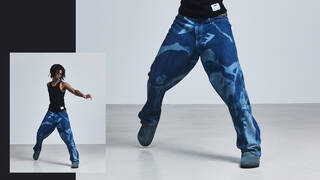


Fashion in Motion
Fashion in Motion is a series of live fashion events presented at the V&A. Featuring some of the greatest designers of our time, Fashion in Motion brings the catwalk experience to a wider audience by modelling it against the beautiful backdrop of the museum.
Milliner Philip Treacy was the first designer to feature, followed – in June 1999 – by his frequent collaborator, Alexander McQueen. Since then, the museum has hosted some of the most exciting work by the likes of Christian Lacroix, Erdem, Gareth Pugh, Molly Goddard, Roksanda, Vivienne Westwood and Yohji Yamamoto.
Features
-
 Fashion in Motion: Copenhagen Fashion Week
Five emerging designers from Denmark present their collections
-
 Fashion in Motion: Eden Loweth x Maggi Hambling
Experience their rebellious spirits
-
 Fashion in Motion: Orange Culture
See their bold, androgynous designs
-
 Fashion in Motion: Francesco Colucci
See the designer working live
-

Fashion in Motion: Inspired by Gabrielle Chanel
See unique creations from Central Saint Martins students, inspired by Gabrielle Chanel
-
 Fashion in Motion: Minju Kim
Experience the joyful yet bold style of Minju Kim
-

Fashion in Motion: Thebe Magugu
Marvel at pieces inspired by fabrics discarded by Europe and America
-

Fashion in Motion: Daniel Lismore
See Daniel Lismore's extravagant wearable artworks
-

Fashion in Motion: Harris Reed
Harris Reed showcased gender-fluid highlights from his collections
-

Fashion in Motion: Fredrik Tjærandsen
Fredrik Tjærandsen showcased his otherworldly 'bubbles', building upon his experimental 'Moments of Clarity' presentation
-

20 years of Fashion in Motion
Fashion in Motion has brought free catwalk shows to the public for the past 20 years
-

Fashion in Motion: Guo Pei
Guo Pei brought her fantastical Alternate Universe collection to the V&A for Fashion in Motion's 20th anniversary
-

Fashion in Motion: Preen by Thornton Bregazzi
Preen by Thornton Bregazzi featured pieces celebrating the summer solstice
-

Fashion in Motion: inspired by Christian Dior
Central Saint Martins students showcased unique creations inspired by our Dior collection
-

Fashion in Motion: Carla Fernández
This live event featured Mexican fashion designer and social entrepreneur Carla Fernández
-

Fashion in Motion: Holly Fulton
Holly Fulton presented a retrospective marking the ten year anniversary of the designer's label
-

Fashion in Motion: John Alexander Skelton
Presenting the work of acclaimed British menswear designer John Alexander Skelton
-

Fashion in Motion: Phoebe English
Find out about our Fashion in Motion live event featuring British fashion designer Phoebe English
-

Fashion in Motion: Molly Goddard
Molly Goddard brings her signature colourful and voluminous designs to the V&A's REVEAL Festival
-

Fashion in Motion: inspired by Balenciaga
Find out about our Fashion in Motion live fashion event, featuring new creations inspired by the master of couture, Cristóbal Balenciaga
-

Fashion in Motion: House of Holland
House of Holland showcased some of the label’s standout moments and key looks from the past 10 years
-

Fashion in Motion: Christopher Raeburn
Christopher Raeburn showcased key pieces from his collections in menswear, womenswear and accessories
-

Fashion in Motion: ASHISH
Celebrating his 10th anniversary, ASHISH presented a retrospective of his personal highlights from his past collections.
-

Fashion in Motion: Grace Wales Bonner
Grace Wales Bonner presented highlights from her collection which take inspiration from black visual culture and mix couture techniques with African craft
-

Fashion in Motion: Peter Pilotto
Luxury womenswear label Peter Pilotto presented highlights from the label’s collections.
-

Fashion in Motion: SIBLING
Watch a catwalk show at the V&A featuring the colourful and playful knitwear collective SIBLING
-

Fashion in Motion: Kansai Yamamoto
Kansai Yamamoto presented new and archive pieces spanning his four decade career, including recreations of his designs worn by David Bowie
-

Fashion in Motion: Alexander McQueen
Watch a catwalk show at the V&A featuring legendary fashion designer Alexander McQueen
-

Fashion in Motion: Ralph & Russo
British couturiers Ralph & Russo presented highlights from their collections
-

Fashion in Motion: Jenny Packham
Celebrating the 25th anniversary, designer Jenny Packham presented highlights from her elegant and iconic collections
-

Fashion in Motion: Fyodor Golan
Design duo Fyodor Golan showcased key pieces from their womenswear collection in this Fashion in Motion
-

Fashion in Motion: Craig Lawrence
British designer Craig Lawrence presented his innovative knitwear collections
-

Fashion in Motion: Olivier Saillard
Olivier Saillard presented an exclusive boutique-style performance during Paris Couture Week
-

Fashion in Motion: Peter Jensen
Peter Jensen showcased mens and womenswear from the past decade including pieces from his most recent collections as well as collaborative pieces
-

Fashion in Motion: Yohji Yamamoto
Yohji Yamamoto presented both menswear and womenswear pieces from his archive modelled by real-life London couples
-

Fashion in Motion: Stéphane Rolland
Stéphane Rolland provided a unique opportunity to see his intricate and sensuous designs from past collections
-

Fashion in Motion: KENZO
KENZO hosted a day of catwalk shows featuring 40 years of pioneering designs
-

Fashion in Motion: Osman Yousefzada
Designer Osman Yousefzada presented a selection of pieces from his collections to date in a series of catwalk shows
-

Fashion in Motion: Erdem Moralioglu
Erdem Moralioglu presented his graceful feminine designs in this Fashion in Motion
-

Fashion in Motion: Giles Deacon
Giles Deacon launched his eponymous label 'Giles' in 2004 to instant international acclaim. Relive his live catwalk event at the V&A
-

Millinery in Motion: Stephen Jones
Millinery in Motion presented the work of five of London's most exciting new milliners alongside world-famous hat designer Stephen Jones
-

Fashion in Motion: Roksanda Ilincic
Roksanda Ilincic presented a selection of key pieces from her past three collections in a live event at the V&A
-

Fashion in Motion: Ma Ke
Ma Ke's artistic fashion brand Wuyong (Useless) highlights personal interpretation and transformation
-

Fashion in Motion: Manish Arora
Manish Arora's Fashion in Motion event was a spectacular celebration of the designer's time in London
-

Fashion in Motion: Christian Lacroix
Christian Lacroix provided a unique opportunity to see his theatrical collection inspired by the Renaissance
-

Fashion in Motion: Gareth Pugh
This unique catwalk show featured Gareth Pugh, one of London's most exciting and innovative designers
-

Fashion in Motion: Hardy Amies
Celebrating its 60th anniversary, English couture house Hardy Amies showcased highlights from its collection
-

Fashion in Motion: Ozwald Boateng
Savile Row tailor Ozwald Boateng presented highlights from his distinctive menswear collection
-

Fashion in Motion: Africa
Three contemporary fashion designers working in both Africa and Europe presented highlights from their collections
-

Fashion in Motion: Gianfranco Ferré
Celebrated Italian fashion designer, Gianfranco Ferré, showed highlights from his extensive archive
-

Fashion in Motion: Swarovski – runway rocks
Swarovski presented a unique collection of spectacular specially-commissioned jewels for the catwalk
-

Fashion in Motion: Missoni
Missoni presented their distinctive knitwear collections
-

Fashion in Motion: Jean Paul Gaultier
Jean Paul Gaultier presents his themed collections inspired by French cultural icons to the London street scene
-

Fashion in Motion: Men in Skirts
Internationally renowned designers reappropriated the skirt as menswear in this unique catwalk event
-

Fashion in Motion: Tata-Naka
Georgian duo Tata-Naka presented outfits inspired by the heritage and history of their homeland
-

Fashion in Motion: Meadham Kirchhoff
Meadham Kirchhoff presented highlights from the label’s womenswear collections
-

Fashion in Motion: Vivienne Westwood
Vivienne Westwood showcased her Gold and Man collections for our Fashion in Motion event
-

Fashion in Motion: Anne Valérie Hash
Anne Valérie Hash presented her impeccably cut womenswear collection
-

Fashion in Motion: Central Saint Martins graduates 2008
Graduates showcased their exciting designs
-

Fashion in Motion: Catherine Walker
Catherine Walker showcased a collection centred around both hiding and revealing the body
Collection highlights
-
 Millinery in Motion, 2009. © Victoria and Albert Museum, London
 -
 Giles Deacon, 2009. © Victoria and Albert Museum, London
 -
 Erdem, 2009. © Victoria and Albert Museum, London
 -
 Yohji Yamamoto, 2011. © Victoria and Albert Museum, London
 -
 Alexander McQueen, 1999. © Victoria and Albert Museum, London
 -
 SIBLING, 2014. © Victoria and Albert Museum, London
 -
 Gareth Pugh, 2017. © Victoria and Albert Museum, London
 -
 Ozwald Boateng, 2005. © Victoria and Albert Museum, London
 -
 Christian Lacroix, 2006. © Victoria and Albert Museum, London
 -
 Vivienne Westwood, 2004. © Victoria and Albert Museum, London
 -
 Jenny Packham, 2013. © Victoria and Albert Museum, London
V&A Shop





Header image:
Fashion in Motion: Gareth Pugh, 2007. © Victoria and Albert Museum, London