Explore the Collections
Search more than 1.3 million objects
Most searched for
Here are our most searched-for objects and themes
-
 Dance costume, Adzido Pan African Dance Company, 1999V&A South Kensington
 -
 Rolling Stones Hot Licks logo, artwork, designed by Jon Pasche, 1970, London, EnglandV&A South Kensington
 -
 Les Paul guitar, made by Gibson, 1960s, USV&A East Museum
 -
 Academy Award, designed by Cedric Gibbons, made by R.S. Owens, 1952, United StatesV&A South Kensington
 -
 Stage costume worn by Shirley Bassey, designed by Douglas Darnell, 1960s, EnglandV&A South Kensington
 -
 Eightpence a Mile: The New Stop Press Review, poster, designed by G.K. Benda, printed by David Allen & Sons, about 1913, London, EnglandV&A East Storehouse
 -
 Film costume from 'Star Wars', designed by John Mollo and Brian Muir, 1977 – 80, EnglandV&A South Kensington
 -
 Costume design for the ballet 'Amor', designed by P Croce, late 19th century, ItalyV&A South Kensington
 -
 Smile Orange, theatre poster, designed by Eureka! Design Consultants with photography by Rick Elgood, 1992, EnglandV&A South Kensington
 -
 Theatre costume, designed by Philip Prowse, made by Bonn & Mackenzie, 1981, London, EnglandV&A East Storehouse
 -
 Set model, designed by Henry Emden, 1903, BritainV&A South Kensington
 -
 Poster advertising Anansi's Royal Quest at the Unicorn Theatre, 1983, EnglandV&A South Kensington
 -
 Queen Elizabeth Viewing the Performance of 'The Merry Wives of Windsor' at the Globe Theatre, oil painting, by David Scott, 1840, BritainV&A East Storehouse
 -
 Leonide Massine waiting for his cue to go on stage in 'On With the Dance', painting, painted by Gluck, 1925, Great BritainV&A South Kensington
 -
 Theatre box from the Palace Theatre of Varieties, designed by Bertie Crewe, 1903 – 1904, BritainV&A South Kensington
-
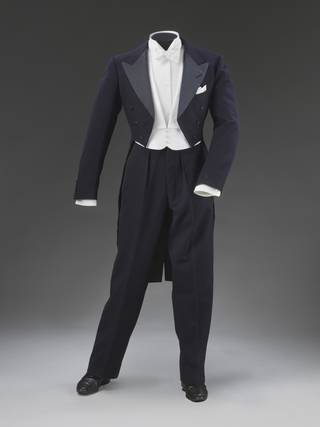 Shall We Dance, film costume worn by Fred Astaire, made by Anderson & Sheppard Ltd, 1936, UKV&A South Kensington
 -
 Music-hall costume worn by May Moore Duprez, about 1910, EnglandV&A East Storehouse
 -
 Costume for 'Prince's Mother' in Swan Lake designed by Alexandre Golovine for the Bolshoi, Moscow, 1901V&A East Storehouse
 -
 Headdress, theatre costume worn by Ram Gopal, maker unknown, mid-20th century, UKV&A East Storehouse
 -
 Costume for The Chinese Conjurer in Massine's ballet 'Parade', designed by Pablo Picasso, 1917V&A South Kensington
 -
 Theatre costume from 'The Lion King', designed by Julie Taymor, 1994, USV&A South Kensington
 -
 Brexit Dress, pantomime costume, designed by Lotte Collett, 2016, UKV&A South Kensington
 -
 Lady in the Dark, film costume, designed by Edith Head, 1944, Hollywood, USV&A East Storehouse
 -
 Hat worn by Idina Menzel as Elphaba in the original 2003 New York production of Wicked, by Rodney Gordon, 2003, New York, USV&A South Kensington
 -
 Dame Edna's Breakfast Dress, costume, designed by Stephen Adnitt, 1997, London, EnglandV&A South Kensington
 -
 Jumpsuit worn by Mick Jagger, costume, designed by Ossie Clark, 1972, Great Britain
 -
 Rear view, 'Bicycle John', rock and pop costume worn by Sir Elton John, designed by Bill Whitten, about 1974, UKV&A East Storehouse
 -
 Design for the costume of Le Buffoon in the ballet 'Chout', by Mikhail Larionov, 1915, Lausanne, SwitzerlandV&A South Kensington
 -
 Costume design for 'Le Coq d'Or', by Natalia Goncharova, about 1914V&A South Kensington
 -
 Black satin floral patterned shoes worn by Prince, costume, about 1994, USA
-
 Glastonbury Festival poster, 1995.
 -
 Print, 'Something like that'.
 -
 Festival-goers in fancy dress at the Chapel of Love and Loathing (part of the Lost Vagueness field).
 -
 Glastonbury, 1970s.
 -
 A festival-goer defeated by the mud, 1990s.
 -
 Glastonbury Festival poster, 1986.
 -
 The first Pyramid stage at Glastonbury Festival, 1971.
 -
 Glastonbury Festival poster, 1970.
 -
 Glastonbury Festival poster, 1983.
 -
 Pyramid Stage sign.
 -
 Arcadia at Glastonbury Festival.
 -
 Jean and Michael Eavis cheer from the Pyramid Stage, 1992.
 -
 Pyramid Stage architectural drawings.
 -
 Glastonbury crowd.
 -
 Banners at Glastonbury Festival, 2014.
-
 'Self Evident', C-type print, by Ingrid Pollard, 1995, printed 2013, Brighton, EnglandV&A South Kensington
 -
 'The Garden II', chromogenic print, by Siân Davey, 2021V&A South Kensington
 -
 Lace, salted paper print, by William Henry Fox Talbot, early 1840s, BritainV&A South Kensington
 -
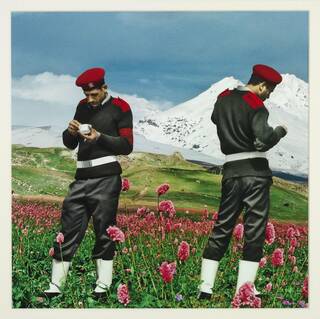 'The Break', Nermine Hammam, inkjet print, 2011V&A East Storehouse
 -
 'Disconnected', inkjet print, by Marvel Harris, 2018, the NetherlandsV&A South Kensington
 -
 'The Angel at the Tomb', photograph, by Julia Margaret Cameron, 1870, Isle of Wight, EnglandV&A South Kensington
 -
 'View of the Raphael Cartoons Galleries at the South Kensington Museum', albumen print, by Isabel Agnes Cowper, about 1873V&A South Kensington
 -
 'Lily Cole and Giant Camera', inkjet print, by Tim Walker, 2004. Museum no. E.1140-2008V&A South Kensington
 -
 'Boys smoking, Portland Road, April 15 1956', gelatin silver print, by Roger Mayne, 1956, London, EnglandV&A South Kensington
 -
 'Tree Peony' from Some Japanese Flowers Vol. I, collotype with lithographic overprinting in colour, by Kazumasa Ogawa, 1894, JapanV&A South Kensington
 -
 'Columbia and Western #3', from the series 'Westward, the Course of Empire', by Mark Ruwedel, 1999V&A South Kensington
 -
 'The Earring', photograph, by Madame Yevonde, about 1936, UK
-
 Opera Theatre of St. Louis, poster, 1978, Missouri, USV&A East Storehouse
 -
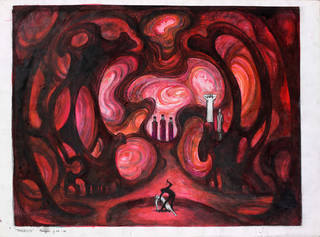 Thérèse, set design, designed by Alan Barlow, 1979, UKV&A East Storehouse
 -
 Serious Operas Vol. VIII, libretto, by George Frideric Handel and Nicola Francesco Haym, printed by Thomas Wood, 1720, London, EnglandV&A East Storehouse
 -
 Theatre costume, designed by Alexander Golovin, about 1910, RussiaV&A East Storehouse
 -
 Theatre costume, designed by Bruno Santini, made by David Garrett, 1977, UKV&A East Storehouse
 -
 Opera glasses, 19th century, EuropeV&A East Storehouse
 -
 H Beard Print Collection, engraved by James Gillray, published by H. Humphrey, 1803, London, EnglandV&A East Storehouse
 -
 Costume design, designed by Oliver Messel, 1950, London, EnglandV&A East Storehouse
 -
 Guy Little Theatrical Photograph, photograph, 19th century, BritainV&A South Kensington
 -
 Engraving of a court ballet in Vlasislav Hall, Prague Castle, by Mat'a, 1617, BritainV&A East Storehouse
 -
 Rich's Glory or his Triumphant Entry into Covent-Garden, engraved by William Hogarth, printed by Robert Wilkinson, 1811, BritainV&A East Storehouse
 -
 The Nightingale, theatre costume, designed by David Hockney, 1983, UKV&A East Storehouse
 -
 Covent Garden Opera House; The Colonnade, watercolour, by John Walter Bayes, about 1940, London, EnglandV&A South Kensington
 -
 Jenny Lind as Alice in Meyerbeer's Opera, figure, 1847, Staffordshire, EnglandV&A South Kensington
 -
 Relief of George Frideric Handel, made by Louis-François Roubiliac, 1750 – 60, London, EnglandV&A South Kensington
Trending
Music and performance
-
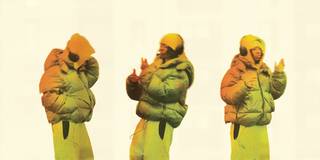 The Music is Black Playlist
Every song featured in the audio soundscape for The Music is Black: A British Story at V&A East Museum
-
 Conserving a PJ Harvey costume
Watch as the threads on PJ Harvey's costume are carefully untangled and arranged
-
 The history of Glastonbury Festival
"When I set out on this crazy, hippy trip, little did I know that this roller coaster would run".
-

Facing the music: Album covers from musical theatre
Explore the album artwork and songs from classic musicals from the 1960s to the 1990s
-
 Redefining the diva
From the rise of the operatic prima donna in the 16th century to today, we explore the reinvention, challenges and redefinition of the diva
-

Opera – an introduction
Discover the evolution of opera from early Baroque extravaganzas through to contemporary productions
Browse by theme
Discover the people, techniques, eras and places represented in our museums



-

Bill Brandt
-

Lee Miller
-
.jpg)
Benjamin Brecknell Turner
-
Eileen Agar
-

Linnaeus Tripe
-

William De Morgan
-

Frederick Hollyer
-

Paul Strand
-

Garry Fabian Miller
-

Thomas Ruff
-

William Henry Fox Talbot
-
Edna Clarke Hall
-

Eileen Gray
-

William Morris
-

Harry Hammond
-

Julia Margaret Cameron
-
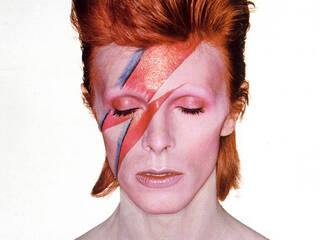
David Bowie
-

Beatrix Potter
-

Valérie Belin
-

Ilse Bing
-
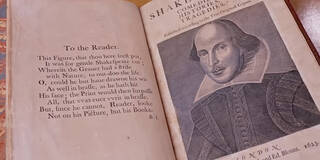
William Shakespeare
-

Alexander McQueen
-

Vivienne Westwood
-

Antonio Canova
-

John Constable
-

Cecil Beaton
-

Cristóbal Balenciaga
-

Elsa Schiaparelli
-

Mary Quant
-

Auguste Rodin
-

Diaghilev and the Ballets Russes
-

Horst P. Horst
-

Grinling Gibbons
-

Curtis Moffat
-

Lucienne Day
-

Wedgwood
-

Nicholas Hilliard
-

Architecture
-
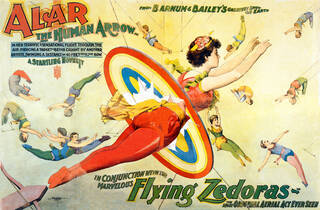
Circus
-

Rapid Response Collecting
-

Hats
-

The V&A Story
-

Music hall
-

Post-war design
-

The Stein Collection
-

The Raphael Cartoons
-

Photography
-

Embroidery
-

Furniture
-

Glasses
-

Artists and the Book
-

Wallpaper
-

Wedding dress
-

Books
-

Paintings
-
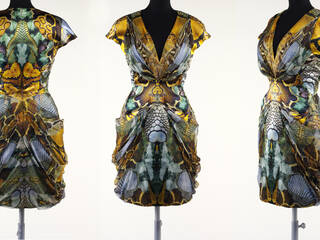
Fashion
-

Frames
-

Shoes
-

Jewellery
-

Costume
-

The Glastonbury Festival Archive
-

Tiles
-

Gender & sexuality
-

Fashion in Motion
-

Manuscripts
-

Opera
-
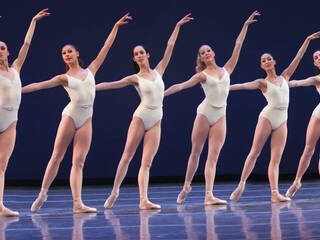
Ballet
-

Digital Art & Design
-
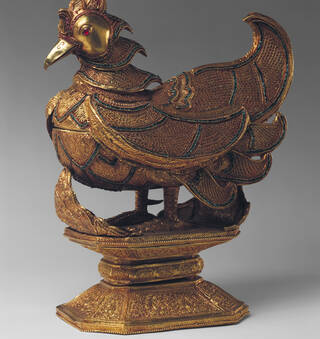
Provenance Research: How have objects come to be in the V&A?
-

Theatre & Performance
-

Underwear





In our venues
See the collections in person. For some objects not on display you can view by appointment. Our collections include the National Art Library and the V&A Archives.
-
 Tippoo's Tiger, mechanical organ, about 1793, Mysore, IndiaV&A South Kensington
 -
 (Detail) Trajan's column, plaster cast, by Monsieur Oudry, about 1864, Paris, FranceV&A South Kensington
 -
 The Great Bed of Ware, designed by Hans Vredeman de Vries, 1590 – 1600, Ware, EnglandV&A South Kensington
 -
 3D-printed Extinction Rebellion logotype woodblockV&A East Museum
 -
 Progress Pride flag, designed by Daniel Quasar, manufactured by Custom Flag Company Inc., 2020, WestminsterV&A South Kensington
 -
 (Detail) Pérou evening ensemble, designed by Christian Dior, by Bodin Brossin, 1954, Paris, FranceV&A East Storehouse
 -
 Costumes for 'Le Train Bleu', designed by Coco Chanel, 1924V&A South Kensington
-
 'Variations on a Geometric Theme' plate, designed by Eduardo Paolozzi, manufactured by Josiah Wedgwood and sons, about 1970, Barlaston, Stoke-on-Trent, England
 -
 Portland Vase, by Josiah Wedgwood and Sons, 1793, Etruria, Stoke-on-Trent, Staffordshire, EnglandV&A Wedgwood Collection
 -
 Wedgwood family portrait, oil painting, by George Stubbs, 1780, EnglandV&A Wedgwood Collection
 -
 Lessore Vase, painted by Emile Aubert Lessore, made by Josiah Wedgwood and Sons, about 1863, EnglandV&A Wedgwood Collection
 -
 Anti-slavery medallion, by Josiah Wedgwood and sons, about 1787, Etruria, Stoke-on-Trent, EnglandV&A Wedgwood Collection
 -
 Teapot moulded in the shape of a cauliflower, by Josiah Wedgwood and sons, 1765, Stoke-on-Trent, EnglandV&A Wedgwood Collection
 -
 Jasperware trials mounted on a wooden tray, by Josiah Wedgwood and sons, 1773 – 76, Stoke-on-Trent, EnglandV&A Wedgwood Collection
 -
 Teapot, designed by Douglas Baillie Hamilton Cochrane, manufactured by Josiah Wedgwood and Sons, 1906V&A Wedgwood Collection
 -
 Detail of 'Fairyland Lustre' bowl, by Josiah Wedgwood and sons, about 1923, Etruria, Stoke-on-Trent, EnglandV&A Wedgwood Collection
-
 Place (Village), installation, by Rachel Whiteread, about 1995 – 2015, LondonYoung V&A
 -
 Planetarium, installation, by Tristan Blondeau, 2023, Paris, FranceYoung V&A
 -
 The Self-Portrait, print, by Quentin Blake, 2010, UKYoung V&A
 -
 Bettiscombe, dolls' house, about 1870, EnglandYoung V&A
 -
 Pikachu, soft toy, manufactured by Deutshe Toy GMBH, 1995 – 99, Munich, GermanyYoung V&A
 -
 'Hero Arm', Open Bionics, 3D printed bionic arm for a child, Bristol, EnglandYoung V&A
 -
 Amstrad CPC 464 Computer, manufactured by Amstrad, 1984, EnglandYoung V&A
 -
 Devdas, film hoarding, by Balkrishna Arts, 2002, London, EnglandYoung V&A
 -
 Death Star, designed by Bjarke Lykke Madsen, designed by Bas Brederode, manufactured by The LEGO Group, 2011 – 12, DenmarkYoung V&A
-
 Cut, Slash & Pull, ensemble, by Vivienne Westwood, 1990, EnglandV&A East Museum
 -
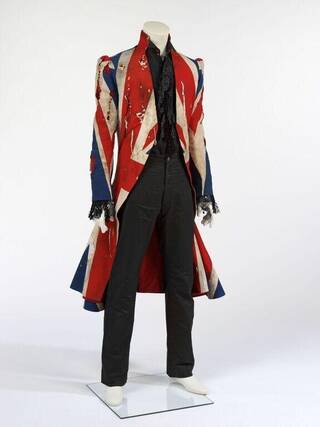 Costume, designed by Alexander McQueen, designed by Bowie, David, 1996, Great BritainV&A East Storehouse
 -
 Powder bowl, made by Halex Ltd, 1930 – 39, Walthamstow, London, EnglandV&A East Storehouse
 -
 Hackney Lesbian Strength and Gay Pride 1993, t-shirt, maker unknown, 1993, EnglandV&A East Storehouse
 -
 Tracksuit showing scenes from the 2011 East London riots, by SIBLING, 2012, London, EnglandV&A East Storehouse
 -
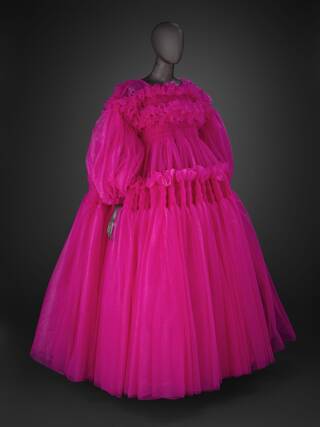 Daria dress, by Molly Goddard, 2019, LondonV&A South Kensington
 -
 Reunion VI: Underneath the Surface, terracotta sculpture, by Bisila Noha, 2022, London, EnglandV&A East Museum
 -
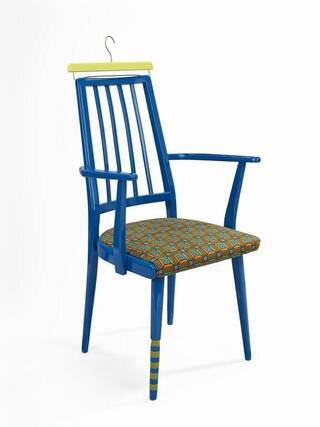 Captain hook chair frame, by Yinka IloriV&A East Museum
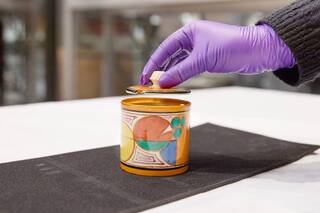


Order an Object
Get closer to the collections nestled within the V&A’s stores.
- Pick any stored objects to see
- Choose when to view them
- Visit your objects for free in the stores