The John Charles Robinson Medal
Medal
2002 (made)
2002 (made)
| Artist/Maker | |
| Place of origin |
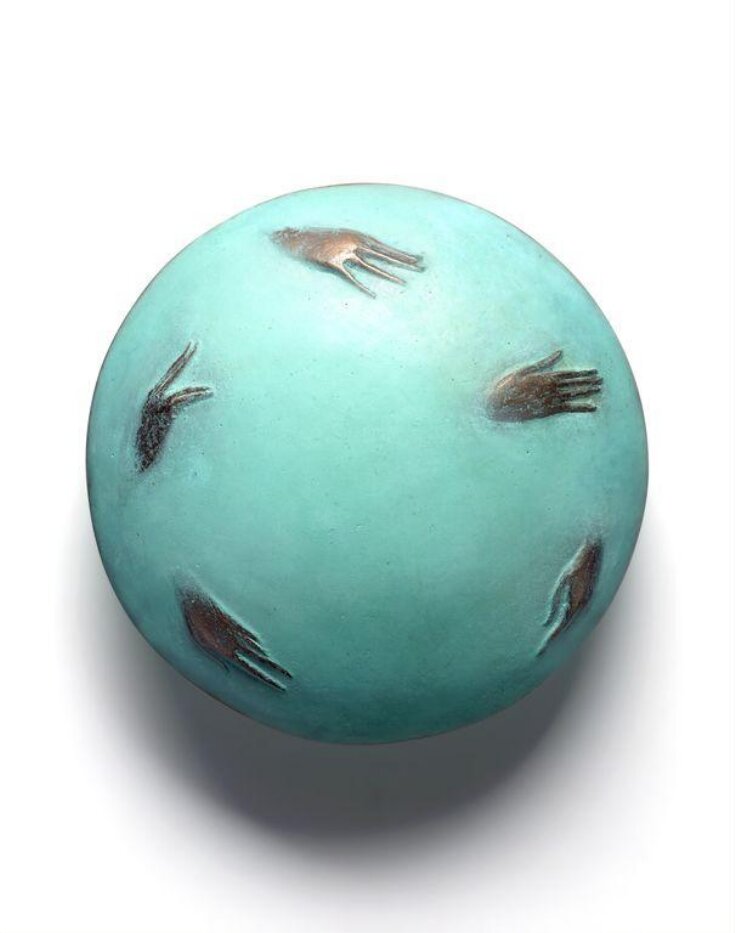
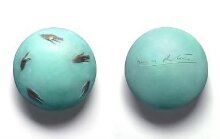
This medal, commemorating John Charles Robinson (1824-1913), was commissioned by the V&A from the artist Felicity Powell (1961-2015) in 2002, with funds donated from an anonymous donor. Robinson was Curator of Sculpture at the South Kensington Museum (now the V&A) and acquired many important works for the collection in the 1850s and 1860s. On the reverse of the medal the artist has used as inspiration the hands from the carved figures in the Annunciation by Arnolfo di Cambio of about 1300. Robinson bought this work for the Museum in 1861 (see inv.no.7563-1861). The reverse replicates the handwriting of John Charles Robinson taken from his letter, dated 6 September 1886, Madrid to the Museum, 'Now Is the Time'. Surface treatments greatly affect the viewer's appreciaion of a medal. Here Powell has applied a copper nitrate solution, under heat, to give a greenish-blue patination. Unusually, she has left the edge unpatinated. Instead, she has polished it and stamped it with Robinson's full name and dates, adding also the cryptic message 'From Few to Many'. For further entries relating to the processes involved in the making of the medal, see inv.nos. A.6 to A.9-2002, and A.10 to A.11-2004.
Object details
| Categories | |
| Object type | |
| Title | The John Charles Robinson Medal (assigned by artist) |
| Materials and techniques | Hollow cast bronze, copper sulphate patina applied with heat |
| Brief description | Medal, bronze cast, copper nitrate patina, commemorating Sir John Charles Robinson, by Felicity Powell, Britain, 2002. |
| Physical description | A circular cast medal c. 115 mm diameter, rounded profile, with copper nitrate patination to both faces and bright bronze edge. Obverse: replicates the handwriting of John Charles Robinson (1824-1913) taken from his letter, dated 6 September 1886, Madrid, to the Museum, 'Now is the time'. Reverse: five hands gesturing. Composition taken from The Annunciation (7563-1861 from the workshop of Arnolfio Cambio in a relief style inspired by the Donatello marble relief Ascension with Christ giving keys to St Peter (7629-1861) Edge stamped: 'JOHN CHARLES ROBINSON 1824-1913' and 'FROM FEW TO MANY' and artist's mark 'FP 2002'. |
| Dimensions |
|
| Style | |
| Production type | Limited edition |
| Marks and inscriptions | 'JOHN CHARLES ROBINSON 1824-1913 - FROM FEW TO MANY - FP 2002'. (Decoration; Edge; stamped) |
| Credit line | Commissioned by the Museum with funding from an anonymous donor. |
| Object history | This is the first commission of a contemporary medal made by the Sculpture collection. The commission was entirely supported by an anonymous donor. A further ten medals were cast to be presented as a gift to major donors of the Museum. Historical significance: Felicity Powell (1961-2015) creates small-scale sculpture, building on the Renaissance practice of medal-making, to produce thoughtful objects with a distinctively poetic resonance. Unlike traditional commemorative medals, this object does not carry a portrait of the person, and unlike most medals it does not have an obvious obverse and reverse sides. The phrase 'Now is the time', (taken from a manuscript letter dated 6 September 1866 written by Robinson to the Museum and now in the National Art Library) underscored by Robinson to stress the urgency and strength of feeling expressed by the words, is as much a portrait of the man and his state of mind at the time of writing, as a physical likeness. This side is actually the obverse. The reverse of the medal is inspired by objects Robinson acquired for the collection. The shallow relief style of the hands is derived from Donatello's The Ascension with Christ giving the Keys to St Peter (Museum no. 7629-1861) and the gestures depicted by the hands are taken from an Annunciation group from the Workshop of Arnolfo di Cambio (Museum no. 7563-1861). In the artist's own words, 'the hands signify the generosity of gesture and of passing the legacy on for future generations'. The phrase on this medal ‘FROM FEW TO MANY’, words chosen by the artist, can be interpreted in several ways, but one of its meanings is a reference to the anonymous donor whose generosity began the whole story. |
| Historical context | The medal links contemporary medal-making with the history of the V&A. It commemorates John Charles, later Sir Charles, Robinson, 1824-1913, first curator at the South Kensington Museum (now V&A) from 1857 to 1863 and who had a significant impact in developing the collections of Sculpture, particularly of the Renaissance. |
| Subjects depicted | |
| Associations | |
| Summary | This medal, commemorating John Charles Robinson (1824-1913), was commissioned by the V&A from the artist Felicity Powell (1961-2015) in 2002, with funds donated from an anonymous donor. Robinson was Curator of Sculpture at the South Kensington Museum (now the V&A) and acquired many important works for the collection in the 1850s and 1860s. On the reverse of the medal the artist has used as inspiration the hands from the carved figures in the Annunciation by Arnolfo di Cambio of about 1300. Robinson bought this work for the Museum in 1861 (see inv.no.7563-1861). The reverse replicates the handwriting of John Charles Robinson taken from his letter, dated 6 September 1886, Madrid to the Museum, 'Now Is the Time'. Surface treatments greatly affect the viewer's appreciaion of a medal. Here Powell has applied a copper nitrate solution, under heat, to give a greenish-blue patination. Unusually, she has left the edge unpatinated. Instead, she has polished it and stamped it with Robinson's full name and dates, adding also the cryptic message 'From Few to Many'. For further entries relating to the processes involved in the making of the medal, see inv.nos. A.6 to A.9-2002, and A.10 to A.11-2004. |
| Associated objects |
|
| Bibliographic references |
|
| Collection | |
| Accession number | A.5-2002 |
About this object record
Explore the Collections contains over a million catalogue records, and over half a million images. It is a working database that includes information compiled over the life of the museum. Some of our records may contain offensive and discriminatory language, or reflect outdated ideas, practice and analysis. We are committed to addressing these issues, and to review and update our records accordingly.
You can write to us to suggest improvements to the record.
Suggest feedback
You can write to us to suggest improvements to the record.
Suggest feedback
| Record created | January 13, 2003 |
| Record URL |
Download as: JSON
