Cataloguing Caldecott: How do you improve an object record?
Thea Grint Art, Architecture, Photography & Design October 29, 2026
I am an intern at the V&A, undertaking a 5-month project to catalogue and research works on paper by Randolph Caldecott (1846 – 86). Caldecott was an artist and illustrator, best known for his annual ‘Picture Books’, including ‘The House that Jack Built’ and ‘Babes in the Wood’. Through these blog posts I hope to shed more light on his life and career, and the process of finding out more about the V&A’s collection of his work. This project is supported by The Randolph Caldecott Collection Trust.
A key goal of my internship at the V&A was to catalogue the nearly 700 drawings, paintings and prints related to illustrator Randolph Caldecott. When I arrived in June, only half of the items had Caldecott’s name attached to them in our collections management software, making it hard for the public to find them on our collections website, Explore the Collections. The experience of cataloguing these pieces introduced me to just how many ways there are to research a collection and allowed me to make this information more accessible than before. With a long list of records to update, how do you know where to start?
Existing information
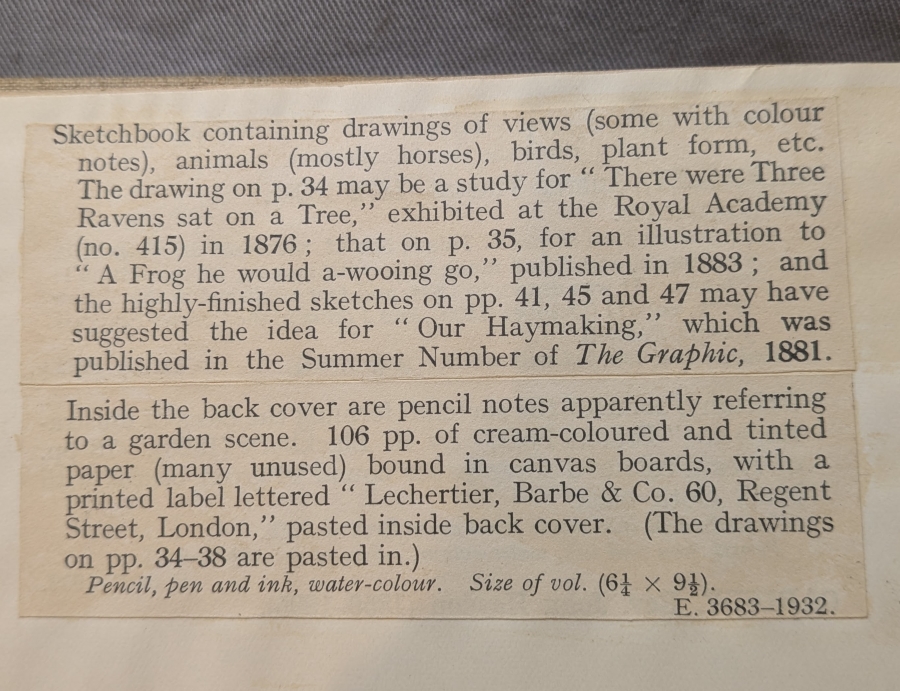
Cataloguing the over 1.3 million objects in the V&A’s collection is a constant process, and many pieces had information added by colleagues before I started on the project. Ranging from detailed interpretation to just his name, these details enabled me to get an overview of the range of work in the collection. In some cases, the pieces had information on their mounts or labels. Furthermore, there was a wealth of information that just required digitising, available in the Registers of Engravings and Drawings from each year. I especially enjoyed looking at these as they provide information contemporary to the object’s acquisition and allow you to make connections between items acquired at a similar time.
Randolph Caldecott is best remembered for his children’s picture books, but he also illustrated for adults. In the travel books he worked on, a list of illustrations was published in the front of each copy. By transferring these titles to the object records, it contextualises what is depicted and allows viewers to find the published version of the proof prints more easily. In the case of Caldecott’s work for the Graphic magazine, adding the issue each illustration features in also clarifies the date it was made.
The National Art Library, South Kensington
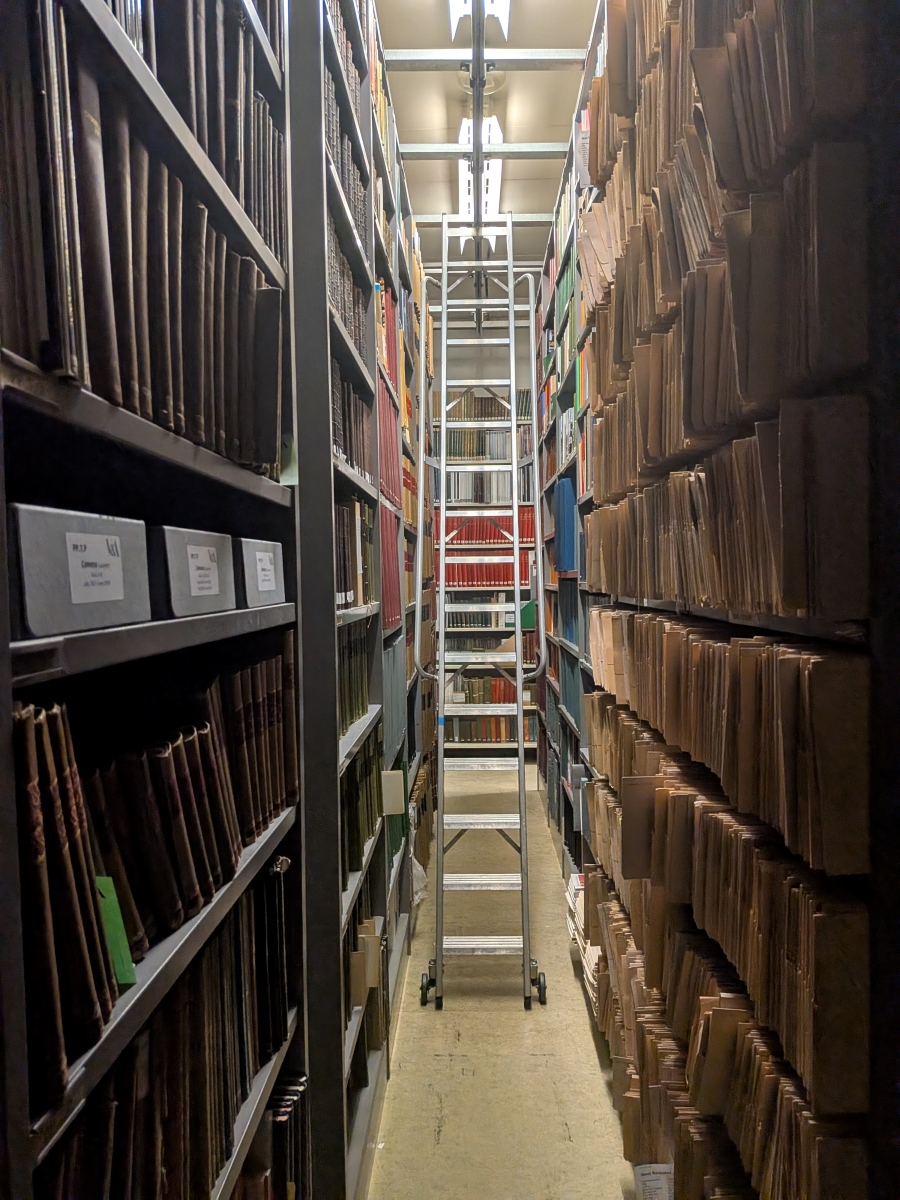
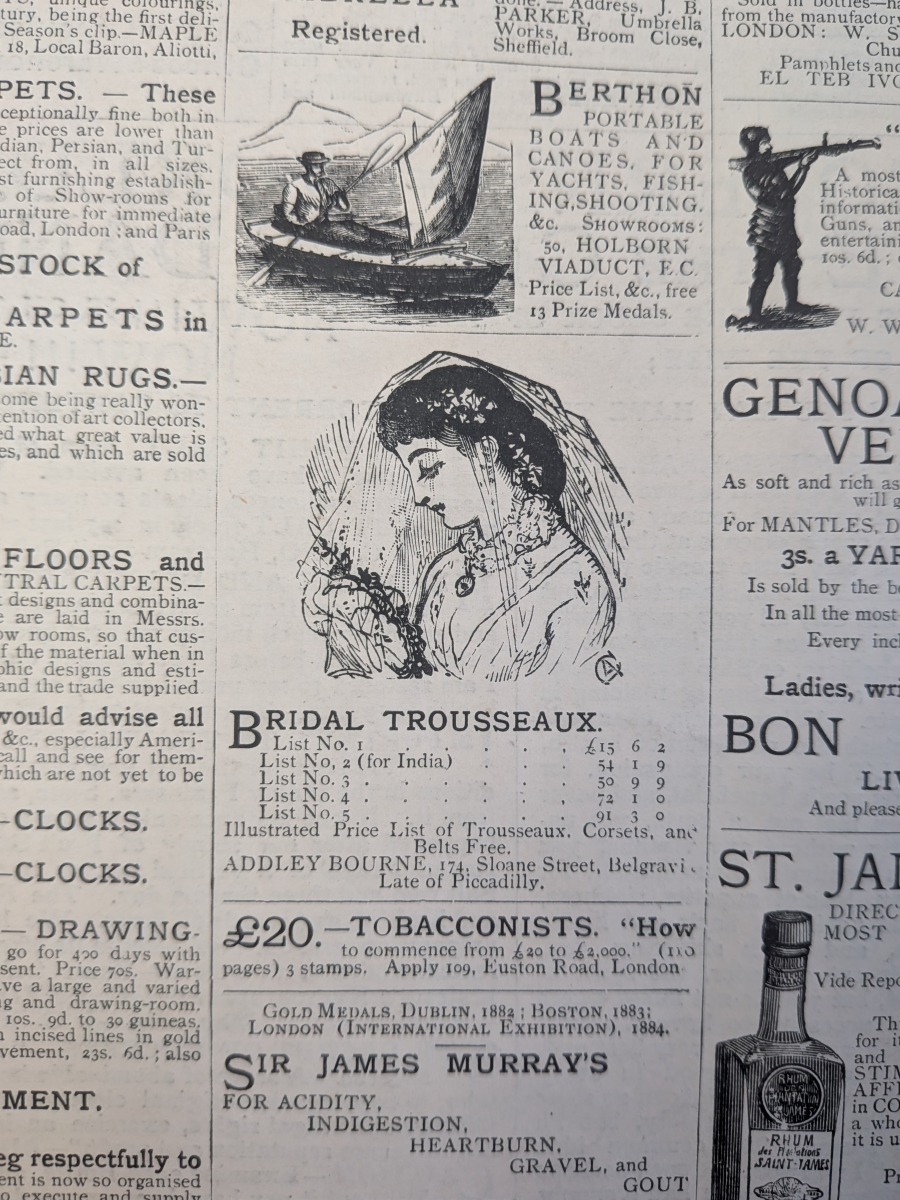
Copies of these published works are held at the National Art Library (NAL) at South Kensington. Both V&A staff and the public can request any of the library’s extensive collection of books on art, design and performance, the largest in the UK! V&A staff are able to retrieve their own books, which for me involved climbing a very tall ladder to access the huge bound volumes of the Graphic. Once I had returned to the ground, it was fascinating to look through copies of the magazine identical to those read in the 19th century. Alongside hunting for Caldecott’s comics, I enjoyed seeing all the highly decorated advertisements accompanied by tiny illustrations. These ephemeral pages are often removed when articles are reproduced, so seeing the issues in their entirety was a unique experience that gave a richer picture of the world Caldecott lived in.
At V&A East Storehouse are many of the NAL’s collection of children’s books. Like pieces requested through the free Order an Object service, these are available to the public to view too. Caldecott and wood engraver Edmund Evans were known for the high quality of the children’s books they produced, including printing in six colours and using multiple double page spreads in one book, both innovative techniques at the time. Seeing the original Victorian copies of these in person was such a pleasure, and an essential resource for cataloguing. For people interested in Caldecott who could not visit these objects in person, detailed cataloguing allows them to access as much information as possible remotely.
New discoveries
Completing an extended period of research solely on Randolph Caldecott allowed me to make deeper connections between pieces, from initial sketches to published illustrations. In one of the sketchbooks, I noticed a label which read “on p. 35, [may be a study] for an illustration to ‘A Frog he would a-wooing go’”. The frog on that specific page was very cute, but was not the gentleman frog in the mentioned story. For one, he was missing the stylish waistcoat sported by the main character in A Frog He Would A-Wooing Go. This page in the sketchbook had been specifically pasted in, so finding the real source of the image was a mystery I was keen to solve.
Whilst looking at the Picture Books at the NAL at V&A East Storehouse, I came across a copy of Jack and the Bean-stalk, published after Caldecott’s death in 1886. As the illustrations were unfinished, the sketches were reproduced instead. As I turned the pages, I uncovered not only the frog sketch but also two other sketches from the same book, a drawing of goats and one of a crow that had also been misidentified. Adding this information to the object record means it is now easily findable for future researchers.
Though the V&A’s archive and library was usually my first port of call, that of other organisations have been invaluable in my research. I enquired with the NatWest Archive to research Randolph Caldecott’s early career as a bank clerk, and reached out to Houghton Library, who hold the rest of the original sketches for Jack and the Bean-stalk. They sent me a scanned copy of these drawings, allowing me to compare the scale and format, confirming that those in the V&A sketchbook were really from the same series. Contacting other organisations reminded me that there are so many fantastic resources out there for research, many of which are available to the public. Through my work cataloguing Randolph Caldecott’s work, I hope to have enriched the V&A’s Explore the Collections site as such a source.