Arts and Crafts
Features

-
 How the Arts and Crafts movement influenced fashion
How did the ideas of the Arts and Crafts movement influence the design and manufacture of clothes, accessories and jewellery?
-
 Arts and Crafts: design for the home
Which British designers applied Arts and Crafts principles in creating objects for the home? Find out in our A to Z guide.
-

Pattern design after William Morris
Highlights from the work of eight textile and wallpaper designers in our Arts and Crafts collection
-

Arts and Crafts: beyond the UK
Find out how the British Arts and Crafts Movement influenced the work of designers in other countries
-
 Philip Webb: a new vision for domestic space
Philip Webb's designs for Red House highlight his quietly revolutionary approach to the design of domestic space
-

Arts and Crafts enamels
A new wave of artists discover an ancient technique
-

Conservation of the Poynter Room grill
See the magnificence of the metalwork return
-

Introducing William Morris
Discover how in his own time Morris – a writer, activist and publisher as well as a designer – was acclaimed for far more than just memorable patterns.
-
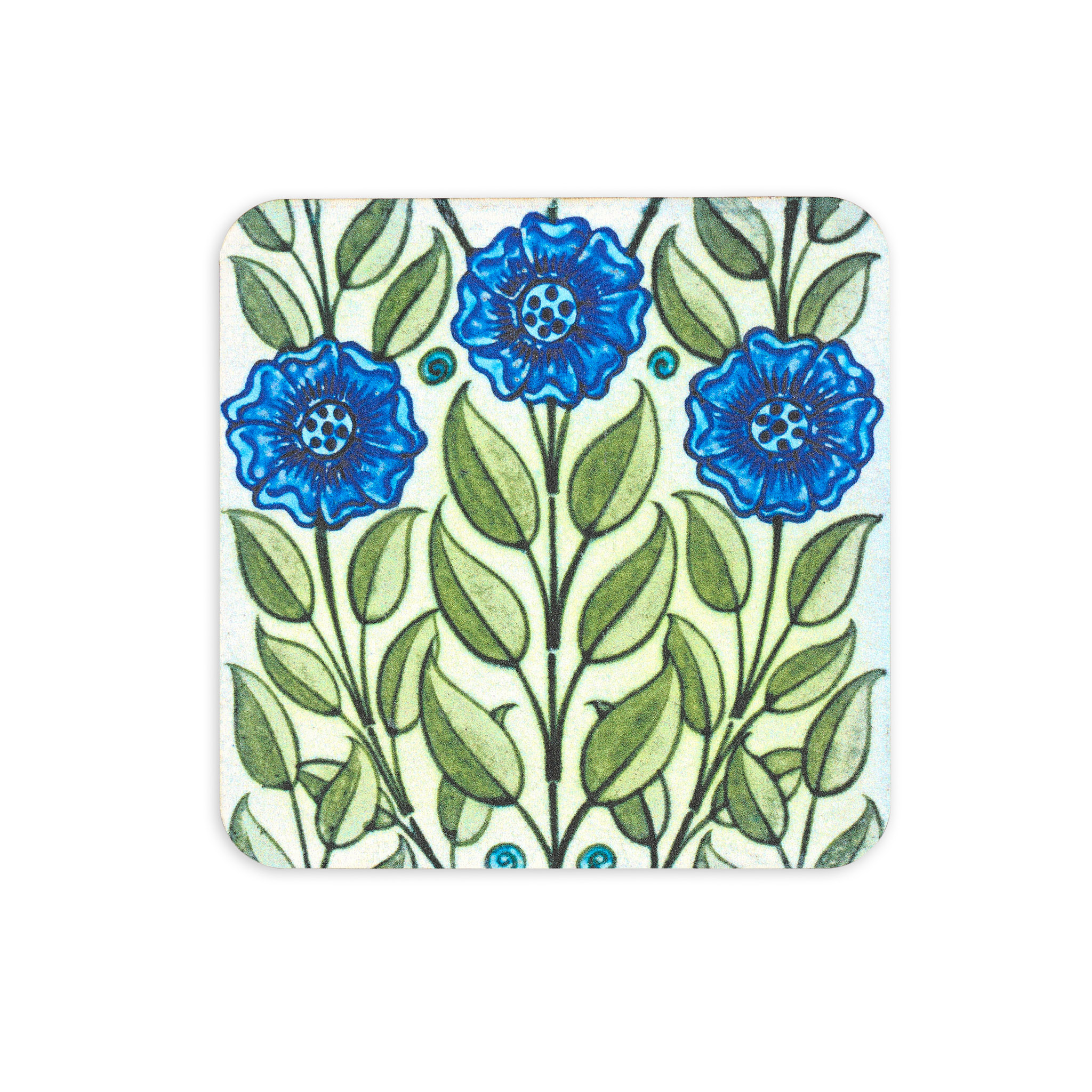
 William De Morgan: master of Arts and Crafts tile design
Bold, intricate and beautiful
-

Frederick Hollyer – Life and Work
Find out more about photographer Fredrick Hollyer who captured members of the Victorian artistic elite
Collection highlights
-
 Season ticket, by Walter Crane, 1890, BritainV&A South Kensington
 -
 Necklace, designed by Charles Robert Ashbee, made by Guild of Handicraft Ltd., 1901 – 02, London, EnglandV&A South Kensington
 -
 Drawing, by William de Morgan, EnglandV&A South Kensington
 -
 Washstand, designed by Leonard F. Wyburd and William De Morgan, manufactured by Liberty & Co. Ltd. and William De Morgan, about 1894, London, EnglandV&A South Kensington
 -
 Design, William De Morgan, late 19th century, EnglandV&A South Kensington
 -
 Tray, designed by William Arthur Smith Benson, 1894, Hammersmith and Fulham, EnglandV&A South Kensington
 -
 Screen, designed by John Henry Dearle, manufactured by Morris & Co., 1885 – 1910, LondonV&A East Storehouse
 -
 Armchair, designed by Ernest William Gimson, made by Edward Gardiner, about 1905, Sapperton, England
 -
 Clock, designed by Charles Francis Annesley Voysey, 1895, EnglandV&A South Kensington
 -
 Urn, designed by Frank Lloyd Wright, made by James Miller, about 1902, Chicago, USV&A East Storehouse
 -
 Zermatt, watercolour, by John Ruskin, 1844, Zermatt, SwitzerlandV&A South Kensington
 -
 Coat, by Marshall & Snelgrove Ltd, 1895 – 1900, EnglandV&A South Kensington
 -
 Decanter, designed by Charles Robert Ashbee, made by Guild of Handicraft Ltd, 1904 – 5, London, EnglandV&A South Kensington
 -
 Poppies furnishing fabric, designed by Lindsay Phillip Butterfield for Turnbull & Stockdale Ltd., 1901, EnglandV&A East Storehouse
 -
 Lamp, designed by Arthur Stansfield Dixon, made by Birmingham Guild of Handicraft, about 1893, Birmingham, EnglandV&A South Kensington
 -
 Architectural drawing of the Red House, by Philip Webb, 1859, EnglandV&A South Kensington
 -
 The Angel with the Trumpet, furnishing fabric, designed by Herbert Percy Horne, made by Simpson & Godlee, about 1884, EnglandV&A East Storehouse


Join a V&A Academy experience
Explore our curated range of expert-led courses, workshops, and talks, all with the V&A collections at their core.
- Expert led courses
- Practical workshops
- Lectures & talks
- Professional development