Beatrix Potter
Features

-

Beatrix Potter: a life drawing nature
Explore a selection of highlights from Beatrix's life of drawing nature
-

Leslie Linder and the Beatrix Potter collection
How he cracked the code of Beatrix Potter's secret journal and showed the world her art.
-

Beatrix Potter's inspirations
From the most mundane everyday objects to majestic landscapes
-

Peter Rabbit: the tale of 'The Tale'
"I don't know what to write to you, so I shall tell you a story about four little rabbits, whose names were Flopsy, Mopsy, Cottontail, and Peter…"
-

Beatrix Potter's first sketchbook, aged 8
Explore Beatrix Potter's earliest surviving sketchbook
-

The Roly-Poly Pudding by Beatrix Potter
Explore the full, original illustrated manuscript
-

Illustration inspired by Beatrix Potter's botanical drawing
-

A brief history of vampires – in print, photography and posters
Discover, if you dare, how Count Dracula haunts the V&A's collections
-

Experience Beatrix Potter's Lake District
Epic panoramic footage of its mountains and lakes, featuring locations where Potter lived, worked and admired
Collection highlights
-
 Drawing of water lilies, by Beatrix Potter, probably 1906, probably Esthwaite Water, Cumbria. Linder Collection cat. no. LC.3.A.2V&A South Kensington
 -
 Beatrix Potter with her dog, Spot, at Dalguise, Rupert Potter, 1880. Linder Bequest cat. no. LB.2083.V&A South Kensington
 -
 Drawing, examples of fungi, by Beatrix Potter, 1897, Ullock, Cumbria. Linder Bequest cat. no. LB.292.V&A South Kensington
 -
 At Evening's Close, by Beatrix Potter, about 1902, Eeswyke, Sawrey. Linder Collection cat. no. LC.4.A.2.V&A South Kensington
 -
 Illustrated letter to Nancy Nicholson, featuring the story of 'The Oakmen', by Beatrix Potter, dated December 1916.V&A East Storehouse
 -
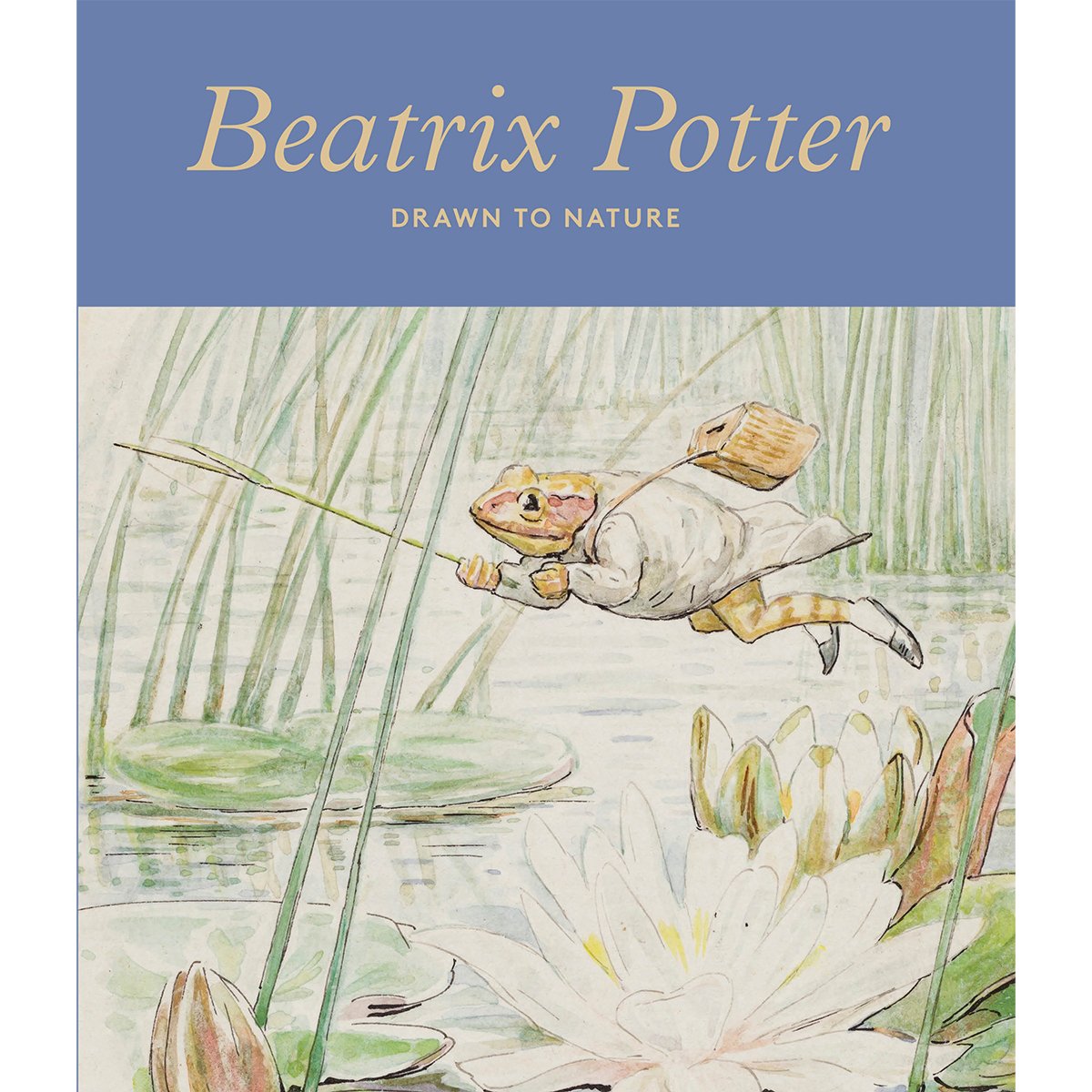
 Jeremy Fisher sitting on a water lily, fishing; a preparatory drawing for The Tale of Mr. Jeremy Fisher, by Beatrix Potter, 1906. Linder Bequest cat. no. LB.839.V&A South Kensington
 -
 Duchess walking down a leafy path, background study for an early version of The Pie and the Patty-Pan, by Beatrix Potter, 1902. Linder Bequest Cat. no. LB.764.V&A East Storehouse
 -
 The Lady Mouse curtseys, variant illustration for p. 24 of 'The Tailor of Gloucester', by Beatrix Potter, 1903, Britain.V&A South Kensington
 -
 Landscape at Sidmouth, background study for The Tale of Little Pig Robinson (1930), by Beatrix Potter, possibly 1904. Linder Bequest cat. no. LB.828.V&A East Storehouse
 -
 Lady rabbit and gentleman rabbit passing on the street, design for a Christmas card, by Beatrix Potter, June 1890. Linder Bequest cat. no. LB.1769.V&A South Kensington
 -
 Studies of a cat, by Beatrix Potter, late 19th/early 20th century. Museum no. BP.385(B), Linder Bequest cat. no. LB.131.V&A East Storehouse
 -
 View across Esthwaite Water, by Beatrix Potter, 21 November 1909. Linder Bequest.V&A South Kensington