Explore the Collections
Search more than 1.3 million objects
Most searched for
Here are our most searched-for objects and themes
-
 Drawing of water lilies, by Beatrix Potter, probably 1906, probably Esthwaite Water, Cumbria. Linder Collection cat. no. LC.3.A.2V&A South Kensington
 -
 Beatrix Potter with her dog, Spot, at Dalguise, Rupert Potter, 1880. Linder Bequest cat. no. LB.2083.V&A South Kensington
 -
 Drawing, examples of fungi, by Beatrix Potter, 1897, Ullock, Cumbria. Linder Bequest cat. no. LB.292.
 -
 At Evening's Close, by Beatrix Potter, about 1902, Eeswyke, Sawrey. Linder Collection cat. no. LC.4.A.2.V&A South Kensington
 -
 Illustrated letter to Nancy Nicholson, featuring the story of 'The Oakmen', by Beatrix Potter, dated December 1916.V&A East Storehouse
 -
 Jeremy Fisher sitting on a water lily, fishing; a preparatory drawing for The Tale of Mr. Jeremy Fisher, by Beatrix Potter, 1906. Linder Bequest cat. no. LB.839.V&A South Kensington
 -
 Duchess walking down a leafy path, background study for an early version of The Pie and the Patty-Pan, by Beatrix Potter, 1902. Linder Bequest Cat. no. LB.764.V&A East Storehouse
 -
 The Lady Mouse curtseys, variant illustration for p. 24 of 'The Tailor of Gloucester', by Beatrix Potter, 1903, Britain.V&A South Kensington
 -
 Landscape at Sidmouth, background study for The Tale of Little Pig Robinson (1930), by Beatrix Potter, possibly 1904. Linder Bequest cat. no. LB.828.V&A East Storehouse
 -
 Lady rabbit and gentleman rabbit passing on the street, design for a Christmas card, by Beatrix Potter, June 1890. Linder Bequest cat. no. LB.1769.V&A South Kensington
 -
 Studies of a cat, by Beatrix Potter, late 19th/early 20th century. Museum no. BP.385(B), Linder Bequest cat. no. LB.131.V&A East Storehouse
 -
 View across Esthwaite Water, by Beatrix Potter, 21 November 1909. Linder Bequest.V&A South Kensington
-
 The Works of Geoffrey Chaucer Now Newly Imprinted, by William Morris & Sir Edward Burne-Jones, 1896, Hammersmith: Kelmscott Press.V&A South Kensington
 -
 Parallèlement, by Paul Verlaine, illustrated from original lithographs by Pierre Bonnard, 1900, Paris: Ambroise Vollard, Imprimerie Nationale. Museum no. L.1005-1953.
 -
 Mr. G. White of Messrs. Green & White, by Simon Cutts, 1984, London: Coracle Press. Museum no. 38041991107822.
 -
 La Prose du Transsibérien et de la petite Jehanne de France, by Sonia Delaunay & Blaise Cendrars, 1913, Paris: Editions des Hommes Nouveaux. Museum no. 38041993109149.
 -
 Sky never stops: poemkon, by Liliane Lijn, 1965, London: published by the artist.V&A South Kensington
 -
 Le Chant des morts; Pierre Reverdy with lithographs by Pablo Picasso, 1948, Paris: Tériade. Museum no. L.4122-1948.
 -
 Oeillades ciselées en branche, by Georges Hugnet, illustrated by Hans Bellmer, Paris: J. Bucher, 1939. Museum no. L.1780-1939.
 -
 Facile, by Paul Éluard and Man Ray, Paris: Éditions G.L.M., 1935. Museum no. L.1342-1936.
 -
 Terrestrial Globe, by Tom Phillips, London: published by the artist, 1992.V&A South Kensington
 -
 Mémoires, by Guy Debord and Asger Jorn, New York: L'Internationale situationniste, printed by Permild & Rosengreen, 1959. Museum no. 38041992109488.
 -
 The Left-Handed Punch, by Roy Fisher & designed and printed by Ronald King, Gilford: Circle Press, 1986.V&A South Kensington
 -
 Desire: the collective unconscious, by Telfer Stokes, Atlanta, Ga.; Yarrow Scotland: Nexus Press in association with Weproductions, 1989.V&A South Kensington
-
 'Self Evident', C-type print, by Ingrid Pollard, 1995, printed 2013, Brighton, EnglandV&A South Kensington
 -
 'The Garden II', chromogenic print, by Siân Davey, 2021V&A South Kensington
 -
 Lace, salted paper print, by William Henry Fox Talbot, early 1840s, BritainV&A South Kensington
 -
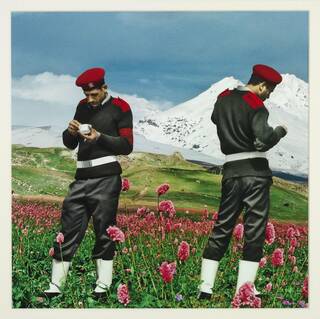 'The Break', Nermine Hammam, inkjet print, 2011V&A East Storehouse
 -
 'Disconnected', inkjet print, by Marvel Harris, 2018, the NetherlandsV&A South Kensington
 -
 'The Angel at the Tomb', photograph, by Julia Margaret Cameron, 1870, Isle of Wight, EnglandV&A South Kensington
 -
 'View of the Raphael Cartoons Galleries at the South Kensington Museum', albumen print, by Isabel Agnes Cowper, about 1873V&A South Kensington
 -
 'Lily Cole and Giant Camera', inkjet print, by Tim Walker, 2004. Museum no. E.1140-2008V&A South Kensington
 -
 'Boys smoking, Portland Road, April 15 1956', gelatin silver print, by Roger Mayne, 1956, London, EnglandV&A South Kensington
 -
 'Tree Peony' from Some Japanese Flowers Vol. I, collotype with lithographic overprinting in colour, by Kazumasa Ogawa, 1894, JapanV&A South Kensington
 -
 'Columbia and Western #3', from the series 'Westward, the Course of Empire', by Mark Ruwedel, 1999V&A South Kensington
 -
 'The Earring', photograph, by Madame Yevonde, about 1936, UK
-
 Hat, designed by Simone Mirman, about 1955, London, EnglandV&A East Storehouse
 -
 Evening dress, designed by Cristóbal Balenciaga, 1954, Paris, FranceV&A East Storehouse
 -
 Man's suit, designed by Mr Fish, manufactured by Hexter, about 1968, London, EnglandV&A South Kensington
 -
 Pair of shoes, 1550 – 1070 BC, EgyptV&A East Storehouse
 -
 Mantua, 1755 – 60, EnglandV&A East Storehouse
 -
 Plato's Atlantis, dress, designed by Alexander McQueen, 2010, London, EnglandV&A South Kensington
 -
 Man's ensemble, designed by Stella Jean, Spring/Summer 2014, Italy and Burkina Faso. Museum no. T.21:1 to 5-2014.V&A South Kensington
-
 The Temptation in the Garden of Eden, oil painting, by Jan Brueghel the elder, about 1600, Antwerp, BelgiumV&A South Kensington
 -
 Disappointed Love, oil painting, by Francis Danby, 1821, EnglandV&A South Kensington
 -
 Altarpiece of St George, by Master of the Centenar, first quarter of the 15th century, Valencia, SpainV&A South Kensington
 -
.jpg) Virgin and Child, oil painting, by Carlo Crivelli, about 1480, ItalyV&A South Kensington
Virgin and Child, oil painting, by Carlo Crivelli, about 1480, ItalyV&A South Kensington -
 Signboard for the Omega Workshops, painting, by Duncan Grant for Omega Workshops, 1913, EnglandV&A East Museum
 -
.jpg) Portrait of a Lady known as Smeralda Bandinell, painting, painted by Sandro Botticelli, 1470 – 80, Florence, ItalyV&A South Kensington
Portrait of a Lady known as Smeralda Bandinell, painting, painted by Sandro Botticelli, 1470 – 80, Florence, ItalyV&A South Kensington -
 Self-Portrait as a Young Man, oil painting, by Jacopo Robusti Tintoretto, about 1548, Venice, ItalyV&A South Kensington
 -
 Vanitas Still Life, oil painting, by N.L. Peschier, 1659, NetherlandsV&A South Kensington
 -
 Portrait of Madame de Pompadour, oil painting, by Francois Boucher, 1758, Paris, FranceV&A South Kensington
 -
 The Painter's Two Daughters, oil painting, by Thomas Gainsborough, about 1758V&A South Kensington
 -
 A Sleeping Nymph Watched by a Shepherd, oil painting, by Angelica Kauffman, about 1780, London, EnglandV&A South Kensington
 -
 Portrait of Melissa Thompson, painting, by Kehinde Wiley, 2020V&A East Museum
 -
 Salisbury Cathedral from The Bishop`s Ground, oil painting, by John Constable, 1823, EnglandV&A South Kensington
 -
 Venice from the Giudecca, oil painting, by Joseph Mallord William Turner, 1840V&A South Kensington
 -
 St Cecilia and the Angels, oil painting, by Paul Delaroche, 1836, Paris, FranceV&A South Kensington
-
 Panel of Chinese wallpaper, unknown maker, about 1750 – 1800, probably Canton, ChinaV&A East Storehouse
 -
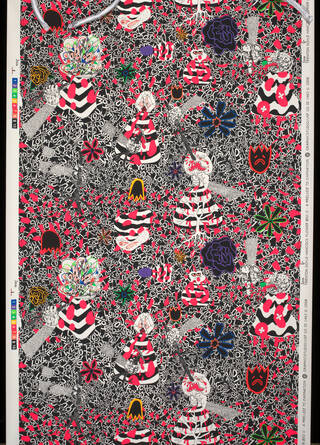 'Flower Bed II, a Prelude to Damnation', wallpaper, by Trenton Doyle Hancock, 2008, United StatesV&A South Kensington
 -
 Unused sheet of wallpaper, about 1780 – 1800, EnglandV&A South Kensington
 -
 Wallpaper illustrating the Crystal Palace, manufactured by Heywood, Higginbottom & Smith, about 1853 – 55, Manchester, EnglandV&A South Kensington
 -
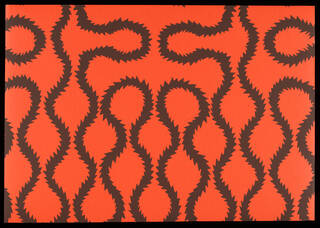 'Squiggle', wallpaper sample, by Vivienne Westwood, 2009, BritainV&A South Kensington
 -
 (Inside) Page from a sample book of wallpapers supplied for the decoration of the Palace of Westminster, A.W.N Pugin, 1851 – 59, EnglandV&A South Kensington
 -
 Wallpaper, designed by Owen Jones, manufactured by Townsend, Parker & Co., about 1852 – 74, BritainV&A South Kensington
 -
 Portion of a classical 'pillar and arch' wallpaper, about 1769, EnglandV&A South Kensington
 -
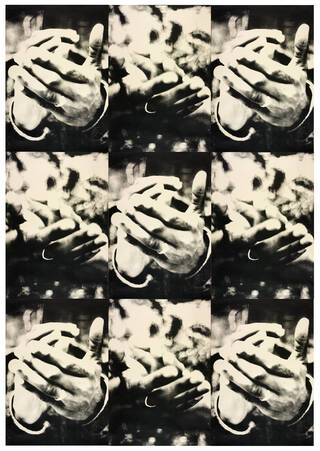 'Clapping Hands', roll of wallpaper, by Sonia Boyce, 1994, BritainV&A South Kensington
 -
 Panel of red flock wallpaper, identical in pattern with the paper formerly hung in the Queen's Drawing Room at Hampton Court Palace, about 1735, EnglandV&A East Storehouse
 -
 Tits in Space, wallpaper, by Sarah Lucas, manufactured by The Archive Printing Company Ltd., 2000, UKV&A South Kensington
 -
 Portion of wallpaper with a design commemorating Queen Victoria's Golden Jubilee, by F. Scott & Son, 1887, Hawick, EnglandV&A South Kensington
 -
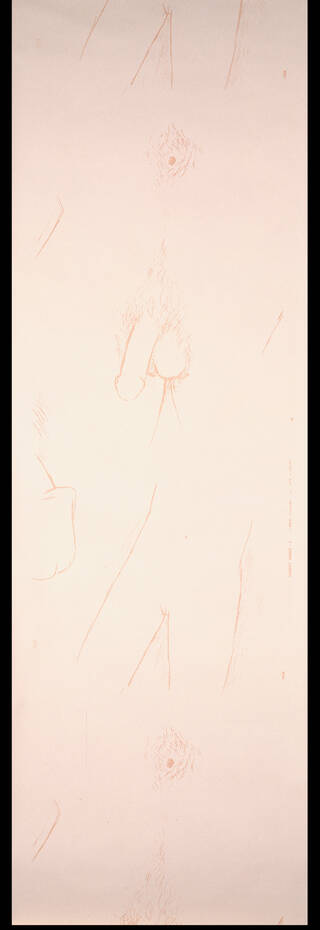 'Male and Female Genital Wallpaper', wallpaper by Robert Gober, 1989, United StatesV&A South Kensington
 -
 Portion of Lunar wallpaper, designed by Michael Clarke, manufactured by Cole & Son, 1964, EnglandV&A South Kensington
 -
 Acanthus, wallpaper, designed by William Morris, manufactured by Jeffrey & Co., 1875, BritainV&A South Kensington
Trending
Embroidery
Exquisite examples of embroidery are threaded throughout our collections – from must-see tapestries to intricate kimono, medieval religious copes to a one-off Mughal hunting coat. Explore them in our galleries or get closer via Order an Object.

-
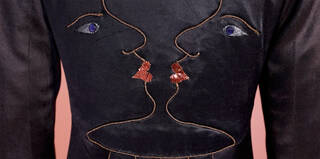 Exploring an iconic embroidered evening coat: Schiaparelli x Cocteau
Discover the extraordinary details of an iconic 1937 embroidered couture coat, designed by Elsa Schiaparelli in collaboration with the Surrealist artist Jean Cocteau.
-
 The War of Troy tapestry
Explore one of the most magnificent examples of medieval tapestry in existence
-

Kimono for a courtesan?
Explore the theatrical motif on this highly decorative outer kimono
-

Embroidery – a history of needlework samplers
What do 'practice pieces' tell us about the changing nature of embroidery over time?
-
 Exploring a one-of-a-kind 17th century Mughal hunting coat
Take an in-depth look at an incredibly rare and exquisite Mughal hunting coat
-

Mexican embroidery
Discover stunning examples of Mexican embroidery from the V&A's textile collection
-

The making of medieval embroidery
See the traditional embroidery techniques used to create masterpieces of opus anglicanum
Browse by theme
Discover the people, techniques, eras and places represented in our museums




-

Thomas Ruff
-

Antonio Canova
-

Mary Quant
-

Curtis Moffat
-

William De Morgan
-

John Constable
-
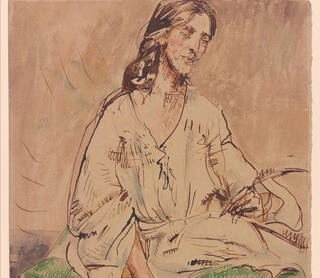
Edna Clarke Hall
-

Julia Margaret Cameron
-

Elsa Schiaparelli
-

Ilse Bing
-

Grinling Gibbons
-

Auguste Rodin
-

Valérie Belin
-

Alexander McQueen
-

Cecil Beaton
-

Harry Hammond
-
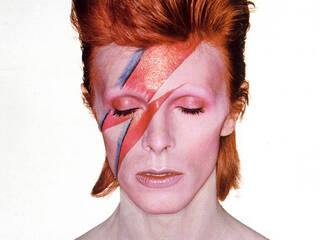
David Bowie
-
.jpg)
Benjamin Brecknell Turner
-

Frederick Hollyer
-

William Henry Fox Talbot
-

Horst P. Horst
-
Eileen Agar
-

Beatrix Potter
-

Bill Brandt
-

Diaghilev and the Ballets Russes
-

Eileen Gray
-

Lee Miller
-

Garry Fabian Miller
-
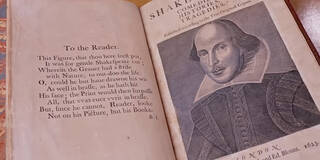
William Shakespeare
-

Cristóbal Balenciaga
-

Vivienne Westwood
-

Nicholas Hilliard
-

Lucienne Day
-

Linnaeus Tripe
-

Paul Strand
-

Wedgwood
-

William Morris
-

Wallpaper
-

The Raphael Cartoons
-

Rapid Response Collecting
-

Costume
-

Music hall
-

Shoes
-
Ballet
-

Photography
-

Theatre & Performance
-

Fashion in Motion
-

Hats
-

Manuscripts
-

Gender & sexuality
-

Post-war design
-

Artists and the Book
-

The Stein Collection
-
Fashion
-
Provenance Research: How have objects come to be in the V&A?
-

Wedding dress
-

Jewellery
-

Tiles
-

Paintings
-

Underwear
-

Frames
-

The Glastonbury Festival Archive
-

The V&A Story
-

Furniture
-
Circus
-

Glasses
-

Opera
-

Books
-

Architecture
-

Embroidery
-

Digital Art & Design




In our venues
See the collections in person. For some objects not on display you can view by appointment. Our collections include the National Art Library and the V&A Archives.
-
 Tippoo's Tiger, mechanical organ, about 1793, Mysore, IndiaV&A South Kensington
 -
 (Detail) Trajan's column, plaster cast, by Monsieur Oudry, about 1864, Paris, FranceV&A South Kensington
 -
 The Great Bed of Ware, designed by Hans Vredeman de Vries, 1590 – 1600, Ware, EnglandV&A South Kensington
 -
 3D-printed Extinction Rebellion logotype woodblockV&A East Museum
 -
 Progress Pride flag, designed by Daniel Quasar, manufactured by Custom Flag Company Inc., 2020, WestminsterV&A South Kensington
 -
 (Detail) Pérou evening ensemble, designed by Christian Dior, by Bodin Brossin, 1954, Paris, FranceV&A East Storehouse
 -
 Costumes for 'Le Train Bleu', designed by Coco Chanel, 1924
-
 'Variations on a Geometric Theme' plate, designed by Eduardo Paolozzi, manufactured by Josiah Wedgwood and sons, about 1970, Barlaston, Stoke-on-Trent, England
 -
 Portland Vase, by Josiah Wedgwood and Sons, 1793, Etruria, Stoke-on-Trent, Staffordshire, EnglandV&A Wedgwood Collection
 -
 Wedgwood family portrait, oil painting, by George Stubbs, 1780, EnglandV&A Wedgwood Collection
 -
 Lessore Vase, painted by Emile Aubert Lessore, made by Josiah Wedgwood and Sons, about 1863, EnglandV&A Wedgwood Collection
 -
 Anti-slavery medallion, by Josiah Wedgwood and sons, about 1787, Etruria, Stoke-on-Trent, EnglandV&A Wedgwood Collection
 -
 Teapot moulded in the shape of a cauliflower, by Josiah Wedgwood and sons, 1765, Stoke-on-Trent, EnglandV&A Wedgwood Collection
 -
 Jasperware trials mounted on a wooden tray, by Josiah Wedgwood and sons, 1773 – 76, Stoke-on-Trent, EnglandV&A Wedgwood Collection
 -
 Teapot, designed by Douglas Baillie Hamilton Cochrane, manufactured by Josiah Wedgwood and Sons, 1906V&A Wedgwood Collection
 -
 Detail of 'Fairyland Lustre' bowl, by Josiah Wedgwood and sons, about 1923, Etruria, Stoke-on-Trent, EnglandV&A Wedgwood Collection
-
 Place (Village), installation, by Rachel Whiteread, about 1995 – 2015, LondonYoung V&A
 -
 Planetarium, installation, by Tristan Blondeau, 2023, Paris, FranceYoung V&A
 -
 The Self-Portrait, print, by Quentin Blake, 2010, UKYoung V&A
 -
 Bettiscombe, dolls' house, about 1870, EnglandYoung V&A
 -
 Pikachu, soft toy, manufactured by Deutshe Toy GMBH, 1995 – 99, Munich, GermanyYoung V&A
 -
 'Hero Arm', Open Bionics, 3D printed bionic arm for a child, Bristol, EnglandYoung V&A
 -
 Amstrad CPC 464 Computer, manufactured by Amstrad, 1984, EnglandYoung V&A
 -
 Devdas, film hoarding, by Balkrishna Arts, 2002, London, EnglandYoung V&A
 -
 Death Star, designed by Bjarke Lykke Madsen, designed by Bas Brederode, manufactured by The LEGO Group, 2011 – 12, DenmarkYoung V&A
-
 Cut, Slash & Pull, ensemble, by Vivienne Westwood, 1990, EnglandV&A East Museum
 -
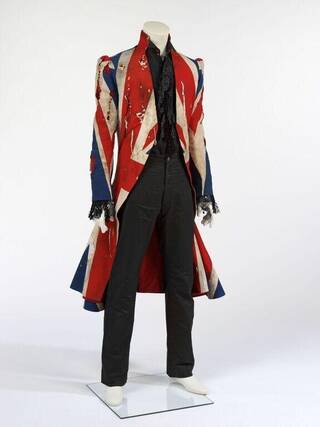 Costume, designed by Alexander McQueen, designed by Bowie, David, 1996, Great BritainV&A East Storehouse
 -
 Powder bowl, made by Halex Ltd, 1930 – 39, Walthamstow, London, EnglandV&A East Storehouse
 -
 Hackney Lesbian Strength and Gay Pride 1993, t-shirt, maker unknown, 1993, EnglandV&A East Storehouse
 -
 Tracksuit showing scenes from the 2011 East London riots, by SIBLING, 2012, London, EnglandV&A East Storehouse
 -
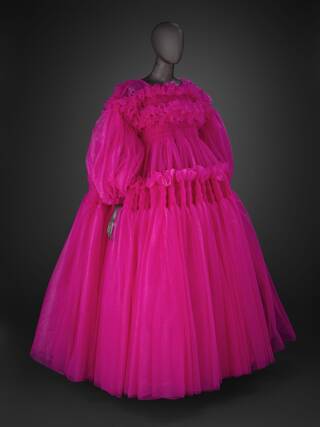 Daria dress, by Molly Goddard, 2019, LondonV&A East Museum
 -
 Reunion VI: Underneath the Surface, terracotta sculpture, by Bisila Noha, 2022, London, EnglandV&A East Museum
 -
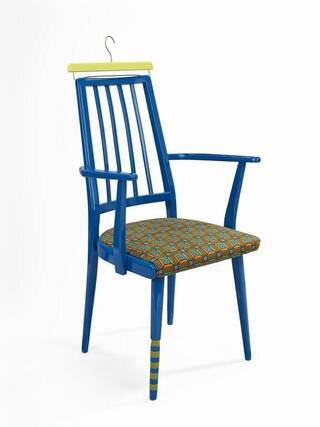 Captain hook chair frame, by Yinka IloriV&A East Museum
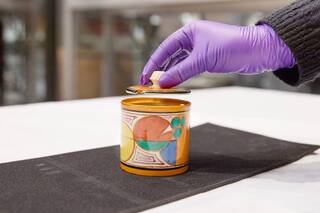


Order an Object
Get closer to the objects within our stores.
- Choose an object to view
- Decide when to view it
- Visit your object for free