Fashion in 1960s London
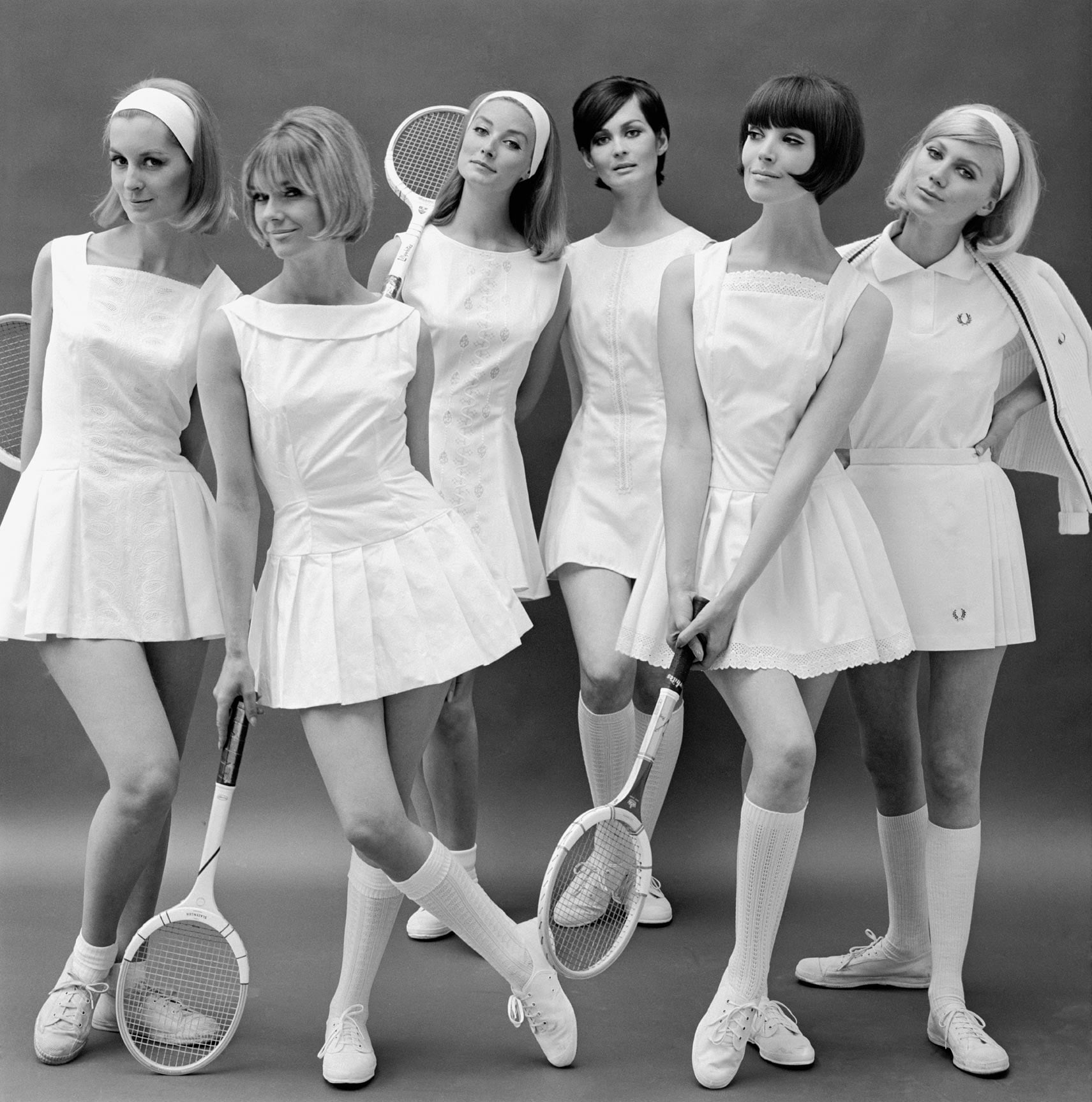
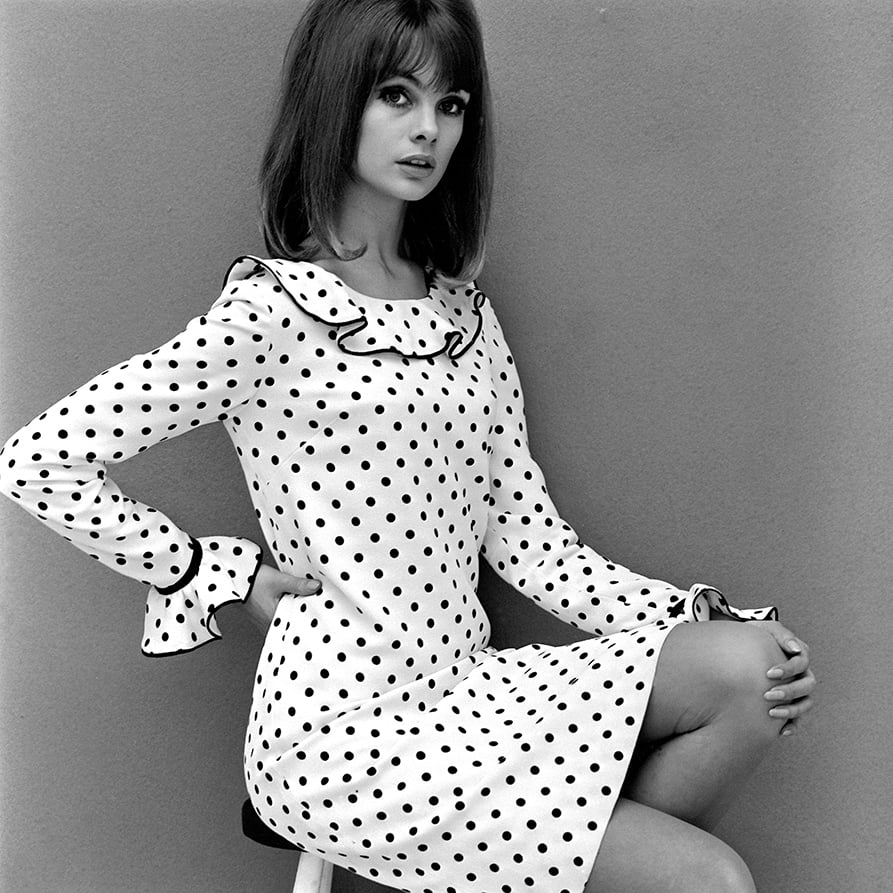
This section explores the development of Sixties fashion from the mid-1950s to the early 1970s, linking it to London's different fashion districts.
Paper Dresses
Paper dresses were a brief but spectacular Sixties sensation. They were cheap and disposable, and their simple 2-D shape was ideal for the bold graphic prints that were so fashionable. Some were produced as free gifts to promote paper products, and though prone to tearing and creasing, they were marketed as 'instant fun from London'.

Dress 'Dispo', Museum no. T.181-1986
Dress 'Dispo' Diane Meyersohn and Joanne Silverstein Britain 1967 Museum no. T.181-1986 Given by Diane Meyersohn

Dress 'Dispo', Museum no. T.176-1986
Dress 'Dispo' Diane Meyersohn and Joanne Silverstein Britain 1967 Museum no. T.176-1986 Given by Diane Meyersohn

Dress 'Dispo', Museum no. T.174-1986
Dress 'Dispo' Diane Meyersohn and Joanne Silverstein Britain 1967 Museum no. T.174-1986 Given by Diane Meyersohn

Dress, Museum no.T.34-1992
Dress Manufacturer unknown Probably USA 1967 Museum no.T.34-1992 Bequeathed by Andie Bancroft

Dress, Museum no. T.32-1992
Dress 'Waste Basket Boutique' (T.M.) by Mars of Asheville N.C. USA 1967 Museum no. T.32-1992 Bequeathed by Andie Bancroft

Skirt 'Dispo', Museum no. T.175 -1986
Skirt 'Dispo' Diane Meyersohn and Joanne Silverstein Britain 1967 Museum no. T.175 -1986 Given by Diane Meyersohn
Established traditions: Mayfair 1955–1960
'In the 1950s youthful clothes were non-existent; I used to make my own. At that time if you were on the tube you were expected to wear a pair of gloves…It was all old lady stuff.' Vanessa Denza, buyer.
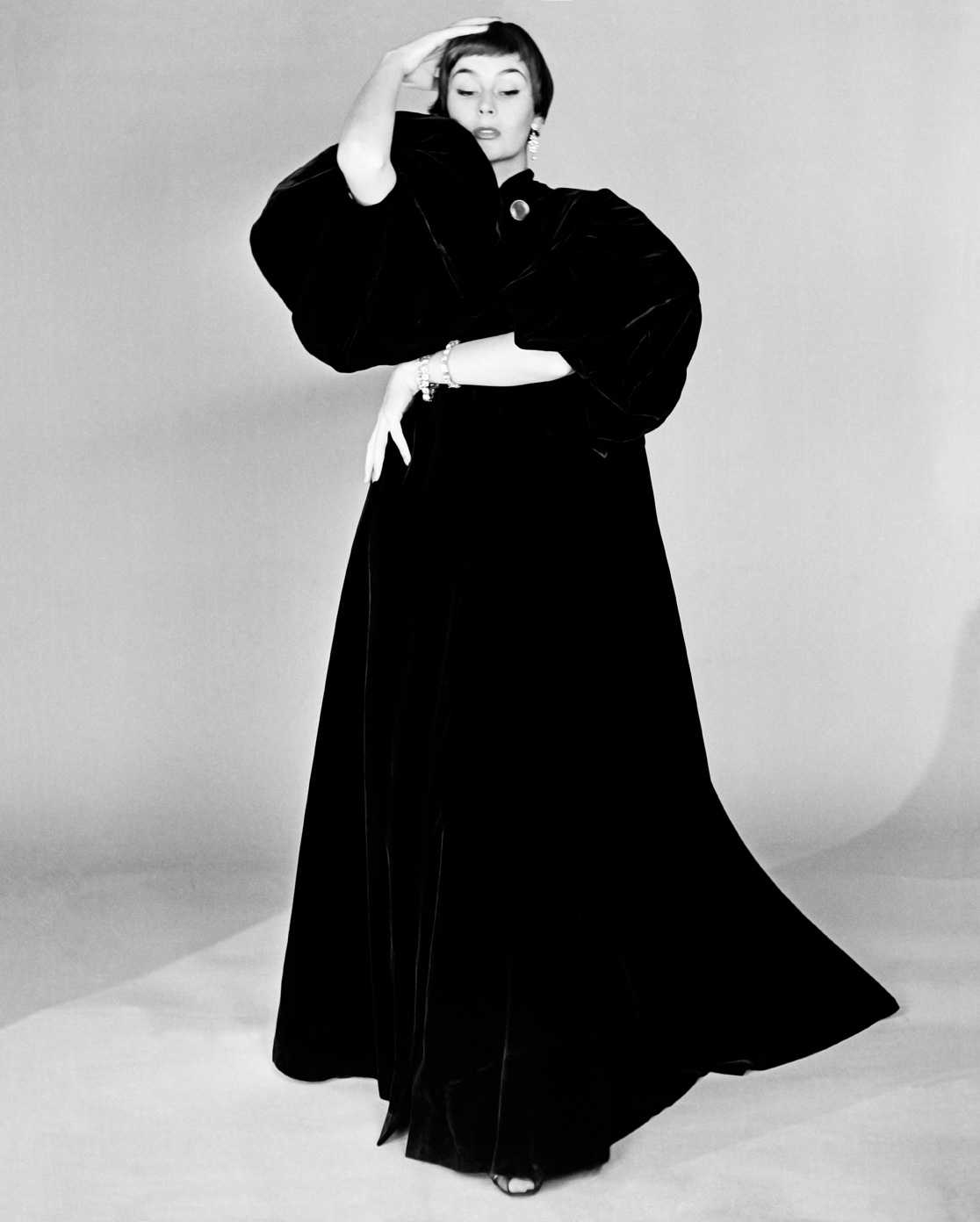
In the post-war period exclusive dressmakers and their wealthy clients set the standards, just as they had done before. They looked to Paris for inspiration but their work and lives revolved around the West End in London.
There was a distinctive London style, shaped by traditional tailoring, the events of the Season (Ascot, Henley, Glyndebourne) and a very English sense of decorum. The epitome of elegance was represented by the twelve most prominent Mayfair couturiers who belonged to the Incorporated Society of London Fashion Designers.
By the early 1960s this Mayfair generation was fading in significance, its sophisticated and elitist approach at odds with the new spirit of egalitarianism. But the Society still provided a useful precedent for younger pioneers, in its attention to cut, its inventive use of fabric and its clever approach to marketing.

Dress and Jacket, John Cavanagh (1914-2004)
Dress and Jacket
John Cavanagh (1914-2004)
1961
Egyptian cotton and silk
Lent by the Museum of Costume, Bath, BATMC I.09.868&A
Given by the Hon. Mrs John Ward from the estate of the late Hon. Lady WardOf all the London couturiers Cavanagh perhaps presented the most youthful collections. With its fresh print and deceptively simple construction, this cotton suit anticipates the lighter mood of the 1960s, yet there is still an element of formality in its well-mannered neatness.

Suit, Charles Creed (1906-66)
Suit
Charles Creed (1906-66)
1954
Wool and silk
Museum no. T.62&A-1966
Given by Charles CreedCreed's work was characterised by a military precision that owed much to the techniques of traditional men's tailoring. Here Savile Row detailing forms the basis of a very feminine suit, perfect for the lunch and shopping excursions that were the focus of many middle-class women's lives.

'Polar Flight', suit
'Polar Flight'
Suit
Sir Hardy Amies (1909-2003)
1959
Mohair (possibly by Ascher)
Museum no. T.63&B-1988
Worn and given by Mrs John RickettHardy Amies created one of London's most progressive and successful fashion businesses. This suit exemplifies his witty and immaculately crafted approach to women's tailoring. While designing for the queen and other prestigious clients, he also developed lines aimed at a wider UK public and the export trade, entering the menswear market in 1959.

Dress and Coat, Norman Hartnell (1901-79)
Dress and Coat
Norman Hartnell (1901-79)
1958
Silk
Museum no. T.170&A-1990
Worn and given by Mrs WingateHartnell enjoyed a high profile due to the patronage of the royal family. This ensemble is typically regal and luxurious, its exquisite pin-tucking making full use of the couturier's craft. By working for wedding gown manufacturers Berketex, Hartnell also made his version of romanticism available to a wider market.

Dress, Worth
Dress
Worth
1960
Silk taffeta and lace
Museum no. T.216-1973
Worn and given by Mrs Roy HudsonBy 1959 the famous Paris couture house of Worth had dressed the world's richest and most fashionable women for over a century. The London branch supplied the British aristocracy with timelessly elegant clothes - as this example illustrates - for every occasion in the London season. However, the house could not adapt to the new spirit of youthful informality and it closed in 1967.
View a rotating image of this dress.

Dress and Jacket, Horrockses Fashions
Dress and Jacket
Horrockses Fashions
About 1955
Printed cotton
Museum no. T.639&A-1996
Worn and given by Mrs Elizabeth PayzeHorrockses' crisp cotton dresses, with their brightly coloured prints and full gathered skirts, were a fashion success story for the post-war period. They appealed to women of different ages and social backgrounds as the perfect summer dress. This example was worn by Elizabeth Payze as a teenager.
Mary Quant - a new approach: Chelsea 1955–1967
'Snobbery has gone out of fashion, and in our shops you will find duchesses jostling with typists to buy the same dresses.' Mary Quant
Around this time a group of young artists, film directors and socialites gravitated towards the King's Road. Known by the media as the 'Chelsea Set', they made the name Chelsea synonymous with a new way of living and dressing.
Mary Quant's boutique, set up in 1955, epitomised this new philosophy and set the standard for later entrepreneurs. Called Bazaar, it was known for its surreal window displays and eclectic mix of clothes, accessories and costume jewellery. The clothes were decidedly modern. 'I want relaxed clothes,' said Quant, 'suited to the actions of normal life'.
With Quant's husband Alexander Plunkett Greene and friend Archie McNair providing the business backup, the venture was profitable, though it appeared chaotic. Some of the goods were sourced from art students, or made up overnight, and the mini shift dress soon became Quant's trademark.
Retail innovation: Knightsbridge 1961–1967
'A whole new world of retail sprang up.' Felicity Green
In the 1950s Knightsbridge was dominated by the stuffy department stores frequented by debutantes and their mothers. The first traditional store to cater specifically for the youth market was Woollands. In 1961, inspired by Mary Quant, it opened the '21 Shop' as an in-store boutique for young working women.
21 Shop sold clothes that were 'simple, zany, not for squares'. The buyer, 22-year-old Vanessa Denza, sought out new talent in the Royal College of Art and worked closely with young designers. Brilliant at turnover, she could get an order of 1000 dresses delivered within a week and sold a week later.
'Like a dam bursting' (to use Denza's phrase) other retailers soon followed her lead, with Young Jaeger, Harrods' Way In and Miss Selfridge establishing themselves as household names.

Dress, Sylvia Ayton (1937-) and Zandra Rhodes (1940-)
Dress
Sylvia Ayton (1937-) and Zandra Rhodes (1940-)
1966
Paper
Lent by Sylvia Ayton MBESylvia Ayton and Zandra Rhodes's innovative designs were taken up by boutiques and some of the more commercial stores. When Miss Selfridge opened in 1966, the buyer stocked their distinctive printed paper dresses. Customers loved them, but kept tearing the hems to see if they really were made out of paper - they were!

'Dress of the Year' Ensemble, Coat: Michele Vivier
'Dress of the Year' Ensemble
1966
Coat: Michele Vivier for V de V at Young Jaeger, PVC
Dress: Young Jaeger, rayon linen
Helmet: Simone Mirman, leather and plastic
Tights: John Bates for Echo, nylon
Boots: Elliott, PVC and leather
© Museum of Costume, Bath
Lent by the Museum of Costume, BathThis futuristic outfit attracted much excitement from the press in 1966, the year that plastic became 'all the rage'. It shows the British ready-to-wear brand Jaeger interpreting the extreme ideas of avant-garde designers for a wider market. Shortly afterwards, softer retrospective styles became more dominant.
Selected by Ernestine Carter, fashion editor of the Sunday Times, for the Museum of Costume, Bath
Dress, John Bates (1938-)
Dress
John Bates (1938-)
1967
PVC (polyvinyl chloride)
Lent by Elizabeth EgglestonJohn Bates was the designer of Diana Rigg's wardrobe for the television series The Avengers in 1965. His striking use of metallic, plastic and transparent fabrics, plus the eroticism of some of his work, attracted press attention and looked good on the screen. But trading under his company name Jean Varon, Bates also produced more commercial products for the key department stores.

Dress, Gerald McCann (1931-)
Dress
Gerald McCann (1931-)
1965
Silk, cotton and linen
Lent by Elizabeth EgglestonGerald McCann studied at the Royal College of Art and, like other RCA graduates, played an influential role in the development of the UK fashion industry. He designed a dress similar to this one as a paper pattern for Butterick. Paper patterns meant that anyone could wear the latest fashions for the price of a couple of yards of fabric.

Dress, Georgie of Group 30
Dress
Georgie of Group 30
1967
Printed cotton
Retailed at Way In, Harrods, Knightsbridge (8 guineas)
Lent by the Museum of London
Worn and given by Julia Parker
© Museum of LondonHarrods launched its Way In department in 1967, the year this vibrant cotton dress was designed. Other established shops, including Selfridges, also responded to the youth market by opening boutiques. These outlets - a store within a store - were informal and intimate, but they had the commercial advantages of a much bigger shop.

Dress, Jeff Banks (1943-)
Dress
Jeff Banks (1943-)
About 1968
Synthetic jersey
Museum no. T.95-1981
Worn and given by Sandie Shaw
Photograph of Sandie ShawJeff Banks trained at Camberwell School of Art and St Martin's College before opening his shop Clobber in Blackheath in 1964. The business grew rapidly and Banks retailed his designs in department stores across the UK and in New York. This dress was worn by his wife, singer Sandie Shaw. It combines a hippy Native American feel with a modern, short hemline.

Dress, Jean Muir (1933-95)
Dress
Jean Muir (1933-95)
1966
Suede
Museum no. T.250-1978
Given by Mrs Ernestine CarterUnlike her art school peers, Jean Muir learned her trade in the fashion industry. Celebrated as a gifted dressmaker, she worked for Liberty, Jaeger and Jane and Jane during the 1950s and '60s. Her clothes were always a subtle demonstration of the sculptural qualities of fabric, with suede a particular favourite.

Suit, Marion Foale and Sally Tuffin
Black and white check suit, Foale & Tuffin, Photograph by Duffy. Vogue, 1 September 1964, Duffy/Vogue © The Condé Nast Publications Ltd
Suit
Marion Foale and Sally Tuffin
1964
Wool
Retailed at Woollands 21 shop (16 guineas)Inspired by Mary Quant's example, Marion Foale and Sally Tuffin set up their own shop in 1962, straight after leaving the Royal College of Art. They became known for finely tailored suits, like this dazzling two-piece with its new long, lean jacket. Later they made clothes for several films, including the exquisitely cut coats and suits for Susannah York in Kaleidoscope of 1966.

Dress, Caroline Charles(1942)
Dress
Caroline Charles(1942)
1964
Cotton
Lent by Cilla BlackFashion and pop music were hand in hand in the 1960s. Cilla Black wore this elegant dress for a performance of her second number 1, 'You are my World', on the cult TV show 'Ready Steady Go'. Viewers tuned in to see what the presenter, Cathy McGowan, and her guests were wearing each week, as much as for the music. Would they be wearing Biba, Foale & Tuffin, or something from a new boutique? Caroline Charles was a favourite with many performers including Cilla Black, Lulu, and Barbra Streisand.
Menswear revolution: Piccadilly 1964–1970
'I remember going to Turnbull & Asser and having a bright pink shirt made, then being asked to leave the Cavalry Club for wearing it. This happened again in about 1966. I was wearing a white suit made by Blades.... I was asked to leave Annabel's Nightclub for having a white suit on!' David Mlinaric, interior designer.
Fashion-conscious young men set out to challenge the staid rules of masculine etiquette that had prevailed since Victorian times. Circulating in the overlapping worlds of fashion, the media and high society, they forged new styles of dress and deportment. The result was the modern dandy, a flamboyant figure in frills and velvet, whose adventurous wardrobe perfectly suited the creative atmosphere of the time.
A new group of entrepreneurs, often from aristocratic backgrounds, spotted this shift in taste. They moved into the area around Piccadilly Circus, long famous for dressing the British gentleman, and opened shops whose peacock products combined traditional tailoring with the design flair of fashion graduates. Many of the new designers had emerged from the first menswear courses, recently set up at the Royal College of Art and London College of Fashion. The results were spectacular, a new 'man about town'.
The rise of the boutique: King's Road 1965–1970
'The King's Road is a wilderness of stoned harlequins.' Christopher Gibbs, antique dealer.
Mary Quant's Bazaar, 'the grandmother of all the little shops', provided a new way of shopping. Until then, mature women had bought their clothes in department stores or gone to dressmakers, while many young women created their own outfits.
Young graduates and enthusiastic amateurs sensed the new spirit in fashion and plunged in. Taking advantage of cheap rents on the King's Road, they opened their own boutiques among the fish shops and greengrocers, attracting customers with their outlandish names and anarchic window displays.
A visit to the King's Road became a journey towards self-expression. On a Saturday afternoon the Rolling Stones and the new pop aristocracy would mix with the crowds, and shoppers emerged transformed, as suede-clad American Indians or romantic heroines in satin and lace.

Dress and Coat, Ossie Clark (1942-96) and Celia Birtwell (1941-)
Dress and Coat
Ossie Clark (1942-96) and Celia Birtwell (1941-)
1970-1
Printed rayon crepe with chiffon inserts
Museum no. T.148&A-1983
Worn and given by Mrs Pauline VogelpoelHere we see the perfect partnership of Celia Birtwell's joyful textile prints with Ossie Clark's unparalleled talent for cutting fluid, sensuous dresses. A husband-and-wife team, they worked together, with Ossie translating Celia's fantasy fashion drawings into three dimensions. Very soon, inherent tensions between creative freedom and the pressures of mass production led to the business's decline.

Dress, Foale & Tuffin
Dress
Foale & Tuffin
1966
Linen
Lent by Marit AllenFoale & Tuffin's simple shift dress with its clever 'D' shaped pocket perfectly captured the irreverent Pop aesthetic that was so dominant in the mid 1960s. In the June 1966 issue of Vogue a similar dress appeared in a mock 'cartoon-strip' fashion shoot, with a caption announcing that it could be bought at Countdown for 9 guineas (about a month's wages for a young office worker).

Jacket and Trousers, Granny Takes a Trip
Jacket and Trousers
Granny Takes a Trip
About 1969
Cotton and viscose
Lent by Marit AllenGranny Takes a Trip offered a very different version of fashion. It opened in the World's End in 1965 with John Pearse, Nigel Waymouth and Sheila Cohen as owners. Behind a series of surreal temporary shop fronts, they promoted an exclusive and mysterious 'look' based around concepts of nostalgia and psychedelia. Much of it appeared to come out of a dressing-up box.

Dress, Sylvia Ayton (1937-) and Zandra Rhodes (1940-)
Photograph by Ronald Traeger, 1966(detail) Vogue ©The Condé Nast Publications Ltd
Dress
Sylvia Ayton (1937-) and Zandra Rhodes (1940-)
1966
Organdie and linen
Retailed at Top Gear (9 guineas)
Lent by Sylvia Ayton MBEAyton and Rhodes opened the Fulham Road Clothes Shop in 1968, having previously designed for a number of boutiques run by friends. Their clothes were admired for the adventurous prints and flattering shapes. This dress combines a skillfully cut, angular neckline with a circle print inspired by the dresses that Paco Rabanne made from huge plastic sequins.

Dress, Janice Wainwright (1940-)
Dress
Janice Wainwright (1940-) for Simon Massey
1968
Rayon with printed panels
Retailed at the Sidney Smith boutique
Lent by the Museum of Costume, BathJanice Wainwright had trained at the Royal College of Art under Janey Ironside, as did Ossie Clark, Marion Foale and Sally Tuffin. Like these other designers, she was interested in colour and draped cut. She also used some of Celia Birtwell's prints.

Jacket and Maxi-Skirt, Ossie Clark (1942-96)
Jacket and Maxi-Skirt
Ossie Clark (1942-96)
About 1967
Jacket: snakeskin and suede
Skirt: wool crepe
Lent by Celia BirtwellIn 1966, the chance discovery of rolls of unused snakeskin in a warehouse inspired Ossie Clark to develop a new look that sculpted rather than concealed the torso. He made the skins into fitted jackets, modeled on black leather 'Rocker' jackets, to be worn with culottes and skirts cut to a new longer length.

Jerkin, Mirandi
Jerkin
Mirandi
About 1968
Jerkin: suede
Retailed at Hung On You
Museum no. T.313-1979
Given by David MlinaricThe figure-hugging jerkin decorated with the outline of an eagle is in keeping with the late 1960s interest in 'ethnic' cultures. It was bought at Hung On You, an elite Chelsea boutique owned by Michael Rainey, who was married to the hippy socialite Jane Ormsby Gore, daughter of Lord Harlech.

Dress, Rose Bradford
Dress
Rose Bradford for Quorum
About 1968
Synthetic fibre with Lurex
Museum no. T.463-1988
Given by Louise BarberQuorum opened in 1964 with Alice Pollock as designer, to be joined a year later by Ossie Clark. In 1968, it was sold to a London wholesaler, Radley Fashions, who employed Rose Bradford to adapt Clark's designs for a wider market. This body-skimming shift is a rare example of a Rose Bradford label.

Man’s sweater, 1969. Museum No T.14-2000
Man’s sweater
Mike Ross for RITVA knitwear [‘The Ritva Man’]
1969
Machine-knitted acrylic
Museum No T.14-2000
Given by Mike RossIn 1969 Mike Ross designed a sweater called the ‘Homerun’, inspired by a traditional baseball under-garment. From this prototype, in two colours with a simple embroidered flower, there followed around 2500 original variations, with stripes, in unique colourways. Ross later produced two ‘Artist Collections’, a series of ‘wearable works of art’, with appliquéd designs by artist friends including David Hockney, Allen Jones, and Patrick Caulfield. Please note that this object is not displayed in the exhibition.
The heart of swinging London: Carnaby Street 1964–1972
'Working class design, British fashion, Rock and Roll, The Beatles, Carnaby Street... You had all these rebels without causes, and all of a sudden everything came together. The gods smiled.' Robert Orbach, retailer.Carnaby Street became synonymous with the idea of Swinging London. Using the skills of the established Soho 'rag trade', it sold relatively inexpensive, trend-driven merchandise that mirrored contemporary changes in society and culture.
In the early days, the clientele was linked to showbusiness. Then, from the mid 1960s, working-class Mods came flocking into the brash outlets of John Stephen (the 'King of Carnaby Street') in search of sharp Italian-style suits. By 1968 shoppers could also find mini-dresses, kaftans, shirts and accessories provocatively emblazoned with patriotic symbols and counter-cultural slogans.
Carnaby Street has often been dismissed as a garish tourist trap. But in its hey-day the clothes and attitude sold there revealed the key Sixties characteristics of innovation, iconoclasm and fun. Above all, they echoed the prevailing spirit of sexual and political revolution.
Exoticism and nostalgia: London's bohemia 1967–1973
'Second hand furniture, old houses, old clothes… Oh God, those vast, whitewashed rooms with bare floorboards and a mattress in the corner with an Indian coverlet on it…. The pure asceticism of the late sixties.' Angela Carter, novelist.
In the late 1960s futuristic themes gave way to exoticism, romanticism and nostalgia. Drugs, the counter-culture and the hippy trail to India suggested an alternative to the commercial fashion scene. Rediscovery of Victorian artists such as Aubrey Beardsley and William Morris stimulated a revival of historic and rural styles. The result was an eclectic combination of the ethnic, the antique and the psychedelic.
Many of the clothing trends of the early 1970s originated in the decadent milieu of London's bohemian quarters: Chelsea, Notting Hill and Kensington. These districts offered a faded grandeur that appealed to those with limited budgets and boundless imaginations. Large derelict flats and empty retail spaces offered an ideal environment for pop stars, artists and entrepreneurs to develop alternative approaches to life, business and fashion.
Biba: Kensington and beyond 1964–1974
'The most 'In' shop for gear…. A must scene for the switched on dolly bird.' Time, April 1966.
Barbara Hulanicki opened her first Biba store in an old chemist's stop in Abingdon Road in 1964. Her last, and most ambitious, enterprise was to take over Derry & Tom's department store on the High Street in 1973.
What linked all the Biba stores was Hulanicki's skill in creating environments that complimented the romantic, sensual appeal of her clothing. The atmosphere was unique, with loud music, stylish staff, dimly lit period interiors and chaotic changing rooms. The clothes were also good value, so young working women could shop alongside models, singers and TV personalities.
Through a combination of mail order, distinctive branding and an understanding ofits customers' dreams, Biba set a template for the 'lifestyle' approach that would go on to support British retail successes in the 1980s and '90s.

Jacket, Barbara Hulanicki (Biba) (1936-)
Jacket
Barbara Hulanicki (Biba) (1936-)
About 1970 and 1968
Jacket: lamé and mixed fibres
Museum no. T.82-1991This jacket with zip detail is constructed from modern materials but the cut retains nostalgic elements. Biba was important in leading the trend for exaggerated retro styles that came to dominate youth fashion in the 1970s. The excesses of glam rock have also been traced back to Biba's version of 'camp'.

Skirt and Top, Barbara Hulanicki (Biba) (1936-)
Skirt and Top
Barbara Hulanicki (Biba) (1936-)
1968
Imitation linen (rayon)
Museum nos. T.170, 171-1995
Given by Pauline DodingtonThis outfit is from the first mail-order collection of 1968. Before Biba, mail order meant cumbersome catalogues and cheap, dull clothes bought on credit. Hulanicki recruited graphic designer John McConnell to create a slim, stylish catalogue with a magazine editorial feel. Now women living outside London could enjoy the Biba experience too.

Dress, Barbara Hulanicki (Biba) (1936-)
Dress
Barbara Hulanicki (Biba) (1936-)
About 1969
Acrylic jersey
Museum no. T.203-1991
Given by Karina GarrickWhile some 1960s designers produced futuristic clothes, Hulanicki looked to the past for inspiration. The Art Deco print of this maxi-length dress recalls the glamour and decadence of the 1930s, while the tight, puffed sleeves and high collar are reminiscent of late 19th-century styles.

Dress, Barbara Hulanicki (Biba) (1936-)
Dress
Barbara Hulanicki (Biba) (1936-)
1971
Museum no. T.472-1993
Given by Suzanne PegleyBy 1971 the Biba boutique had grown into a large store stocking a wide range of Biba clothes. There were separate departments for menswear, childrenswear and household accessories. Barbara Hulanicki designed all the clothes and retained control of the colour co-ordination of all other products. This dress, with its swirling paisley design, is typical of the palette used for Biba's 'Granny' prints.

Suit, Barbara Hulanicki (Biba) (1936-)
Suit
Barbara Hulanicki (Biba) (1936-)
1974
Printed cotton
Museum no. T.265&A-1984
Given by Petra SiniaswskiThe bold colours and flared trousers of this floral-printed suit were typical of 1970s tailoring. It belonged to the actress Petra Siniawski who bought it from the Biba store in the old Derry & Tom's building on Kensington High Street. 'It was a favourite outfit', she recalls. She wore it when she accompanied her agent to a Shirley Bassey concert at the Royal Albert Hall.
Out of London: Paris and New York 1965–1968
'They were looking at us and we were looking at them.' Sylvia Ayton, designer.
Until the 1960s, London's clothing industry operated in the shadow of the great Parisian couturiers. Paris, with its focus on made-to-measure garments for a fabulously wealthy, elite group of women, was the hub of international fashion. But suddenly, with the growth of the youth market, London began to set the pace.
Paris maintained its edge thanks to a group of young designers trained in the couture tradition but thinking into the future. Fashion houses such as Cardin, Courrèges and Saint Laurent learned to reach younger consumers. They opened ready-to-wear boutiques and concessions in department stores, and created 'space age' garments that were instantly copied in the high street.
In the United States, the youth market was massive and department stores made millions by importing London designs. But retailers also realised the potential of the boutique. In New York especially, homegrown boutiques flourished, selling exclusive, avant-garde designs to a sophisticated clientele.

'Cosmos' Tunic and Sweater, Pierre Cardin (1922-)
'Cosmos' Tunic and Sweater
Pierre Cardin (1922-)
1967
France
Wool jersey and knitted wool
Museum no. T.703-1974
Given by M. Pierre CardinCardin's pioneering, futuristic clothes had a profound influence on 1960s fashion design. His menswear collection of 1960 included the collarless 'cylinder' jackets popularised by the Beatles' tailor Dougie Millings. The 'Cosmos' tunics, directly inspired by space travel, first appeared in 1965, complete with plastic visor, opaque tights and boots.

Dress, John Kloss (died 1987)
Dress
John Kloss (died 1987)
About 1966
New York
Cotton
Lent by Marit AllenNew York designer John Kloss shared his friend Ossie Clark's interest in the optical and graphic effects of colour and pattern, but he also drew much inspiration from contemporary abstract painting. When Saint Laurent's 'Mondrian' collection appeared in 1965, the New York Times claimed that Kloss had achieved the same effect two years previously.

Dress, Paco Rabanne (1934-)
Dress
Paco Rabanne (1934-)
1967
Paris
Plastic and metal
Museum nos. T.165-1983; T.163&A-1983
Worn and given by Baroness Helen Bachofen von EchtPaco Rabanne led the field of radical experimentation in elite fashion design. Using techniques borrowed from jewellery, he created sculptural dresses in unconventional materials, which inspired inferior copies in London. Baroness Helen Bachofen von Echt wore this dress to a party in New York where she danced with Frank Sinatra.

Dress, Leonard Joseph
Dress
Leonard Joseph
1965
New York
Gold paper and sequins
Museum no. T.297-1974
Given by Princess Stanislaus RadziwillDesigned with very unconventional materials for the avant-garde New York boutique Forward Look, this dress was worn by Princess Stanislaus Radziwill. She was the sister of Jackie Kennedy and a regular figure on the social scene on both sides of the Atlantic. Indeed the princess featured in Time's 1966 special edition on 'Swinging London'.

Dress, Yves Saint Laurent (1936-)
Bri-Nylon Mondrian style dress advertised in Vogue, March 1966
Dress
Yves Saint Laurent (1936-)
1965
Paris
Silk crepe
Museum no. T.369-1974
Given by M. Yves Saint LaurentSaint Laurent used Dutch artist Piet Mondrian's abstract grid paintings to create a series of simple shift dresses that have become icons of 1960s style. They were immediately copied in man-made fabrics such as Bri-nylon. In 1966, in a shrewd business move, Yves Saint Laurent opened his first Rive Gauche boutique selling cheaper 'prêt-à-porter' clothes to a wider market.
Ballgowns: British Glamour Since 1950
From 19 May 2012 the V&A celebrates the opening of the newly renovated Fashion Galleries with an exhibition of beautiful ballgowns, red carpet evening dresses and catwalk showstoppers.
Book nowShop online
Lucile Ltd: London, Paris, New York, Chicago: 1890s — 1930s
The life and work of London's leading fashion designer in the early twentieth century
Buy nowEvent - Designing the Decades: 1960s
Sat 16 June 2012 10:30

STUDY DAY: Explore the decade of the mini skirt, flower power, the Beatles, the Vietnam War, the Cultural Revolution and the first man on the moon. Investigate the architecture, interiors and fashions of this revolutionary decade.
Book online