
Costume
Features

-
 Seven things you didn't know about legendary costume designer Bob Mackie
Seven things you may not have known about the 'Sultan of Sequins', Bob Mackie
-

Costume design: SIX the Musical – Catherine of Aragon
Discover the secrets behind the costume
-
 Wilhelm: legendary costume and stage designer of Victorian and Edwardian ballet
Introducing Wilhelm – designer of the most spectacular ballet costumes of the late 19th and early 20th century
-
 A V&A celebration of carnival in seven objects
Discover some carnival-flavoured highlights from our collection
-

Conserving a clown costume
See the processes involved in conserving a sequinned clown costume
-
 Shoes formerly worn by Prince
Shoes worn by the best-selling musical artist Prince have been acquired for the V&A's National Collection of Performing Arts
-

Costume conservation: My Fair Lady
From rags to riches, follow the transformation of an iconic piece of musical theatre history
-

ASMR at the museum
Get closer to our objects than ever before
-

The story of The Supremes
Mary Wilson, co-founder of The Supremes, talks about her extraordinary career and the heyday of Motown
-

Designing Hollywood costume
Delve into Hollywood's extraordinary legacy of costume design
-

Gender, performance and transformation: Sonja Harms
Hear how costume maker Sonja Harms crafts alternative identities through clothing
-
 Conserving a prima ballerina's tutu - ASMR
Watch as Belinda Wright's tutu is humidified
-

Handling Ian McKellen's Shakespeare costume
Find out about the importance of handling theatre costumes with care
-

Conserving an Adzido Pan African Dance Costume
See how these raffia leg wraps were conserved
-
 A close-up look at the risqué costume made for the 1913 performance of Salomé by the Ballet Russes
Take a closer look at the risqué costume designed for Tamara Karsavina in her role as Salome, performed by the Ballet Russes in 1913
-

Conserving Vivien Leigh's Cleopatra Cloak
Step behind the scenes and experience the conservation process up close
-

Costume design: Moulin Rouge! The Musical – Satine's Sparkling Diamond costume
Go behind the scenes to see how Satine's dazzling costume was designed
-
 Unboxing rare ballet costumes worn by legendary dancers
Watch as we unbox rare ballet costumes and shoes worn by some of the most legendary dancers of the 20th century
-
 Whitney Houston's dress for the 1994 Grammy Awards
Take a close-up look at the glittering dress that was worn by Whitney Houston at the Grammy Awards in 1994
-
 Dua Lipa's glimmering Future Nostalgia catsuit
Take a close-up look at the costume worn by the star
-
 Musical theatre costume design: Everybody's Talking About Jamie
How do you create a character through costume?
-
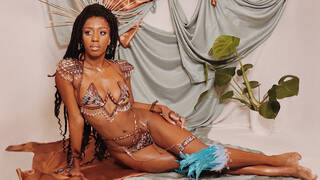 Making a Notting Hill carnival costume
Watch the making of a bespoke butterfly wire-bra carnival costume
Collection highlights
-
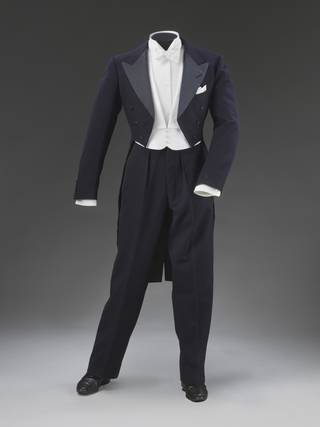 Shall We Dance, film costume worn by Fred Astaire, made by Anderson & Sheppard Ltd, 1936, UKV&A South Kensington
 -
 Music-hall costume worn by May Moore Duprez, about 1910, EnglandV&A East Storehouse
 -
 Costume for 'Prince's Mother' in Swan Lake designed by Alexandre Golovine for the Bolshoi, Moscow, 1901V&A East Storehouse
 -
 Headdress, theatre costume worn by Ram Gopal, maker unknown, mid-20th century, UKV&A East Storehouse
 -
 Costume for The Chinese Conjurer in Massine's ballet 'Parade', designed by Pablo Picasso, 1917V&A South Kensington
 -
 Theatre costume from 'The Lion King', designed by Julie Taymor, 1994, USV&A South Kensington
 -
 Brexit Dress, pantomime costume, designed by Lotte Collett, 2016, UKV&A South Kensington
 -
 Lady in the Dark, film costume, designed by Edith Head, 1944, Hollywood, USV&A East Storehouse
 -
 Hat worn by Idina Menzel as Elphaba in the original 2003 New York production of Wicked, by Rodney Gordon, 2003, New York, USV&A South Kensington
 -
 Dame Edna's Breakfast Dress, costume, designed by Stephen Adnitt, 1997, London, EnglandV&A South Kensington
 -
 Jumpsuit worn by Mick Jagger, costume, designed by Ossie Clark, 1972, Great Britain
 -
 Rear view, 'Bicycle John', rock and pop costume worn by Sir Elton John, designed by Bill Whitten, about 1974, UKV&A South Kensington
 -
 Design for the costume of Le Buffoon in the ballet 'Chout', by Mikhail Larionov, 1915, Lausanne, SwitzerlandV&A South Kensington
 -
 Costume design for 'Le Coq d'Or', by Natalia Goncharova, about 1914V&A South Kensington
 -
 Black satin floral patterned shoes worn by Prince, costume, about 1994, USA
 -
 Theatre costume, designed by Philip Prowse, made by Bonn & Mackenzie, 1981, London, EnglandV&A East Storehouse
 -
 Film prop and costume from 'The Bride of Frankenstein', designed by Vera West for Universal Pictures, 1935, USYoung V&A
Experience more as a V&A Member today
Treat yourself or a lucky recipient to the gift of Membership
- Unlimited free entry to all exhibitions
- Exclusive access to two Member spaces
- 10% discount in all V&A Shops
- Members-only previews and events

