Explore the Collections
Search more than 1.3 million objects
Most searched for
Here are our most searched-for objects and themes
-
 Colour screenprint poster advertising bands performing at the UFO Club, London, designed by Michael English, published by Osiris Visions Ltd, 1967, UKV&A South Kensington
 -
 Colour lithograph poster advertising the Nord Express train from Paris to Riga, by Adolphe Mouron Cassandre, 1927, FranceV&A South Kensington
 -
 Colour lithograph poster for the Underground Electric Railways Co. of London, Ltd., by Edward McKnight Kauffer, issued by Underground Electric Railways Co. of London, Ltd., 1930, London, EnglandV&A South Kensington
 -
 Colour lithograph poster for East Coast Resorts by L.N.E.R., by Tom Purvis, about 1925, UKV&A East Storehouse
 -
 Colour lithograph poster advertising La Loïe Fuller at the Folies-Bergère, by Jules Chéret, printed by Imprimerie Chaix, Ateliers Cherét, 1893, Paris, France
 -
 Down with US imperialism, Down with Soviet revisionism, screenprint, by students from Xian University, 1967, ChinaV&A South Kensington
 -
 Jane Avril au Jardin de Paris, lithograph poster, by Henri de Toulouse-Lautrec, 1893, Paris, FranceV&A South Kensington
 -
 On vous intoxique!, screenprint, by Atelier Populaire, 1968, Paris, FranceV&A South Kensington
 -
 Lithograph poster for Tropon powdered eggs, by Henry van de Velde, 1898, BelgiumV&A South Kensington
 -
 Keep Smiling. Guinness Is Good For You, lithograph poster, by John Gilroy, about 1939 – 45, UKV&A East Storehouse
 -
 Lithograph poster for the Berlin Zoologischer Garten, by Julius Klinger Germany, published by Hollerbaum & Schmidt, 1910, Berlin, GermanyV&A South Kensington
 -
 Men who mean business read the Financial Times every day, lithograph poster, designed by Abram Games, 1952, UKV&A South Kensington
 -
 Job, poster, by Alphonse Mucha, 1898
-
 Maharaja Ranjit Singh's throne, throne chair, made by Hafiz Muhammad Multani, 1805 – 10, LahoreV&A South Kensington
 -
 Cassone chest, about 1488, Mantua, ItalyV&A South Kensington
 -
 Screen, designed by Eileen Gray, 1923, Paris, FranceV&A South Kensington
 -
 Materialized Sketch, 3D-printed chair, designed by Front Design, printed by Alphaform, 2005, Stockholm, SwedenV&A South Kensington
 -
 The Yatman Cabinet, designed by William Burges, painted by Edward John Poynter, made by Harland and Fisher, 1858, London, EnglandV&A South Kensington
 -
 ESU 421-C, storage unit, designed by Charles & Ray Eames for Herman Miller Furniture Co., 1949 – 50, US
 -
 Chiswick table, console table, designed by William Kent, made by John Boson, 1727 – 32, London, EnglandV&A South Kensington
 -
 The Great Bed of Ware, designed by Hans Vredeman de Vries, 1590 – 1600, Ware, EnglandV&A South Kensington
 -
 Garden Egg Chair, designed by Peter Ghyczy, manufactured by Elastogran GmbH, 1968, Lemförde, GermanyV&A South Kensington
 -
 Medal cabinet, designed by Charles Percier, made by Martin Guillaume Biennais, about 1810, Paris, FranceV&A South Kensington
 -
 (Back) Bell cittern, by Joachim Thielke, about 1700, Hamburg, GermanyV&A South Kensington
-
 'Self Evident', C-type print, by Ingrid Pollard, 1995, printed 2013, Brighton, EnglandV&A South Kensington
 -
 'The Garden II', chromogenic print, by Siân Davey, 2021V&A South Kensington
 -
 Lace, salted paper print, by William Henry Fox Talbot, early 1840s, BritainV&A South Kensington
 -
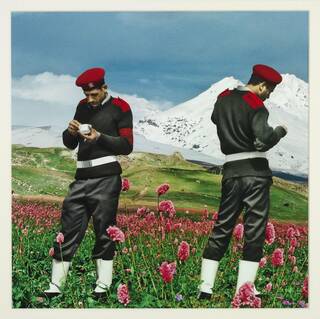 'The Break', Nermine Hammam, inkjet print, 2011V&A East Storehouse
 -
 'Disconnected', inkjet print, by Marvel Harris, 2018, the NetherlandsV&A South Kensington
 -
 'The Angel at the Tomb', photograph, by Julia Margaret Cameron, 1870, Isle of Wight, EnglandV&A South Kensington
 -
 'View of the Raphael Cartoons Galleries at the South Kensington Museum', albumen print, by Isabel Agnes Cowper, about 1873V&A South Kensington
 -
 'Lily Cole and Giant Camera', inkjet print, by Tim Walker, 2004. Museum no. E.1140-2008V&A South Kensington
 -
 'Boys smoking, Portland Road, April 15 1956', gelatin silver print, by Roger Mayne, 1956, London, EnglandV&A South Kensington
 -
 'Tree Peony' from Some Japanese Flowers Vol. I, collotype with lithographic overprinting in colour, by Kazumasa Ogawa, 1894, JapanV&A South Kensington
 -
 'Columbia and Western #3', from the series 'Westward, the Course of Empire', by Mark Ruwedel, 1999V&A South Kensington
 -
 'The Earring', photograph, by Madame Yevonde, about 1936, UK
-
 Hat, designed by Simone Mirman, about 1955, London, EnglandV&A East Storehouse
 -
 Evening dress, designed by Cristóbal Balenciaga, 1954, Paris, FranceV&A East Storehouse
 -
 Man's suit, designed by Mr Fish, manufactured by Hexter, about 1968, London, EnglandV&A South Kensington
 -
 Pair of shoes, 1550 – 1070 BC, EgyptV&A East Storehouse
 -
 Mantua, 1755 – 60, EnglandV&A East Storehouse
 -
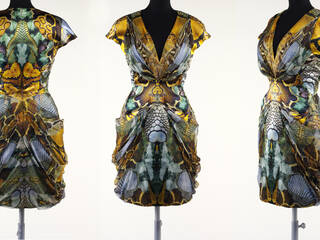
 Plato's Atlantis, dress, designed by Alexander McQueen, 2010, London, EnglandV&A South Kensington
 -
 Man's ensemble, designed by Stella Jean, Spring/Summer 2014, Italy and Burkina Faso. Museum no. T.21:1 to 5-2014.V&A South Kensington
-
 Banner, 600 – 900 AD, Dunhuang, China, pattern and plain woven silk, wood and paintV&A East Storehouse
 -
 Cravat, jumper, designed by Elsa Schiaparelli, 1927, France.V&A South Kensington
 -
 The Bullerswood Carpet, designed by William Morris and John Henry Dearle, 1889, London, EnglandV&A South Kensington
 -
 Animals by the Watering Hole, tapestry, by 'Ali Salim, 1985, EgyptV&A East Storehouse
 -
 Embroidered casket, made by Martha Edlin, 1671, EnglandV&A South Kensington
 -
 Ensemble, unknown, early 19th century, IndiaV&A East Storehouse
-
 Oil & Water Do Not Mix, poster, screen print with oil, designed by Anthony Burrill, made for Happiness Brussels, 2010, UKV&A South Kensington
 -
 Printed playing cards, woodcut with stencil, by Gilles Savouré, 1490 – 1500, Lyons, FranceV&A South Kensington
 -
 The Last Supper, from the Large Passion series, print, woodcut on paper, by Albrecht Dürer, 1510, Nuremberg, GermanyV&A South Kensington
 -
 Jack Sheppard!, poster, printed by S.G. Fairbrother and Son, 1839, London, EnglandV&A East Storehouse
 -
 Würzburg Missal (Missale Herbipolense) manuscript, printed by Georg Reyser, about 1484, Würzburg, GermanyV&A South Kensington
 -
 Cyber Dada Manifesto, photocopy, by Troy Innocent and Dale Nason, 1990, Melbourne, AustraliaV&A South Kensington
 -
 (Detail) The Iolanthe wallpaper, woodblock print, designed by Charles Voysey, manufactured by Essex & Co., about 1897, EnglandV&A South Kensington
 -
 The Great Wave, woodblock print, by Katsushika Hokusai, about 1831, Japan
 -
 Elektronischer Einstein, lithographic print, Herbert W Franke, 1972, GermanyV&A South Kensington
 -
 The Royall Oake of Brittayne, engraving, 1649, EnglandV&A South Kensington
 -
 Marilyn Monroe, screenprint, by Andy Warhol, printed by Aetna Silkscreen Products Inc./ Du-Art Displays, published by Factory Additions, 1967, New York, USV&A South Kensington
 -
 Seaside Excursions: Southend, poster, lithograph, designed by Frederick Charles Herrick, printed by Baynard Press, 1925, EnglandV&A South Kensington
 -
 The Three Trees, etching, by Rembrandt van Rijn, 1643, the NetherlandsV&A South Kensington
 -
 Mister Tambourine Man, poster, screen print, designed by Martin Sharp, 1967, UKV&A South Kensington
Trending
Halloween
It’s spooky season at the V&A – prepare for tricks and treats from a frightening cast of ghosts, vampires, skeletons and witches from the V&A collections.

-
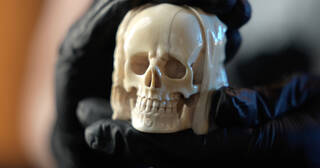
Creepy or beautiful? Unboxing memento mori skull jewellery
Explore the symbolism within tiny keepsakes 'memento mori'
-
 A brief history of ghosts and spirit photography
Find out about the Victorian obsession with seances, spiritualism and capturing ghosts
-

Fashion unpicked: the Skeleton dress by Elsa Schiaparelli
Get closer to Schiaparelli's famously surreal evening dress, designed with Salvador Dali
-
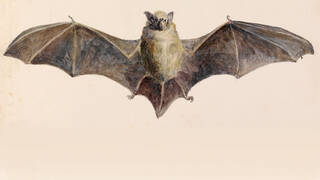 A brief history of vampires – in print, photography and posters
Discover, if you dare, how Count Dracula haunts the V&A's collections
-
 500 years of witches in art and design
Grab your broom and join us for a spellbinding journey through art and design history
-
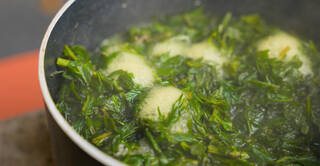
How nettle and mugwort become ink | Witchcraft, folklore, foraging and printmaking
Weeds, witchcraft and folklore combine as nettles and mugwort are brewed into natural printing ink
-
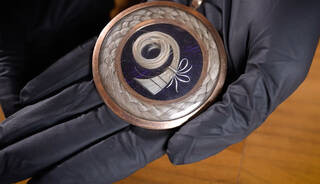
Unboxing Victorian mourning: dress, human hair jewellery and postmortem photos
Discover how grief, love, and art intertwined during the 19th century
Browse by theme
Discover the people, techniques, eras and places represented in our museums


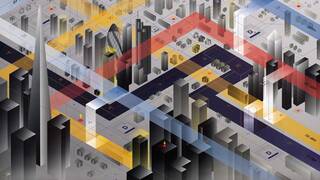


-

Mary Quant
-

Garry Fabian Miller
-

Thomas Ruff
-

Linnaeus Tripe
-

Grinling Gibbons
-

Lee Miller
-

Julia Margaret Cameron
-

Beatrix Potter
-

Elsa Schiaparelli
-

Ilse Bing
-

William Morris
-

Harry Hammond
-

William Henry Fox Talbot
-

Vivienne Westwood
-
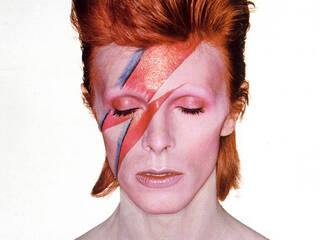
David Bowie
-

Frederick Hollyer
-

Antonio Canova
-

Horst P. Horst
-

William De Morgan
-

Paul Strand
-
.jpg)
Benjamin Brecknell Turner
-
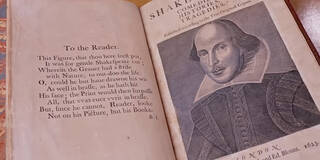
William Shakespeare
-

Diaghilev and the Ballets Russes
-
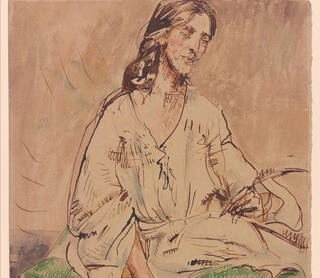
Edna Clarke Hall
-

Lucienne Day
-

Auguste Rodin
-

Wedgwood
-

Nicholas Hilliard
-

Alexander McQueen
-

Curtis Moffat
-

Cristóbal Balenciaga
-

John Constable
-

Bill Brandt
-
Eileen Agar
-

Cecil Beaton
-

Valérie Belin
-

Eileen Gray
-

Opera
-

Books
-

The V&A Story
-

Paintings
-

The Raphael Cartoons
-

Underwear
-

Furniture
-

Jewellery
-

Gender & sexuality
-
Provenance Research: How have objects come to be in the V&A?
-

The Stein Collection
-
Circus
-

Architecture
-

Shoes
-

Fashion in Motion
-

Frames
-

Embroidery
-

The Glastonbury Festival Archive
-

Tiles
-
Ballet
-

Costume
-
Fashion
-

Rapid Response Collecting
-

Artists and the Book
-

Theatre & Performance
-

Glasses
-

Digital Art & Design
-

Manuscripts
-

Post-war design
-

Hats
-

Photography
-

Music hall
-
Comics and graphic novels
-

Wallpaper
-

Wedding dress




In our venues
See the collections in person. For some objects not on display you can view by appointment. Our collections include the National Art Library and the V&A Archives.
-
 Tippoo's Tiger, mechanical organ, about 1793, Mysore, IndiaV&A South Kensington
 -
 (Detail) Trajan's column, plaster cast, by Monsieur Oudry, about 1864, Paris, FranceV&A South Kensington
 -
The Great Bed of Ware, designed by Hans Vredeman de Vries, 1590 – 1600, Ware, EnglandV&A South Kensington
-
 3D-printed Extinction Rebellion logotype woodblockV&A East Museum
 -
 Progress Pride flag, designed by Daniel Quasar, manufactured by Custom Flag Company Inc., 2020, WestminsterV&A South Kensington
 -
 (Detail) Pérou evening ensemble, designed by Christian Dior, by Bodin Brossin, 1954, Paris, FranceV&A East Storehouse
 -
 Costumes for 'Le Train Bleu', designed by Coco Chanel, 1924
-
 'Variations on a Geometric Theme' plate, designed by Eduardo Paolozzi, manufactured by Josiah Wedgwood and sons, about 1970, Barlaston, Stoke-on-Trent, England
 -
 Portland Vase, by Josiah Wedgwood and Sons, 1793, Etruria, Stoke-on-Trent, Staffordshire, EnglandV&A Wedgwood Collection
 -
 Wedgwood family portrait, oil painting, by George Stubbs, 1780, EnglandV&A Wedgwood Collection
 -
 Lessore Vase, painted by Emile Aubert Lessore, made by Josiah Wedgwood and Sons, about 1863, EnglandV&A Wedgwood Collection
 -
 Anti-slavery medallion, by Josiah Wedgwood and sons, about 1787, Etruria, Stoke-on-Trent, EnglandV&A Wedgwood Collection
 -
 Teapot moulded in the shape of a cauliflower, by Josiah Wedgwood and sons, 1765, Stoke-on-Trent, EnglandV&A Wedgwood Collection
 -
 Jasperware trials mounted on a wooden tray, by Josiah Wedgwood and sons, 1773 – 76, Stoke-on-Trent, EnglandV&A Wedgwood Collection
 -
 Teapot, designed by Douglas Baillie Hamilton Cochrane, manufactured by Josiah Wedgwood and Sons, 1906V&A Wedgwood Collection
 -
 Detail of 'Fairyland Lustre' bowl, by Josiah Wedgwood and sons, about 1923, Etruria, Stoke-on-Trent, EnglandV&A Wedgwood Collection
-
 Place (Village), installation, by Rachel Whiteread, about 1995 – 2015, LondonYoung V&A
 -
 Planetarium, installation, by Tristan Blondeau, 2023, Paris, FranceYoung V&A
 -
 The Self-Portrait, print, by Quentin Blake, 2010, UKYoung V&A
 -
 Bettiscombe, dolls' house, about 1870, EnglandYoung V&A
 -
 Pikachu, soft toy, manufactured by Deutshe Toy GMBH, 1995 – 99, Munich, GermanyYoung V&A
 -
 'Hero Arm', Open Bionics, 3D printed bionic arm for a child, Bristol, EnglandYoung V&A
 -
 Amstrad CPC 464 Computer, manufactured by Amstrad, 1984, EnglandYoung V&A
 -
 Devdas, film hoarding, by Balkrishna Arts, 2002, London, EnglandYoung V&A
 -
 Death Star, designed by Bjarke Lykke Madsen, designed by Bas Brederode, manufactured by The LEGO Group, 2011 – 12, DenmarkYoung V&A
-
 Cut, Slash & Pull, ensemble, by Vivienne Westwood, 1990, EnglandV&A East Museum
 -
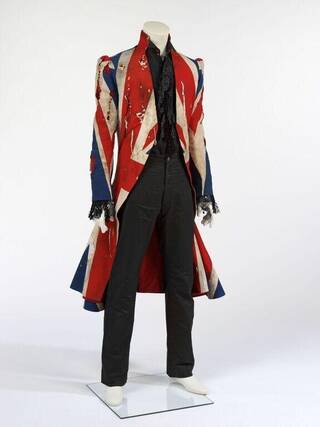 Costume, designed by Alexander McQueen, designed by Bowie, David, 1996, Great BritainV&A East Storehouse
 -
 Powder bowl, made by Halex Ltd, 1930 – 39, Walthamstow, London, EnglandV&A East Storehouse
 -
 Hackney Lesbian Strength and Gay Pride 1993, t-shirt, maker unknown, 1993, EnglandV&A East Storehouse
 -
 Tracksuit showing scenes from the 2011 East London riots, by SIBLING, 2012, London, EnglandV&A East Storehouse
 -
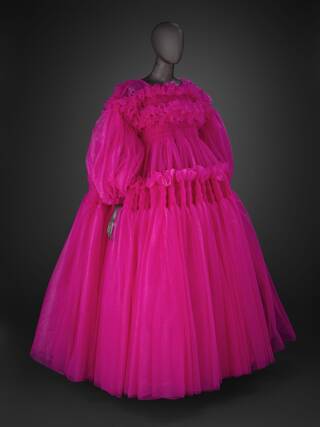 Daria dress, by Molly Goddard, 2019, LondonV&A East Museum
 -
 Reunion VI: Underneath the Surface, terracotta sculpture, by Bisila Noha, 2022, London, EnglandV&A East Museum
 -
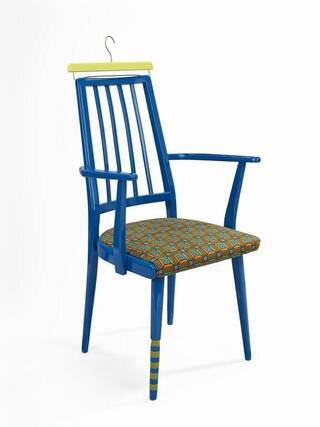 Captain hook chair frame, by Yinka IloriV&A East Museum
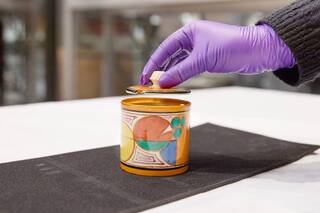


Order an Object
Get closer to the objects within our stores.
- Choose an object to view
- Decide when to view it
- Visit your object for free