Interview with Tapfuma Gutsa, artist

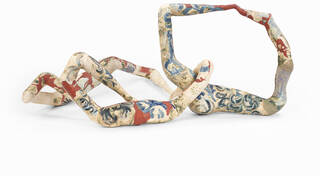
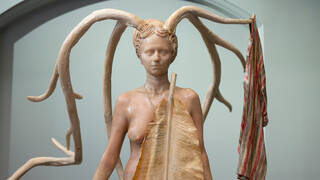
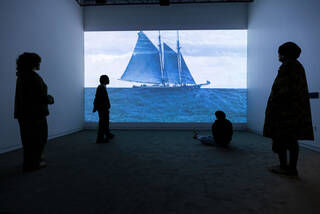
Tribute to Sango, Tapfuma Gutsa, 2005, Zimbabwe/Austria

Tribute to Sango, Tapfuma Gutsa, 2005, Zimbabwe/Austria

Tapfuma Gutsa (b. 1956, Zimbabwe) was one of 11  artists featured in the exhibition Uncomfortable Truths: The Shadow of Slave Trading on Contemporary Art which was held in 2007 to commemorate the bi-centenary of the pariamentary abolition of the British slave trade. He sculpts using dynamic combinations of organic materials - from the more traditional media of carved stone and wood to the unconventional shaping of paper, string, drawing pins and gourds. His methods have revolutionised Zimbabwean art practice. He lives and works in Vienna, Austria. Two of his works, 'Ancient Voyages' and 'Tribute to Sango' are on display as part of Uncomfortable Truths. In this interview he talks about his work and the Uncomfortable Truths exhibition.
What for you is the appeal - or necessity - of addressing slavery in your work?

I would address slavery because it has been part of human history forever, even to the present day. That of Africans is the most glaring example of slavery in history, but there are other more subtle forms that have existed, for example as described by [John] Berger in 'The Seventh Man'. I therefore think it is a universal aberration of human freedom at the hands of humans and wish to see it stop. However it is an issue that will not go away just like that, as it is tied to economics (to the point of trafficking in humans).

Can you talk visitors to our website through the creative process that led the work on display in the exhibition to take the shape it has done?

I made Sango in Zimbabwe and was trying to work granite without the folly of trying to dominate the stern material, hence the delicate balance meant to lend the piece a feeling of lightness.

My 'Voyage' piece was made in Vienna. I wanted something portable considering the uncertainty of my situation in an awkward space where one is forced to affirm one's rights to be...  I note the irony of the fact that I came voluntarily to Europe on a personal voyage.

How do you feel that the environment of the museum impacts on the perception of your piece(s)?

The museum is appropriate because it contains objects that come from all over the world, some obtained by unorthodox means. Cultures tend to discard obsolete material, and therefore museums are valuable databanks where one is likely to find authentic materials objectively displayed without shame of politics.

A gift in your will

You may not have thought of including a gift to a museum in your will, but the V&A is a charity and legacies form an important source of funding for our work. It is not just the great collectors and the wealthy who leave legacies to the V&A. Legacies of all sizes, large and small, make a real difference to what we can do and your support can help ensure that future generations enjoy the V&A as much as you have.

More

Shop online

Artistic Circles: Design and Decoration in the Aesthetic Movement

Artistic Circles: Design and Decoration in the Aesthetic Movement

Artists' houses and their gardens formed a distinct and influential strand in Victorian architecture and decoration, eliciting public interest and cov…

Buy now

Event - Michelangelo: His Epic Life

Mon 11 November 2013 19:00

Join Martin Gayford, chief European art critic for Bloomberg, as he discusses his latest publication, Michelangelo: His Epic Life.

Book online