Embroidery
Features

-

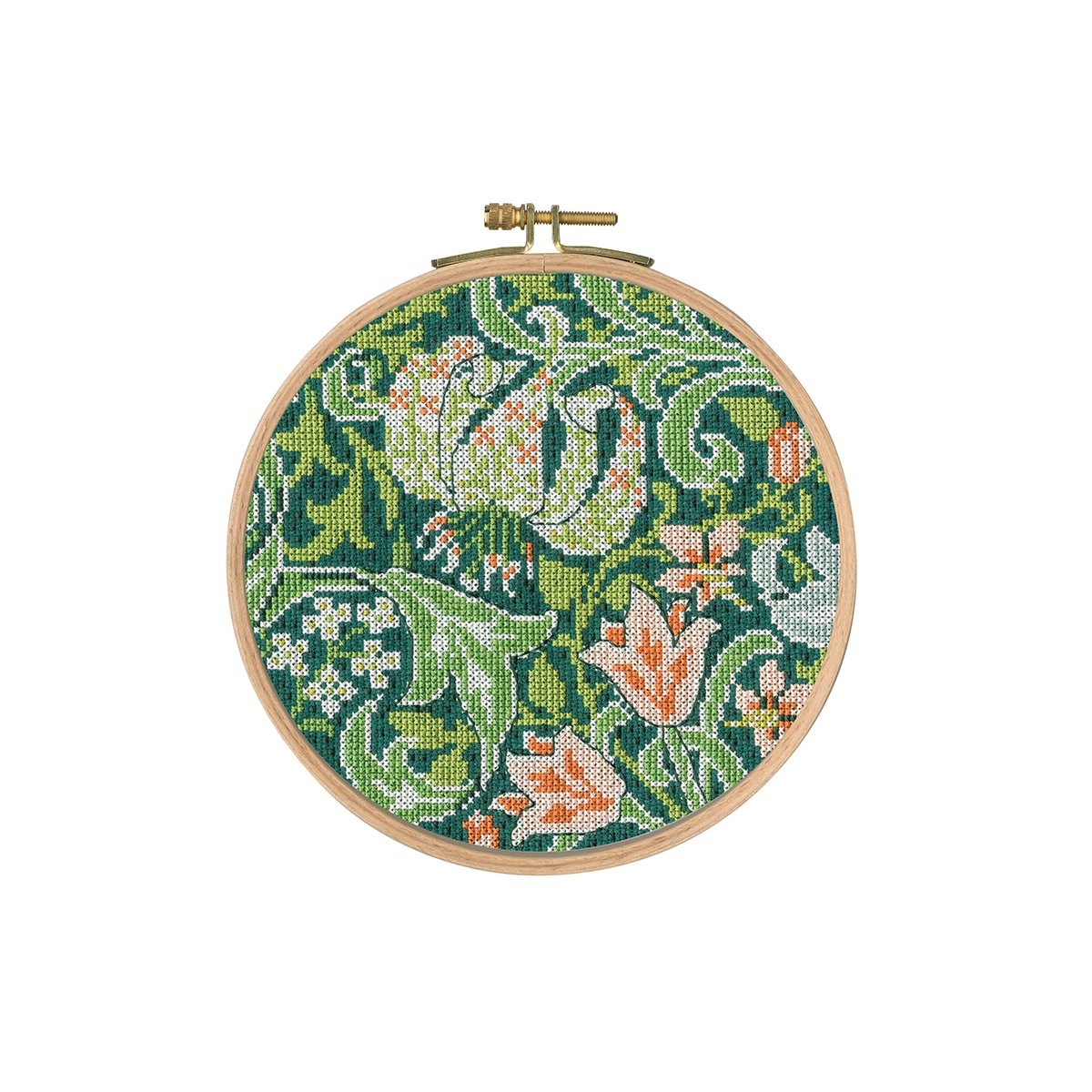
Make your own: Mexican-inspired embroidery
Try your hand at some Mexican-inspired embroidery motifs with these free, downloadable patterns
-

Martha Edlin's Casket
This exquisite example of 17th-century English embroidery was worked by a young girl aged just 11
-
 Tatreez: the ancient art of Palestinian embroidery
Discover six incredible examples of embroidered Palestinian fashion.
-
 The prison embroideries of Mary, Queen of Scots
For Elizabeth I's most famous political rival, needlework was both a pastime and a means of resistance
-

The making of medieval embroidery
See the traditional embroidery techniques used to create masterpieces of opus anglicanum
-

Mexican embroidery
Discover stunning examples of Mexican embroidery from the V&A's textile collection
-

Indian embroidery
From plain cotton to iridescent beetle-wing embellishments, explore diverse forms of traditional Indian embroidery
-

Make your own: embroidered zipped pouch
Make your own embroidered zipped pouch, ideal for carrying cards, coins or makeup, with this free pattern
-

Balenciaga's sequinned evening coat
Recreating the beautiful hot-pink beading and sequin work of Balenciaga's 1967 evening coat.
-

The Steeple Aston Cope
Discover how the fabric of this English medieval embroidery has been altered, ensuring its survival over centuries
-

The Syon Cope
Explore the beautiful imagery of the Syon Cope, embroidered in coloured silk and silver threads
-

The Tree of Jesse Cope
Explore the richly-worked imagery and intricate design of the Tree of Jesse Cope
-

Medieval mythologies
Peering out from the stitched designs of English medieval embroideries are lifelike animals, alongside fantastical creatures drawn from mythology and the imagination.
-

Embroidery – a history of needlework samplers
What do 'practice pieces' tell us about the changing nature of embroidery over time?
-

An A–Z of Opus Anglicanum
Do you know your cope from your chasuble, your split stitch from your satin stitch?
-

The Butler-Bowdon Cope
Take a closer look at the elaborate iconography of the Butler-Bowdon Cope
-

Katerina Jebb / Elizabeth Parker installation
Explore Katerina Jebb's photomontage of Elizabeth Parker's sad yet subversive 19th century embroidered sampler
-
Blending modern technology with traditional Uzbek embroidery
Meet visual artist Aziza Kadyri, who is bringing together traditional Uzbek suzani embroidery and artificial intelligence.
Collection highlights
-
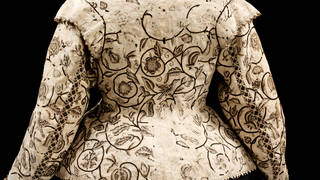
 (Back) Waistcoat, 1620 – 25, EnglandV&A East Storehouse
 -
 (Detail) The Flowers of the Fields of France, evening dress, designed by Norman Hartnell, 1957, London, EnglandV&A East Storehouse
 -
 Armchair, about 1725 – 35, FranceV&A East Storehouse
 -
 (Detail) Hanging, about 1700, Gujarat, IndiaV&A East Storehouse
 -
 Child's shoe, about 1873, Shache, ChinaV&A East Storehouse
 -
 Evening outfit, designed by Cristóbal Balenciaga, made by Lesage, 1967, Paris, FranceV&A East Storehouse
 -
 (Detail) The Butler Bowdon Cope, 1330 – 45, EnglandV&A South Kensington
 -
 Pair of shoes, unknown, 1730 – 40, BritainV&A East Storehouse
 -
 (Detail) Pérou evening ensemble, designed by Christian Dior, by Bodin Brossin, 1954, Paris, FranceV&A East Storehouse
 -
 (Detail) Jacket, 1915, Jinan, China
 -
 Portrait of Charles I, by Wenceslaus Hollar, 1625 – 50, EnglandV&A East Storehouse
 -
 Embroidered casket, made by Martha Edlin, 1671, EnglandV&A South Kensington
Join a V&A Academy experience
Explore our curated range of expert-led courses, workshops, and talks, all with the V&A collections at their core.
- Expert led courses
- Practical workshops
- Lectures & talks
- Professional development