Explore the Collections
Search more than 1.3 million objects
Most searched for
Here are our most searched-for objects and themes
-
 Hans Himmelheber, Masked Figure and Men, DRC, Pende Region, 1939, Scan of a Chalcopyrite from the Kipushi Mine, and Reflection in Mirror, photograph, by Sammy BalojiV&A South Kensington
 -
 Sande mask, unknown maker, 1900 – 40, Sierra LeoneV&A South Kensington
 -
 Souvenir 4 (Princess Alexandra), bust, by Hew Locke, 2019, EnglandV&A South Kensington
 -
 'Tomee', textile design, designed by Althea McNish, made for Danasco Fabrics Ltd, 1961, BritainV&A South Kensington
 -
 Sparkle Vase, by Ndidi Ekubia, 2012, London, UKV&A South Kensington
 -
 Inlay, unknown maker, 305 BC – 30 BC, EgyptV&A South Kensington
 -
 Oku, dress, designed by Frank Aghuno for Fruché, 2020, LagosV&A East Storehouse
 -
 Spirit of the Carnival, print, by Joseph Tam, 1988, UK Spirit of the Carnival, print, by Tam Joseph, 1988, Great BritainV&A East Museum
 -
 'What Chu Lookin at Ho?, Before', print, by Khaleb Brooks, 2020, UKV&A South Kensington
 -
 'Mofolo South, Soweto', photograph, by David Goldblatt, 09/1972, South AfricaV&A South Kensington
 -
 Guinea and Cape Verde Solidarity / 3 August, poster, by Berta Abelenda, published by the Organisation in Solidarity with the people of Africa, Asia and Latin America (OSPAAAL), about 1974, CubaV&A East Museum
 -
 'I Can't Breathe', poster, designed by Greg Bunbury, printed by Metro Imaging, 2014, London, UKV&A South Kensington
 -
 Portrait of Melissa Thompson, painting, by Kehinde Wiley, 2020V&A East Museum
-
 Kaftan, about 1590, Bursa, TurkeyV&A East Storehouse
 -
 Mamluk minbar, 1468 – 96, Cairo, EgyptV&A South Kensington
 -
 (Detail) 22,500, composition, by Hadieh Shafie, 2011, Baltimore, US
 -
 The Luck of Edenhall, beaker and case, 14th century, Middle EastV&A South Kensington
 -
 (Detail) The Ardabil Carpet, 1539 – 40, IranV&A South Kensington
 -
 Ewer, 1000 – 50, EgyptV&A South Kensington
 -
 Pyxis, about 969 – 970, Madinat al-Zahra, SpainV&A South Kensington
 -
.jpg) (Detail) Tile panel, 17th century, Isfahan, IranV&A South Kensington
(Detail) Tile panel, 17th century, Isfahan, IranV&A South Kensington -
 Animals by the Watering Hole, tapestry, by 'Ali Salim, 1985, EgyptV&A East Storehouse
-
 'Self Evident', C-type print, by Ingrid Pollard, 1995, printed 2013, Brighton, EnglandV&A South Kensington
 -
 'The Garden II', chromogenic print, by Siân Davey, 2021V&A South Kensington
 -
 Lace, salted paper print, by William Henry Fox Talbot, early 1840s, BritainV&A South Kensington
 -
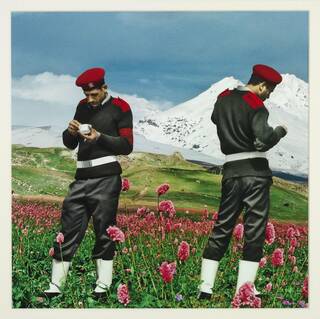 'The Break', Nermine Hammam, inkjet print, 2011V&A East Storehouse
 -
 'Disconnected', inkjet print, by Marvel Harris, 2018, the NetherlandsV&A South Kensington
 -
 'The Angel at the Tomb', photograph, by Julia Margaret Cameron, 1870, Isle of Wight, EnglandV&A South Kensington
 -
 'View of the Raphael Cartoons Galleries at the South Kensington Museum', albumen print, by Isabel Agnes Cowper, about 1873V&A South Kensington
 -
 'Lily Cole and Giant Camera', inkjet print, by Tim Walker, 2004. Museum no. E.1140-2008V&A South Kensington
 -
 'Boys smoking, Portland Road, April 15 1956', gelatin silver print, by Roger Mayne, 1956, London, EnglandV&A South Kensington
 -
 'Tree Peony' from Some Japanese Flowers Vol. I, collotype with lithographic overprinting in colour, by Kazumasa Ogawa, 1894, JapanV&A South Kensington
 -
 'Columbia and Western #3', from the series 'Westward, the Course of Empire', by Mark Ruwedel, 1999V&A South Kensington
 -
 'The Earring', photograph, by Madame Yevonde, about 1936, UK
-
 Hat, designed by Simone Mirman, about 1955, London, EnglandV&A East Storehouse
 -
 Evening dress, designed by Cristóbal Balenciaga, 1954, Paris, FranceV&A East Storehouse
 -
 Man's suit, designed by Mr Fish, manufactured by Hexter, about 1968, London, EnglandV&A South Kensington
 -
 Pair of shoes, 1550 – 1070 BC, EgyptV&A East Storehouse
 -
 Mantua, 1755 – 60, EnglandV&A East Storehouse
 -
 Plato's Atlantis, dress, designed by Alexander McQueen, 2010, London, EnglandV&A South Kensington
 -
 Man's ensemble, designed by Stella Jean, Spring/Summer 2014, Italy and Burkina Faso. Museum no. T.21:1 to 5-2014.V&A South Kensington
-
 Banner, 600 – 900 AD, Dunhuang, China, pattern and plain woven silk, wood and paintV&A East Storehouse
 -
 Cravat, jumper, designed by Elsa Schiaparelli, 1927, France.V&A South Kensington
 -
 The Bullerswood Carpet, designed by William Morris and John Henry Dearle, 1889, London, EnglandV&A South Kensington
 -
Animals by the Watering Hole, tapestry, by 'Ali Salim, 1985, EgyptV&A East Storehouse
-
 Embroidered casket, made by Martha Edlin, 1671, EnglandV&A South Kensington
 -
 Ensemble, unknown, early 19th century, IndiaV&A East Storehouse
-
 The Temptation in the Garden of Eden, oil painting, by Jan Brueghel the elder, about 1600, Antwerp, BelgiumV&A South Kensington
 -
 Disappointed Love, oil painting, by Francis Danby, 1821, EnglandV&A South Kensington
 -
 Altarpiece of St George, by Master of the Centenar, first quarter of the 15th century, Valencia, SpainV&A South Kensington
 -
.jpg) Virgin and Child, oil painting, by Carlo Crivelli, about 1480, ItalyV&A South Kensington
Virgin and Child, oil painting, by Carlo Crivelli, about 1480, ItalyV&A South Kensington -
 Signboard for the Omega Workshops, painting, by Duncan Grant for Omega Workshops, 1913, EnglandV&A East Museum
 -
.jpg) Portrait of a Lady known as Smeralda Bandinell, painting, painted by Sandro Botticelli, 1470 – 80, Florence, ItalyV&A South Kensington
Portrait of a Lady known as Smeralda Bandinell, painting, painted by Sandro Botticelli, 1470 – 80, Florence, ItalyV&A South Kensington -
 Self-Portrait as a Young Man, oil painting, by Jacopo Robusti Tintoretto, about 1548, Venice, ItalyV&A South Kensington
 -
 Vanitas Still Life, oil painting, by N.L. Peschier, 1659, NetherlandsV&A South Kensington
 -
 Portrait of Madame de Pompadour, oil painting, by Francois Boucher, 1758, Paris, FranceV&A South Kensington
 -
 The Painter's Two Daughters, oil painting, by Thomas Gainsborough, about 1758V&A South Kensington
 -
 A Sleeping Nymph Watched by a Shepherd, oil painting, by Angelica Kauffman, about 1780, London, EnglandV&A South Kensington
 -
Portrait of Melissa Thompson, painting, by Kehinde Wiley, 2020V&A East Museum
-
 Salisbury Cathedral from The Bishop`s Ground, oil painting, by John Constable, 1823, EnglandV&A South Kensington
 -
 Venice from the Giudecca, oil painting, by Joseph Mallord William Turner, 1840V&A South Kensington
 -
 St Cecilia and the Angels, oil painting, by Paul Delaroche, 1836, Paris, FranceV&A South Kensington
Trending
Black History Month
Featuring critically acclaimed musical talent to the Black models that changed fashion, iconic fabric designs to carnival costumes, and representation in the form of monumental sculptures, we're celebrating Global African creativity in all its forms.

-
 Africa fashion: cloth of a continent
Discover more about African cloth types through our collections
-
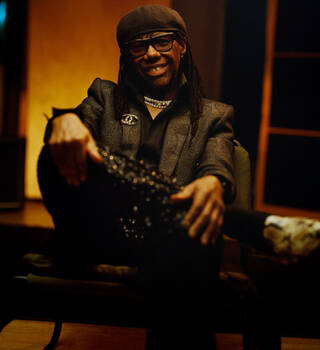 Let's Dance: How Nile Rodgers made David Bowie's demo a global smash hit
How Chic's Nile Rodgers made David Bowie's Let’s Dance one of the biggest songs of the 1980s
-
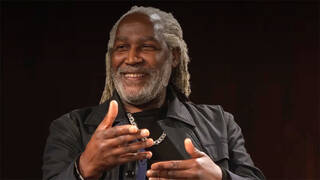 Three Objects: Norris 'da boss' Windross on the genesis and legacy of UK garage
In episode two of V&A podcast miniseries 'Three Objects', UK garage pioneer Norris 'da boss' Windross
-

Monumentalism, representation and materiality – Thomas J Price at the V&A
Price discusses how his work raises questions of representation, perception and power, prompting us to think about the nature of monuments: who is represented and why?
-

The story of The Supremes
Mary Wilson, co-founder of The Supremes, talks about her extraordinary career and the heyday of Motown
-
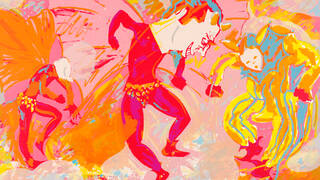 A V&A celebration of carnival in seven objects
Discover some carnival-flavoured highlights from our collection
-
 The groundbreaking Black models who changed fashion
Find out about the trailblazing women who paved the way
Browse by theme
Discover the people, techniques, eras and places represented in our museums





-
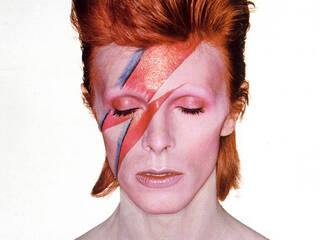
David Bowie
-
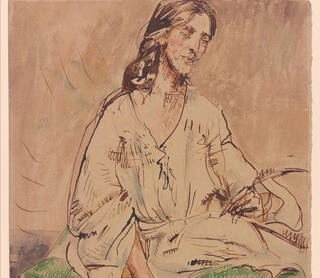
Edna Clarke Hall
-

Elsa Schiaparelli
-

Grinling Gibbons
-
.jpg)
Benjamin Brecknell Turner
-

William De Morgan
-

Diaghilev and the Ballets Russes
-

Beatrix Potter
-

Cristóbal Balenciaga
-

Garry Fabian Miller
-

Eileen Gray
-

Curtis Moffat
-

Bill Brandt
-

Horst P. Horst
-

Ilse Bing
-

William Morris
-

Lucienne Day
-

William Henry Fox Talbot
-
William Shakespeare
-

Auguste Rodin
-

Julia Margaret Cameron
-

Lee Miller
-

Thomas Ruff
-

Antonio Canova
-

Frederick Hollyer
-

Harry Hammond
-

Linnaeus Tripe
-
Eileen Agar
-

Alexander McQueen
-

Valérie Belin
-

Nicholas Hilliard
-

Paul Strand
-

Mary Quant
-

John Constable
-

Vivienne Westwood
-

Wedgwood
-

Cecil Beaton
-

Hats
-

Rapid Response Collecting
-

Architecture
-

Photography
-

Music hall
-

Tiles
-

Furniture
-

Gender & sexuality
-

Jewellery
-

Underwear
-

Fashion in Motion
-

Glasses
-

The V&A Story
-
Comics and graphic novels
-

The Stein Collection
-

Wallpaper
-

Books
-

The Glastonbury Festival Archive
-

Opera
-

Embroidery
-

Artists and the Book
-

Frames
-

Post-war design
-

Digital Art & Design
-

The Raphael Cartoons
-

Paintings
-
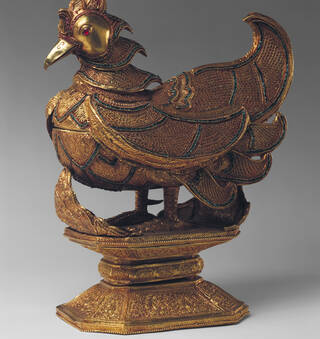
Provenance Research: How have objects come to be in the V&A?
-

Costume
-
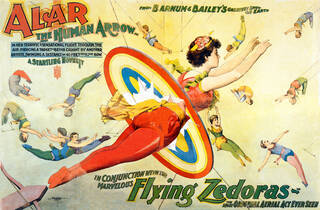
Circus
-
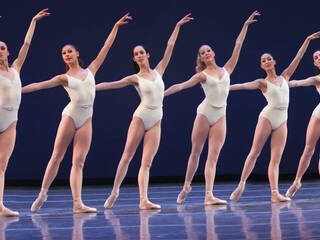
Ballet
-

Theatre & Performance
-
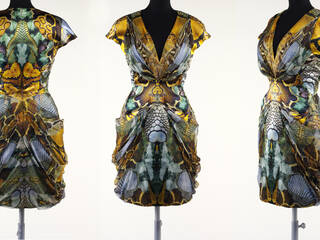
Fashion
-

Wedding dress
-

Manuscripts
-

Shoes






In our venues
See the collections in person. For some objects not on display you can view by appointment. Our collections include the National Art Library and the V&A Archives.
-
 Tippoo's Tiger, mechanical organ, about 1793, Mysore, IndiaV&A South Kensington
 -
 (Detail) Trajan's column, plaster cast, by Monsieur Oudry, about 1864, Paris, FranceV&A South Kensington
 -
 The Great Bed of Ware, designed by Hans Vredeman de Vries, 1590 – 1600, Ware, EnglandV&A South Kensington
 -
 3D-printed Extinction Rebellion logotype woodblockV&A East Museum
 -
 Progress Pride flag, designed by Daniel Quasar, manufactured by Custom Flag Company Inc., 2020, WestminsterV&A South Kensington
 -
 (Detail) Pérou evening ensemble, designed by Christian Dior, by Bodin Brossin, 1954, Paris, FranceV&A East Storehouse
 -
 Costumes for 'Le Train Bleu', designed by Coco Chanel, 1924
-
 'Variations on a Geometric Theme' plate, designed by Eduardo Paolozzi, manufactured by Josiah Wedgwood and sons, about 1970, Barlaston, Stoke-on-Trent, England
 -
 Portland Vase, by Josiah Wedgwood and Sons, 1793, Etruria, Stoke-on-Trent, Staffordshire, EnglandV&A Wedgwood Collection
 -
 Wedgwood family portrait, oil painting, by George Stubbs, 1780, EnglandV&A Wedgwood Collection
 -
 Lessore Vase, painted by Emile Aubert Lessore, made by Josiah Wedgwood and Sons, about 1863, EnglandV&A Wedgwood Collection
 -
 Anti-slavery medallion, by Josiah Wedgwood and sons, about 1787, Etruria, Stoke-on-Trent, EnglandV&A Wedgwood Collection
 -
 Teapot moulded in the shape of a cauliflower, by Josiah Wedgwood and sons, 1765, Stoke-on-Trent, EnglandV&A Wedgwood Collection
 -
 Jasperware trials mounted on a wooden tray, by Josiah Wedgwood and sons, 1773 – 76, Stoke-on-Trent, EnglandV&A Wedgwood Collection
 -
 Teapot, designed by Douglas Baillie Hamilton Cochrane, manufactured by Josiah Wedgwood and Sons, 1906V&A Wedgwood Collection
 -
 Detail of 'Fairyland Lustre' bowl, by Josiah Wedgwood and sons, about 1923, Etruria, Stoke-on-Trent, EnglandV&A Wedgwood Collection
-
 Place (Village), installation, by Rachel Whiteread, about 1995 – 2015, LondonYoung V&A
 -
 Planetarium, installation, by Tristan Blondeau, 2023, Paris, FranceYoung V&A
 -
 The Self-Portrait, print, by Quentin Blake, 2010, UKYoung V&A
 -
 Bettiscombe, dolls' house, about 1870, EnglandYoung V&A
 -
 Pikachu, soft toy, manufactured by Deutshe Toy GMBH, 1995 – 99, Munich, GermanyYoung V&A
 -
 'Hero Arm', Open Bionics, 3D printed bionic arm for a child, Bristol, EnglandYoung V&A
 -
 Amstrad CPC 464 Computer, manufactured by Amstrad, 1984, EnglandYoung V&A
 -
 Devdas, film hoarding, by Balkrishna Arts, 2002, London, EnglandYoung V&A
 -
 Death Star, designed by Bjarke Lykke Madsen, designed by Bas Brederode, manufactured by The LEGO Group, 2011 – 12, DenmarkYoung V&A
-
 Cut, Slash & Pull, ensemble, by Vivienne Westwood, 1990, EnglandV&A East Museum
 -
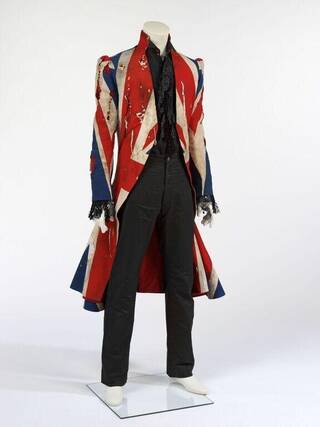 Costume, designed by Alexander McQueen, designed by Bowie, David, 1996, Great BritainV&A East Storehouse
 -
 Powder bowl, made by Halex Ltd, 1930 – 39, Walthamstow, London, EnglandV&A East Storehouse
 -
 Hackney Lesbian Strength and Gay Pride 1993, t-shirt, maker unknown, 1993, EnglandV&A East Storehouse
 -
 Tracksuit showing scenes from the 2011 East London riots, by SIBLING, 2012, London, EnglandV&A East Storehouse
 -
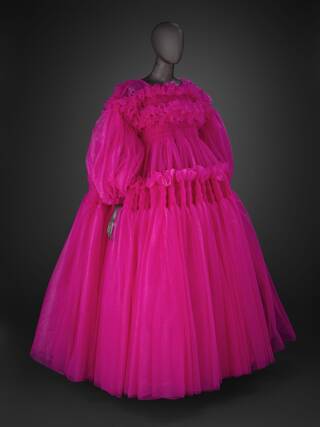 Daria dress, by Molly Goddard, 2019, LondonV&A East Museum
 -
 Reunion VI: Underneath the Surface, terracotta sculpture, by Bisila Noha, 2022, London, EnglandV&A East Museum
 -
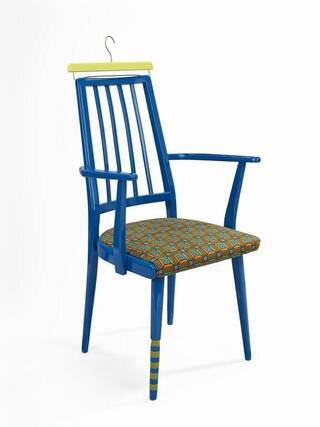 Captain hook chair frame, by Yinka IloriV&A East Museum
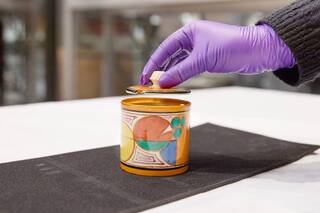


Order an Object
Get closer to the objects within our stores.
- Choose an object to view
- Decide when to view it
- Visit your object for free