Jewellery
Features

-
 A history of jewellery
Jewellery techniques and designs, illustrated with key pieces from our collection
-

Spotlight on the Jewellery collections
Discover personal highlights from the collection by four industry experts
-
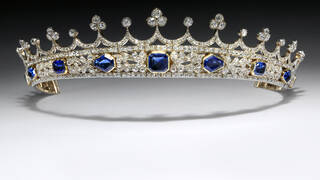 Queen Victoria's sapphire and diamond coronet
View the coronet on permanent public display in our Jewellery Galleries
-
 An A – Z of gemstones
Discover dazzling objects encrusted with gems – from amethyst to Whitby jet
-

Viren Bhagat: jewellery designer
Contemporary Indian jewellery designer Viren Bhagat discusses how his detailed paper concepts transform into the finished luxury piece
-
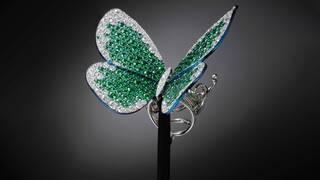 Beyoncé's fluttering butterfly ring
This exquisite 'papillon' ring was designed in 2014 by London-based master jeweller G (Glenn Spiro) for Beyoncé Knowles-Carter.
-

Visual Feast by Silvia Weidenbach
Jewellery designer and Gilbert Collection artist in residence Silvia Weidenbach talks about creating a Visual Feast for the V&A
-

Examining jewellery in detail
Jewellery experts examine three spectacular pieces from the Al Thani jewellery collection
-

Traditional Indian jewellery making
Craftsman in Mumbai and Jaipur demonstate how traditional kundan and enamelled jewellery is made
-

A musical Dior brooch
Much loved by its owner, what music does this beautiful brooch by Mitchel Maer for Christian Dior play?
-

Brooches for bridesmaids
A 19th century guide to gifts for bridesmaids
-

Gifts for groomsmen
Canes, stock pins or cufflinks – a groomsmen gift guide
-

How was it made? Diamond ring
See a diamond ring take shape
-

Poor Maria and the Bourbonnais Shepherd – when literature came into fashion
Find out how books have inspired jewellery
-

How was it made? Silver watch case
See how an 18th-century watch case is made
-
 How was it made? Cindy Chao's Peony Brooch
Find out how the dazzling piece was made
-
 The hidden power of gemstones: meanings, myths, and magic
Revealing the hidden meanings and magical attributes of gemstones
-

What makes CHANEL so iconic?
Explore the evolution of Gabrielle Chanel's design philosophy through her most enduring and recognisable pieces
-

Handling CHANEL jewellery: ASMR
Experience wearing the pieces yourself
-
 Shipwrecked treasure and ancient jewellery
Mudlarked, shipwrecked, buried treasure – discover treasures lost and found
-
 Unboxing some seriously sparkly Cartier jewels
Helen Molesworth, senior curator of Jewellery at the V&A, unboxes some incredible Cartier gems
-
 About the Cartier exhibition
Find out more about the blockbuster Cartier exhibition, featuring over 350 objects
-
 Exploring a glittering diamond Cartier brooch
Join V&A Jewellery curator Helen Molesworth as she examines a small but intensely sparkly Cartier diamond and platinum brooch
-
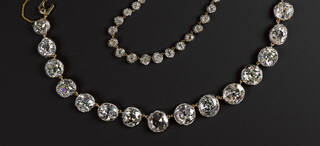
The necklace that ruined Marie Antoinette? Unboxing the Sutherland Diamonds
Collection highlights
-
 Brooch, designed by Barbara Paganin, 2011, ItalyV&A South Kensington
 -
 Hair ornament, designed by Philippe Wolfers, 1905 – 7, BelgiumV&A South Kensington
 -
 Necklace, designed by Santhi Wongchan, made by Niphon Yodkranpan, 2003, Bangkok, ThailandV&A South Kensington
 -
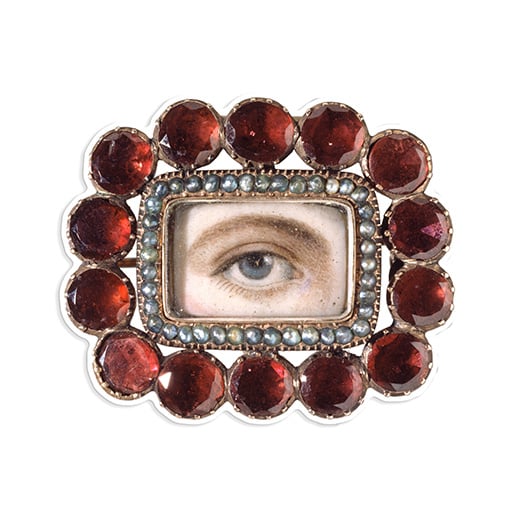
 Eye miniature, early 19th century, EnglandV&A South Kensington
 -
 Spray ornament, about 1850, EnglandV&A South Kensington
 -
 The Shannongrove Gorget, collar, 800 BC – 700 BC, IrelandV&A South Kensington
Experience more as a V&A Member today
Treat yourself or a lucky recipient to the gift of Membership
- Unlimited free entry to all exhibitions
- Exclusive access to two Member spaces
- 10% discount in all V&A Shops
- Members-only previews and events