
Theatre & Performance
Features

-

The story of theatre
As told through our fascinating collection
-

Design and make your own story
Create a story and bring it to life!
-

Paper peepshows
Take a peek into our peepshow collection
-

Handling Ian McKellen's Shakespeare costume
Find out about the importance of handling theatre costumes with care
-
 Conserving Sandie Shaw's Eurovision dress
See how Sandie Shaw's beaded Eurovision dress is conserved
-
 A history of puppets in Britain
Punch, Judy, Sooty, Sweep and a life-sized horse puppet called Joey, you'll find them all in our puppets collection...
-

An A–Z of musical theatre
From early ballad operas to today's West End blockbusters
-
 Conserving a PJ Harvey costume
Watch as the threads on PJ Harvey's costume are carefully untangled and arranged
-

The story of circus
Discover the history of circus and the acts that have entertained audiences over the last 250 years
-

"That's the way to do it!" A history of Punch & Judy
Discover the fascinating story of the perennial entertainer
-

The Harry Hammond photographic collection
The founding father of music photography
-

Conserving a clown costume
See the processes involved in conserving a sequinned clown costume
-

Modernist theatre in Britain between the Wars
The Modernist agenda is reflected in the pioneering political theatrical organisations that sprung up in the UK between the wars
-

The story of pantomime
The familiar trappings of the classic British panto owe much to the innovations of Victorian entrepreneurs, performers and designers
-
 The Rolling Stones tongue and lips logo
Discover the fascinating story about how a young RCA student was commissioned to produce one of the world's most iconic logos
-

Diaghilev and the Ballets Russes – an introduction
The productions of the Ballets Russes revolutionised early 20th-century arts and continue to influence cultural activity today
-

Conserving an Adzido Pan African Dance Costume
See how these raffia leg wraps were conserved
-

Tommy Cooper collection
The Tommy Cooper Collection celebrates the life and career of one of Britain’s best-loved comedy stars
-
 Shoes formerly worn by Prince
Shoes worn by the best-selling musical artist Prince have been acquired for the V&A's National Collection of Performing Arts
-

Wilton's Music Hall archive
Discover the chequered history of the world's oldest surviving Victorian music hall
-
 Conserving a prima ballerina's tutu - ASMR
Watch as Belinda Wright's tutu is humidified
-

Theatre posters – an illustrated history
Explore over 400 years of theatre poster design
-

Music hall and variety theatre
Charting its history from early song and supper rooms to West End music halls and the birth of the Royal Variety Performance
-

ASMR at the museum
Get closer to our objects than ever before
-

The story of The Supremes
Mary Wilson, co-founder of The Supremes, talks about her extraordinary career and the heyday of Motown
-
 The circus photography of John Hinde
The power of photography to create a "greatness and fullness of life"
-

Facing the music: Album covers from musical theatre
Explore the album artwork and songs from classic musicals from the 1960s to the 1990s
-

Costume design: SIX the Musical – Catherine of Aragon
Discover the secrets behind the costume
-
 Gabrielle Enthoven – collector of theatre and performance
Discover one woman's efforts to establish a theatre and performance collection at the V&A
-
 Design and make a musical from your favourite story
Re-think your favourite story for the stage
-

Costume conservation: My Fair Lady
From rags to riches, follow the transformation of an iconic piece of musical theatre history
-

Costume design: Moulin Rouge! The Musical – Satine's Sparkling Diamond costume
Go behind the scenes to see how Satine's dazzling costume was designed
-

Preparing a Bollywood poster for stretching: ASMR
Step inside the Painting Conservation Studio to see this enormous hand-painted poster be prepared for display
-
 Shakespeare's First Folio
Discover the secrets of a 400-year-old copy of Shakespeare's collected plays
-
 Diva playlist
Experience the greatest divas of all time, and add your own to our playlist
-
 Redefining the diva
From the rise of the operatic prima donna in the 16th century to today, we explore the reinvention, challenges and redefinition of the diva
-
 500 years of witches in art and design
Grab your broom and join us for a spellbinding journey through art and design history
-
 Packing objects for a new home: ASMR
How do you move over 250,000 museum objects from one side of London to the other?
-
 Musical theatre costume design: Everybody's Talking About Jamie
How do you create a character through costume?
-
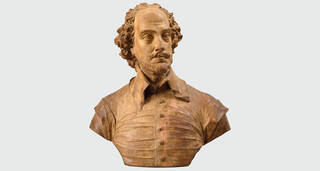 V&A trail: Shakespeare's magic
Explore the Britain Galleries through a Shakespearean lens looking anew at objects on display and discovering links to Shakespeare’s plays.
-
 French Windows – the psychedelic music video for Pink Floyd's One of These Days
A classic piece of experimental animation by award winning film director and a pioneering animator Ian Emes
Collection highlights
-
 Dance costume, Adzido Pan African Dance Company, 1999V&A South Kensington
 -
 Rolling Stones Hot Licks logo, artwork, designed by Jon Pasche, 1970, London, EnglandV&A South Kensington
 -
 Les Paul guitar, made by Gibson, 1960s, USV&A East Museum
 -
 Academy Award, designed by Cedric Gibbons, made by R.S. Owens, 1952, United StatesV&A South Kensington
 -
 Stage costume worn by Shirley Bassey, designed by Douglas Darnell, 1960s, EnglandV&A South Kensington
 -
 Eightpence a Mile: The New Stop Press Review, poster, designed by G.K. Benda, printed by David Allen & Sons, about 1913, London, EnglandV&A East Storehouse
 -
 Film costume from 'Star Wars', designed by John Mollo and Brian Muir, 1977 – 80, EnglandV&A South Kensington
 -
 Costume design for the ballet 'Amor', designed by P Croce, late 19th century, ItalyV&A South Kensington
 -
 Smile Orange, theatre poster, designed by Eureka! Design Consultants with photography by Rick Elgood, 1992, EnglandV&A South Kensington
 -
 Theatre costume, designed by Philip Prowse, made by Bonn & Mackenzie, 1981, London, EnglandV&A East Storehouse
 -
 Set model, designed by Henry Emden, 1903, BritainV&A South Kensington
 -
 Poster advertising Anansi's Royal Quest at the Unicorn Theatre, 1983, EnglandV&A South Kensington
 -
 Queen Elizabeth Viewing the Performance of 'The Merry Wives of Windsor' at the Globe Theatre, oil painting, by David Scott, 1840, BritainV&A East Storehouse
 -
 Leonide Massine waiting for his cue to go on stage in 'On With the Dance', painting, painted by Gluck, 1925, Great BritainV&A South Kensington
 -
 Theatre box from the Palace Theatre of Varieties, designed by Bertie Crewe, 1903 – 1904, BritainV&A South Kensington
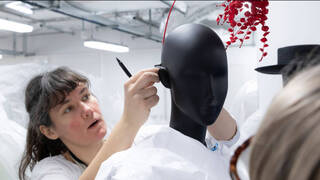
Join a V&A Academy experience
Explore our curated range of expert-led courses, workshops, and talks, all with the V&A collections at their core.
- Expert led courses
- Practical workshops
- Lectures & talks
- Professional development

