Architecture
Features

-
 A (fun) beginners' guide to Brutalism
Everything you need to know about Brutalism
-
 A (tropical) guide to Modernism
Take a peek a inside some of London's most iconic modernist buildings
-
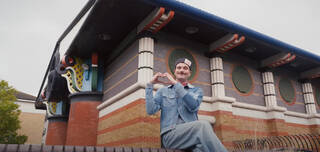 Postmodernist architecture: total chaos or pure genius?
Delve into one of the most fun and experimental design styles – Postmodernism (aka Pomo)
-

Architects and their sketchbooks
Architects sketchbooks provide freedom. They are a personal record of thoughts, observations, problems and memories
-
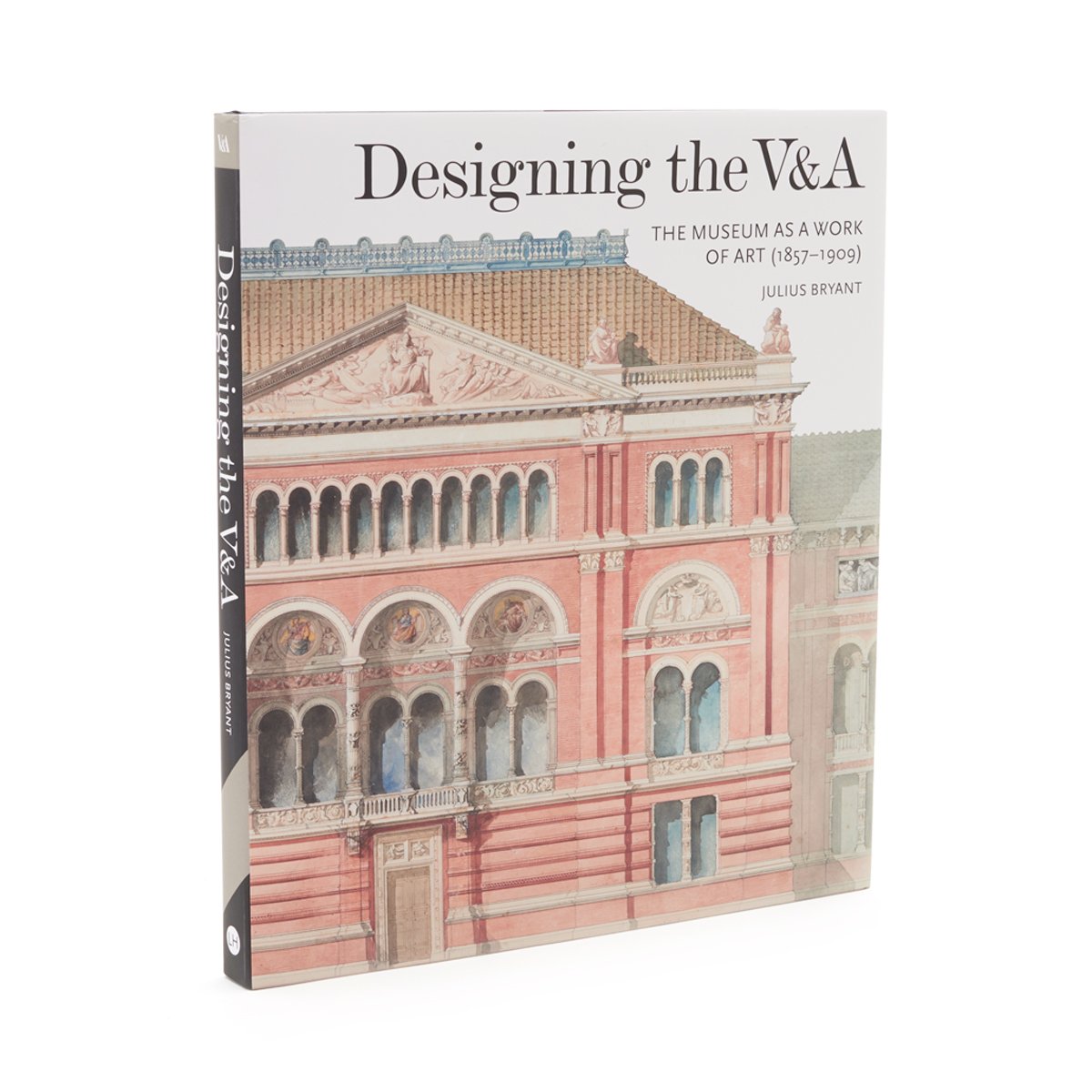
 Building the V&A
The V&A's buildings are works of art in themselves. Each represents a chapter of the V&A's story and a moment in British design history
-

La Biennale di Venezia 2023
Presenting 'Tropical Modernism', the V&A's Special Project for the Venice Architecture Biennale 2023
-

Recreating Palmyra's Arch of Triumph using photogrammetry
-

La Biennale di Venezia 2021
2021's display explored contemporary multiculturalism through three adapted mosque spaces in London
-

What is Tropical Modernism?
Discover the 'Bauhaus in the Tropics'
-

Inside mid-century Tropical Modernist architecture
See inside mid-century buildings in West Africa
-

Skateboarding and the city: a global phenomenon
Drop in on the history of skateboarding
-
 A curious trail of architecture at the V&A in 10 objects
-
 V&A trail: Architectural wonders
Discover the story of the V&A's eclectic buildings in this self-guided trail
-

Robin Hood Gardens
Discover the history of Robin Hood Gardens – a defining example of Brutalist architecture and social housing, as a three-storey section is acquired by the V&A
-
 The Chandigarh Chair
Discover the untold origin story of a design classic
-
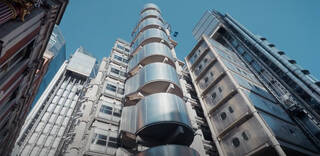 Exploring London's futuristic high-tech architecture
Join architectural enthusiast Reece Davey as he explores some of London's most iconic high-tech buildings
Collection highlights
-
 Adelphi ceiling, designed by Robert Adam, made by David Adamson, about 1771, EnglandV&A South Kensington
 -
 Wallpaper and tile design for Houses of Parliament, designed by A. W. Pugin, 1908, London, EnglandV&A South Kensington
 -
 The Apotheosis of Henry VIII, drawing, probably designed and drawn by Robert Pyte, about 1546, London, England
 -
 Print from 'Diverse maniere d'adornare i cammini…’ depicting a design for an Egyptian chimneypiece by Giovanni Battista Piranesi, published 1769, Rome, ItalyV&A South Kensington
 -
 Architectural drawing for the north or entrance front of Castle Howard, by Sir John Vanbrugh and Nicholas Hawksmoor, about 1699, EnglandV&A South Kensington
 -
 Julie Tile for A House for Essex, designed by Grayson Perry and FAT Architecture, manufactured by Shaws of Darwen, 2015, UKV&A South Kensington
 -
 Petronas Towers, Kuala Lumpur: ochre towers with blue sky, architectural print, by César Pelli, printed by Nash Editions, 1998V&A South Kensington
 -
 Contract drawings for the Metropolitan Board of Works depicting the Thames Embankment - Middlesex side, print, by Joseph Bazalgette, printed by Waterlow & Sons, 1868, BritainV&A South Kensington
 -
 Architectural model of Robin Hood Gardens, Poplar, London, by Alison and Peter Smithson, commissioned by Jeremy Dixon, 1970V&A East Storehouse
 -
 Sir Paul Pindar's House, house front, about 1600, London, EnglandV&A South Kensington
 -
 Model of the Albert Hall, architectural model, by Francis Fowke, made 1864, EnglandV&A South Kensington



Join a V&A Academy experience
Explore our curated range of expert-led courses, workshops, and talks, all with the V&A collections at their core.
- Expert led courses
- Practical workshops
- Lectures & talks
- Professional development