Fashion shows displaying the Spring/Summer and Autumn/Winter collections became the culmination of a couture house’s activity. Showing new designs followed fixed laws of precedence, beginning with suits and ending with evening wear. Day outfits included casual ensembles (ensembles simples), morning suits (tailleurs matin), casual afternoon suits (robes d’après-midi simples) and sophisticated dress suits (tailleurs habillés).

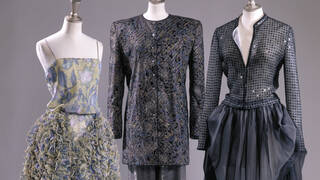
Daywear was followed by formal afternoon dresses (robes après-midi habillées), cocktail dresses (robes de cocktail), semi-evening (robes demi-soir) and short evening dresses (robes du soir courtes). These distinctions became simpler as the decade progressed and social codes began to break down.
The fashion show culminated with evening dresses (robes du soir), dance dresses (robes à danser), long evening dresses (robes du soir longues), grand evening dresses (robes grand soir) and spectacular gala dresses (robe de gala). Traditionally, the end of the collection was marked by the wedding gown (robe de mariée). Although these days a designer does not have to show his collection in a particular order, the wedding dress is still almost always the final, dramatic climax of a catwalk show.

Entry to an haute couture collection was strictly controlled. At houses such as Dior and Balenciaga, the collections were presented first to the fashion press, then to commercial buyers from North America, then buyers from Europe, and then, a month later, to private clients. Finally, they were shown to the interested public on a daily basis for many months. Each garment was made specifically for the house model who wore it, so that it fitted perfectly and looked its best.
Dior’s collections took place in a perfumed, crowded grand salon and were often attended by celebrities and film stars. Balenciaga’s sometimes lasted two hours and were conducted in complete silence, apart from the number of each design being called out.
Every design was photographed and registered by name or number. However, despite a law passed in 1952 stipulating a couture collection was protected by copyright for one season, couturiers filed dozens of lawsuits a year in an attempt to prevent illegal copying. Anyone caught sketching during a collection was asked to leave but some professional copyists were able to memorise the garments by eye.

Fashion shows at the V&A
The V&A’s Fashion in Motion series is a programme of spectacular live catwalk events featuring some of the greatest international fashion designers of our time in the stunning surrounds of the Museum.