South Asia
Features

-
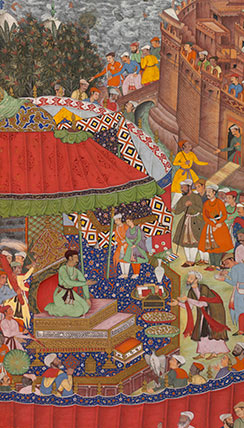
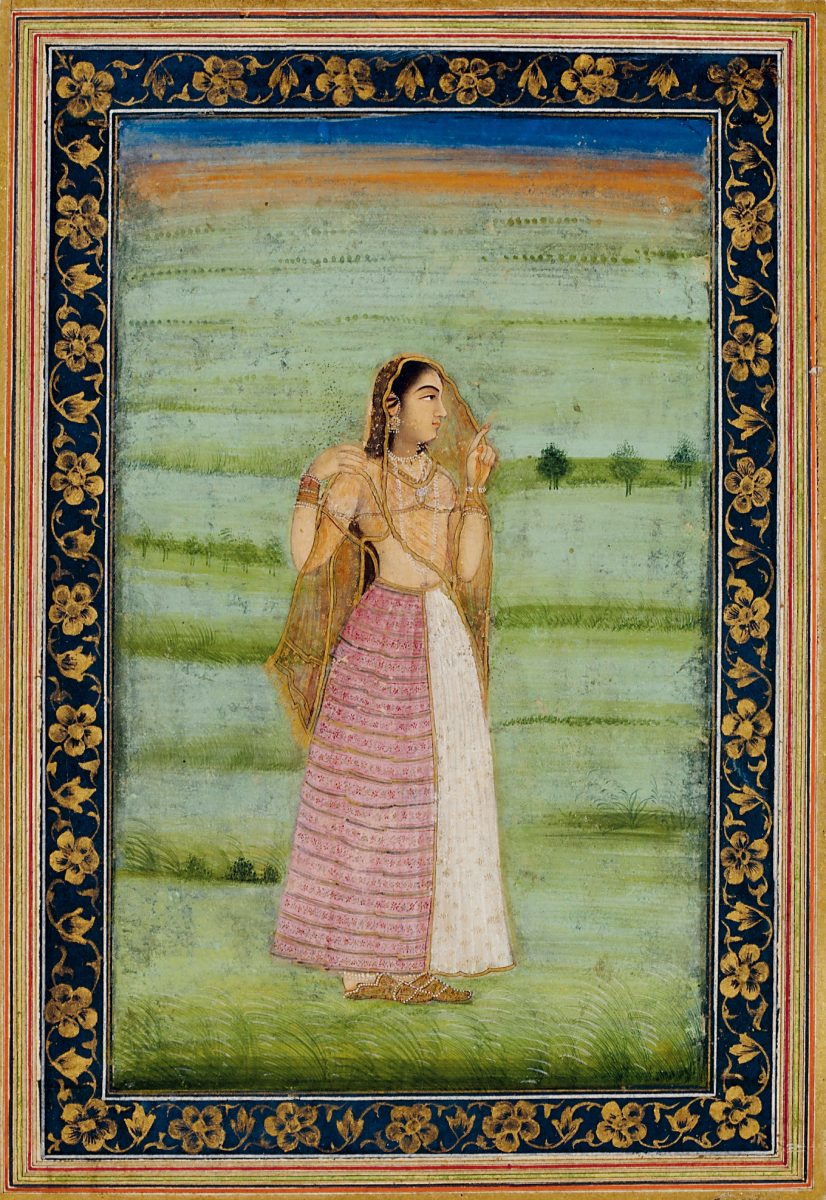
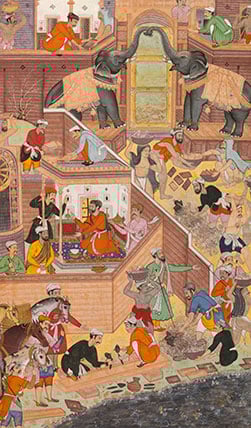
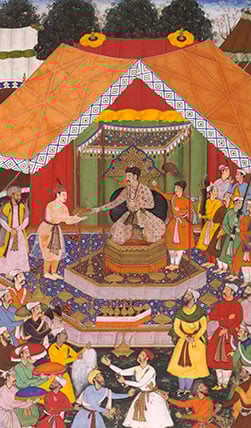
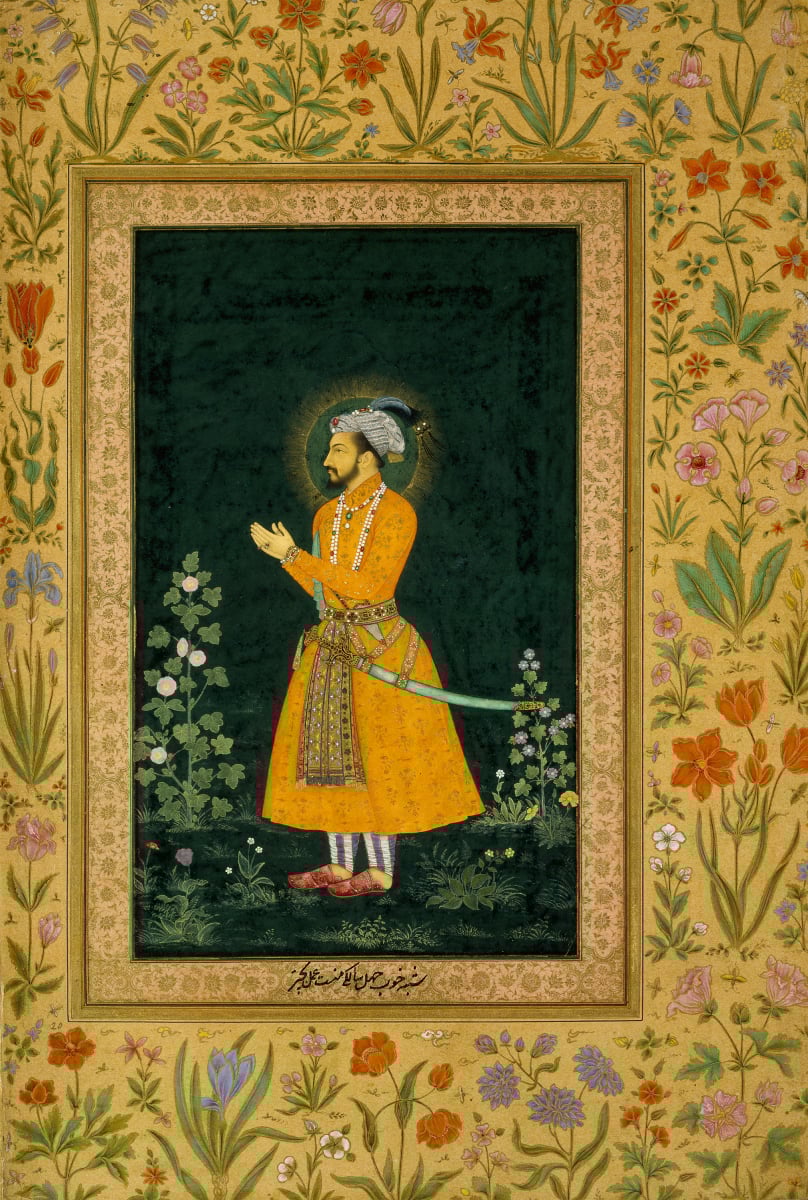
 The arts of the Mughal Empire
Discover some of the exquisite art created during the Mughal dynasty
-

Preparing a Bollywood poster for stretching: ASMR
Step inside the Painting Conservation Studio to see this enormous hand-painted poster be prepared for display
-
 Tipu's Tiger
This life-sized, semi-automaton of a tiger mauling a man is one of the V&A’s most famous and fascinating objects
-

Conservation of an Indian jama
Find out how our conservation team have repaired this intricately embellished piece
-

The art of Bollywood
Changing times in India, as seen through the lens of the film industry
-
 A wine cup for a Mughal emperor
One of the world's most outstanding surviving objects from the court of the Mughal dynasty
-

Kantha – a South Asian quilting tradition
Discover why this traditional quilting style has become a proud symbol of Bangladeshi culture
-

Examining jewellery in detail
Jewellery experts examine three spectacular pieces from the Al Thani jewellery collection
-

Kalighat painting
Discover a unique collection of Indian paintings from the 19th century
-

Indian embroidery
From plain cotton to iridescent beetle-wing embellishments, explore diverse forms of traditional Indian embroidery
-
 South Asian objects at the V&A: 1880 – 1920
-
 How to build a box for a musical instrument: ASMR
 -
 Exploring a one-of-a-kind 17th century Mughal hunting coat
Take an in-depth look at an incredibly rare and exquisite Mughal hunting coat
-
 How to make paint pigments from stones – a Mughal masterclass
Watch Anita Chowdry demonstrate the painstaking method used by Mughal court artists to create paint pigment from stones
Collection highlights
-
 Turban ornament, early 18th century, Mughal empireV&A South Kensington
 -
 Tippoo's Tiger, mechanical organ, about 1793, Mysore, IndiaV&A South Kensington
 -
 Tea set, by Oomersi Mawji, 1880 – 90, Bhuj, IndiaV&A East Storehouse
 -
 Wine cup made for the Emperor Shah Jahan, 1657, Mughal court workshops, white nephrite jadeV&A South Kensington
 -
 Ikat sari, designed by Neeru Kumar, made for Tulsi, 2013, Odisha, IndiaV&A East Storehouse
 -
 Ewer and lid, 19th century, Bombay, IndiaV&A South Kensington


Join a V&A Academy experience
Explore our curated range of expert-led courses, workshops, and talks, all with the V&A collections at their core.
- Expert led courses
- Practical workshops
- Lectures & talks
- Professional development