

Come and spark your creativity at Young V&A – the museum where children, young people and families can imagine, play and design. Be inspired by spaces, explore our collection and get creative at Art Fund Museum of the Year 2024.
Bethnal Green, London
Plan your visit

Featured Events at Young V&A
-
Featured
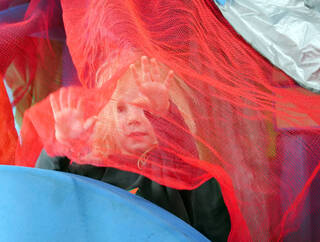
SEND Play (Feb-Jun 2026)
Drop-in
On until Saturday, 6 June 2026
Young V&A
-
Featured
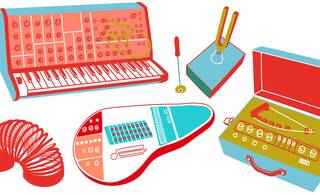
Mini Jam with School of Noise
Special event
Saturday, 28 February 2026
Young V&A
-
Featured

Play Saturdays (Jan-Mar 2026)
Drop-in
On until Saturday, 28 March 2026
Young V&A
-
Featured
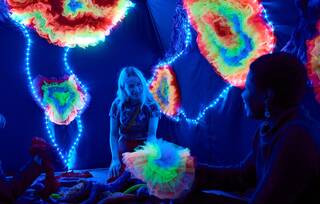
The Shed placement display
Open studio
Saturday, 28 February 2026
Young V&A

Stories from Young V&A
Blog post
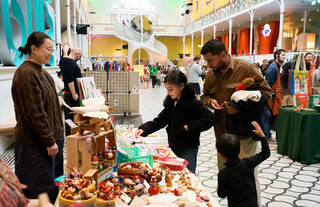
Winter at Young V&A
Blog post
Autumn at Young V&A
Blog post
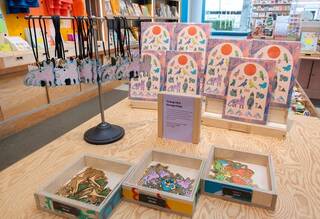
Design Club launches new product range for Young V&A



-
 Place (Village), installation, by Rachel Whiteread, about 1995 – 2015, London
 -
 Planetarium, installation, by Tristan Blondeau, 2023, Paris, France
 -
 The Self-Portrait, print, by Quentin Blake, 2010, UK
 -
 Bettiscombe, dolls' house, about 1870, England
 -
 Pikachu, soft toy, manufactured by Deutshe Toy GMBH, 1995 – 99, Munich, Germany
 -
 'Hero Arm', Open Bionics, 3D printed bionic arm for a child, Bristol, England
 -
 Amstrad CPC 464 Computer, manufactured by Amstrad, 1984, England
 -
 Devdas, film hoarding, by Balkrishna Arts, 2002, London, England
 -
 Death Star, designed by Bjarke Lykke Madsen, designed by Bas Brederode, manufactured by The LEGO Group, 2011 – 12, Denmark
Header image: © and TM Aardman Animations LTD. 2026
Header video: © and TM Aardman Animations LTD. 2026