
Baroque
The Baroque style dominated Europe between the 17th and the mid-18th century. Its influence also spread worldwide, making it the first style to have a significant global impact. As the rich array of objects in the V&A's collection show, Baroque spanned the visual arts and transformed the look of churches, palaces, public squares and theatres. Its emphasis on emotion and movement placed the viewer at the heart of the drama.
From opulent furniture to imposing portraits to grand wine sets, our collection shows that the Baroque style intended to impress. As well as masterpieces by the likes of Gianlorenzo Bernini, renowned for his 'living sculpture', and Grinling Gibbons, the most celebrated British woodcarver of the period, there are exquisite examples of craftsmanship drawn from across the visual arts, such as ivory-covered cabinets, painted mirrors and lavishly decorated metal tankards.
Features

-

Inside the Baroque palace
In every aspect, from their architecture to their decor, Baroque palaces offered dazzling displays of power
-

Bernini and the Baroque
Take a closer look at the influential work of Gianlorenzo Bernini, spanning sculpture, architecture, painting and theatre
-

Performance and the Baroque
As a key component of Baroque art, performance was used to assert power and authority through inspiring wonder and awe.
-
 Religious art and the Baroque
Discover more about how the Baroque style flourished thanks to the patronage of the Roman Catholic Church
Collection highlights
-
 Guitar, made by Joachim Tielke, 1693, Hamburg, GermanyV&A South Kensington
 -
 Peg tankard, about 1690, ScandinaviaV&A South Kensington
 -
 Pier table, Lucio de Lucci and Andrea Brustolon, 1680–1700, Venice, ItalyV&A South Kensington
 -
 Neptune and Triton, figure group, sculpted by Giovanni Lorenzo Bernini, about 1622 – 23, Rome, ItalyV&A South Kensington
 -
 Mirror, painted by Antoine Monnoyer, 1710 – 20, London, EnglandV&A South Kensington
 -
 July, tapestry, designed by Charles Le Brun, made by by Gobelins, 1670 – 1700, Paris, FranceV&A South Kensington
 -
 Time and Death, relief, by Caterina de Julianis, 1727, ItalyV&A South Kensington
 -
 The Blessed Ludovica Albertoni, model, by Gian Lorenzo Bernini, 1672, ItalyV&A South Kensington
 -
 Carved cravat, by Grinling Gibbons, about 1690, London, EnglandV&A South Kensington
 -
 Marlborough ewer and basin, made by Elie Pacot, 1711 – 12, Lille, FranceV&A South Kensington
 -
 Cup and cover, sculpted by Philipp Singer, 1681, Tuscany, ItalyV&A South Kensington
 -
 Costume design for Hercules from Atys, designed by Jean-Louis Berain, 1676, FranceV&A East Storehouse
 -
 Milk pan, designed by Daniel Marot, about 1694, Delft, NetherlandsV&A South Kensington
 -
 The Virgin of Sorrows, bust, by José de Mora, about 1680 – 1700, Granada, SpainV&A South Kensington
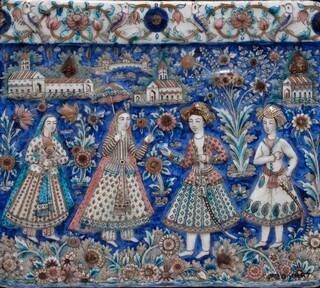
Join a V&A Academy experience
Explore our curated range of expert-led courses, workshops, and talks, all with the V&A collections at their core.
- Expert led courses
- Practical workshops
- Lectures & talks
- Professional development
