Metalwork
Features
-
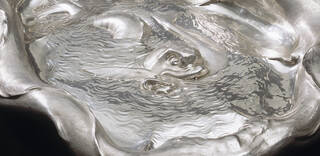
 Pushing silver to its limits – Ndidi Ekubia
Watch contemporary silversmith, Ndidi Ekubia, as she manipulates and pushes silver to its limits
-
 The antimonial cup – a doctor's 'cure' designed to make you sick
Senior Metalwork Curator reveals a mysterious and highly toxic object from not one, but two unusual boxes.
-
 Biscuit tins – a bite-sized history
Novelty biscuit tins in all shapes and sizes
-

Unlocking a 17th-century strongbox: ASMR
Peek into the past as we look inside a historic strongbox
-
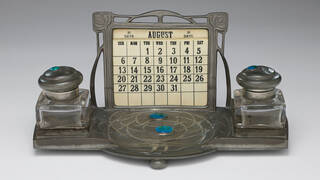 Archibald Knox, Liberty and the Celtic Revival style
Discover a master of metalwork
-

Dressed to kill – fashion and armour
Discover what the fashion-conscious Renaissance man would have worn on the battlefield or for jousting
-

How was it made? Electrotype
Discover how a metal copy of an object is created
-

How was it made? Silver watch case
See how an 18th-century watch case is made
-

Conservation of the Poynter Room grill
See the magnificence of the metalwork return
-

How was it made? Guilloché enamelling
Watch precise geometric patterns appear on metalwork in this centuries-old process
-
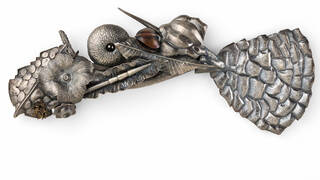 Serving up: silver slices
Contemporary silversmiths respond to a unique, creative brief to redesign the humble fish slice.
-

How was it made? 3D scanning and printing
See how 3D scanning and printing techniques are used to reproduce an object from our collection
-

Laying a wacky and whimsical Christmas table
How wacky is your Christmas table? Discover some of our favourite festive fare, with a twist
-
 A history of jewellery
Jewellery techniques and designs, illustrated with key pieces from our collection
-
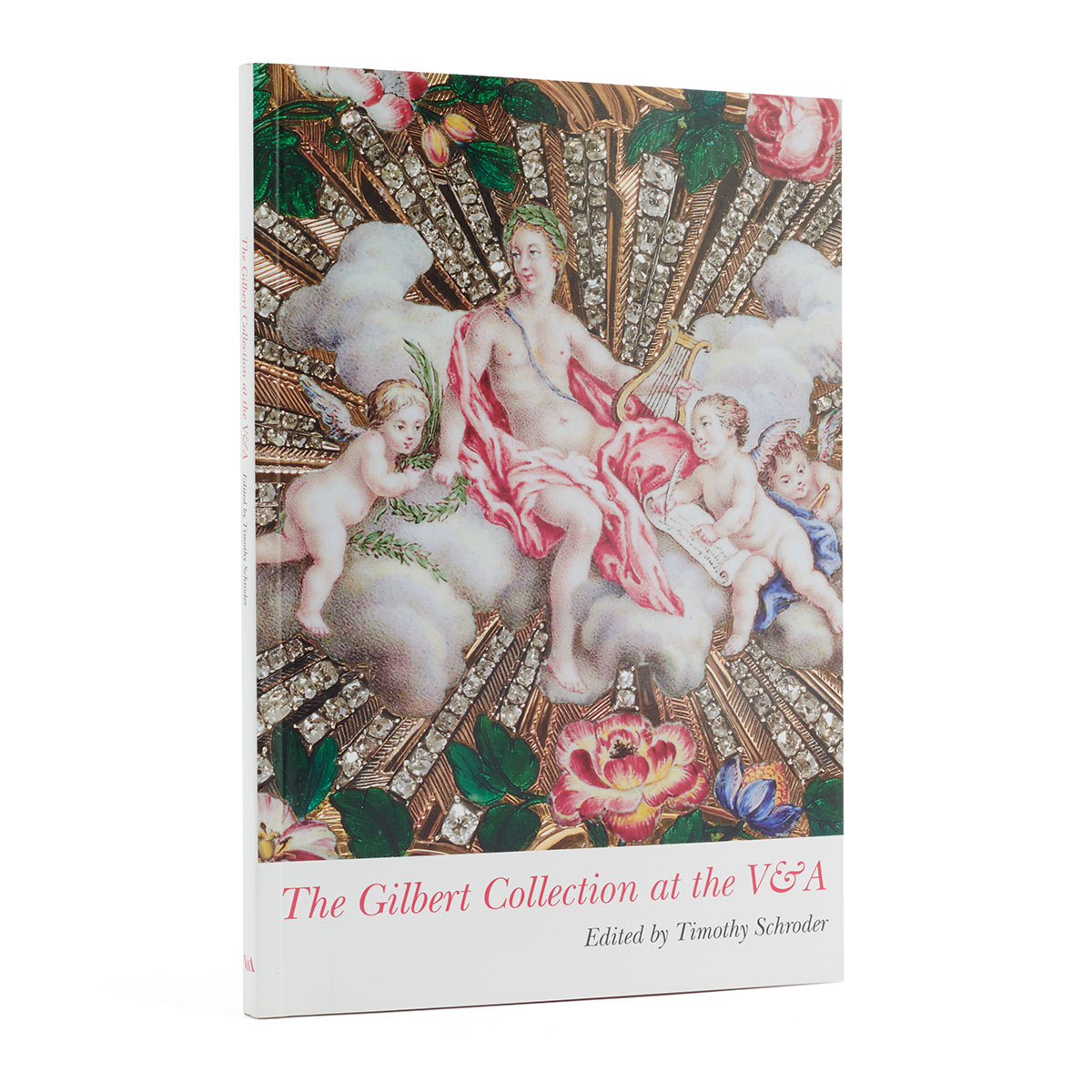
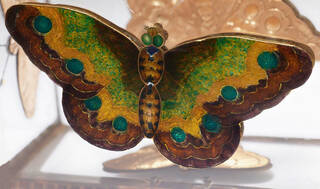 Rosalinde and Arthur Gilbert and their collection
Meant ‘for everyone’, the Rosalinde and Arthur Gilbert Collection comprises gold and silver, enamel miniatures, gold boxes and mosaics
-

The gold ewer
Read about the restitution of a 4,250-year-old Anatolian gold ewer
-
 Teapot design through time
Discover some of the finest examples of teapots produced over the last five centuries
-

How was it made? Champlevé enamelling
See how this medieval technique was carried out
-

Deconstructing samurai armour: ASMR
Removing the helmet and untying intricate knots – watch as the 18th century piece is dismantled
-

Dressing a 17th-century dolls' house: ASMR
Step inside a tiny dolls' house
-

How to pack a fragile and toxic object: ASMR
How to you carefully pack something so precious?
-
 Shipwrecked treasure and ancient jewellery
Mudlarked, shipwrecked, buried treasure – discover treasures lost and found
-
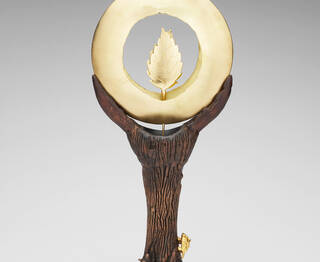 Unity: a collaboration between artist goldsmith Emefa Cole and the Asante royal goldsmith
Explore 'Unity', a V&A commisioned sculpture which celebrates a new relationship between the V&A and the Royal Palace in Kumasi
-
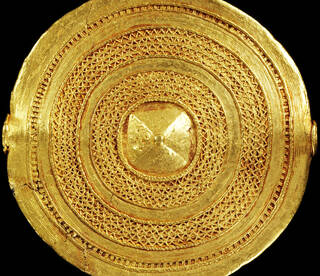 A history of Asante gold at the V&A
Discover the history of the Asante gold at the V&A that was among several hundred pieces looted by British troops during the Anglo-Asante Wars in 1874
-
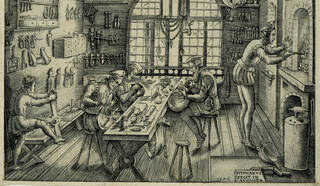 A guide to metalworking techniques
Discover some of the techniques used to make the metalwork objects in the V&A’s collections
Collection highlights
-
 The Real Thing, pectoral cross, by David Poston, 2004, Suffolk, EnglandV&A South Kensington
 -
 Reliquary, head of Saint Januarius, about 1500 – 50, Switzerland or GermanyV&A South Kensington
 -
 Shaffron for a large horse, about 1525, GermanyV&A South Kensington
 -
 Necessaire (watch), by James Cox, about 1770, LondonV&A South Kensington
 -
 Crosier, 1200 – 1300, Limoges, FranceV&A South Kensington
 -
 The Peacock Sconce, by Alexander Fisher, about 1899, EnglandV&A South Kensington
 -
 Union Centrepiece, by Miriam Hanid, 2013, EnglandV&A South Kensington
 -
 Nef, by Esaias zur Linden, 1609 – 29, Nuremberg, GermanyV&A South Kensington
 -
 Gondola prow, 1600 – 1700, Venice, ItalyV&A South Kensington
 -
 'Streamliner', meat slicer, designed by Egmont Arens and Theodore C. Brookhart in 1940, manufactured by Hobart manufacturing Co from 1944, USAV&A South Kensington
 -
 Paper bag (Sugar), by David Bielander, 2017, Munich, GermanyYoung V&A
 -
 Armet, 1520 – 1540, GermanyV&A South Kensington
 -
 Hanukkah lamp, by Eli Gera, 1970 – 80, Tel Aviv-Jaffa, IsraelV&A East Storehouse
 -
 Spoon, about 1550 – 75, GermanyV&A South Kensington
 -
 Armchair, made by Russian Imperial Arms Factory, about 1750, Tula, RussiaV&A South Kensington
 -
 Chandelier, 1480 – 1520, German or FlemishV&A South Kensington
 -
 Flask, about 1550, Nuremberg, GermanyV&A South Kensington
 -
 Candlestick, probably made by Anthony Hatch and Stephen Pilcherd, about 1650 – 80, LondonV&A South Kensington
 -
 Brewer's sign, 1700 – 1800, GermanyV&A South Kensington
 -
 Teapot, designed by Christopher Dresser, made by James Dixon and Sons, about 1879, Sheffield, EnglandV&A South Kensington
 -
 Rattle, about 1750, BritainV&A South Kensington
 -
 TP49, teapot, by Robert Foster, 2004, Queanbeyan, New South Wales, AustraliaV&A South Kensington
 -
 Pendant, probably designed by René Jules Lalique, about 1899, FranceV&A South Kensington
 -
 The Dudley Box, 1579, EnglandV&A South Kensington
Experience more as a V&A Member today
Treat yourself or a lucky recipient to the gift of Membership
- Unlimited free entry to all exhibitions
- Exclusive access to two Member spaces
- 10% discount in all V&A Shops
- Members-only previews and events