Fashion
Features

-
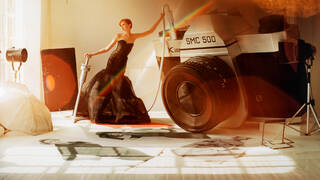 100 years of fashion photography
Discover the key trends in fashion photography over the last 100 years
-
 The bottom line: underwear revealed
Take a peek at our underwear collection
-
 Examining Christian Dior's 'Bar' suit: a post-war fashion icon
Watch dressmaking expert and V&A volunteer, Sue Clark, as she examines Christian Dior's 'Bar' suit
-

Art Deco fashion
From Jeanne Lanvin's haute couture to the bold geometric jewellery of Raymond Templier, discover the Art Deco aesthetic in the fashions of the 1920s and 1930s
-

BLITZ magazine and the tale of 22 denim jackets
Discover era-defining style magazine BLITZ and their designer denim jacket project
-
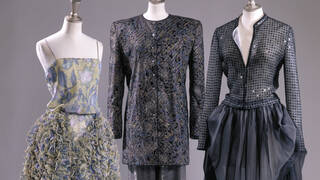 Five iconic Giorgio Armani looks from the V&A collections
Discover five key ensembles from iconic Italian fashion designer Giorgio Armani
-

The future of fashion
As the fashion industry continues to plunder the earth's resources, innovators are striving to find alternative production processes
-

X-raying the Fashion collection
Find out how we're shedding new light on our Fashion collections through the illuminating mode of X-ray
-

The fashion show
Discover the origins of the catwalk show
-

The design process: interviews with Agent Provocateur, FiFi Chachnil and La Perla
From creation to catwalk - discover the design process of three leading fashion brands
-

X-raying Balenciaga
Discover the hidden interior structures of iconic garments by Cristóbal Balenciaga, revealed through beautiful X-rays
-

The 'Babydoll' slip by Carine Gilson
Lingerie designer, Carine Gilson discusses the design process behind the 'Babydoll' slip featured in the exhibition
-

Designing for the bride
Gareth Pugh, Pam Hogg and Philip Treacy discuss bespoke bridal commissions
-

Ocean liner fashion: a socialite's guide
Find out why dressing for an ocean voyage was "the acid test of true chic"
-
 An exclusive pattern by Katie Jones, crochet and knitwear designer – meet, make and do
Meet Katie Jones – technicolour knitwear and crochet designer passionate about her ethical craft
-

Balenciaga's sequinned evening coat
Recreating the beautiful hot-pink beading and sequin work of Balenciaga's 1967 evening coat.
-

Secrets of Balenciaga's construction
Animated dress patterns show how three of Balenciaga's iconic designs were constructed, revealing his mastery of pattern cutting, draping and manipulation of fabrics.
-
 How the Arts and Crafts movement influenced fashion
How did the ideas of the Arts and Crafts movement influence the design and manufacture of clothes, accessories and jewellery?
-

Revealing hidden structures through x-rays
Discover the internal structures of a hat, stays, and a hood - three historic objects from the exhibition, Fashioned from Nature
-

Women's tie-on pockets
Find out how the development of the humble pocket offered independence and security for women
-

Fashioned from the animal kingdom
Working with colleagues at the Natural History Museum, London, we explore some of the materials used to create fashion that are drawn from the natural world
-
 Fashion inspired by the natural world
Discover more about how nature has provided a rich source of inspiration for fashion over the centuries
-

Making an entrance – ocean liner style
The glamour of first-class travel is brought to life for the exhibition Ocean Liners: Speed and Style
-

Knitted eveningwear
Discover how knitted fabrics have created glamorous evening dresses through the 20th century and beyond
-

Pollution: the dark side of fashion
Despite using the natural world as a source book, the fashion industry's processes and practices harm environments, ecosystems and human communities globally
-

Stephen Jones and Dior
Milliner, Stephen Jones, discusses working alongside Dior to create exquisite hats and headpieces to complement their designs
-

Meet Jean Dawnay, Dior's English rose
Jean Dawnay's daughter, Katya Galitzine, discusses her Mother's modelling career during Dior's golden age
-

BodyMap: shaping 1980s fashion
Discover how influential British fashion label BodyMap shaped the 1980s catwalk scene
-

Dior in Britain
A confirmed Anglophile, Christian Dior associated his many visits to Britain with "a sensation of happiness and great personal freedom"
-

Modelling for a legend – Svetlana Lloyd on Dior
Listen to 1950s Dior mannequin Svetlana Lloyd discussing working for the house
-

Lolita fashion: Japanese street style
Sweet, punk or gothic?
-

Sew your own: Mary Quant 'Georgie' dress
Get creative with our free downloadable sewing pattern!
-

20 years of Fashion in Motion
Fashion in Motion has brought free catwalk shows to the public for the past 20 years
-

Barbara Nessim: an artful life
Meet American artist, fashion designer and computer art pioneer, Barbara Nessim
-

Madeleine Vionnet – an introduction
Couturier Madeleine Vionnet changed the shape of women's fashion with her revolutionary 'bias-cutting' technique
-

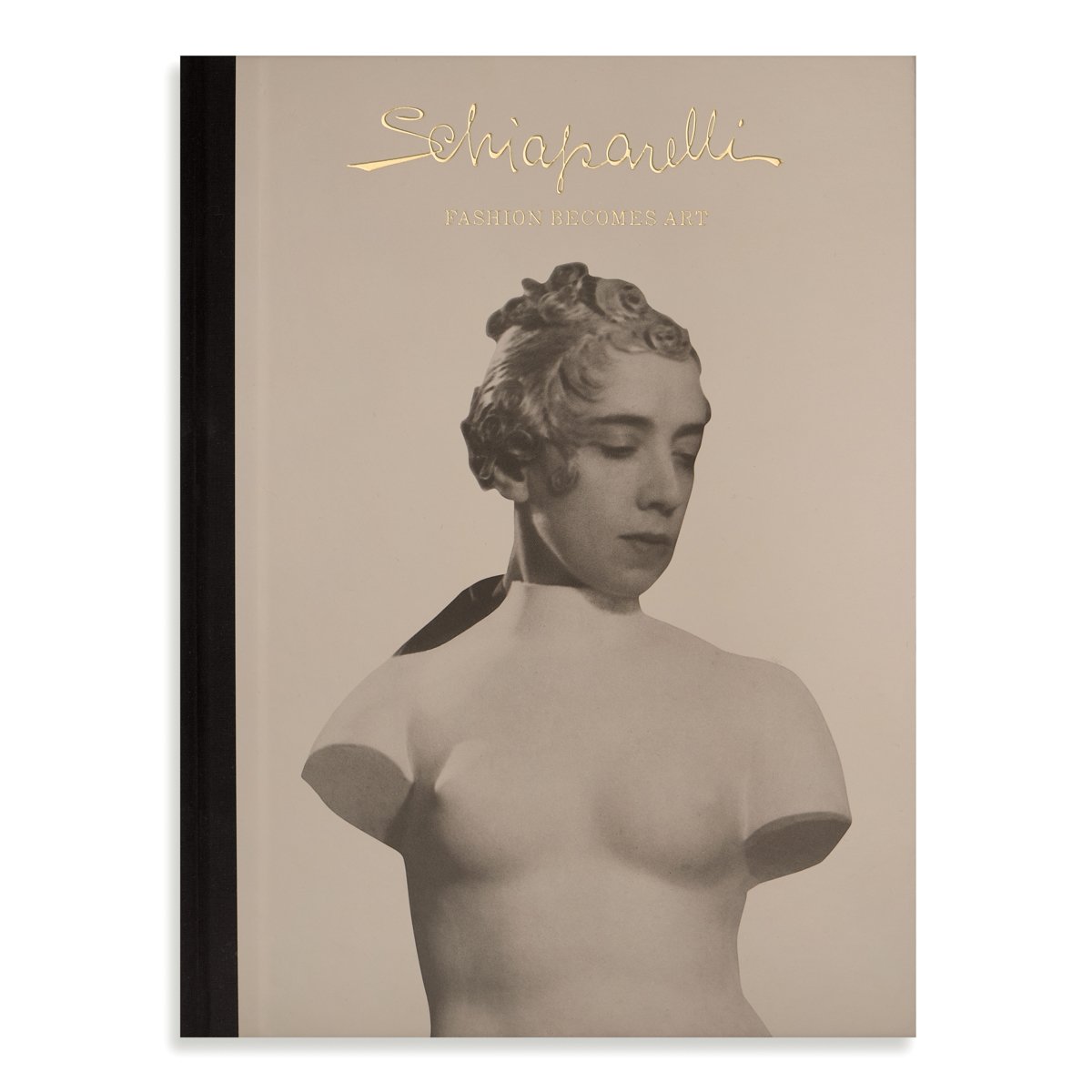
Introducing Elsa Schiaparelli
Shocking, subversive, surreal – meet Elsa Schiaparelli
-

'King of Fashion' by Paul Poiret
Fashion designer Paul Poiret describes his debut as a couturier in this extract from his 1931 autobiography
-

'From A to Biba' by Barbara Hulanicki
Discover the humble beginnings of a legendary fashion label
-

'With Tongue in Chic' by Ernestine Carter
Fashion journalist Ernestine Carter recalls her first glimpse of Christian Dior's 'New Look' in this extract from her autobiography
-

'Silver and Gold' by Norman Hartnell
Couturier Norman Hartnell describes the pinnacle of his career: designing the Coronation dress for Queen Elizabeth II
-

Making bags
Take a look at the complex process of making bags
-

The Infinity Dress and Omniverse Sculpture
A voluminous kinetic 'halo' hovers around a magical feathered dress
-

Yohji Yamamoto: Poet of Black
Hear from enigmatic fashion designer Yohji Yamamoto as he talks about his career and design values
-

Fashion design: Rahemur Rahman
Sustainable, ethical fashion, "for people who dream in colour"
-
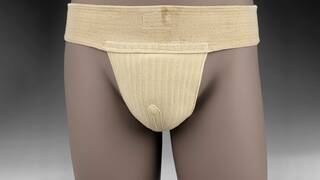 A brief history of men's underwear
From ruffle-fronted shirts, to Y-fronts, jock-straps and Calvin Kleins, explore the hidden history of men's underwear
-

Inside the Fashioning Masculinities exhibition
Take a look inside our first major exhibition to celebrate the art of menswear
-

Fashion design: Edward Crutchley
Sumptuous and subversive fashions which disregard gender
-

Fashion design: Samuel Ross / A-COLD-WALL*
Clothing as "armour for the now", or architecture for the body
-

In the pink: colour in menswear
Discover the dazzling spectrum of colours in menswear throughout history
-

Fashion design: Priya Ahluwalia
"One of the most important outfits in a man's wardrobe is a tracksuit"
-

A life through clothes: Professor Lalage Bown, OBE
Take a look inside the wardrobe of Professor Lalage Bown, OBE
-
 Family, photography, memories: Africa Fashion
Find out about the personal stories and unique fashion histories from individuals across the continent
-

'My Years and Seasons' by Pierre Balmain
Legendary couturier Pierre Balmain recalls his fledgeling fashion show in this extract from his autobiography
-

Nigeria's first fashion designer: Shade Thomas-Fahm
Meet iconic fashion designer Shade Thomas-Fahm
-

Tortoiseshell combs from Jamaica
This Intriguing set of tortoiseshell objects reveal a colonial history
-

Conserving an 18th-century portrait and waistcoat
Follow the conservation of two uniquely connected objects – a rare double acquisition for the museum
-

Nisha Kanabar: Industrie Africa
Meet Nisha Kanabar, founder and CEO of Industrie Africa
-

Magician of the desert: Alphadi
Meet Alphadi – world renowned fashion designer drawing upon histories and cultures from across the continent
-

Fashion Unpicked: couture ensemble by Imane Ayissi
Join Senior Curator Christine Checinska as she examines this striking fuchsia ensemble
-

Fashion in Virginia Woolf's 'Orlando'
Curator Rosalind McKever explores fashion, gender and identity in Virgina Woolf’s novel 'Orlando'.
-

Fashion Unpicked: YSL couture evening dress and shoes
Discover a dazzling 1960s evening dress by Yves Saint Laurent and matching shoes by Roger Vivier
-

100 years of fashionable womenswear
Explore three unique dresses spanning 100 years of fashion history
-

What makes CHANEL so iconic?
Explore the evolution of Gabrielle Chanel's design philosophy through her most enduring and recognisable pieces
-

Fashion unpicked: CHANEL tweed suit worn by Lauren Bacall
See the exquisite hand-sewn detailing of a suit made for a star
-

Gabrielle Chanel: dressing the modern woman
How did the designer change the face of women's fashion?
-

Gabrielle Chanel in Britain
Discover how the designer was inspired by Britain
-

Barbie vs Sindy: who wins the fashion race?
Meet our favourite Barbie and Sindy dolls
-

Fashion Unpicked: CHANEL sequin trouser suit worn by Diana Vreeland
Take a close-up look at the glamorous design
-
 Top 10 Naomi Campbell looks
Could she wear anything more iconic?
-
 The groundbreaking Black models who changed fashion
Find out about the trailblazing women who paved the way
-
 Naomi Campbell's ultimate catwalk mix
Listen to the supermodel's specially curated playlist
-
 Unboxing Naomi Campbell's platform shoes
Take a peek, inside and out
-

Unboxing a couture Versace dress worn by Naomi Campbell
See the spectacular leather dress up close
-
 Victorian fashion history: 1890s
Victorian fashion is not what you think...
-
 Packing objects for a new home: ASMR
How do you move over 250,000 museum objects from one side of London to the other?
-
 V&A trail: Contemporary fashion
Take a self-guided trail around V&A South Kensington to discover some highlights from our 21st-century fashion collections.
-
 Adaptive fashion: 1960s wedding dress and shoes
A stunning example of 1960s adaptive bridal fashion
-
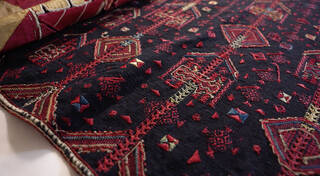 Tatreez: the ancient art of Palestinian embroidery
Discover six incredible examples of embroidered Palestinian fashion.
-
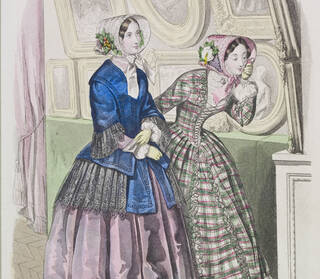 The art of fashion plates: a hidden history of three pioneering women
Discover three French sisters who, in a pre-photographic era, pioneered the way fashion was depicted in mass media
-
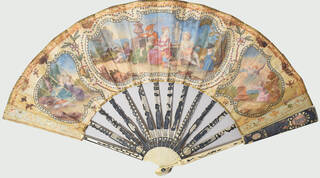 Conserving a fragile 200-year-old fan from the era of Marie Antoinette
Join Senior Paper Conservator Susan Catcher as she conserves a fragile 200-year-old fan from the era of Marie Antoinette.
Collection highlights
-
 Hat, designed by Simone Mirman, about 1955, London, EnglandV&A East Storehouse
 -
 Evening dress, designed by Cristóbal Balenciaga, 1954, Paris, FranceV&A East Storehouse
 -
 Man's suit, designed by Mr Fish, manufactured by Hexter, about 1968, London, EnglandV&A South Kensington
 -
 Pair of shoes, 1550 – 1070 BC, EgyptV&A East Storehouse
 -
 Mantua, 1755 – 60, EnglandV&A East Storehouse
 -
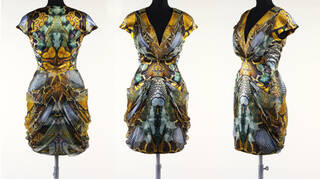
 Plato's Atlantis, dress, designed by Alexander McQueen, 2010, London, EnglandV&A South Kensington
 -
 Man's ensemble, designed by Stella Jean, Spring/Summer 2014, Italy and Burkina Faso. Museum no. T.21:1 to 5-2014.V&A South Kensington

Join a V&A Academy experience
Explore our curated range of expert-led courses, workshops, and talks, all with the V&A collections at their core.
- Expert led courses
- Practical workshops
- Lectures & talks
- Professional development