
"Fine art is that in which the hand, the head, and the heart of man go together".
In Britain the damaging effects of machine-dominated production on both social conditions and the quality of manufactured goods had been recognised since around 1840. But it was not until the 1860s and '70s that new approaches in architecture and design were championed in an attempt to correct the problem. The Arts and Crafts movement in Britain was born out of an increasing understanding that society needed to adopt a different set of priorities in relation to the manufacture of objects. Its leaders wanted to develop products that not only had more integrity but which were also made in a less dehumanising way.
Structured more by a set of ideals than a prescriptive style, the Movement took its name from the Arts and Crafts Exhibition Society, a group founded in London in 1887 that had as its first president the artist and book illustrator Walter Crane (1845 – 1915). The Society's chief aim was to assert a new public relevance for the work of decorative artists (historically they had been given far less exposure than the work of painters and sculptors). The Great Exhibition of 1851 and a few spaces such as the Refreshment Rooms of the South Kensington Museum (later known as the V&A) in the 1860s had given decorative artists the chance to show their work publicly, but without a regular showcase they were struggling to exert influence and to reach potential customers.
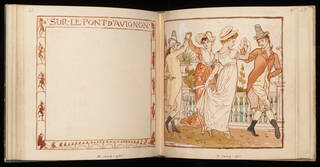
The Arts and Crafts Exhibition Society mounted its first annual exhibition in 1888, showing examples of work it hoped would help raise both the social and intellectual status of crafts including ceramics, textiles, metalwork and furniture. Its members publicly rejected the excessive ornamentation and ignorance of materials, which many objects in the Great Exhibition of 1851 had been criticised for. For many years in Britain exhibitions mounted by the Society were the only public platform for the decorative arts, and were critical in changing the way people looked at manufactured objects.
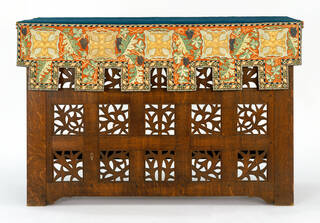
Although it was known by a single name (one that wasn't in fact used widely until the early 20th century), the Arts and Crafts movement was in fact comprised of a number of different artistic societies, such as the Exhibition Society, the Arts Workers Guild (set up in 1884), and other craftspeople in both small workshops and large manufacturing companies.
Many of the people who became involved in the Movement were influenced by the work of the designer William Morris (1834 – 96), who by the 1880s had become an internationally renowned and commercially successful designer and manufacturer.

Morris only became actively involved with the Arts and Crafts Exhibition Society a number of years after it was set up (between 1891 and his death in 1896), but his ideas were hugely influential to the generation of decorative artists whose work it helped publicise. Morris believed passionately in the importance of creating beautiful, well-made objects that could be used in everyday life, and that were produced in a way that allowed their makers to remain connected both with their product and with other people. Looking to the past, particularly the medieval period, for simpler and better models for both living and production, Morris argued for the return to a system of manufacture based on small-scale workshops.

Morris was not entirely against the use of machines, but felt that the division of labour – a system designed to increase efficiency, in which the manufacture of an object was broken into small, separate tasks, meaning individuals had a very weak relationship with the results of their labour – was a move in the wrong direction.
Like many idealistic, educated men of his era, he was shocked by the social and environmental impact of the factory-based system of production that Victorian Britain had so energetically embraced. He wanted to free the working classes from the frustration of a working day focused solely on repetitive tasks, and allow them the pleasure of craft-based production in which they would engage directly with the creative process from beginning to end.
Morris was himself inspired by the ideas of the Victorian era's leading art critic John Ruskin (1819 – 1900), whose work had suggested a link between a nation's social health and the way in which its goods were produced. Ruskin argued that separating the act of designing from the act of making was both socially and aesthetically damaging. The Arts and Crafts movement was also influenced by the work of Augustus Pugin (1812 – 52). An interior designer and architect, Pugin was a Gothic revivalist and a member of the Design Reform Movement. He had helped challenge the mid-Victorian fashion for ornamentation, and, like Morris, focused on the medieval period as an ideal template for both good design and good living.

In the final decade of the 19th century and into the 20th, the Arts and Crafts movement flourished in large cities throughout the UK, including London, Birmingham, Manchester, Edinburgh and Glasgow. These urban centres had the infrastructure, organisations and wealthy patrons it needed to gather pace. Exhibition societies inspired by the original one in London helped establish the Movement's public identity and gave it a forum for discussion. Members of the Arts and Crafts community felt driven to spread their message, convinced that a better system of design of manufacture could actively change people's lives. Between 1895 and 1905 this strong sense of social purpose drove the creation of over a hundred organisations and guilds that centred on Arts and Crafts principles in Britain.
Progressive new art schools and technical colleges in London, Glasgow and Birmingham encouraged the development of both workshops and individual makers, as well as the revival of techniques, including enamelling, embroidery and calligraphy. Arts and Crafts designers also forged new relationships with manufacturers that enabled them to sell their goods through shops in London such as Morris & Co. (William Morris's 'all under one roof' store on Oxford Street), Heal's and Liberty. This commercial distribution helped the Movement's ideas reach a much wider audience.

A particular feature of the Arts and Crafts movement was that a large proportion of its leading figures had trained as architects. This common culture helped develop a collective belief in the importance of designing objects for a 'total' interior: a space in which architecture, furniture, wall decoration, etc. blended in a harmonious whole. As a result, most Arts and Crafts designers worked across an unusually wide range of different disciplines. In a single career someone could apply craft-based principles to the design of things as varied as armchairs and glassware. Arts and Crafts also had a significant impact on architecture. Figures including Philip Webb, Edwin Lutyens, Charles Voysey and William Lethaby quietly revolutionised domestic space in buildings that referenced both regional and historical traditions.
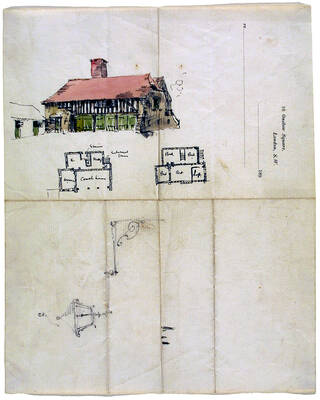
Although the Arts and Crafts movement evolved in the city, at its heart was nostalgia for rural traditions and 'the simple life', which meant that living and working in the countryside was the ideal to which many of its artists aspired. Increasingly, many left the city to establish new ways of living and working, with workshops set up across Britain in locations including the Cotswolds, the Lake District, Sussex and Cornwall. All these places offered picturesque landscapes, an existing culture of craft skills and, importantly, rail links for access to patrons and the London market.
Arts and Crafts makers based in rural communities both revived craft traditions and created employment for local people. This kind of development meant that the Movement endured longer in the countryside than in the city, and had a more significant impact on the rural than the urban economy. Significantly, the Arts and Crafts community was open to the efforts of non-professionals, encouraging the involvement of amateurs and students through organisations such as the Home Arts and Industries Association. And it also created an environment in which, for the first time, women as well as men could begin to take an active role in developing new forms of design, both as makers and consumers.
In Europe the honesty of expression in Arts and Crafts work was a catalyst for the radical forms of Modernism, whereas in Britain the progressive impetus of the Movement began to lose momentum after the First World War. Under the control of older artists it had begun to withdraw from productive relationships with industry and into a purist celebration of the handmade. Some organisations sympathetic to Arts and Crafts ideals did survive, particularly in the countryside, and the original Arts and Crafts Exhibition Society mounted regular shows up to and beyond its 50th anniversary in 1938. In 1960, the Society merged with the Cambridgeshire Guild of Craftsmen to form the Society of Designer Craftsmen, which is still active today.


