Gilbert Collection
Gilbert Galleries: access guide
Features
-
 Rosalinde and Arthur Gilbert and their collection
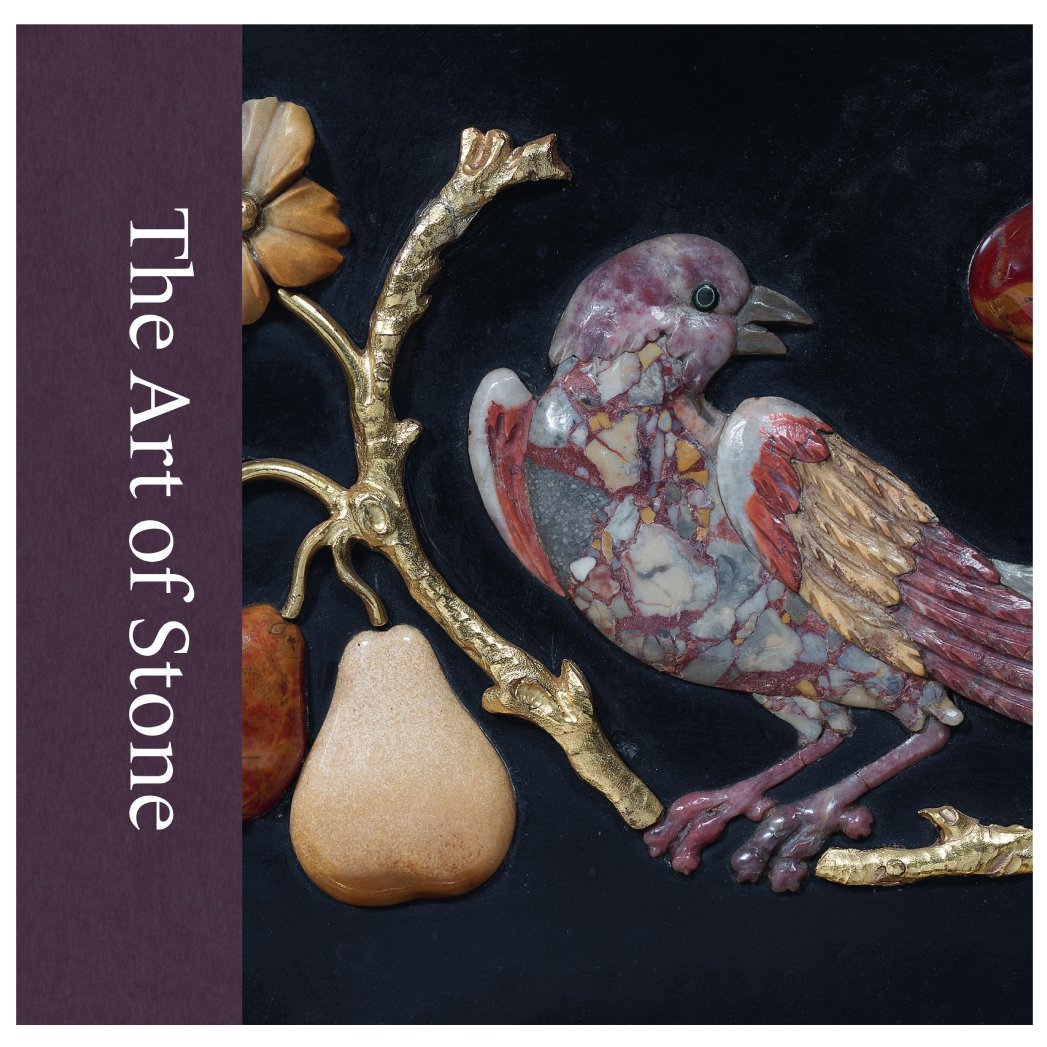
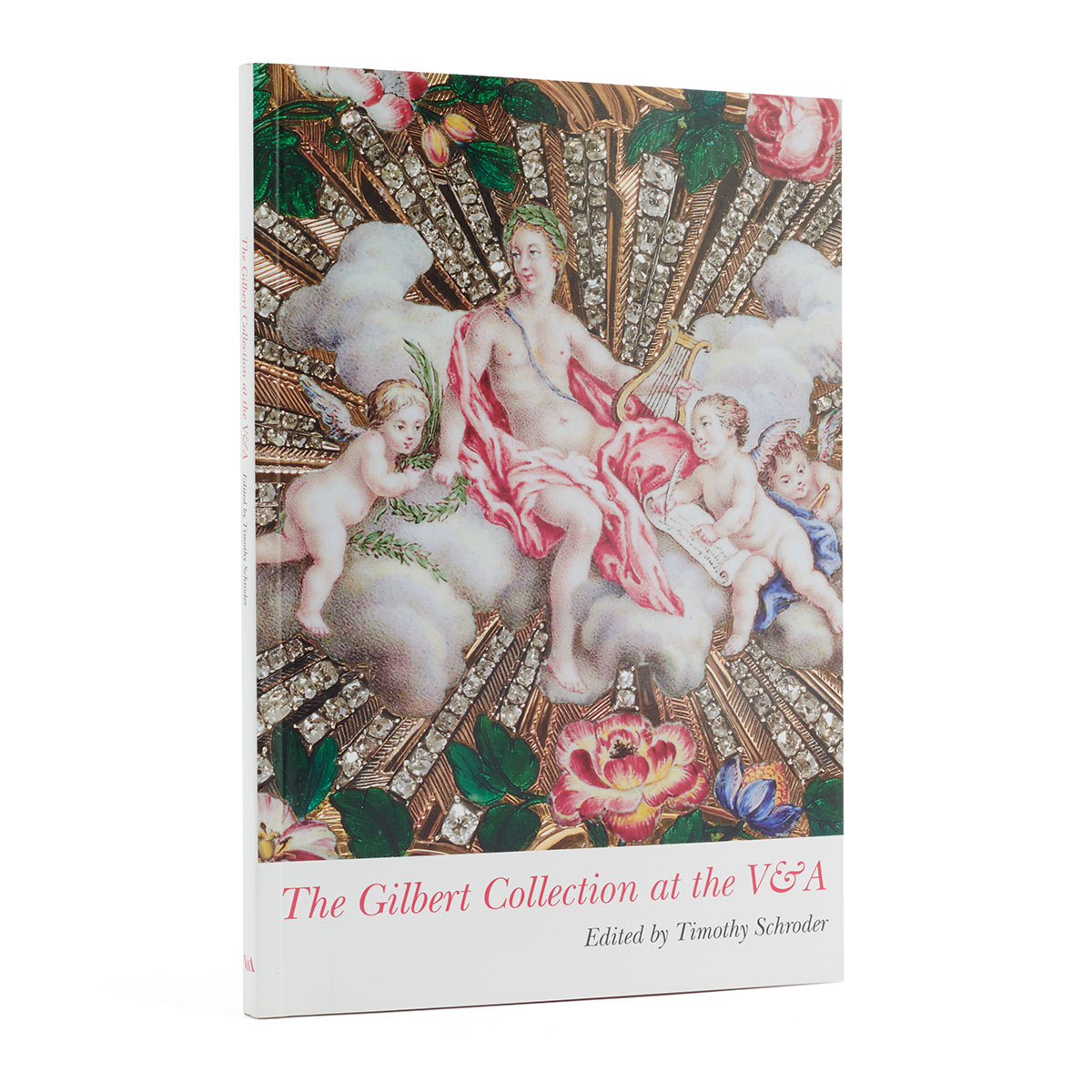
Meant ‘for everyone’, the Rosalinde and Arthur Gilbert Collection comprises gold and silver, enamel miniatures, gold boxes and mosaics
-

How was it made? Micromosaics
Watch the astonishingly intricate recreation of a historic micromosaic
-
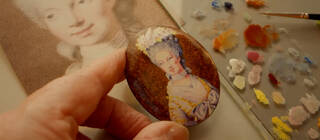 How was an enamel portrait miniature made in the 18th century?
Watch the painstaking recreation of a portrait miniature of Queen Charlotte, based on an original painted in 1781
-
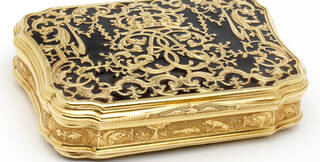 Gold boxes
Arthur and Rosalinde Gilbert delighted in the dazzling details of these boxes, which tell stories on an astonishingly small scale using precious and exotic materials
-

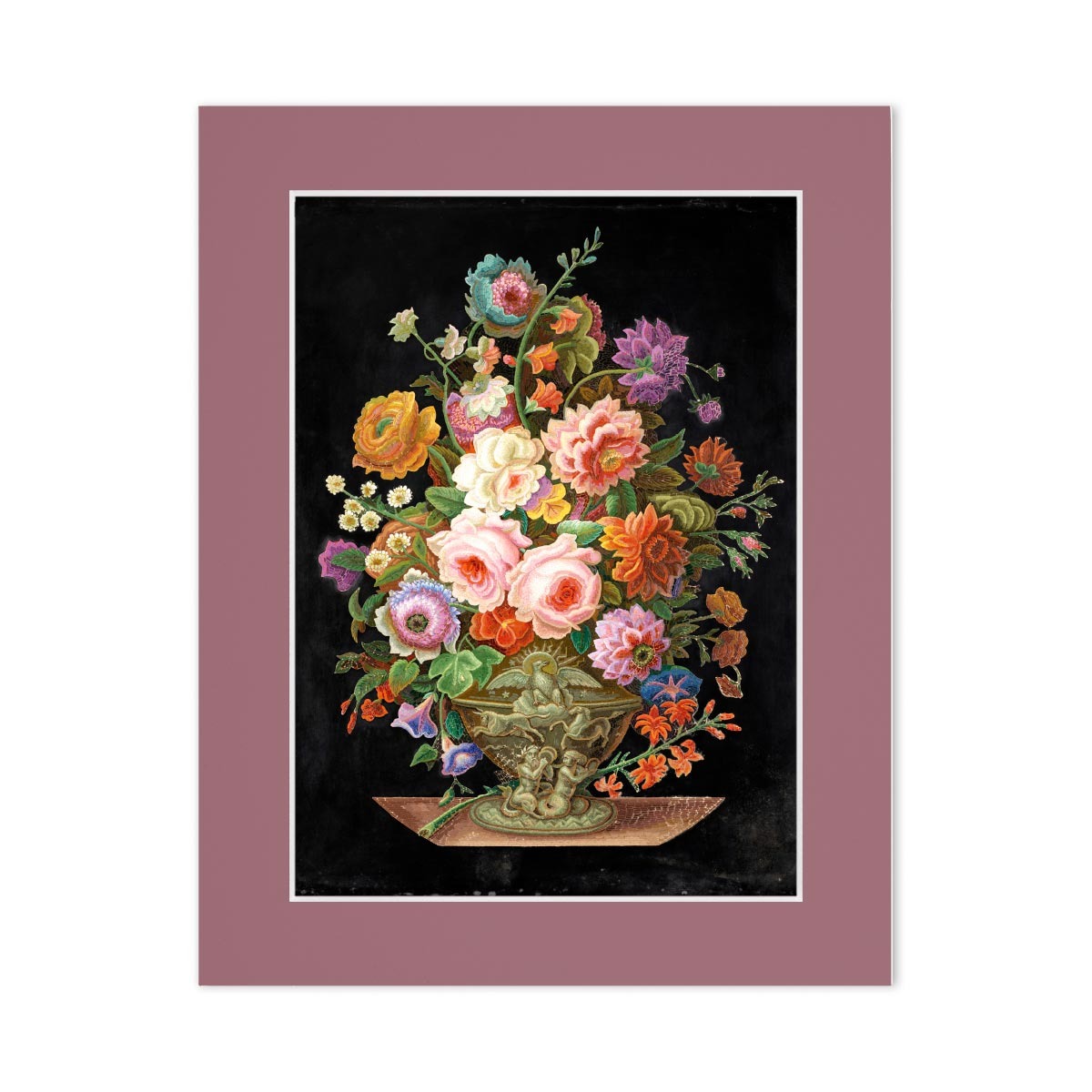
What is a micromosaic?
What are micromosaics and where did they come from?
-
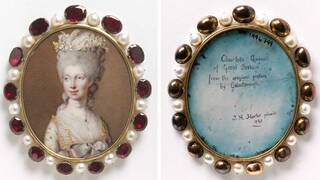 Hidden histories: portrait miniatures and their secret messages
While these pocket-sized paintings often show famous figures or celebrate personal connections, many also contain secret messages.
-
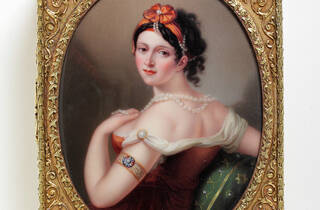 Portrait miniatures painted in enamel
The Gilbert Collection of enamel portrait miniatures represent some of the most important artists working in the medium
-
 An A – Z of gemstones
Discover dazzling objects encrusted with gems – from amethyst to Whitby jet
-

How was it made? Pietre Dure
Watch the highly skilled and intricate process of creating a pietre dure panel
-

The gold ewer
Read about the restitution of a 4,250-year-old Anatolian gold ewer
-
 Shipwrecked treasure and ancient jewellery
Mudlarked, shipwrecked, buried treasure – discover treasures lost and found
-

Swan centrepiece by Asprey
This life-size sterling silver swan is the star of the Gilbert Collection
-

Automata boxes
Automata are objects that have moving parts driven by clockwork mechanisms that can also play music
-

Visual Feast by Silvia Weidenbach
Jewellery designer and Gilbert Collection artist in residence Silvia Weidenbach talks about creating a Visual Feast for the V&A
-

Creating a visual feast
Feast your eyes on Silvia Weidenbach's exuberant jewellery, created in response to the equally dazzling Gilbert Collection
-
 Micromosaics
Explore these incredible works of art and craft, skill and patience, introducing the history of the form, and some of its greatest moments
-

Pietre dure: The tomb of Cecilia Metella
Collection highlights
-
 Beaker, 1600 – 25, EuropeV&A South Kensington
 -
 Snuffbox, about 1750, GermanyV&A South Kensington
 -
 Micromosaic, made by Giovanni Morelli, 1820, Rome, ItalyV&A South Kensington
 -
 The Capitoline Doves, plaque, by Giacomo Raffaelli, 1801, Rome, ItalyV&A South Kensington
 -
 Enamel miniature on copper of George Washington, by Henry Bone after Gilbert Stuart, 1825, EnglandV&A South Kensington
 -
 (Detail) Ewer, made by Paul de Lamerie, 1742 – 3, London, EnglandV&A South Kensington
 -
 Snuffbox, designed by Jean Guillaume Krüger, 1775 – 80, Berlin, GermanyV&A South Kensington
 -
 Tiara, made by Real Laboratorio and Opificio, about 1808, Naples, ItalyV&A South Kensington
 -
 Cabinet, 17th century, northern EuropeV&A South Kensington
 -
 Cup, made by Samuel Kassborer and Hans Kässborer, about 1600, Ulm, GermanyV&A South Kensington
 -
 Miniature, made by Johann Heinrich Hurter, 1781, EnglandV&A South Kensington
 -
 Snuffbox, made by Moulinie and Bautte & Moynier, 1804 – 9, Geneva, SwitzerlandV&A South Kensington
 -
 Cup, 1480 – 90, Venice, ItalyV&A South Kensington
 -
 Snuffbox, about 1765, Berlin, GermanyV&A South Kensington
 -
 Table, 1861 – 90, Rome, ItalyV&A East Storehouse
 -
 Centrepiece, made by Asprey plc, 1985, London, EnglandV&A South Kensington
 -
 Cup, by Georg Rühl, 1598 – 1602, Nuremberg, Germany. Museum no. LOAN:GILBERT.60:1,2-2008.V&A South Kensington

Experience more as a V&A Member today
Treat yourself or a lucky recipient to the gift of Membership
- Unlimited free entry to all exhibitions
- Exclusive access to two Member spaces
- 10% discount in all V&A Shops
- Members-only previews and events