




Hedy Lamarr was an Austrian-American actress who was widely considered to be ‘the most beautiful woman in the world’ – but there was much more to this leading lady. She was an avid self-taught inventor and possessed a brilliant mind. Her inventions laid the foundation for Bluetooth, Wi-Fi and GPS. Hedy married six times and had three children, living a long life until her death aged 86. Let’s find out more about this inspiring woman and the legacy she left behind…
Wi-Fi “inventor”
During World War II, Lamarr co-invented a “frequency-hopping” communication system designed to prevent radio signals from being intercepted or jammed. While it was originally intended for guiding torpedoes, the underlying principle became foundational to technologies we now rely on daily, including Wi-Fi, Bluetooth, and GPS. Super cool!
Her collaborator was an unlikely partner…
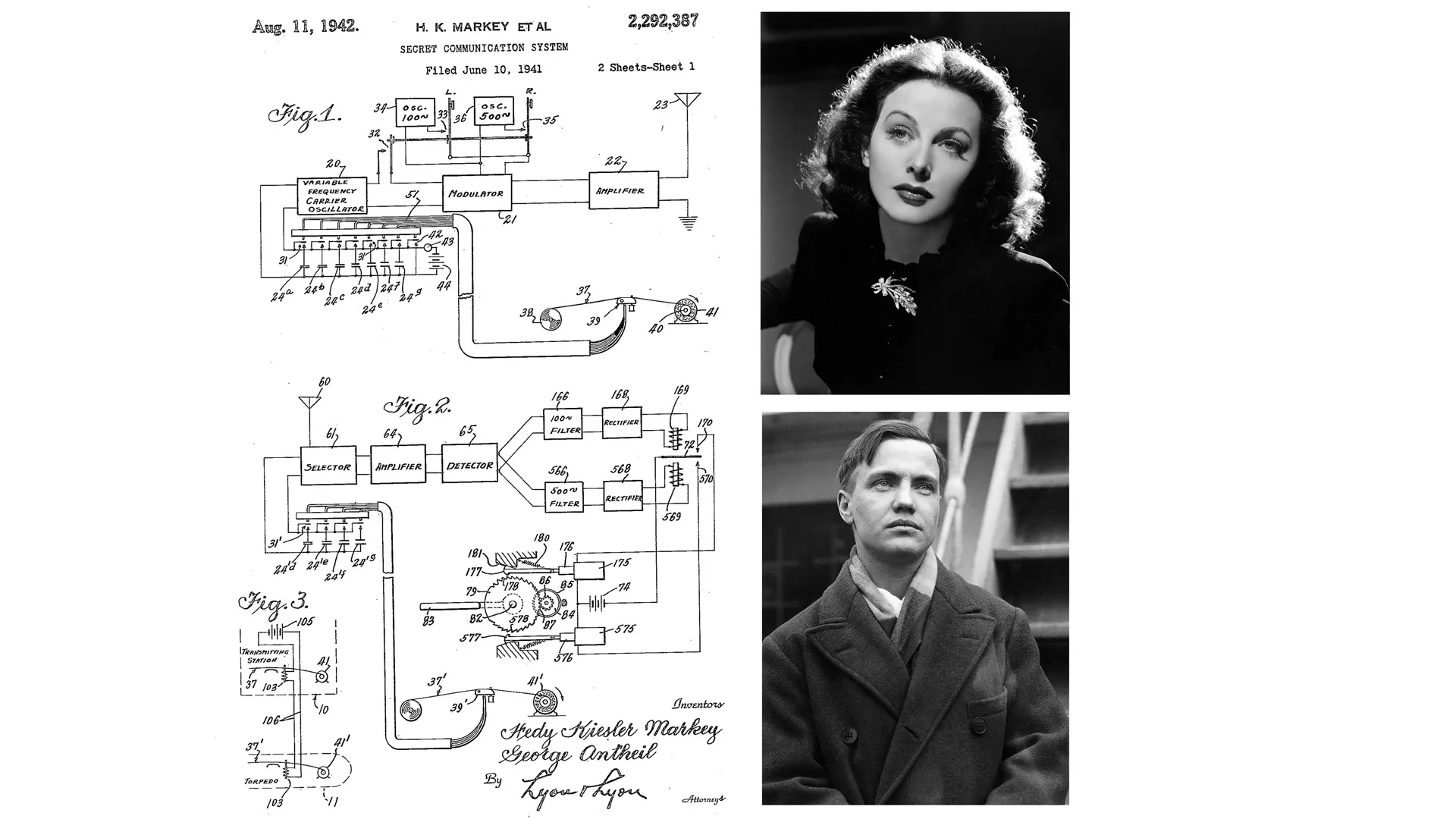
Lamarr worked alongside George Antheil, an avant-garde composer known for experimental music. Their invention drew inspiration from player pianos, using synchronised patterns to shift frequencies in tandem. It’s an unexpectedly elegant blend of art and engineering – a film star and a composer devising a system sophisticated enough to influence modern telecommunications. Imagine doing this yourself?!
Hollywood didn’t appreciate her…

She was underestimated by the industry that made her famous. Despite her intellect, Hollywood largely framed Lamarr as a visual spectacle rather than a thinker. Studios focused on her appearance, often overlooking her technical interests and intelligence entirely. Lamarr herself commented that achieving glamour was straightforward – “one simply had to stand still and look pleasant,” suggesting she was well aware of how narrowly she was being perceived. Do you think things have changed?
Her invention arrived too early to be fully appreciated…

Although Lamarr and Antheil patented their frequency-hopping system in 1942, the U.S. Navy did not implement it at the time. The concept was considered too complex for the available technology, and it was set aside. Decades later, as electronics advanced, the same principles proved not only workable but essential – an idea that had simply been waiting for the world to catch up.
Recognition came late – but, better late than never!
For many years, Lamarr’s contributions to science and engineering went largely unrecognised. It wasn’t until the later decades of her life that she began receiving formal acknowledgment, including awards for her role in developing spread-spectrum technology. By then, her work had already shaped the invisible infrastructure of modern communication – proof that her legacy extended far beyond the silver screen.