As Bangladesh enters a new democratic age after what has been widely reported as the first free and fair election held in the country for almost two decades, Meneesha Kellay, Lead Curator of an upcoming exhibition focussed on South Asia looks back at a visit to a region redefining itself.
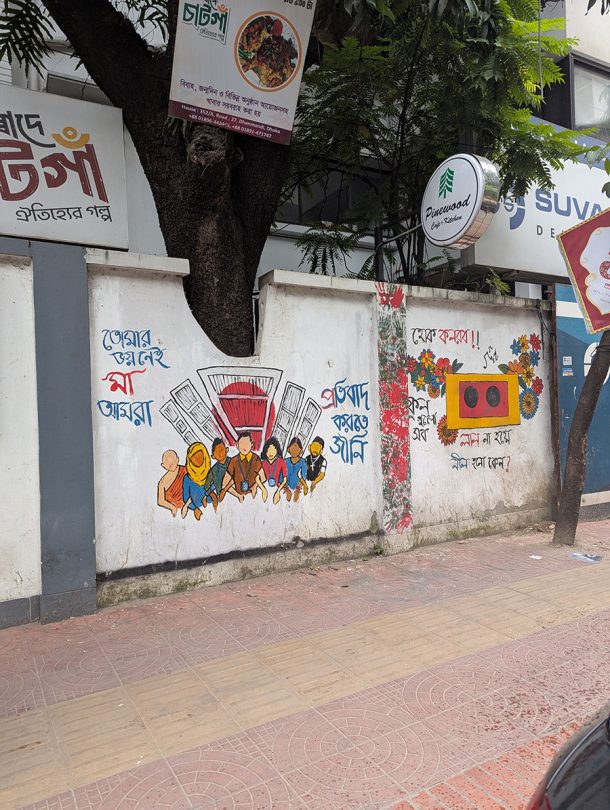
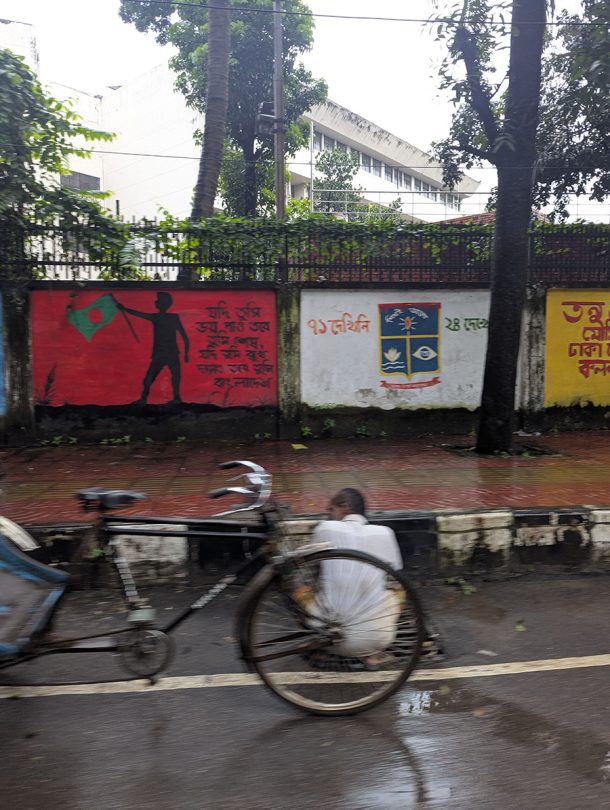
Over a year after the gen Z uprising toppled the autocratic regime of Sheikh Hasina, remnants of the movement are visible across Dhaka, the country’s capital. There was barely a wall in public spaces across the city that wasn’t covered by murals and graffiti in reference to the revolution. The walls became a canvas for public expression – grief, anger and hope, aspirations and solidarity. It could be read it as a kind of people’s constitution.
Generously supported by the Durjoy Bangladesh Foundation (DBF), the research trip covered institutions such as the Bengal Foundation, Brihatta Art Foundation, Britto Art Trust, Counter Foto – A Centre for Visual Arts, and Pathshala Institute where I met artists Munem Wasif, Sarker Protick and Ahmed Rasel. Durjoy Rahman, one of South Asia’s most prominent art collectors, took me through the extensive Durjoy Bangladesh Foundation art collection, featuring artists such as Rana Begum and Rasheed Areen to Ai Weiwei, Lucian Freud and Serge Attukwei Clottey.
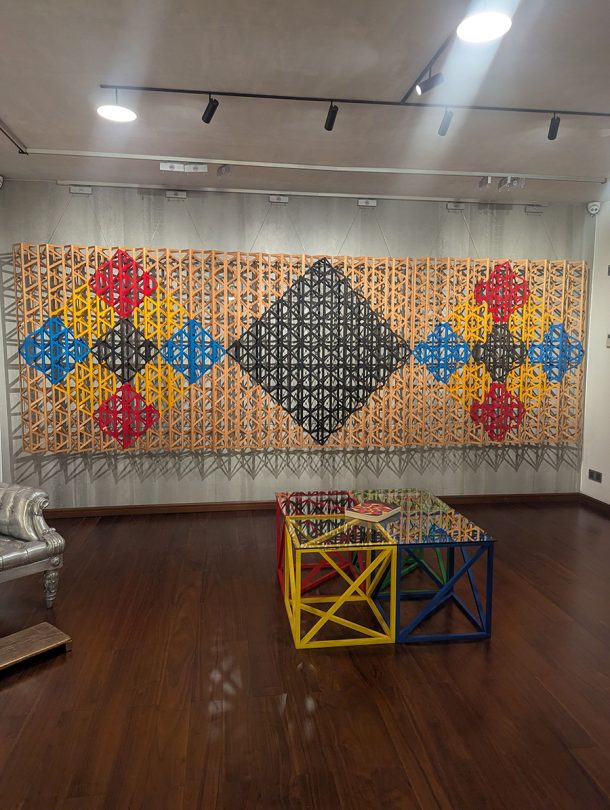


In what first appeared as an abandoned building, revealed itself as an oasis above the bustling streets of Dhaka below. A former tannery lovingly restored by co-founder and Artistic Director of Brihatta Art Foundation, Bishwajit Goswami offers a new perspective on Hazaribagh. A historic leather manufacturing district, the Foundation offers artist residencies, community-rooted programmes and peer-to-peer exchange. The outcome of many of these collaborations are on display in their onsite gallery space.


Visits to architects included Saif Ul Haque, an Aga Khan Award winning architect and a proponent of adaptive, amphibious architecture; buildings that could sit on the ground or float on the water, depending on the season. Architecture that works harmoniously with the Bengal Delta and flooding, not against it. I also met architect of the Bengal Foundation Jubair Hasan, Kazi Fida Islam, Saiqa Iqbal Meghna and visited Marina Tabassum’s Bait Ur Rouf Jame Mosque. Modest in scale and form, the mosque uses terracotta brick as its principal material, beautifully arranged to allow light to act as ornamentation.


Artists welcomed me into their homes and studios, Dhali Al Mamun and Dilara Begum Jolly took me through their deeply moving archive of painting and fibre artworks, tracing the remnants of colonialism to the horrors of the Liberation War of 1971. Yasmin Jahan Nupur led me through her sanctuary on the outskirts of Dhaka at Vukhanda, as well as an artist space, the garden hosts a ceramic studio and café.
The most memorable meal of the week was a home cooked lunch with Tayeba Begum Lipi and Mahbubur Rahman artists and founders of Britto Arts Trust. Britto’s artist network explores food politics, displacement, and culture through empowering its artists to create highly experimental work.


Former model and fashion designer, Bibi Russell’s office was a treasure trove of memorabilia from her glamourous international career. Filled with news clippings and awards from her pioneering work with UNESCO supporting over 35,000 weavers in rural Bangladesh. Chandra Shekhar, a master craftsman in textile design, took me through the art of Jamdani, Bangladesh’s most celebrated textile tradition. I viewed an exquisite 200-year old jamdani that was as light as a feather. Chandra Shekhar’s love for the craft was clear, he commented, “Jamdani cannot be replicated by machine. Its sheer transparency and delicacy are like weaving magic that floats in the air.”


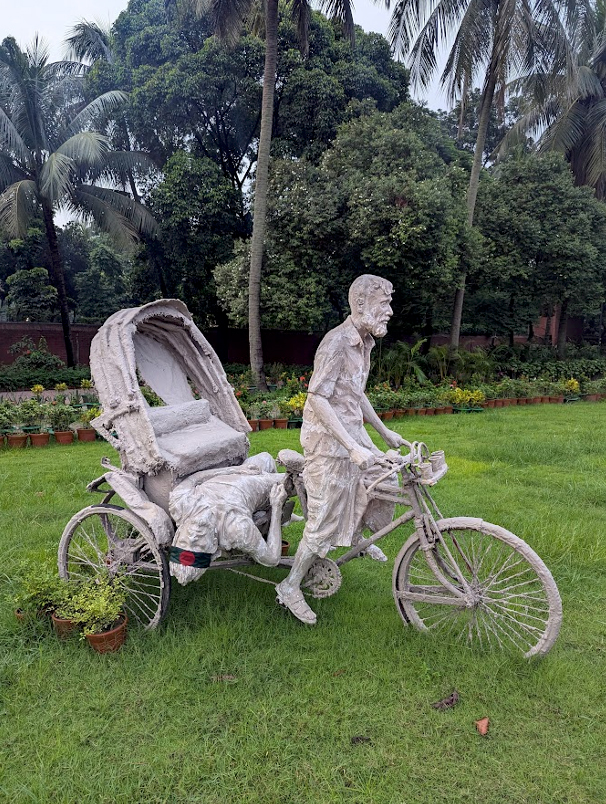
I had the unique privilege of visiting the National Parliament by Louis Kahn, one of the most extraordinary works of 20th-century architecture. The building was eerily empty as the parliament had been suspended while the interim government was in place following the end of former Prime Minister Sheikh Hasina’s 15-year rule. A masterclass in the play of monumental concrete mass, volume, light and the architecture blends modernism with traditional Bengali elements, such as the relationship to water and geometry. It was a surprise to see traces of graffiti from when parliament was stormed by protestors during the uprising. I detected pride in the faces of the officials who showed me around the complex, they were not keen to erase the significance of 7th July 2024. I was then taken to the former Prime Minister’s residence, which was in the process of being converted into a museum. The July Revolution Memorial Museum features a memorial commemorating the 4,200 people killed during the protests and during Hasina’s tenure, designed by Marina Tabassum and sculptures based on iconic photographs from the uprising – including a striking sculpture of a rickshaw driver carrying the body of a slain protester back to his family. The visit was a moving experience; you could feel the weight of history and the profound need for change and hope for a positive future.



Finally, I spoke with Tanzim Wahab curator, academic, and the Director General of Bangladesh National Museum. He was acutely aware of the challenge ahead. I was captivated by his acceptance of the enormity of the task and his confidence in the creative community’s ability to rise to the challenge. He left me with speculations on the future of Bangladesh; can culture heal? Can art be a space for collective reconciliation? The creative scene in Dhaka is thriving, and I have no doubt we will continue to see it bloom.
This research trip was funded by the Durjoy Bangladesh Foundation (DBF), one of several trips funded for V&A curators and academics to further their understanding of the region. Alongside this, Durjoy Bangladesh Foundation has also established a five-year acquisition fund for modern and contemporary works by artists and makers from Bangladesh and the diaspora for the V&A’s collection, which will coincide with the re-opening of the museum’s South Asia Gallery in 2028 following extensive refurbishment. The programme will also support a commission by an artist from Bangladesh or the diaspora at the soon to open V&A East Museum.