As my 12 months as Community Engagement Assistant for the Learning and Engagement team comes to an end, I have been reflecting on the experiences and opportunities I have had for growth, connection and creativity.
I had always hoped that one day I would be able to work at a place rich with history and possibility. However, as many of us know, breaking into the arts and cultural heritage sector can be challenging. Furthermore, growing up I rarely saw anyone who looked like me or shared a similar background to me, visiting or as interested in museums and galleries, let alone working in them.
When my STEP internship first began, I had a strong idea of what a museum was, and less of what a museum could be. This idea was based on my long-lived love for places and spaces that hold and conserve knowledge, history and culture. My love and passion for people, culture and stories is something I discovered from a young age. As I grew, it grew with me, expanding as I continued to explore the many manifestations of what it means to be human and the ways in which we understand ourselves, our world and our experiences throughout time and space.
I started my role at a poignant time in V&A East’s history and mission. Storehouse had only been open for less than a year, and they were soon to open the new V&A East Museum. Both sites were unique not only in architecture, but also in where they were located, the objects and the stories they held and how they were displayed. I remember when I first started, there were frequent discussions about the positive and negative impacts the institutions could have on the local area, economy, and communities.

These impacts could not be ignored or taken lightly, instead they needed to be deeply and realistically considered as well as ethically and responsibly navigated. This, I learned, played a fundamental role in the work of the Learning and Engagement team. Initially, I knew very little about Learning and Engagement or the work they did. I assumed it was similar to the work of Curatorial teams and, in some ways it is as the two teams were once one. However, as my manager explained early on, their roles and objectives are quite distinct.
My colleagues in Learning and Engagement care for local, underrepresented and often marginalised communities. They help young people, and people of all ages, ethnicities and socioeconomic backgrounds engage with the museum in meaningful, reflective and ethical ways. Museums have historically faced challenges in engaging certain demographic groups, and these disparities continue to persist. For example, the Community and Engagement Survey 2025/26 statistics show that several ethnic global majority communities remain less likely than the national average to visit and engage with museums and galleries.
It was also found in the Community and Engagement Survey 2025/26 that those from lower socioeconomic backgrounds, for example those in manual occupations and who are unemployed, were less likely to engage with museums and galleries both physically and digitally. These statistics demonstrate the deep need for, and purpose of, our colleagues and teams in Learning and Engagement. They make it their mission to create programmes and opportunities for those who have long been systemically inhibited and overlooked in terms of access, representation and opportunities professionally, creatively and educationally in the arts and cultural heritage sector. As V&A East seeks to build meaningful relationships with its local communities, the Learning and Engagement team plays a crucial role in ensuring its mission is realised in practice.

In the team we have often come across many people of all ages from the local area that have never visited the V&A East sites, much less known they were there. It was important that we helped local people “cross the threshold”, as one of my colleagues would say, from “old Stratford” to the “new Stratford”. Many of these people shared that they had begun to feel increasingly disconnected from the new changes happening in the area.
The area has undergone significant architectural and cultural changes, but this does not necessarily mean that the benefits of these changes have been felt or experienced equally or at all by long-standing local communities. So, rather than encouraging communities to abandon their own cultures, identities and heritage, the aim is to meet the needs of these local groups as well as address and reduce the inequalities that globalisation, gentrification and wider socio-political factors create.
One of V&A East’s and the Learning and Engagement team’s major and most well-known projects is a testament to this – The Robin Hood Gardens legacy project. Afia Yeboah, Senior Producer for Community Partnerships and Participation and Ben Selig, a Curatorial Fellow at the time, worked closely with former residents of Robin Hood Gardens and young East Londoners on multiple events and activations in honour of the stories and histories of those that lived in the estate.

One of the first events that I facilitated and supported was the Robin Hood Gardens x FLOWERS gallery event, a celebratory event where the Robin Hood Young Producers launched their publication, Robin Hood: The Arts of Occupation. The Robin Hood Gardens legacy also continues in the creation and running of the People, Home and Housing walk programme led by Asma Begum, a previous inhabitant of Robin Hood Gardens.
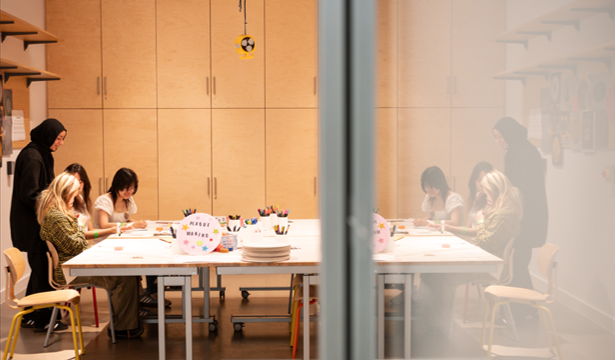
I have had the opportunity to work alongside a diverse range of passionate and talented local creatives and organisations including Nourishment, a community & cultural marketing agency that helped bring Ideas Exchange to life. Ideas Exchange is a 6-month micro-residency programme where local and global creatives of all ages and backgrounds come together to discuss poignant topics in society today. I also worked with Ruff Sqwad Arts Foundation, a charity founded by Grime Legends Prince Owusu-Agyekum (Rapid) and Ebenezer Ayerh (Slix). Through these programmes, as well as Make Space, I came to understand the importance of third spaces: places where people can come together to share, learn, create, and connect without judgement or expectation.

As part of my role I also supported and facilitated school and colleges creative learning sessions. I watched young people from areas, schools, and colleges that I knew of and grew up close to, come to Storehouse and East Museum to explore their interests, creativity, and voices beyond the traditional classroom and curriculum.
Many of the students were often unsure at first as the creative studios, albeit stimulating and new, required a different way of engaging and interacting compared to what students are used to. The Creative Studio Practitioners, Sally Barton and Gal Leshem, alongside Learning Producer Sara Ismail, do a fantastic job of making the young people feel welcome and comfortable. They continually remind students that the space is one for critical thinking, curiosity, and creative experimentation, regardless of whether students consider themselves artists or particularly creative. Young people often leave those sessions feeling pleasantly surprised by how much they enjoyed the visiting the Collections Hall and the creative making activities as well as surprised by what they had been able to create.
Looking back, my year as Community Engagement Assistant has been deeply rewarding, representing the fulfilment of a long-standing ambition of mine. I have grown in confidence and have a deeper awareness of my skills, interests and capabilities. There have been many moments where I have seen myself reflected in the young people who come through our doors, eager to express themselves beyond the boundaries of home or school, yet sometimes uncertain or hesitant about doing so.
I have also seen myself in many of the adults who visit, some who seem to be searching for a creative outlet they never felt able to pursue. With the demands of work, adult responsibilities, and long-held ideas about who gets to be creative, where and how, many have given themselves countless reasons why they cannot or should not see themselves as an artist or artistic. I have realised that beneath it all is the same desire for self-expression and creative freedom.

Throughout the last 12 months, I have had the unique opportunity not only to witness the immense time, care and collaboration required to keep an institution of this scale and reputation running smoothly but also to be a part of opening a completely new museum. V&A East Museum is a space for creatives, artists, local communities, young people and people across generations to create, respond to and reflect on the history, heritage and future of East London, a place where many, myself included, call home.
East London is a place that has long been overlooked, undeserved and undervalued, similar to the people that my team serve. Despite the historical, political and socioecomomic challenges many of the people and groups in the area have faced, the people and communities have continued to create, innovate and thrive. The collections, stories and this museum is a reflection of this.
Highlights
Ideas Exchange

Ideas Exchange is a 6-month micro-residency programme held every second Sunday of the month. The 2025-26 season was delivered by Komal Khetia, Senior Producer for Partnerships and Participation in collaboration with Nourishment, a community and cultural marketing agency founded by Tito Mogaji. Each session had a different thought, question or idea to be reflected upon for each session, ranging from “How youth culture inspires, disrupts and drives east London forward” and “The economics of creativity: navigating the creative economy” to “What does success mean today?”. Creatives from the local area and beyond in coming together and connect, discuss, debate and create.
The new season, starting October 2026, similarly invites emerging and established creatives to ask why, “why we create”, “why we build” and “why we connect”. The programme and the practitioners offer myself and others the opportunity to take some time out to check in with ourselves and other while reflecting on their creative practices, ways of thinking, feeling and being.
Making Sound

In April 2026 V&A East Museum opened, halfway through my placement year, a little before V&A Storehouse’s first birthday. A lot of work was being done by across all V&A East teams to not only balance the needs of having recently opened a new site that hadn’t been open for even a year but also meet the needs of opening a completely new museum. Not many people can say they have had the opportunity to witness and partake in the opening of a new museum. Many of the museums we know and visit today, particularly the most famous ones, have been around for generations and existed long before most of us were born.
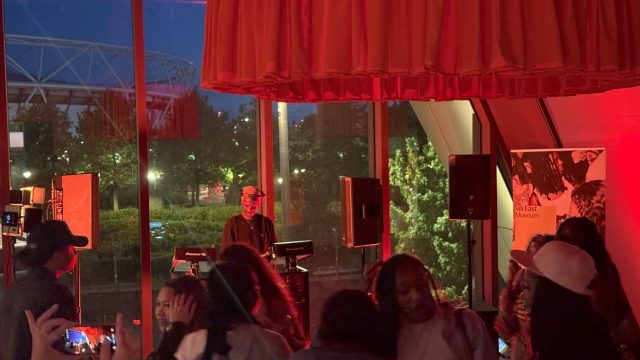
The museum’s inaugural exhibition is The Music is Black: A British Story, “125 years of Black music-making in Britain. Spanning four continents, this is a story of excellence, struggle, resilience and joy.”. Making Sound was created in response, a youth-focused initiative inspired by our inaugural exhibition exploring sound production, the creative potential of music and the rich history of music and broadcasting in East London.
We partnered with Ruff Sqwad Arts Foundation to plan and deliver the programme over a 6-month period from April to September. The project ran alongside Sounds & Stories, a project for 16–24-year olds to collaborate and reflect on the historical and societal themes highlighted in the exhibition while developing their music journalism, content creation and skills Lucy McVeigh, our Young People Producer worked beside Elijah and Music Journalist Laviea Thomas in delivering the project.

Both projects benefited significantly from running alongside one another. The young people regularly expressed that the opportunity to connect with and learn from young people across both programmes was one of the most valuable aspects of their experience. The projects successfully brought new young people “across the threshold” and into V&A East Storehouse and Museum, many of whom had never visited either site before or had not been to a museum or other cultural institution in years.
This reflects the reality of V&A East’s target audience of 16-24 year olds, who are generally less likely than the national average to engage with museums and galleries in person but the most likely to engage with them digitally. While both of the Making Sound and Sounds and Stories groups connected deeply with the programme and exhibitions, they did so in different ways. Individuals who initially appeared shy, reserved or hesitant gradually became more comfortable and confident being in the spaces, engaging with the team and exhibition. Over time, many began to recognise that these spaces, collections and creative opportunities were for, and to, them. Seeing that shift in confidence, belonging and engagement was one of the most rewarding outcomes of the project.
The projects highlighted an important reality for those seeking to engage underserved and underrepresented groups and communities. These groups are not a monolith and should not be viewed as a single uniform audience. Within them are diverse individuals and subgroups with different experiences, needs and perspectives that can easily be over looked if not carefully considered. Levels of engagement, confidence and belonging vary widely, as do interest in museums and cultural institutions. Engagement with these spaces is also influenced by a range of socioeconomic, cultural, educational and personal barriers.
Robin Hood Gardens x FLOWERS Gallery

This event was a conversation between the young producers who had worked on the Robin Hood Gardens legacy project as an iteration of the V&A’s youth collection and David Hepher, an artist whose pieces were on display at the gallery as part of the The Elegy of Robin Hood Gardens exhibition. At the event the young people on the programme read and performed excerpts from their publication Robin Hood: The Arts of Occupation, a collection of spoken word, poetry reflecting on memories and experiences of living in Robin Hood Gardens or visiting loved ones who lived there and the impact of its demolition on the lives of those people, families and communities who called it home.
The work produced by the Robin Hood cohort, Afia, Ben and others in response to the demolition of Robin Hood Gardens explored themes of social housing, redevelopment and displacement. It demonstrated the kind of work museums can and should do to elevate the voices and experiences of the communities they represent. As Janine Downes shared at the Museum Ideas Conference, “museums exist only because of the communities they represent”. Museums have a responsibility to represent those communities ethically, respectfully and authentically.
Makers Day

Makers Day 2026 was the pre-opening event of the museum led by Kamal Hussain, where 1075 creatives, teachers, students, local communities, industry professionals, family and friends were able to experience a special preview into the space, the exhibition and the permanent Why We Make galleries. There were talks from the Gus Casely-Hayford, Director of V&A East, Dr Chloe Kellow and Zofia Trafas White, curators of the Why We Make galleries, Senior Producer for Communities and Participatory Practice, Afia Yeboah and myself about the Making Sound programme and Josephine Small, Exhibition Research Assistant for The Music is Black exhibition. There were making activities such as a collective weaving piece, Interwoven Futures: The Collective Loom, led by our Creative Studio Practitioners Sally and Gal and some of V&A East’s Youth Collective Community as well as a Zine making session led by local artist Sahra Hersi.
There was something incredibly special about seeing such a diverse and large group of people inhabiting a museum space in this way. The museum felt alive in a way that I had never experienced before, it was warm, welcoming, almost homelike. People connected over food, shared interests, art and ideas. All were united by the fact that in some way indirectly or directly, they had contributed to the museum’s creation and development
Careers Week: Debate Mate Workshop

Group debate gives young people the opportunity to think critically and deeply about real world issues. When provided with the time, guidance, agency and authority to speak on these issues, they often bring a level of insight and thoughtfulness that is genuinely inspiring.
Seeing young people from local schools and colleges speak so eloquently and passionately about challenges being faced in the museum sector today, many of which adults in working in the sector struggle to comprehend, let alone solve, filled me with an immense sense of pride and joy.
Acknowledgments
Thank you to the V&A East teams and colleagues who shared their time, passion and wisdom with me over the past year; who thought of me when opportunities to learn, connect and grow arose; and who work incredibly hard to make V&A East all that it can and should be.
Finally, a special thank you to Lily Towers and my manager, Kamal Hussain for this opportunity. Thank you the V&A East Learning and Engagement team – Sara Ismail, Sally Barton, Afia Yeboah, Catherine Ritman-Smith, Komal Khetia, Derya Adiyaman, Lucy McVeigh, Gal Leshem, Sophie Alonso and Honey Birch for making this experience one of a kind.
Thank you all for welcoming me from day one, for your encouragement and for trusting me with the privilege of building relationships with and supporting communities that are too often overlooked. It has been an honour and one of the most meaningful parts of this journey.