
David Bowie utilised masks in many forms throughout his acting and musical career, periodically recasting his face – literally and figuratively – in different modes and expressions. The David Bowie Archive holds dozens of these masks, each simultaneously capturing a specific moment in time and presenting a timeless, blank canvas.
Bowie’s early work in mime in the late 1960s first formed his fascination with masks. Bowie trained with mime artist and dancer Lindsay Kemp, whose productions drew on pantomime and commedia dell’arte traditions. One of Bowie’s first music videos was a mime sketch entitled The Mask, which follows a young man who discovers a mask in an antique shop which allows him to become a famous mime artist. Once onstage, he realises he cannot remove the mask and dies under the spotlights; a prescient narrative which mirrors Bowie’s complex relationship with fame and persona.
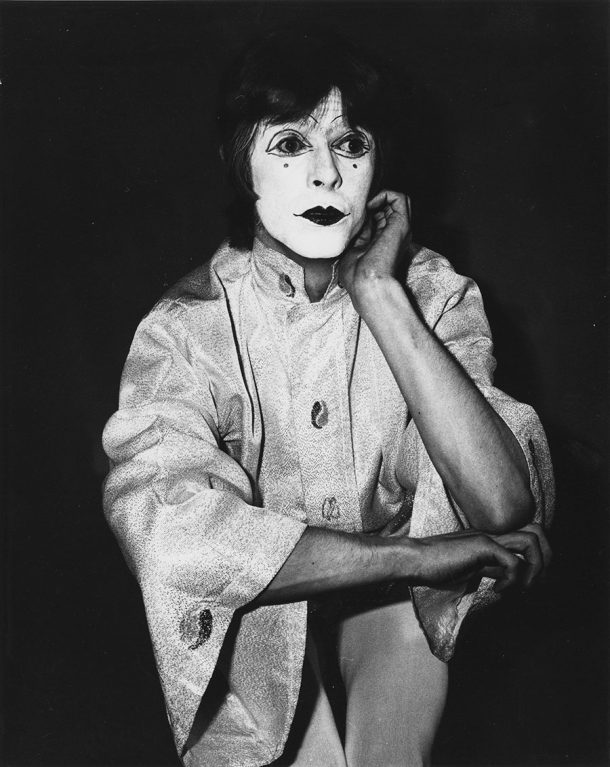
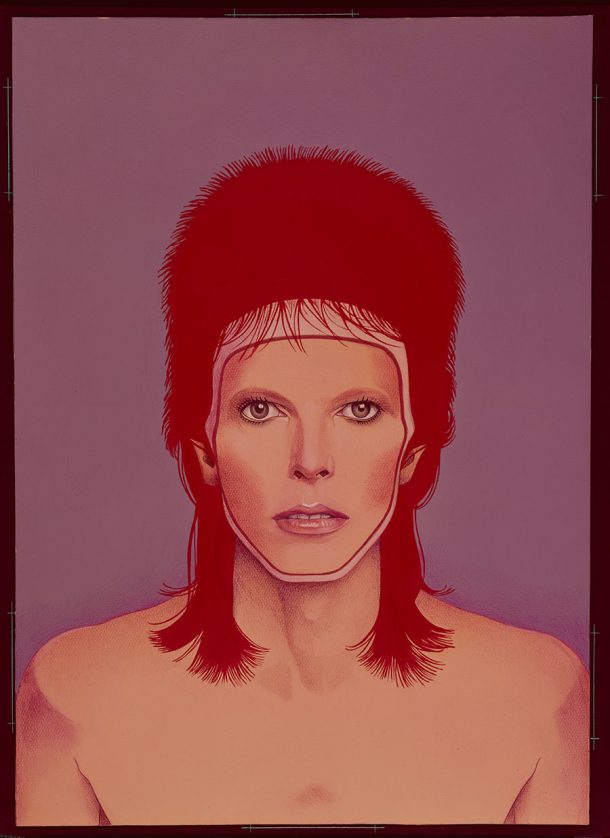
Bowie was also inspired by the masks and mask-like makeup of Japanese theatrical traditions Kabuki and Noh. In 1973, Bowie gifted a book about Japanese theatrical masks to his friend and makeup artist Pierre LaRoche. It seems that this book heavily influenced LaRoche’s makeup designs for Bowie going forward, most significantly for the album cover of Pin Ups. In this cover, Bowie and Twiggy wear painted makeup ‘masks’, transforming their real faces into uncanny, artificial expressions.
In 1974, Alan Yentob filmed the documentary Cracked Actor (released 1975). The opening sequence depicts Bowie backstage at the Universal Amphitheatre in Los Angeles on the Diamond Dogs tour, having a mould taken of his face. The mould-making process was carried out by Bill Malone, a special effects artist known for his work on horror movies. A series of translucent, silver plastic masks were made from the mould, one of which Bowie holds up in the opening of the documentary. Sadly, these masks are now lost – however, the mould was kept. There are many life masks in the archive which appear to have been made at later dates, but from this 1974 mould. They are distinguishable as such by the thin nature of Bowie’s face and slightly open lips.
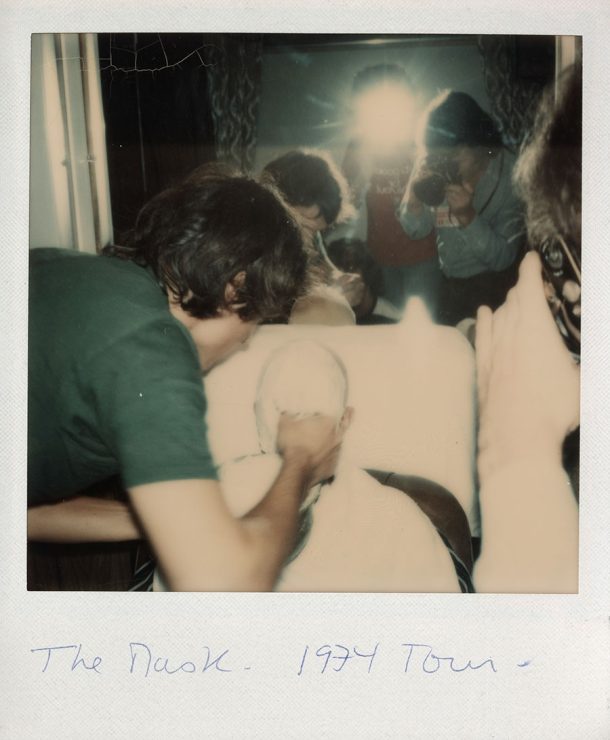
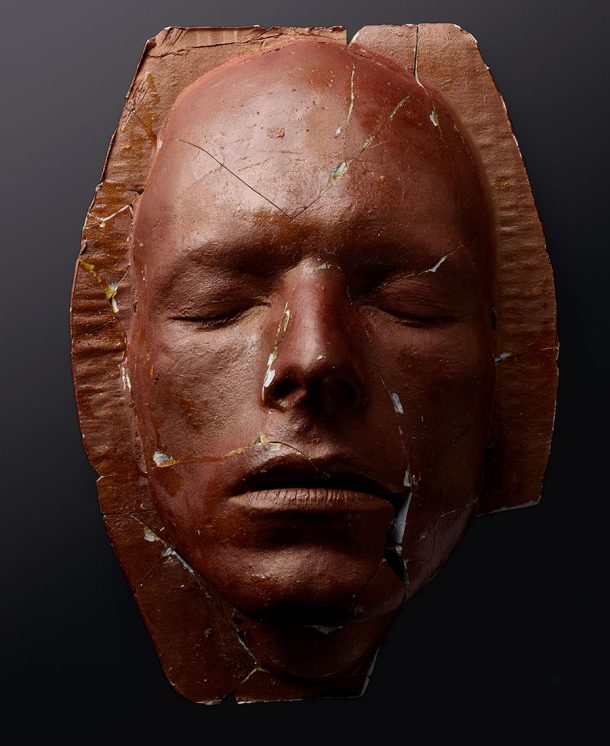
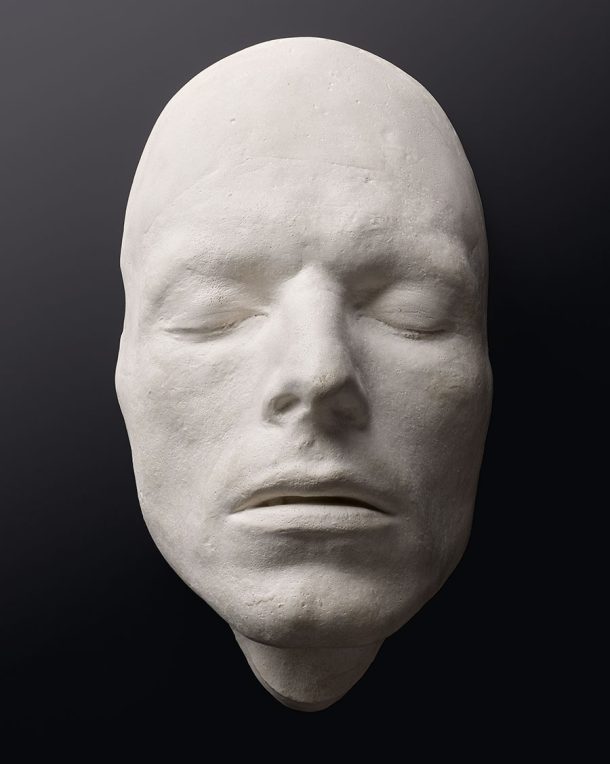
In 1982, another mould was made of Bowie’s face during production of the film The Hunger. In the film, Bowie plays a several-hundred-year-old vampire who rapidly begins to lose his outward appearance of youth. Veteran movie makeup artist and pioneer of prosthetics Dick Smith was employed to create this effect. Smith took a mould of Bowie’s face in his basement workshop in his suburban New York home. He then produced foam latex pieces that could be layered on top of a cast, to give the appearance of different ages.
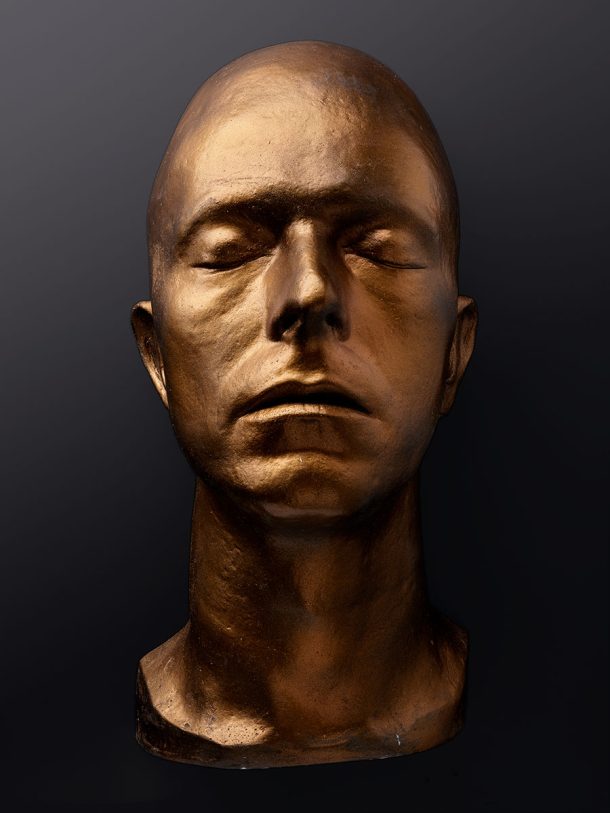
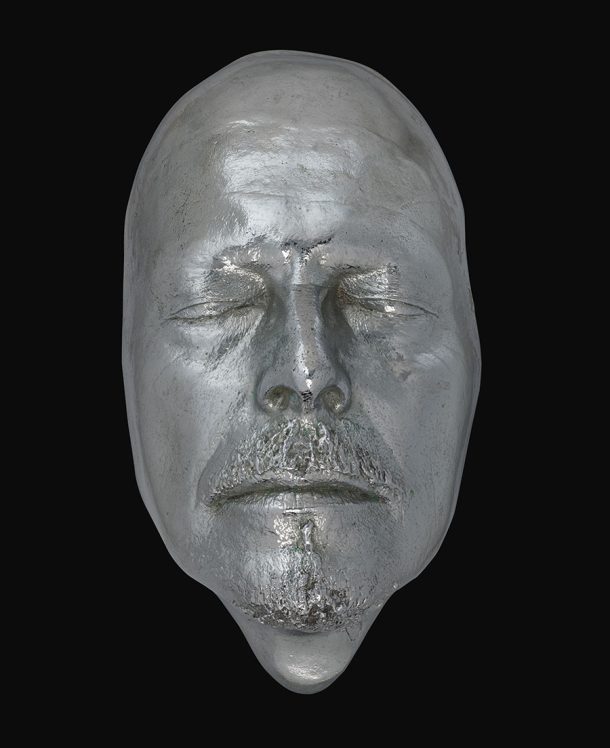
In 1995, Bowie produced his first solo art exhibition in collaboration with South African artist Beezey Bailey, which included a series of silver resin masks. Bailey created these masks in his studio and later sold a limited edition run of the casts. They are distinguishable by Bowie’s small goatee beard and moustache. Two years later in 1997, Bowie collaborated with another artist, Tony Oursler, to create the music video for the song ‘I Can’t Read’. In the video, Bowie wears an irregular-shaped white mask, onto which different iterations of his face are projected, creating a distorted, eerie appearance.
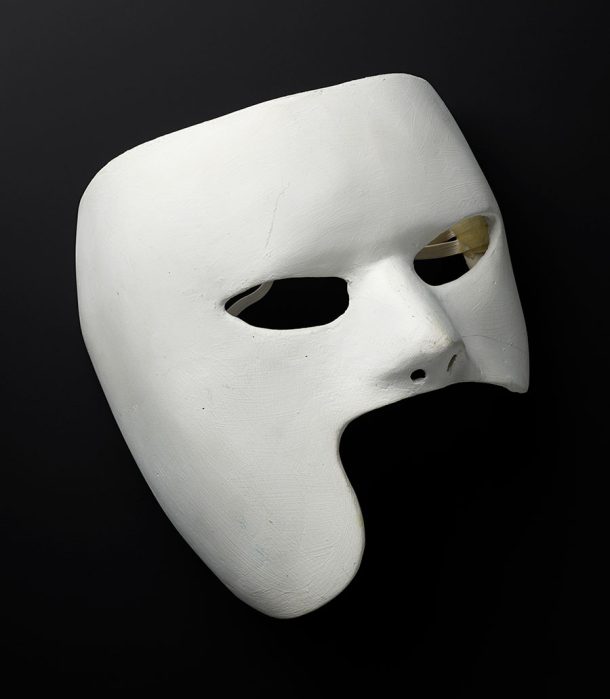
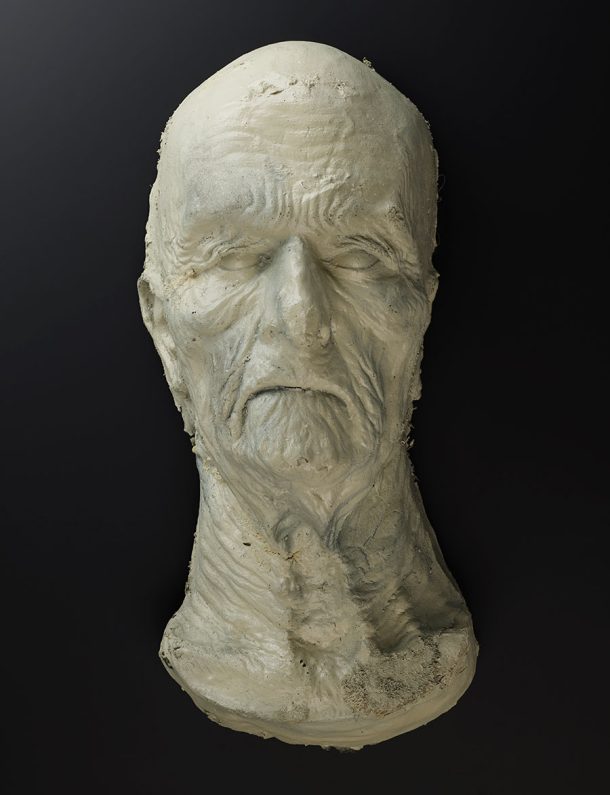
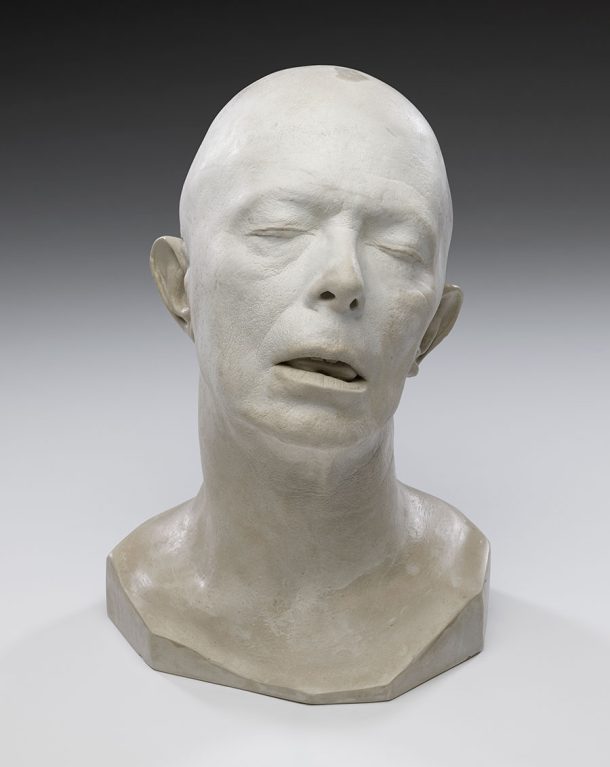
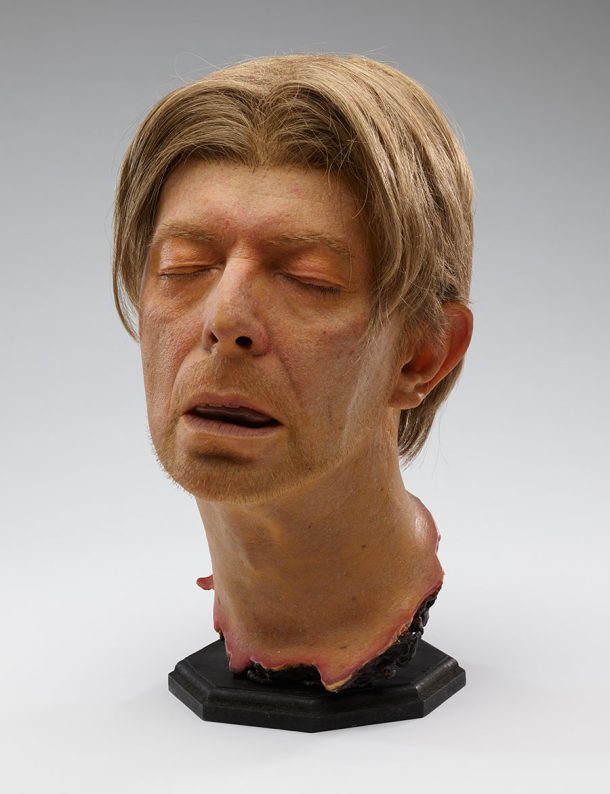
The final known mould taken of Bowie’s face was also in 1997, for the television show The Hunger. In the show, Bowie’s mad artist character eventually dies, and his body is staged as an elaborate final work of art. Canadian special effects makeup artist Erik Gosselin created a mould of Bowie’s face and body, which was then used to make several particularly gruesome and disturbingly lifelike plaster casts and silicone props.
One of David Bowie’s final major magazine covers was for NME in 2013, to advertise the surprise release of The Next Day. The editor of NME at the time, Mike Williams, recalled that the photograph for the cover arrived unexpectedly in his inbox, and he saw that ‘…staring out from behind the mask [were] the unmistakable eye of David Bowie’. Because, naturally, Bowie chose to wear another mask for this cover. This mask was a flat, blank silver expanse, as if to obscure his age and identity to any but his truest fans.
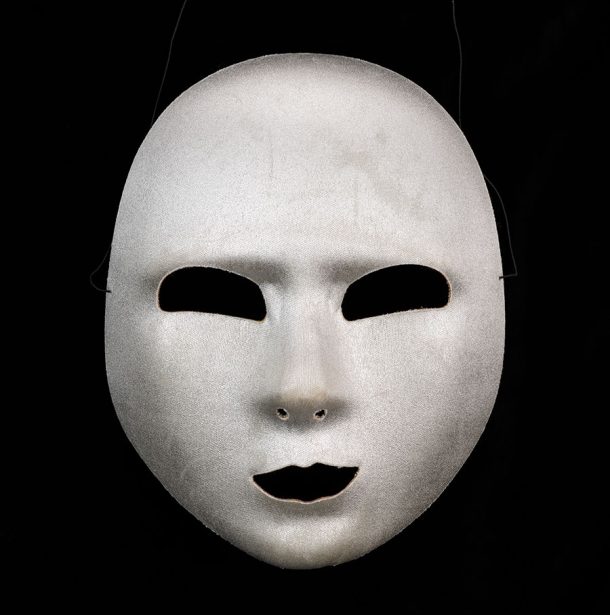
Several artists have acquired copies of moulds of Bowie face and created masks. Mark Wardel and William Forsche are two artists who had their pieces actively acquired by Bowie himself for his archive. Forsche recalled that after meeting Bowie, he was asked to send his artistic casts to Bowie’s New York office. Similarly, Mark Wardel was contacted by Bowie’s management and asked for two masks for the archive; he sent an additional Pin Ups inspired mask as a Christmas gift in 2015.
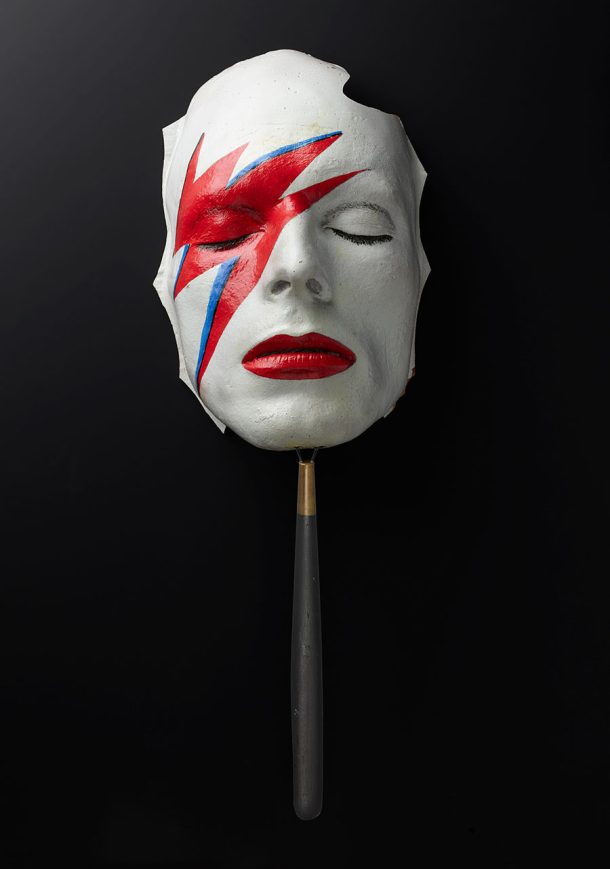
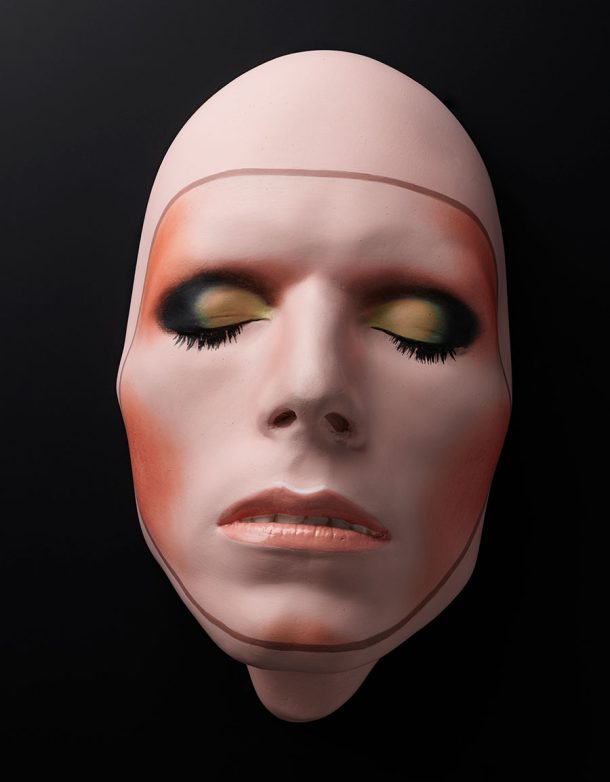
The David Bowie Archive shows us that Bowie’s was a face continuously photographed, drawn, filmed, cast, replicated, obscured and distorted. Bowie’s use of masks, moulds and casts was one of his most powerful tools in creating his own mystique. His face and image are at once iconic and elusive, ubiquitous and unfathomable.
Really useful and easy to read. If you like friendly online competitions, challenge your friends with this online click test. It records clicks during the selected time and displays scores instantly. Everyone gets tested under the same conditions, making score comparisons simple and fair.