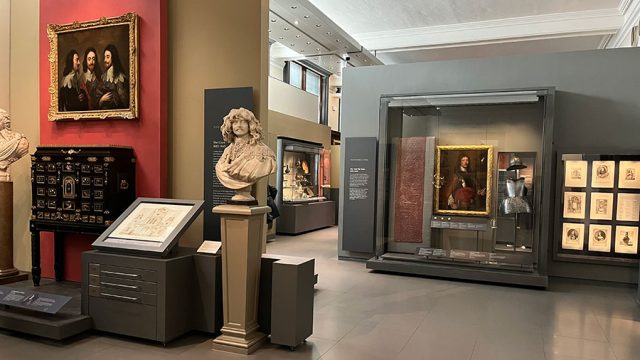
There are currently 3,000 objects on display, spread across two galleries, at the V&A Wedgwood Collection.
For the past two years, cataloguer, Heather Densham, and junior photographer, Morgan McMahon, have been working behind the scenes to catalogue and photograph all objects on display to make them accessible via Explore the Collections.
As their work in the gallery draws to an end, they wanted to share some of the highlights of their time spent amongst the objects.
Morgan’s stand out moments
As part of my role, I began to photograph gallery objects in August 2023 – methodically working from case 1 to case 63 every Monday and Tuesday for two years.

A notable highlight for me in was a pair of white terracotta figures made in 1769, located in case 26. The figures depict two Herculaneum dancers who, when placed side by side, face away from each other. Although two separate objects, they are displayed together and were photographed both as a pair and individually to showcase their uniqueness and how they interact. The soft, matte finish of the terracotta leant itself to a two-light setup, with reflectors positioned on both sides to catch and redirect the light back onto the figures. This setup emphasised the details and texture of the figures.

March 2024 marked the start of Gallery 2 photography. This gallery features an impressive 2300 objects, all needing new imagery. Upon walking into Gallery 2, you will find a portrait miniature situated in lectern 32, which is my second highlight. The portrait miniature features a watercolour painting on ivory of Elizabeth ‘Bessie’ Allen (1805), mounted behind glass in a gold frame. The reverse side holds a lock of Elizabeth’s hair.

Photographing the miniature presented a few challenges. I used a copy stand with a black background and positioned two lights at a 45-degree angle on either side of the setup. This arrangement caused the gold frame to reflect light, creating highlights on the frame while the outer edges appeared darker due to the lack of direct light. To achieve a more consistent lighting effect around the frame, I added a modified lampshade over the object. The lampshade served as an additional soft box, effectively spreading and diffusing the light evenly around the frame. I then merged the images to create one photograph.

Heather’s highlights
I joined the cataloguing project in April 2024, beginning with case 37 in Gallery Two. With over 30 display cabinets in this gallery alone, there was a wide range of material to engage with right from the start.

One object that really made an impact on me was the Wedgwood majolica oil lamp in case 40, made in about 1880. Shaped like a monkey holding a nut above its head, it is both charming and unexpected—and the first object I worked on that wasn’t tableware! It brought together multiple materials: a glazed ceramic body, a delicate glass lampshade and chimney, and finely crafted brass fittings.

A small but easily overlooked detail is the inscription on the brass that reads, ‘HINKS’S / DUPLEX / PATENT’. I did some digging and discovered that the fittings were made by James Hinks & Son, a Birmingham-based company known for their innovations in oil lamp technology. In 1865, they patented the Duplex burner, which used two wicks instead of one. This simple but clever change made the lamps significantly brighter and more efficient. It’s a great example of how Victorian design often combined decorative flair with industrial innovation.

Toward the end of Gallery 2, there is a collection of 26 plates displayed along the walls and ceiling. These plates depict significant people, places, and motifs related to America, produced throughout the 20th century. They were the final objects I catalogued within the gallery space. Many of the plates had detailed information on the reverse, but two stood out from ‘The American State Flower Plates’ series from 1939. Each plate features a grouping of four flowers that represent an American state. One plate includes flowers from Connecticut, Delaware, New York, and Rhode Island; the other from Vermont, Maine, New Hampshire, and Massachusetts. These plates show that in the 1930s, America remained an important market for Wedgwood, with sales sustained by affluent consumers despite the Great Depression and the beginning of World War II.

Now that the photography phase is complete, the galleries are open seven days a week. Cataloguing of the last seven display cases will take place in our reserve store. Each week, a selection of objects will be temporarily removed from display to allow this work to continue behind the scenes.
Curious to learn more about the Unpacking Wedgwood project? Follow us on Facebook, Instagram or X for updates and insights.