
The V&A Global Narratives Network (GNN) is a collective of staff and volunteers. We create supportive and inclusive spaces for those who belong to the global majority. The members celebrate, share and problematise culture through regular events, updates and information-sharing with groups across the museum.
As co-chair of the Global Narratives Network, it was a real privilege to host an intimate conversation with Do Ho Suh; an artist whose work has long shaped how we think about home, movement, and belonging across borders. The event brought together colleagues and practitioners to reflect on liberation at the intersection of art, architecture, and politics; guided by Suh’s quietly attentive and thoughtful practice.

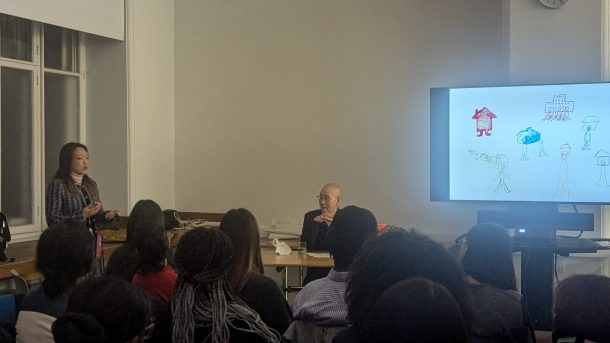
Do Ho Suh first came to international attention when he represented Korea at the 49th Venice Biennale in 2001. Since then, his work, spanning sculpture, installation, and film, has consistently returned to a deceptively simple question; “How much space can I carry with me?” Through meticulously constructed, life scale replicas of domestic interiors made from translucent fabric, Suh explores home not as a fixed site, but as something emotional, portable, and endlessly repeatable. His works evoke delicacy and care, while the labour-intensive processes behind them suggest creative ways of remembering, revisiting, and reconnecting with space.
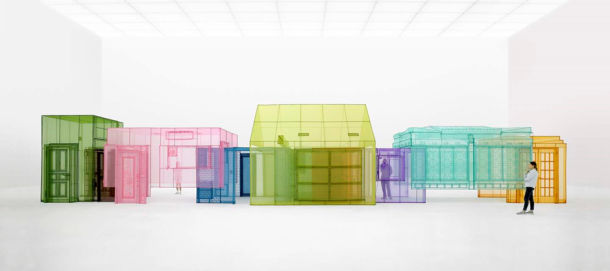
During the conversation, Suh spoke about crossing boundaries, between Korea, US and the UK, past and present homes, inner and outer worlds. His transportable architectures challenge the idea of site specificity itself; sites can be removed from their original locations, folded into suitcases, and reassembled elsewhere, carrying memory, emotion, and lived experience across borders.
A particularly insightful moment came when Suh reflected on working within institutional frameworks. We discussed his collaborations with major institutions such as Tate and the V&A, including his recent film on Robin Hood Gardens, currently on display at V&A East Storehouse. He described how working with small museum or gallery teams can feel fluid and supportive, allowing ideas to be realised closely and intuitively. In contrast, larger institutions bring more complex processes and conditions, such as ensuring accessibility for wheelchair users by widening passageways within installations. Rather than viewing these requirements as limitations, Suh spoke about how they pushed him to expand his ideas, scale up his work, and evolve his practice in response to institutional priorities.
For us as members of the GNN, this conversation captured the very purpose of the group. GNN exists to create supportive and inclusive spaces for staff and volunteers, who belong to the global majority; spaces where culture can be celebrated, questioned, and shared openly across the museum. Emerging in 2020 from a moment of urgency, care, and collective organising, the network has always been shaped by dialogue, mutual support, and staff-led initiatives. Hearing Suh speak candidly about the realities of working with institutions; from the ease of collaborating with small teams to the challenges and possibilities of large-scale organisational structures; resonated deeply with our own experiences. The event offered a rare opportunity to reflect together on how artistic vision, accessibility, and institutional priorities intersect in practice. It reminded us that inclusivity is not a fixed outcome, but an ongoing process of negotiation, listening, and adaptation. By opening up this conversation, the event reaffirmed GNN’s role as a space where difficult questions can be held collectively, where differences are acknowledged with care, and where new ways of working across the museum can be imagined together.
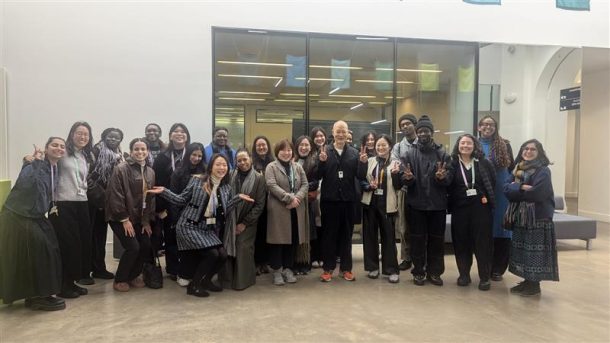
© Global Narratives Network
This conversation with Do Ho Suh on the Global Narratives Network is fascinating! His insights into how personal space informs identity resonate deeply. How do you think artists can further bridge cultural narratives through their work? space waves
Your discussion raises a few interesting points. It encourages a more careful look at the subject.
https://flowerforest.wiki/
Do Ho Suh’s exploration of portable spaces resonates with creative projects that bridge culture and identity, much like the work shared at https://toontones.app/. His dialogue with the V&A Global Narratives Network highlights how art can reframe belonging across shifting landscapes.
Do Ho Suh’s translucent fabric replicas prove how domestic memory can be folded into luggage and transported across borders. That same portable approach to space finds a quiet parallel in how pooplegame organizes its navigation. You can really understand why the GNN would dedicate energy to these cross-border dialogues.
Selecting the most relevant category improves your article’s visibility and helps readers find it faster.
TokenHawk
Selecting the most relevant category improves your article’s visibility and helps readers find it faster. tokenhawk
This reflection on how institutional requirements can spark creative expansion rather than impose limits offers a valuable shift in perspective on accessibility and artistic practice.
Clash
Suh’s reflection on how institutional accessibility requirements expanded rather than limited his practice is a refreshing reminder that constraints can fuel creativity and inclusion simultaneously.Just My Socks
Suh’s insight that institutional constraints can actually expand creative practice is a powerful reframing for anyone working within large organisations.机场推荐
Suh’s point about accessibility requirements broadening his work is a reminder that institutional constraints can become creative catalysts rather than obstacles.Shadowrocket
Suh’s perspective on how institutional accessibility requirements can expand rather than restrict artistic practice is a valuable reframing of how we think about inclusive design in the creative process.KitDude
Suh’s concept of home as a portable, emotional space offers a compelling lens through which to rethink how institutions can incorporate migratory perspectives into their curatorial practices.机场和梯子推荐
Suh’s reframing of institutional accessibility requirements as creative expansion rather than limitation is a powerful perspective for any cultural organization.梯子推荐
The Global Narratives Network’s commitment to creating space for dialogue around belonging and institutional practice makes this conversation with Do Ho Suh particularly resonant; his work embodies the very portability of identity that the network seeks to explore.Image to PDF 200KB
Suh’s insight that accessibility requirements can enlarge rather than restrict artistic practice is a powerful reminder that inclusive design and creative evolution go hand in hand.picture to pixel art
Suh’s reframing of institutional accessibility requirements as creative catalysts rather than limitations offers a valuable perspective for anyone working at the intersection of art and inclusion.can i run it
Thanks for sharing this. I found the discussion around “Victoria and Albert Museum” useful, especially the practical context.
Suh’s reflection on how institutional constraints can evolve artistic practice is truly profound. It reminds me that growth often happens through complex adjustments—much like solving a daily word ladder where each careful, singular change leads to a new understanding. A fascinating piece on inclusivity.