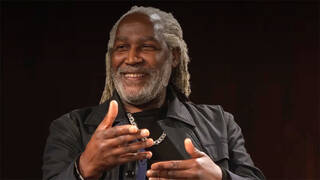
The legendary DJ joins host Zakia Sewell and V&A Researcher Josephine Small to look at three items that chart the genre’s rise through the 1990s and early 2000s.
First up is one of Norris’s dubplates – a type of vinyl test-pressing cherished by DJs, as they represent one of the fastest routes from the recording studio to the dancefloor.
Reflecting on sound system and DJ culture, the panel chart the differences between rave, jungle, and drum and bass nights and the aspirational vibe that made the garage scene feel so different.
The next two objects are photographs that capture the genre’s transition into the mainstream. Eddie Otchere’s photograph of So Solid Crew is complete with extra friends and family, two Audi TTs and a dog – a clear visual that a full community is represented – while the third object is Soulla Petrou’s glossy portrait of Mis-Teeq, a confident image of an emerging mainstream pop force.
Norris also reflects on the controversial Clause 696, which targeted the shutdown of certain performers, and gives a behind-the-scenes insight into the 100-person meeting he called in an attempt to keep the scene in the hands of the people who had built it.
You can see objects featured in this episode on display as part of The Music is Black exhibition at V&A East Museum, which runs until the end of 2026.
To watch or listen to the Three Objects miniseries in full, head to Spotify, Apple Podcasts or YouTube.