
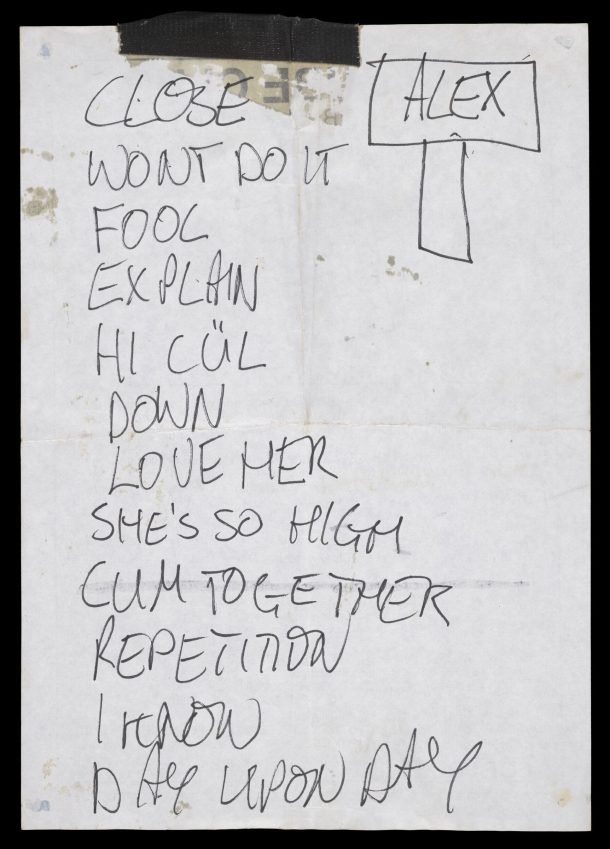
Unboxing the Lost Music Venue Collection produces vestiges of hazy nights remembered fondly; set lists, slightly stained but lovingly preserved, candy-coloured flyers pocketed at the gates of legendary clubs, or a 1999 bound booking diary, leather fraying through years of nightly use.
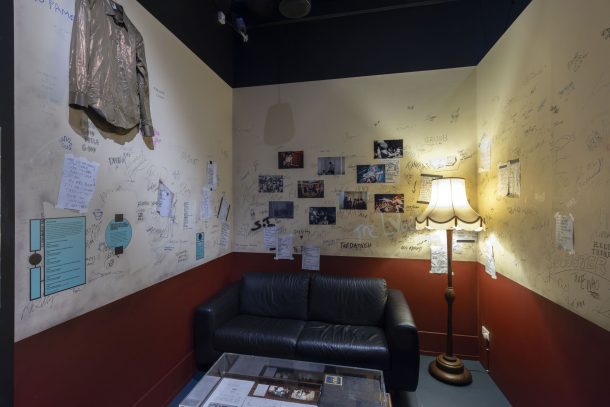
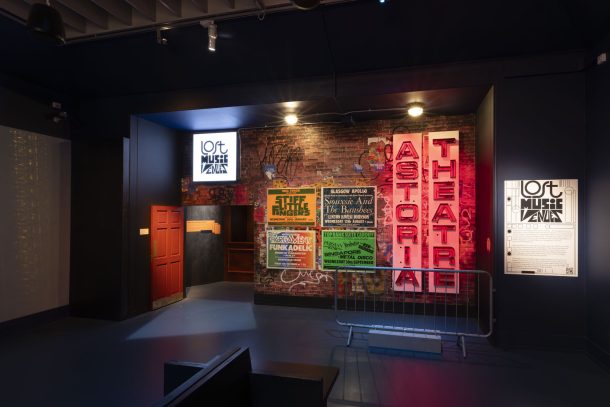
The archive was established to preserve documentation of British live music venues operating from the 1980s to the 2010s. Developed alongside the Lost Music Venue Display (now open in V&A South Kensington’s Theatre and Performance Gallery) the material maps nightclubs, grassroots rock venues, bars, pubs, and LGBTQI+ spaces, charting how a changing political and economic climate culminated in widespread closures. Despite stories of loss and regret, the project also explores the broader cultural legacy of British music spaces, as sites of creativity and collective identity that influenced music, fashion and media on a massive scale.
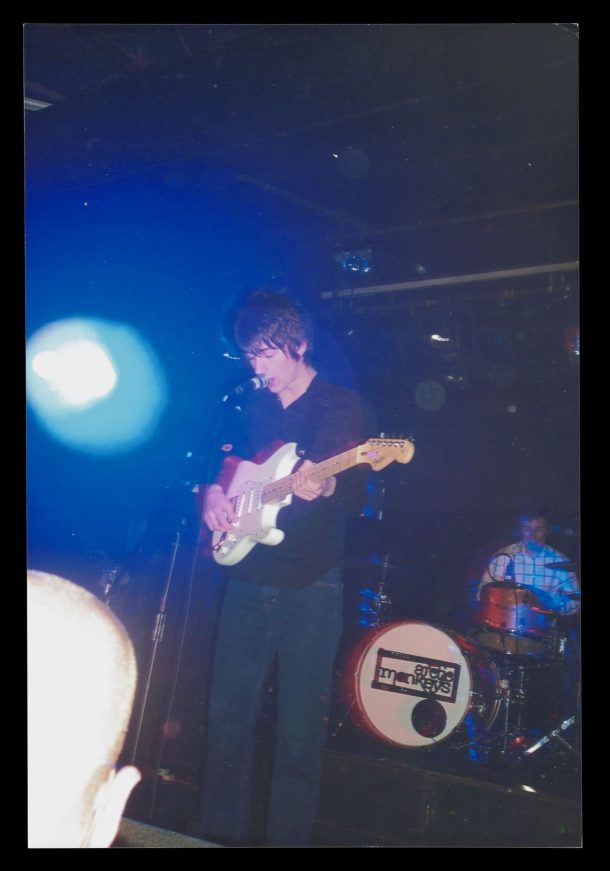
The Music Venue Trust circulated the archive call out, inviting submissions of ephemera, records and artefacts related to live music venue spaces for potential acquisition and display. Donations from fans, ravers and punters were also selected, providing records of British bands on the cusp of stardom. Examples include a set list salvaged from Blur’s 1990 gig at Bull and Gate in London, or a series of fuzzy photographs featuring Arctic Monkeys at Sheffield’s The Leadmill in 2006. The photographs capture the band on the eve of their debut album release; “Whatever People Say I Am, That’s What I’m Not”. This material helps to humanise the artists, situating them in a world of sticky pub floors and smoky basement gigs.
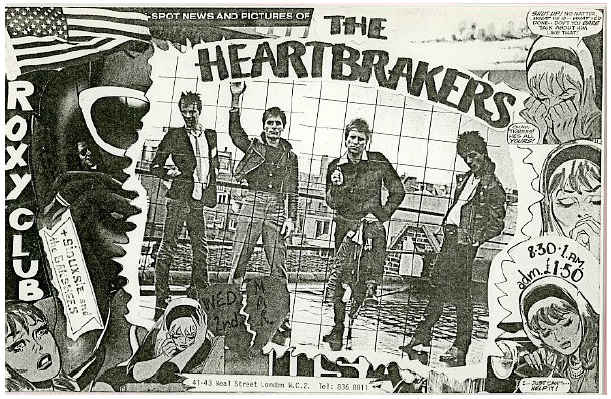
Another compelling feature of the archive is the inclusion of nightclubs that provided space for subcultural formation and liberation. London’s punk scene, shaped by the economic and social turmoil of the 1970s, found its crucible in Andrew Czezowski and Susan Carrington’s club, Roxy. Christened on New Year’s Day with an opening gala performance from The Clash (watch here), The Roxy ran for 100 days and nights, offering a line up of seminal punk bands, including the Buzzcocks, The Damned and Generation X. Carrington and Czezowski went on run the equally iconic Fridge Club (I and II) in Brixton from the 1980s to 2000s. The couple donated flyers and photographs relating to each club, hand selected from their extensive personal archive. They designed much of their club’s material using the newly designed Xerox machine and later, computer generated graphics. The material reveals how punk extended beyond the stage, with the attitude and aesthetic of clubs helping to shape the sensibilities of communities they attracted.
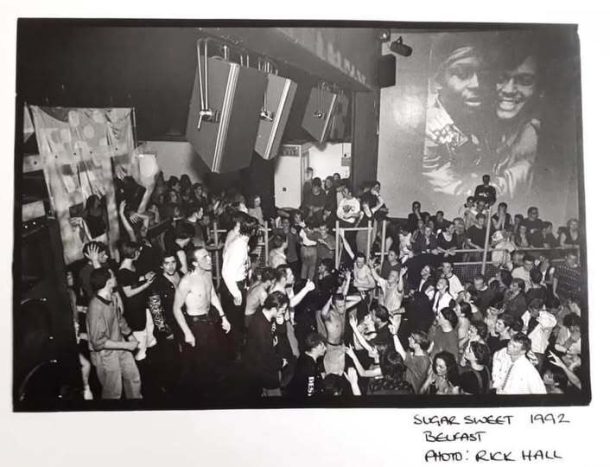
Elsewhere in the archive, material points to how one nightclub offered reprieve from violent unrest inflicted by the Irish troubles in the 1990s. Sugar Sweet was launched by emerging DJ’s David Holmes and Ian McCready in Belfast Art College, Ulster, on 23 December, 1989. The club soon became a bedrock of freshly imported acid house and rave and movements in Northern Ireland, largely driven by the growing popularity of recreational drug use (namely ecstasy). Orbital even paid tribute to the club by releasing their track Belfast after playing there in May 1990 – listen here. Crowds soon queued for hours to squeeze in, with certain nights remembered by the intense emotion palpable across the room. The club offered an escape from the upheaval, dancers sharing moments of joy that temporarily liberated them from religious and civic boundaries.
I recognised similar themes of belonging and community in the February 1993 issue of Shebang (1992-1994), donated from queer women’s event organiser and HIV advocate Paula Harrowing. The issue features a promotion of Harrowing’s event Girl Bar at the Fruit Machine, which she established for queer women after becoming frustrated by the male-centric focus of London’s queer nightlife.
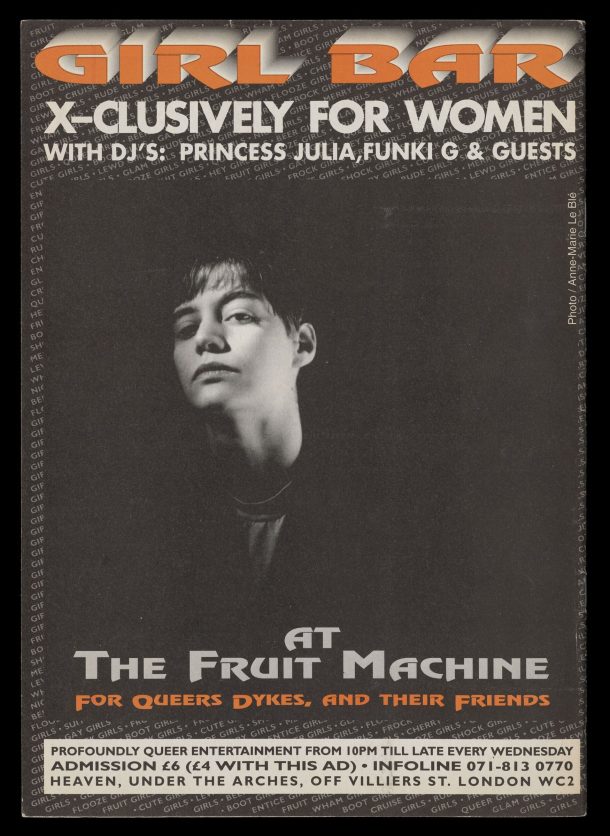
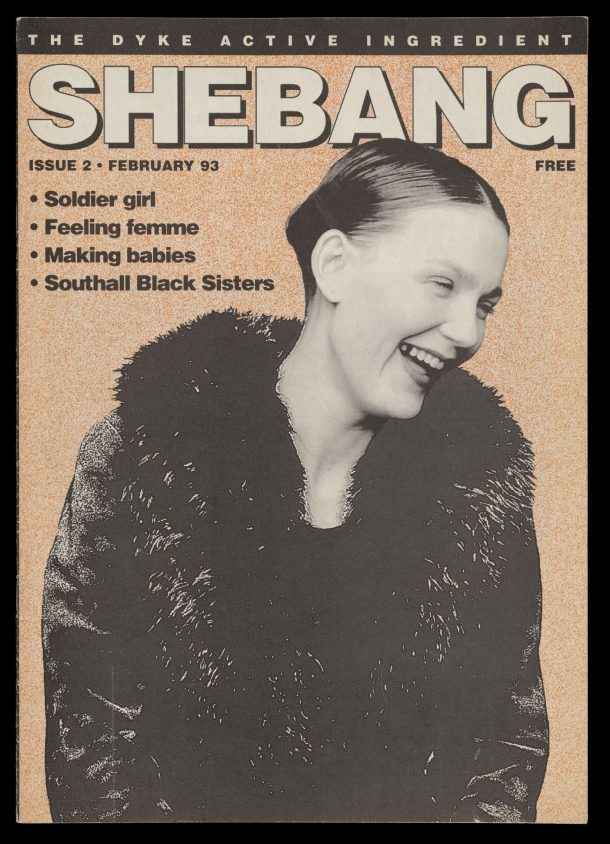
The advert is interleaved between ardent political discourse, satirical cartoon, and a directory of adverts which range from private ‘services’, lesbian-friendly trattorias, queer drivers and networking events. Shebang combines the emerging type styles of early web design with the DIY pastiche of zine culture. By connecting readers with nightlife events, services and communities, it proved a cultural lifeline as much as a listing mag. With its focus on sex-positive and inclusive spaces for queer women, Shebang, much like Harrowing’s events, likely helped its audience to negotiate the mainstream and locate safe spaces for connection.
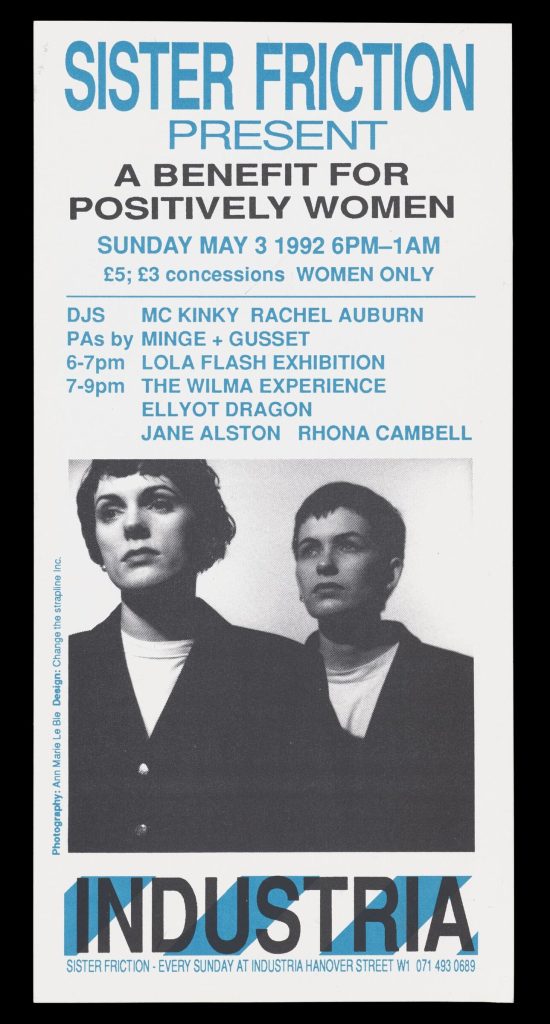
Collectively the Lost Music Venue Collection captures something fundamental about archives. Working documents, flyers and ephemera are not often designed to last. Their preservation points to the enduring love of live music fans and formative nature of such events. The archive’s connective threads reveal how the visual identity, operation and surrounding culture of live music and dance venues helped shape the experiences and identities of punters and artists alike. Its worth noting that the archive, unlike the display, also contains material relating to venues still operating as of 2026. These are living histories, containing tales of determined owners, enpassioned crowdfunding and a general sense of hope. The catalogue for the Lost Music Venue Collection will soon be made publicly available on the V&A Archive Catalogue, which can be viewed here.

What a fascinating look at the lost music venues! I remember my first local gig in a tiny basement space such an intimate vibe! Did you have a Doodle Baseball venue that felt special to you?
The contrast between a frayed booking diary or stained set list and the scale of the cultural history it records is striking. The Roxy’s 100-night run, Sugar Sweet’s role across civic and religious boundaries in Belfast, and the Shebang directory for queer women show that venues were infrastructure for communities, not merely rooms for performances. A Seed 3D reconstruction made from donated snapshots and floor-plan fragments could complement the flyers by helping future researchers understand how those temporary spaces felt and functioned.