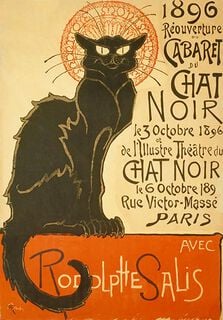


Reouverture du Cabaret du Chat Noir
Paper size
Please select-
Small
23 x 30 cm
-
Medium
30 x 40 cm
-
Large
45 x 60 cm
-
Extra-Large
61 x 80 cm
Frame type
Please select-
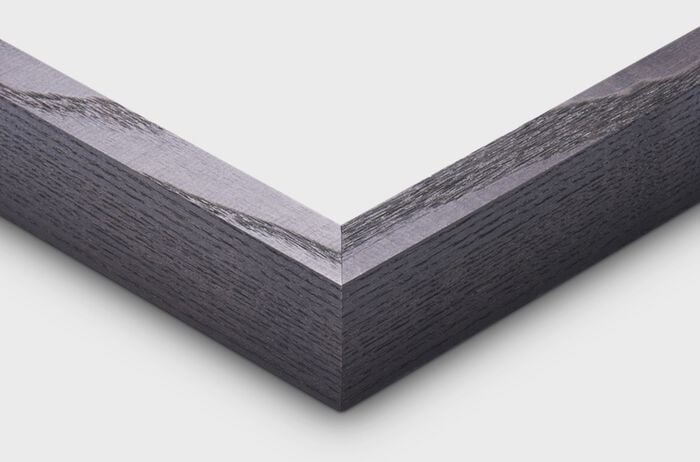
Black
-
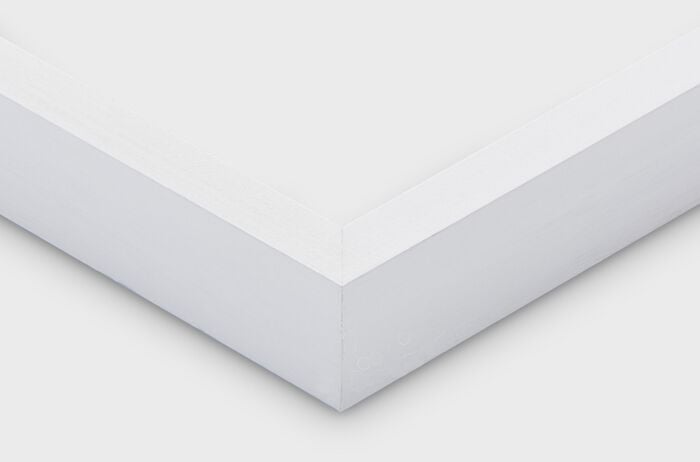 White
White -
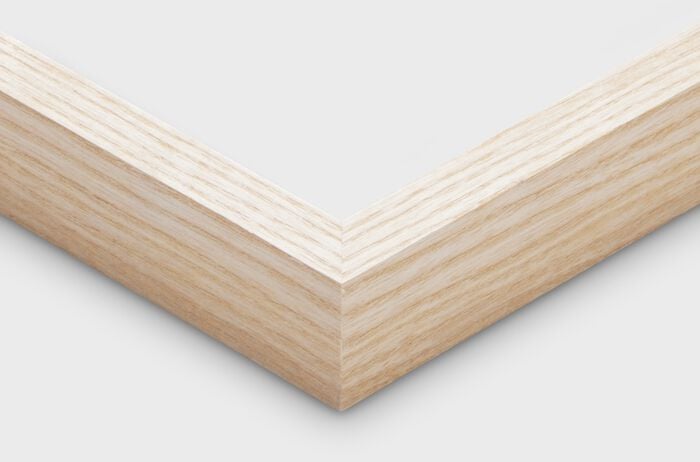 Natural
 -
 Unframed
- 1.5 cm black stained ash box frame - stained and waxed
- 280gsm smooth matte fine art paper
- cm white mount - acid free, extra thick smooth white mount board with a white core
- Printed image size:
- Total framed size:
- Total size:
- Details
- About custom prints
- Delivery
- Returns
Reouverture du Cabaret du Chat Noir
Ink on paper by Theophile Alexandre Steinlen (1859-1923)
France, 1896
Le Chat Noir was a Parisian cabaret in the arrondissement of Montmartre owned by Rodolphe Salis. The Black Cat was a fitting name for such a locale, conjuring up images of black magic and witches. It was probably influenced by Edgar Allan Poe's short story of the same name, published in 1847.
The poster was advertising the re-opening of the Cabaret du Chat Noir on 3 October 1896 and the Thétre du Chat Noir three days later
Custom printed on 280gsm smooth matte fine art paper.
From our gallery walls to yours
High quality art prints of images from across the V&A collections. Spanning Japanese woodblock prints to book illustration, textile designs and photography this collection of prints offers a glimpse into the rich and diverse nature of the V&A.
Made in England on the Sussex coast by leading print producers King & McGaw, our prints are hand finished and framed by skilled craftsmen using responsibly sourced materials, carefully packaged and delivered directly to your door.
The process is simple:
1. Select an image
2. Choose your preferred size and frame
3. Place your order!
Additional details
We use fine art paper sourced from UK paper mills for our prints. The paper type has been chosen to best suit the original artwork, selected among one of the following:
• 300gsm textured fine art paper for paintings and illustrations;
• Semi-gloss 250gsm premium lustre photo satin paper for photographic reproductions;
• 280gsm smooth matte fine art paper for images of objects.
Each artwork is giclée printed using archival quality inks.
Acid free, extra thick smooth white mount board with a white core.
We use 90% UV-protected acrylic glazing for safety and longevity. Cast acrylic is a high-quality material, offering many benefits including 92% optical clarity. It protects prints from light damage and bleaching and is also shatter-resistant, making it much safer than glass in your home or workplace, and it is lighter weight for easier, safer hanging.
Framed by hand in Sussex by skilled craftsmen using responsibly sourced solid ash, the finished product is made to order and is supplied ready to hang. In every framed order, we include the right strap hangers, metal D-rings, and wall plugs so you can decorate your walls the moment your prints arrive.
The finished product has a taped eco-friendly backing board, made with 61% recycled content and 100% recyclable.
Each print is carefully packaged to ensure safe transportation, using 100% recyclable materials.
Please note that a copyright line is included under the image.
Each print is made to order and dispatched separately to other V&A Shop products, for GB delivery only. Please be sure to specify a delivery address where someone can sign for the parcel. When buying Custom Prints and other shop products together, please note the standard delivery charge applies in addition to the below. However, delivery is free for all GB orders over £60. See our Delivery and Returns page for more detail.
Each print is made to order, and as such, not eligible for return unless it arrives damaged, faulty or not as described. Please contact us if there is a problem with your order. See our Delivery and Returns page for more detail.
Theophile Steinlen
Theophile Alexandre Steinlen was born in Lausanne in 1859 and, after arriving in Paris in 1881, soon became a member of the artistic community in Montmartre of which Henri de Toulouse-Lautrec and Adolphe Willette were also members. Steinlen and Toulouse-Lautrec depicted several of the same subjects in their work but it was the Swiss artist who enjoyed greater fame during the artists' lifetimes, no doubt due to his ability to undertake more commercial work, such as this poster for Vingeanne milk, which reached a greater audience than Toulouse-Lautrec's controversial graphic work.