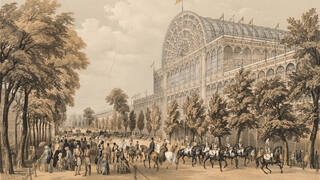
Affectionately known as the 'Crystal Palace', it was the most famous building to rise in 19th-century Britain, a structure that, at the time, formed the largest man-made covered space on earth. Such was the exhibition's phenomenal success that it gave birth to the international tradition of Expositions Universelles (better known as 'Expos') that still flourishes today.
Global ambitions
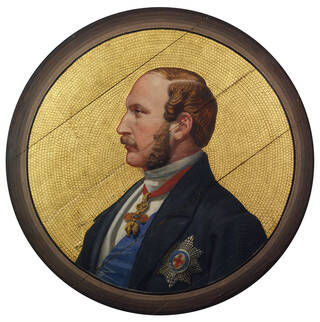
The practical origins of the Great Exhibition lie with the Royal Society of Arts under the presidency of Prince Albert, husband of Queen Victoria, but it had much deeper roots. Indeed, the Great Exhibition could be seen as just the latest and greatest in a series of attempts to find a cure for a national anxiety. Concern about the sorry state of art, design and taste in Britain dated back at least to the early years of the 18th century. A vital spur came from France when, after visiting for 18 months, the French art critic Jean-Bernard, abbé Le Blanc, published his assessment of the British. In Lettres d’un François (1745), he observed: 'much as I admire their invention in mechanical arts, I am equally offended at all their productions in the arts of taste'. The English translation was published in 1747 and widely read.
The Royal Society of Arts was founded in 1754, as the Society for the Encouragement of Arts, Manufactures and Commerce. Through exhibitions of the fine and applied arts, and prizes for the promising young (up to £140, a considerable sum in the 18th century), it encouraged and rewarded inventors, manufacturers and young artists.
Under Albert, the Society revived its tradition of income-earning exhibitions and prizes. In 1847, over 20,000 visitors came to its exhibition of British manufactures and decorative art. In 1848, the Society's show attracted over 73,000. In 1849, over 100,000 visitors came. In 1850, the Society advertised its exhibition of Ancient and Medieval Art as 'where the manufacturer can correct his taste and refine his judgement'. By then the Society had decided on a more ambitious, national exhibition for 1851. The idea of making it international came from Paris.
On 29 May 1849, the architect and writer Matthew Digby Wyatt went to Paris, sent by the Society to study and write a report on the latest in the series of national exhibitions of French manufactures. On his trip, Wyatt was accompanied by Henry Cole (future first director of the V&A), who at that time worked at the Record Commission (forerunner of the National Archives) and served on the Society's council. Cole had set up his own 'Art-Manufactures' business and invited artists to collaborate with producers of household goods. In March 1849, two months before the trip, Cole had launched a monthly magazine, The Journal of Design and Manufactures. This was just part of his wider campaign to reform art and design.
In Paris, Wyatt and Cole met with the Minister of Agriculture and Commerce, Louis Buffet. He shared his frustration at not being able to make his trade expositions international. Another member of the Society of Arts, Francis Fuller, had also come to Paris to see the exhibition. He returned with the same idea, which he first shared with master builder Thomas Cubitt. On 30 June 1849, the Secretary of the Royal Society of Arts, John Scott Russell, accompanied by Cubitt, Fuller and Cole, went to see Prince Albert at Buckingham Palace. They decided to organise the first international exhibition but recognised that the project required more resources than the Society could offer. Prince Albert's solution was to invite the government to appoint a Royal Commission.
Parliament established the Royal Commission for the Exhibition of 1851 on 3 January 1850. Responsibility for developing and delivering the Society's vision transferred to this independently funded body with most of the same executive committee. It met for the first time a week later, just 16 months before the royal opening scheduled for 1 May 1851.
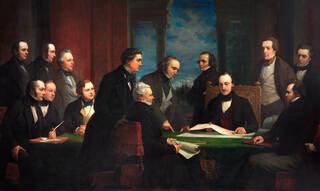
Albert's vision was for an exhibition of 'the Works of Industry of All Nations'. It would not be confined to the 'industry' of machines and to other factory products, rather it would showcase works of human industry in a wider sense. An international exhibition would bring nations together and celebrate the latest developments in science and art, united through industry and free trade. Through making awards it would spotlight not only examples of innovation and ingenuity, but also help the British public to recognise quality and taste.
A ‘Crystal Palace’
Various locations for the exhibition were put forward, including the courtyard of Somerset House and Leicester Square, until Albert's suggestion of a vast stretch of lawn on the southern border of Hyde Park, which Parliament ultimately voted in favour.
The Building Committee held an open international competition for designs. Their final choice, from 245 proposals, had come down to two: one by the Richard Turner, co-designer of the Palm House at Kew Gardens, and the other by French architect Hector Horeau. Both specialised in iron and glass construction and both were estimated to go way over budget.
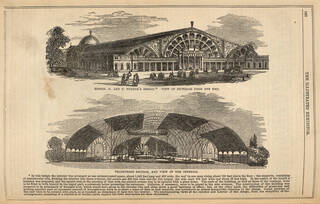
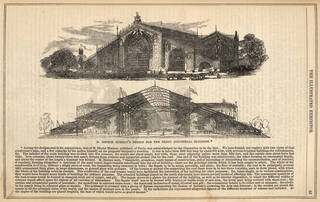
The Building Committee finally decided to honour both entries with a 'special mention' and move on, proposing their own alternative solution: a colossal 'temporary' structure that would have cost less than £100,000 but would have consumed between 13 and 20 million bricks, thousands of slates for the roof and sheets of iron for the vast dome. T.L. Donaldson designed the main galleries and Isambard Kingdom Brunel the dome over the rotunda. When it appeared in the llustrated London News on 22 June 1850, the Building Committee's design solution met with derision.
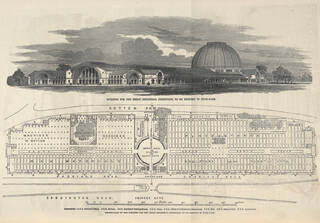
Days before, on 11 June 1850, the architect and engineer Joseph Paxton had sketched an idea for an exhibition building, inspired by the glass and iron Lily House he had built at Chatsworth in Derbyshire. Paxton presented his proposal to the Commission on 29 June.
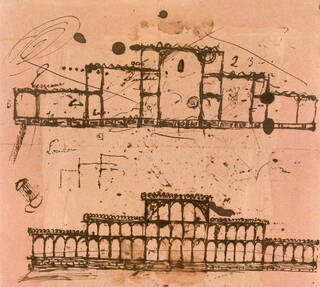
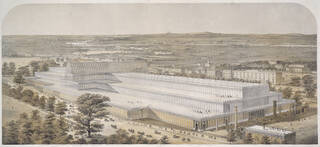
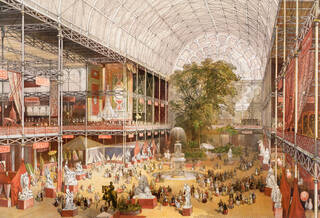
To encourage support, he sent a stunning view to the Illustrated London News, where it appeared on 6 July. The key modification that followed was the addition of north and south transepts beneath a barrel vault with distinctive spoke-pattern lunettes and the inclusion of two open-air courts, as practical solutions to save ten huge elm trees. The Royal Commission formally accepted the scheme on 15 July 1850.
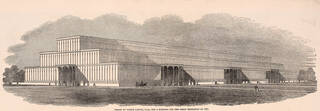
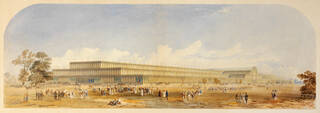
Construction soon became such a public spectacle that onlookers were admitted (on paying a fee) to watch the glazers and painters at work. The race against time to complete the building required the most efficient production-line assembly of standardised prefabricated parts by an average of 2,000 workers (and 200 horses) on site each day. Chance Brothers of Birmingham supplied 293,655 panes of glass (including 18,392 individual mouth-blown panes for the roof), which were held in place by a web of over 200 miles of wooden glazing bars resting on a framework of horizontal girders and cast-iron columns. At the end of January 1851, the building was officially completed and certified for public use, only seven months after breaking ground.
On 19 October 1850, the Illustrated London News reported a speech made by Paxton at the Derby Mechanics Institute, calling it 'The Crystal Palace', and the romantic nickname stuck.
From 'Raw Materials' to 'Fine Art'
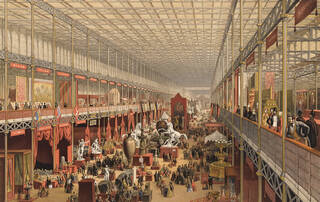
After choosing what to build, the next key challenge for the organisers was how best to arrange over 100,000 objects lent by 13,937 exhibitors. The ultimate tally was never known, as many of the displays continued to grow long after opening day.
The Official Descriptive and Illustrated Catalogue credits Prince Albert as designer of the exhibition's four-part structure, each with a lead organiser: 'Raw Materials and Produce', curated by professor of materia medica at King's College London, John Forbes Royle; 'Machinery and Mechanical Inventions', curated by the engineer William Cubitt; 'Manufactures', curated by Henry Cole; and 'Fine Art', curated by design expert Owen Jones. The First Report of the Commissioners (1852) summed up this structure as a progression from the 'raw materials which nature supplies to the industry of man', through machinery, to 'manufactured articles', leading to 'the art which he employs to impress them with the stamp of beauty'.
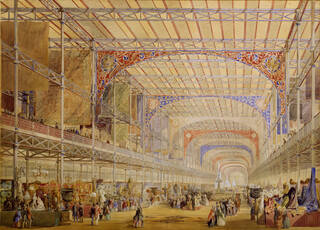
Inside the exhibition hall the main avenue stretched from west to east, divided by 'transepts' to the north and south. Britain, with over 30 territories in its growing empire, took up the western side of the floor space, including two upper galleries. The eastern side of the ground floor was shared amongst 34 foreign nations, the size of the space allocated in proportion to the size of their trade with Britain.
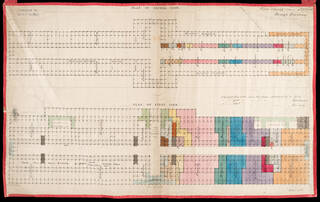
Owen Jones led on the interior decoration of the building, with a controversial scheme of primary colours painted on the structural elements – yellow for the round parts of columns, white for the flat verticals, blue for concave surfaces, and red for the underside of girders.
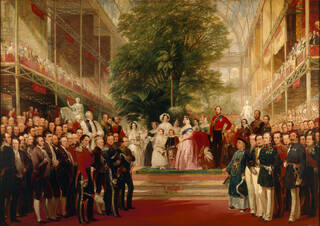
On 1 May 1851 at 9 am the doors opened to 25,000 season-ticket holders, who had to wait until noon before the formal events began.
Lessons and legacies
London's long summer party finally came to an end on 11 October 1851. The first world's fair was conceived to be much more than the grandest trade bazaar. Through amicable international competition, the hope was that it would help develop critical judgement in art and design in the buying public as market-driving consumers.
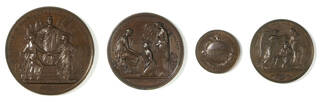
Rather than cash prizes, five specially designed medals were presented by the Royal Commissioners on behalf of Queen Victoria. The most prestigious prize, the Council Medal (known at the time as the 'Great Medal'), was awarded to around 170 of the 14,000 exhibitors. The Prize Medal (known as the 'Ordinary Medal') was awarded 'wherever a certain standard in excellence production or workmanship had been attained'. All exhibitors who had not won a medal received the Exhibitor's Medal. In recognition of their own contributions, every juror received a Juror's Medal.
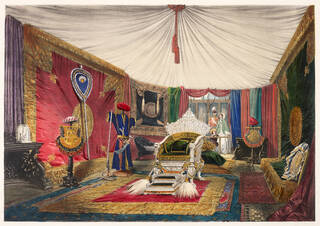
When it came to finding new exemplars for the reform of art and design in Britain, and for public education in taste, in the opinions of experts, India stole, and saved, the show.
In his prize-winning essay The Exhibition as a Lesson in Taste, Ralph Wornum praised the displays from India: 'By far the finest specimens as Works of Art are the large shawls from Cashmere and Lahore'. His admiration for India's art and crafts, especially textiles, was shared by many for their flat patterns, motifs based on natural forms and harmonious use of colour. At a presentation in the series Lectures on the Results of the Great Exhibition delivered before the Society of Arts, Manufactures and Commerce at the Suggestion of H.R.H. Prince Albert, Henry Cole told his audience 'it was from the East that the most impressive lesson was learnt. Here was revealed a fresh well of art, the general principles of which were the same as those in the best periods of art of all nations – Egyptian, Grecian, Roman, Byzantine, Gothic'.
Another important conclusion drawn from the exhibition was expressed by Antonio Panizzi, Keeper of Printed Books at the British Museum. In his report on behalf of the jury, Panizzi recorded:
'The foundation of a permanent industrial Museum in the heart of the metropolis of trade and industry, seems to the Jury the logical and practical consequence of this Exhibition. It is in the 'Crystal Palace' that the great truth has been impressed upon us that art and taste are henceforth to be considered as elements of industry and trade of scarcely less importance than the most powerful machinery. It seems also natural that this Museum should in the first instance consist of the objects to which the several Juries have called public attention as happy types and models for imitation'.
As Panizzi had recommended in his report, 244 exemplary objects were selected by experts and purchased (by the Board of Trade, using a special grant from the Treasury) to add to the teaching resources of the Government School of Design. These combined resources would become the foundation collections of the V&A when it opened to the public in 1857.
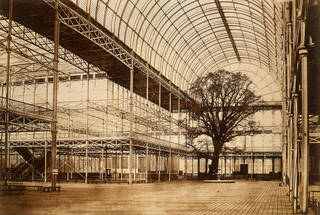
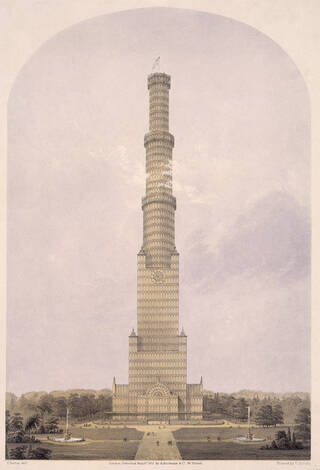
Debate continued around other ways to take forward the lessons of foreign collections for British taste and manufacturing, but the building itself was the greatest work of art. Doomed to be dismantled, as always intended, in 1852 the Crystal Palace attracted various proposals to save it. One example was Charles Burton's idea to recycle the palace as a 'Prospect Tower', 47 storeys tall. The world's first skyscraper, complete with a 'vertical railway' would have provided access to 'a depository of every branch of art and manufacture our kingdom produces'. But despite endorsement from the palace's engineers Fox, Henderson & Co., Burton's tower failed to attract investors.
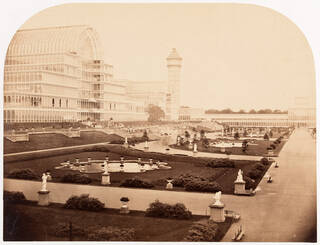
Eventually, the new Crystal Palace was re-erected just south of London, at Sydenham in Kent, in a parkland setting of terraces, fountains and sculptures. On 10 June 1854, a royal opening conferred public endorsement by Victoria and Albert. The new Crystal Palace had very different aims, presenting an encyclopaedia of cultural history through ten architectural courts, from ancient Egypt to Elizabethan England, filled with casts of buildings and sculptures. A setting for many exhibitions and events, it proved a popular attraction, until destroyed by fire in 1936.
This is an edited extract from The Great Exhibition in Art, by Julius Bryant (Lund Humphries in association with V&A Publishing, 2025)


