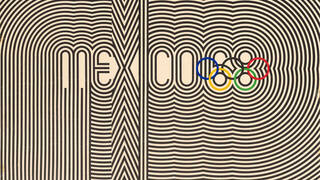
By the early 1900s, it was understood that posters could influence people through a ‘sub-conscious inference’ (Graham Wallas, Human Nature in Politics, 1908), and that this could be critical in matters of political decision-making. With the emergence of mass politics and new socialist parties to represent broadening democratic interests, the poster was employed around the world to great effect, both to educate and to manipulate. In the history of the political poster we can find a catalogue of the conflicts, conspiracies and concerns that have shaped our modern world.
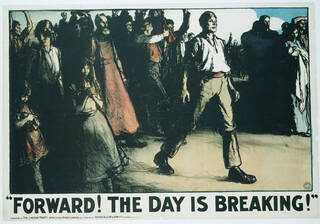
The end of the Victorian period saw the beginnings of a shake-up of the social order. Society began to shed some of its more restrictive elements, but as the world was catapulted into a new age of modernity, progressive ideals were slow to keep up and certain prejudices became more virulent than ever.
Satire and political cartoons have always been savage, but some of the most offensive imagery was generated around the Dreyfus Affair in France. Alfred Dreyfus (1859 – 1935) was a Jewish French army captain, accused in 1894 of selling military secrets to Germany. There was little evidence to corroborate the claims, but he was nevertheless imprisoned in a penal colony. When new evidence came to light to support his innocence, his acquittal dragged on. The scandal divided France, highlighting how deeply entrenched anti-Semitism had become.
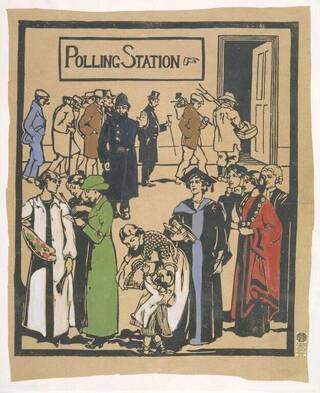
In Britain, causes such as Irish Home Rule and women’s suffrage also generated a vast array of visual material which offered both hard-hitting truths and fear-mongering lies. In particular, the Women’s Social & Political Union (WSPU) pioneered the use of symbolic party colours and original branding to advance public awareness of their demands.
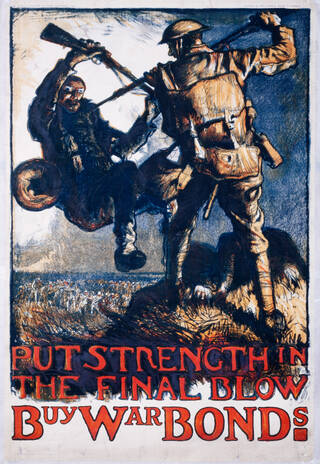
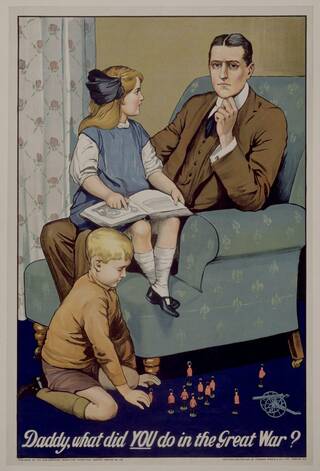
The First World War saw the first widespread use of propaganda to stir patriotism. The need to raise vast sums of money from the public purse to fund the war spawned numerous posters advertising war bonds and loans. Countries on both sides of the conflict employed some of their best poster artists for this purpose. Carefully judged imagery was required to galvanize the population into action without causing mass panic. Posters everywhere urged men to sign up and join the front lines, with different approaches to target all levels of society. Alongside straightforward tactics of command and demand, there were also exercises in jaunty flirtation and guilt-inducement.
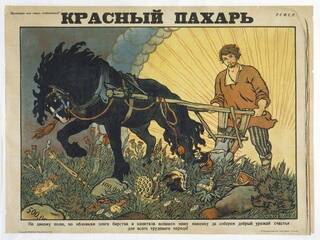
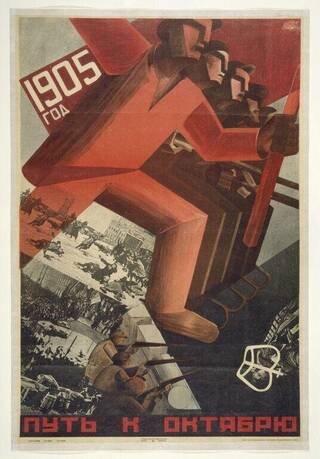
The war marked the beginning of the end for the old social and political order, as new ideologies appeared in the vacuum created by the breakdown of empires. This shift was perhaps most apparent in Russia with the Bolshevik revolution of 1917. While some posters played on traditional imagery to tap into national nostalgia, early experiments in photo-montage and the dramatic use of the colour red shaped the development of Constructivism and a new era of powerful Soviet propaganda. This in turn influenced graphic design elsewhere, in countries catastrophically torn between extremes of left and right – notably in Spain during the Civil War. Graphic artists eagerly searched for new aesthetics which would be effective in agitating for revolutionary change.
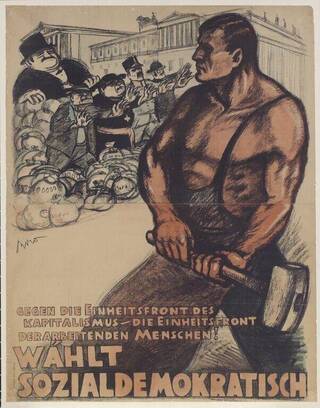
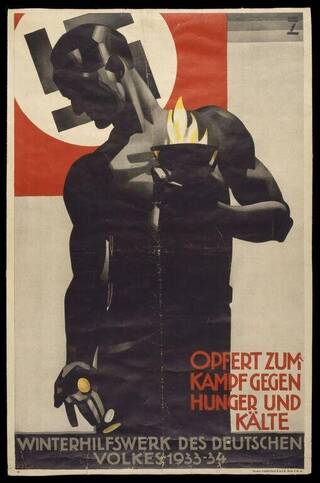
The interwar years brought optimism and increased liberalism in many countries, but it was not long before the fallout from the war reopened the dangerous divisions of the past. In Germany, the Nazi Party had formed in 1920 and its early propaganda left little doubt about its violent intentions to smash the system and create a new world order. Interestingly, despite radically opposed ideologies, Fascist and Communist propaganda shared visual tropes such as the towering strongman and a subtler, idealized male figure, both of which had a wide appeal.
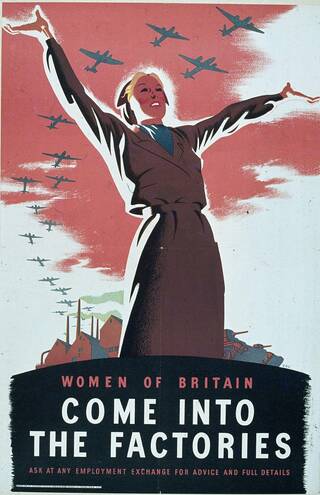
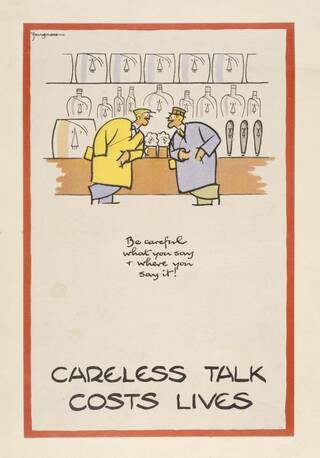
Liberal democracies in Western Europe and America largely moved away from the repugnant use of racist caricatures and overt propaganda in the run up to the Second World War (1939 – 45), preferring to demonstrate their progressive values in opposition to the rising totalitarianism of Germany and the Soviet Union, where many posters called for the annihilation of Western materialism. Both the British and American governments strove to cement the idea of their national characteristics as unwaveringly plucky, with humour more likely to be employed than fear-mongering tactics. In Britain, artists such as Fougasse proved that vital public messages during wartime could be successfully communicated through a deliberately light-hearted humorous approach.


It was talented designers such as H.M. Bateman, Fougasse and Abram Games, and European émigrés that had settled in Britain, such as the partnership Lewitt-Him, that produced many of the finest posters for the various British ministries during the Second World War. As the world limped out of devastating conflict, valuable lessons were learned around the influencing and shaping of public morals through poster propaganda. Many of the most effective British designers of the war years reflected a growing sense of inclusivity, of working together for a brighter tomorrow. This can be seen in the work of design duo Reginald Mount and Eileen Evans, who helped to shape the identity of the newly formed Welfare State with official commissions to design posters addressing trade, agriculture, employment, and the health and safety concerns of an increasingly permissive society.
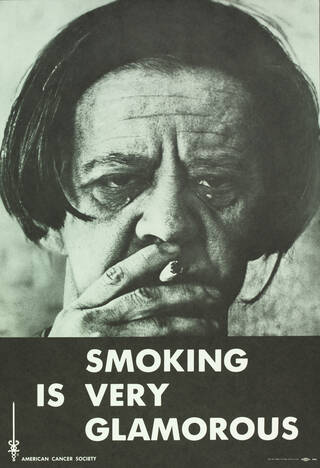
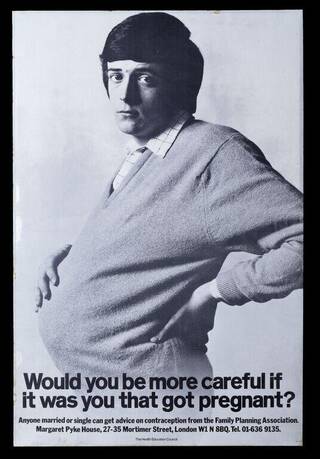
The persuasive language of the growing advertising trade was put to use in the world of politics, as governments sought help from the expanding commercial agencies to sell their promises and market their messages. The so-called ‘nanny state’ approach to public health took off with warning posters proliferating around the world, often focused on the dangers of alcohol and smoking. Developments in contraception also generated enormous debate, with an early incarnation of the Saatchi agency proving that shock tactics and the probing of gender taboos could win them the campaign of the decade.
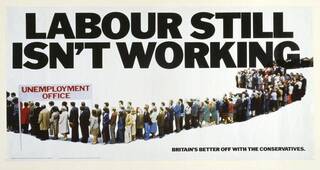
In the UK, both the Conservative and Labour Parties began electioneering collaborations with major advertising agencies, designing campaigns around hollow populist notions of a kind that parallel today’s concerns over uncorroborated ‘fake news’, as the public seek out and consume stories which support their views in a sea of contradictory statistics presented as fact.
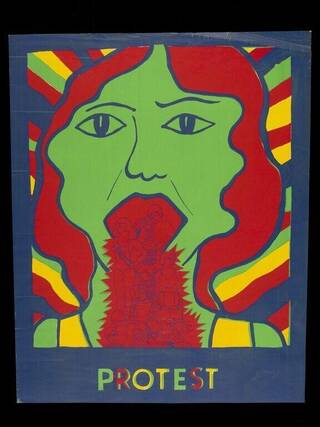
Running parallel to this trend was the growth of independent, collaborative print workshops which sprang up between the 1960s and 1990s, such as See Red Women’s Workshop, bringing together like-minded activists to counter the increasingly corporate and untrustworthy nature of mainstream politicking.

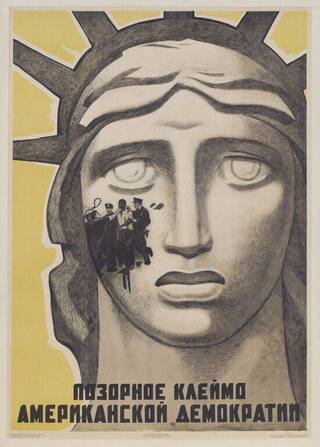
In the same period in Cuba, the influential Organisation of Solidarity with the People of Asia, Africa and Latin America (OSPAAAL) started producing posters to highlight solidarity campaigns with oppressed peoples around the world, depicting leaders like President Nixon as treacherous vampires. A distrust of Western politics continued to provide fodder for Communist posters which highlighted hypocrisies in the so-called ‘free world’.
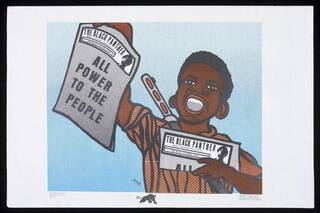

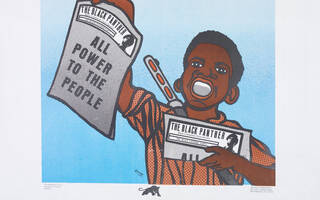
As the Civil Rights movement in the USA accelerated with increasing urgency through the 1960s, artists like Emory Douglas brought the African-American voice into the foreground, mirroring the growing sense of pride and militancy in the Black community to unite against the seemingly endless history of racist injustice. In Britain, designs by David King took up the fight against neo-Nazism and apartheid in South Africa, generating many imitators for his distinctive style which combined bold type with an eye-catching palette of red, yellow and black.
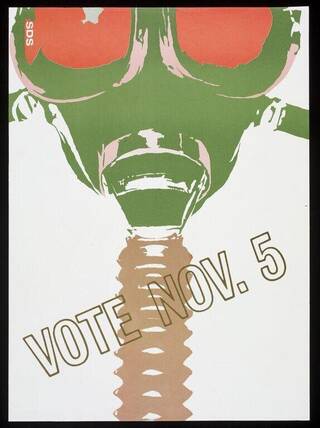
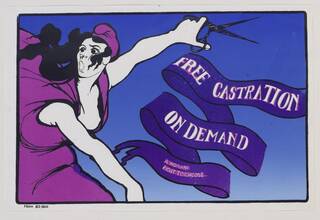
The Vietnam War and the social rift it generated was the impetus for a wave of organized protests led by groups such as ‘Students for a Democratic Society’. Opposition to the war was further fuelled by imagery depicting the violent and shocking realities of the front-line fight. Demands for equality and social justice ricocheted around the world in the 1960s from Mexico to France as criticisms of neoliberalism gathered pace amidst student revolt. With this came long overdue progress for the women’s liberation movement, which in turn produced a breakthrough for feminist art in the following decades with artists such as Barbara Kruger and the Guerrilla Girls .
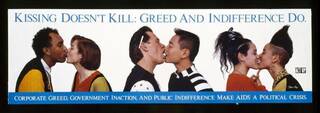
There were also changes in the gay rights movement, with greater visibility and the formation of several LGBTQ rights groups. After a few short years of positive change, the appearance of HIV and AIDS decimated the gay male community. Action groups such as GMFA, ACT UP and Gran Fury were established to press for greater investment in medical research, countering some of the negative government advertising in the process.
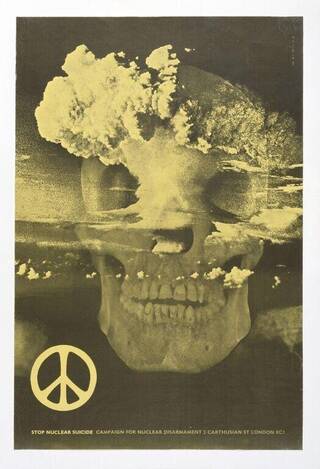
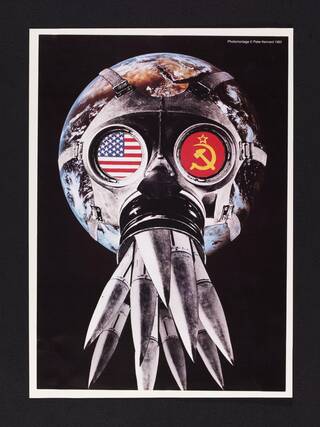
Other social causes which have generated significant poster campaigns include climate change and environmental protection, both ongoing crises that have galvanized public protest but seen very little effective action or impact on public policy. The world is no closer to resolving many of the concerns highlighted in posters some fifty years ago relating to air pollution, loss of biodiversity and mass extinction, or the threats posed by nuclear weapons and energy. The poster continues to be one amongst many strategies adopted by protestors and campaigners to draw attention to these increasingly urgent issues.
This is an edited extract from the V&A/Thames & Hudson publication The Poster: A Visual History by Margaret Timmers and Gill Saunders, available to buy in the V&A shop.