V&A South Kensington – visual story

This page will help you plan your visit to V&A South Kensington, including how to get here and what to expect at the museum, especially if you’re visiting for the first time. 

V&A South Kensington is one of the world's largest museums of art, design and performance with lots to see and do. There are 145 galleries, spread over five floors, showcasing over 5,000 years of human creativity.
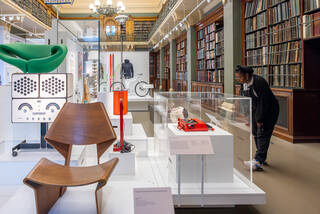
Room 76
Room 76. © Victoria and Albert Museum, London

Tickets and opening times

The V&A South Kensington is free to visit and you don’t need a ticket to enter. For some temporary exhibitions and events you will need to buy a ticket.

We are open daily 10.00 – 17.45. On Fridays we close at 22.00, but some galleries and spaces may close earlier.

Getting here

We recommend getting to us by public transport as parking is limited.

South Kensington station

The closest underground station is South Kensington. This station is not step-free. The nearest step-free underground station is Knightsbridge, which is a 14-minute walk.

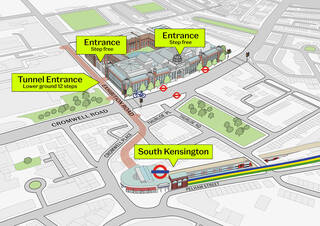
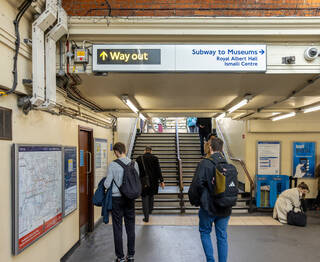
There are two ways to get to the museum from South Kensington station, through a subway tunnel or at street level.
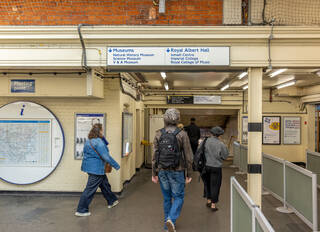
South Kensington station subway
South Kensington station subway. © Victoria and Albert Museum, London
South Kensington steps to street level.
South Kensington steps to street level. © Victoria and Albert Museum, London

Getting here via the subway tunnel

The tunnel is the quickest way to get to the museum (4 minutes) and it avoids busy roads. This route has steps. Lighting is low-level, sounds can echo and it may be busy with school groups.
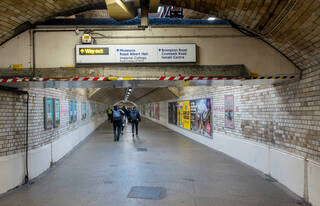
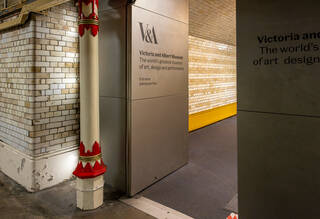
The Tunnel entrance
The Tunnel entrance. © Victoria and Albert Museum, London
The Tunnel entrance
The Tunnel entrance. © Victoria and Albert Museum, London

Getting here via street level

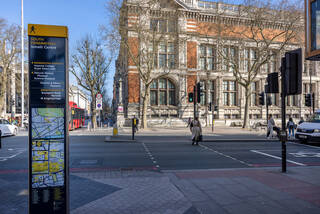
The walk takes 6 minutes and crosses a busy road.
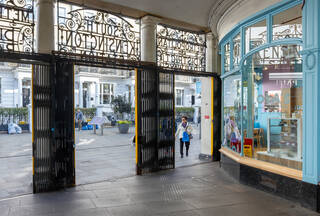
Leaving South Kensington Station
Leaving South Kensington Station. © Victoria and Albert Museum, London
Walking towards the V&A
Walking towards the V&A. © Victoria and Albert Museum, London
Crossing Cromwell Road
Crossing Cromwell Road. © Victoria and Albert Museum, London

Entrances

There are three entrances to the museum: Cromwell Road and Exhibition Road are at street level and the Tunnel entrance is underground.

Cromwell Road entrance

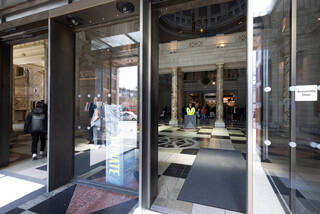
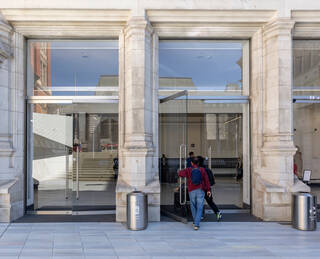
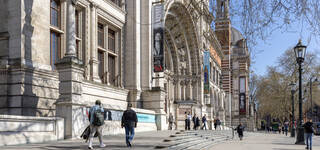
The Cromwell Road entrance is the main entrance to the museum. It has steps and a ramp. There are automatic doors.
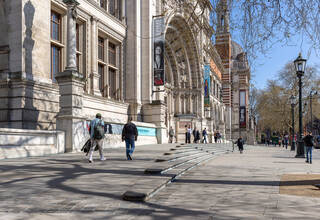
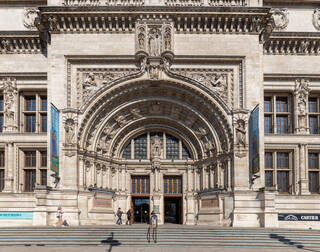
Cromwell Road entrance
Cromwell Road entrance. © Victoria and Albert Museum, London
Cromwell Road entrance.
Cromwell Road entrance. © Victoria and Albert Museum, London
Cromwell Road entrance
Cromwell Road entrance. © Victoria and Albert Museum, London

This is the best entrance for the exhibitions in the Porter Gallery and the main information desk, where you can buy Membership and exhibition tickets. You can also find the cloakroom, borrow a wheelchair and access the main V&A Shop.

Exhibition Road entrance

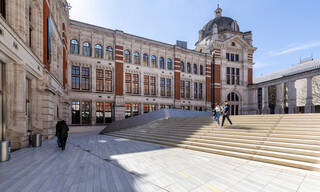
There are steps and a slope to the entrance and a push button automatic door. Surfaces may be uneven or slippery in wet conditions.
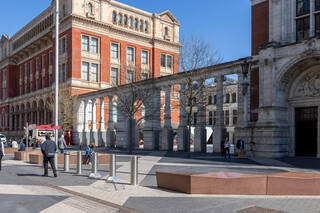
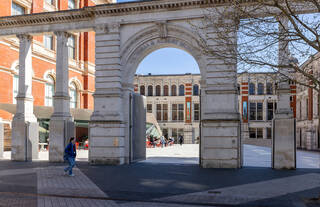
Exhibition Road entrance.
Exhibition Road entrance. © Victoria and Albert Museum, London
Exhibition Road entrance
Exhibition Road entrance. © Victoria and Albert Museum, London
Exhibition Road entrance
Exhibition Road entrance. © Victoria and Albert Museum, London
Exhibition Road entrance
Exhibition Road entrance. © Victoria and Albert Museum, London
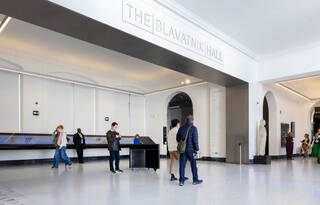
The Blavatnik Hall at the Exhibition Road entrance
The Blavatnik Hall at the Exhibition Road entrance. © Victoria and Albert Museum, London

This is the best entrance for exhibitions in the Sainsbury Gallery, as well as the Main Café and Learning Centre.

Tunnel entrance

This entrance has steps.
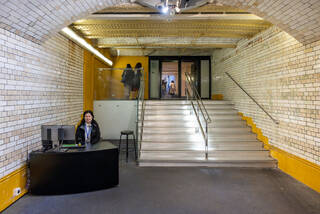
The Tunnel entrance
The Tunnel entrance. © Victoria and Albert Museum, London

Inside the museum

Inside each entrance you may see a member of security staff. They are there to keep you and the museum safe. If you have a bag, they may ask to look inside it.
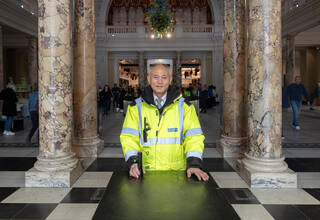
V&A security staff. © Victoria and Albert Museum, London

V&A South Kensington is an old building with some accessible routes. Our staff can recommend the most convenient route depending on what you'd like to see.

There is no right or wrong way to explore the museum. Near each entrance there is a map on the wall, including printed maps. You can also use our digital map.
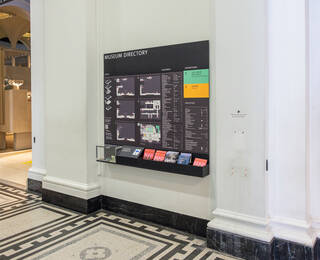
Museum directory
Museum directory. © Victoria and Albert Museum, London

Look out for digital screens, which tell you What's On in the museum, including exhibitions, talks and tours.
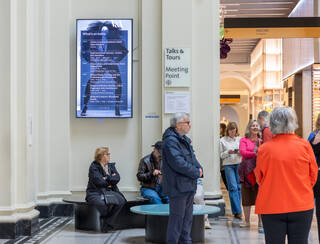
Digital What's On screens at the Cromwell Road entrance
Digital What's On screens at the Cromwell Road entrance. © Victoria and Albert Museum, London

There are both lifts and stairs to help you move around the museum.

Cloakrooms

Cloakrooms are available for a small charge per item. They are located to the right of both the Cromwell Road and Exhibition Road entrances.

If your bag has wheels, or is larger than 56 × 45 × 21cm, you must store it in the cloakroom.
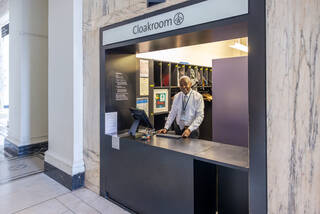
Cloakroom
Cloakroom. © Victoria and Albert Museum, London

Toilets

There are standard and accessible toilets on every floor. Look for the signs around the museum or find them on the digital map. Baby changing facilities are included in most toilets.
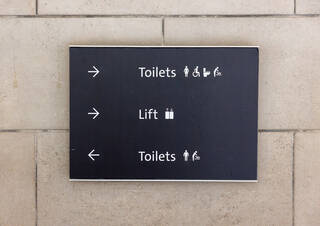
Toilet signage
Toilet signage. © Victoria and Albert Museum, London

The nearest changing places toilet is located at the Science Museum nearby.

Quiet Space

V&A South Kensington has a dedicated Quiet Space with two Quiet Rooms that can be used to rest, reflect and reset during your visit. You are also welcome to infant feed here.
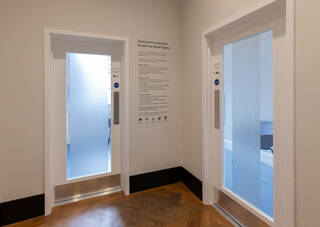
The entrances to our two quiet rooms. The doors have frosted panels to allow for private rest and reflection. Guidelines for using the room are printed on the wall between the two doors. The doors are manual and open with flat metal push plates
Entrance to Quiet Rooms. © Victoria and Albert Museum, London

Guidelines for using the Quiet Rooms are printed on the wall.
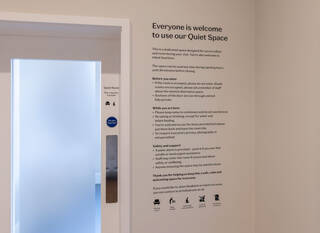
Guidelines for using the Quiet Rooms in black lettering on a white wall. Pictographs indicate you can rest, change nappies, and use the rooms for multi-faith contemplation. You cannot eat or use your phone in the rooms.
Quiet Room guidelines. © Victoria and Albert Museum, London

This room has capacity for four people. It includes a sink, soap, and paper handtowels for washing. There is also a mirror, a chair with arm rests, and a window with a shade that can be drawn up or down.
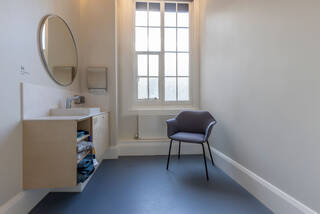
View inside the quiet room, looking towards the window. The walls of the room are painted off-white and the floor is blue linoleum. On the left wall there is a white washbasin with a large round mirror over it and a wooden storage cupboard built underneath. The storage cupboard has three shelves, holding prayer mats, blankets, and sensory mats. Opposite the basin, to the right, is a grey chair with armrests and four black legs.
View inside Quiet Room. © Victoria and Albert Museum, London

This room has capacity for five people. This room also includes a fold-out baby changing station and a wastebasket to dispose of nappies.
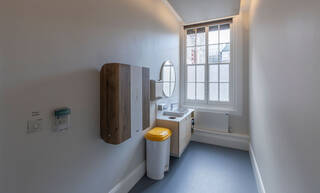
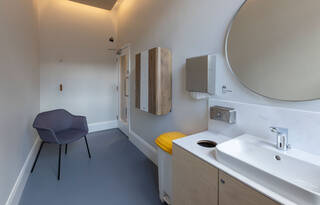
View inside the quiet room, looking towards the window. The walls of the room are painted off-white and the floor is blue and uncarpeted. Against the left wall there is a light switch dimmer, a baby-changing station, and a white waste-bin with a yellow lid. There is also a white washbasin with a large round mirror over it and a wooden storage cupboard built underneath. The storage cupboard has three shelves, holding prayer rugs, mat, and sensory toys.
Quiet Room with baby changing station, looking towards the window. © Victoria and Albert Museum, London
A view of the same room as before, now looking towards the door. There is a grey chair with arm rests and four black legs in the left corner. The chair slopes backward slightly. A Qibla is printed on the wall over the door. The door is manually operated by a pull handle.
Quiet Room with baby changing station, looking towards the door. © Victoria and Albert Museum, London
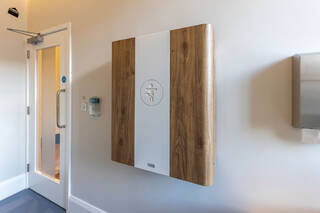
A wall-mounted baby changing table. The outer cover is faux-wood and white plastic. A tactile baby-changing pictograph is in the centre of the cover.
Baby-changing station close up. © Victoria and Albert Museum, London

Both rooms include dimmable lighting and an emergency call button.
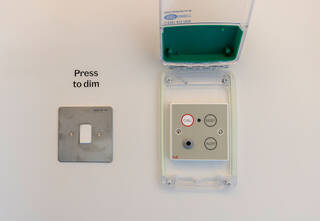
A white push button light switch mounted in a silvery metal plate. The words ‘press to dim’ are printed on the wall above the switch. Beside the switch, on the right, is the emergency call alarm, its protective case open so you can see the buttons operating the alarm. The buttons read ‘call’, ‘reset’, and ‘alert’.
Dimmable light switch and emergency call button. © Victoria and Albert Museum, London

There is also a Qibla (direction towards Mecca) installed on the wall in both rooms.
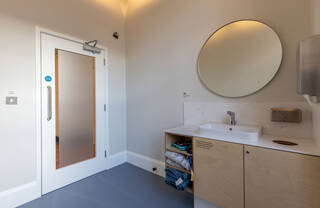
A view of one of the quiet rooms facing the door. A Qibla is printed in black on the wall just off the right top corner of the door.
Quiet room with Qibla over the door. Victoria and Albert Museum, London

Prayer rugs, mats, and sensory toys are provided in the storage shelves in both rooms.
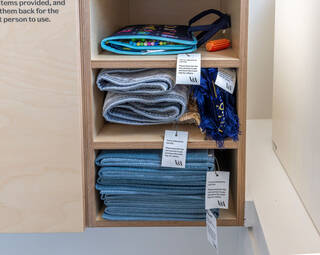
Close up of one of the wooden cupboards under the sink. The cupboards have three tiers of shelves holding sensory mat book and orange sensory toy, neatly folded blue and yellow prayer rugs with tassels, and folded blue mats.
Sensory toys, mats, and prayer rugs. © Victoria and Albert Museum, London

Access to quiet rooms

There are two lifts that provide step-free access to the Quiet Space. A smaller capacity lift is directly accessible from Exhibition Road entrance. This lift is also used to access the Members' Room and may be busy.
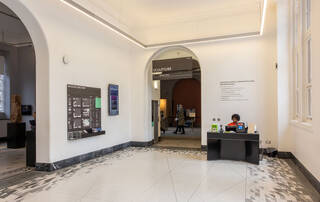
A large room with white walls and white marble flooring with black patterned edges. At the centre of the photo is an arched entry into the sculpture galleries. A sign hangs down from the entryway. The word ‘sculpture’ is printed in white lettering on a black background. To the left of the arched entry, a museum directory is mounted on the wall. There is also a screen with a digital display telling you what’s on at the museum. To the right of the arched entry is a small black desk with guidebooks, a computer, and hearing loops. A visitor experience assistant is seated at the desk wearing an orange museum uniform.
Blavatnik Hall, inside Exhibition Road entrance. © Victoria and Albert Museum, London

This lift is small. The doorway is about 700mm wide, and the inside is about 830mm width by 1220mm depth. It can be used by ambulatory visitors and some visitors with small wheelchairs. The Quiet Space is on Floor 2.
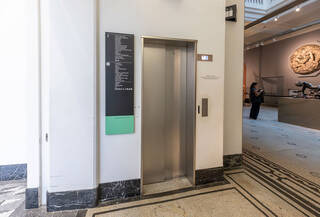
A lift with narrow, metal doors. The doors are closed. The floor indicator shows the left is coming down from floor 2, where the quiet space is. The walls surrounding the lift are white and a floor directory is mounted on the wall on the left side of the lift. Sculptures visible in the galleries to the right of the lift. The floor is black and white marble mosaic.
Lift leading to the Quiet Space. © Victoria and Albert Museum, London

Visitors with large wheelchairs can access the Quiet Space via the lift at the end of the Hintze Sculpture Galleries. Entering Sculpture from Exhibition Road/Blavatnik Hall, turn right.
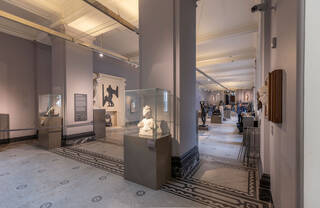
A long gallery with grey painted walls, high white ceilings, and white and black marble mosaic floors. A large square support column is front and centre of the photo. In front of it is a glass display case on a large plinth. Inside is a bust of a woman in white marble. Other sculptures mounted on plinths are visible down the centre and sides of the gallery.
Hintze Sculpture Gallery, approaching from the Blavatnik Hall. © Victoria and Albert Museum, London

Alternatively, from the Cromwell Road entrance, pass through the main gift shop, down the left ramp to the Hintze Sculpture Galleries.
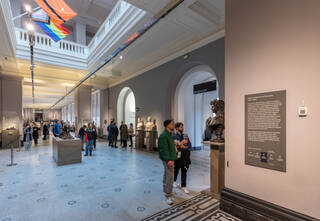
A long gallery with grey painted walls, high white ceilings, and white and black marble mosaic floors. A large atrium is cut out of the floor above, adding to the spaciousness of the gallery. On the floor above are white parapet railings. The progress pride flag and refugee pride flags are mounted on flagpoles and hung from the atrium. There are visitors standing and walking through the hall, looking at sculptures mounted on plinths in the centre and along the walls of the room.
Hintze Sculpture Gallery, approaching from gift shop ramp. © Victoria and Albert Museum, London

Follow to the end of the Hintze Sculpture Galleries. The lift corridor is to the left of the marble staircase.
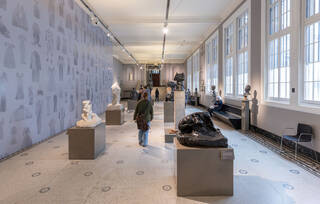
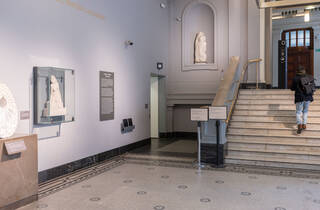
A long gallery with grey painted walls, high white ceilings, and white and black marble mosaic floors. Sculptures are displayed on plinths in two rows through the centre of the gallery and visitors are walking through and looking at the sculptures. The right walls of the gallery are lined with windows and bench seating. A temporary wall has been erected on the left side of the gallery, where the new fashion exhibit is being built. This wall is blue-grey and decorated with historical clothing items.
Hintze Sculpture Gallery, heading towards lift. © Victoria and Albert Museum, London
Corner of the Hintze sculpture gallery with doorway exiting to a lift corridor. The doorway is to the left of a white marble staircase with brass handrail.
Entrance corridor leading to lift. © Victoria and Albert Museum, London
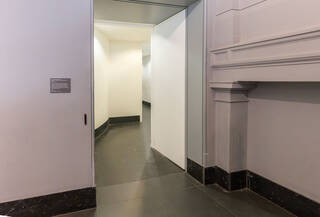
Doorway leading into the lift corridor. The corridor is wide enough to fit one wheelchair. The first part of the corridor is very short – about 1 wheelchair’s length – and then turns sharply to the right. The walls of the corridor are painted white and the floor is black.
First part of lift corridor. © Victoria and Albert Museum, London
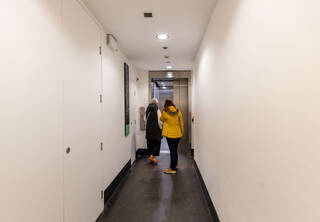
 wide and can accommodate 16 standing people. The corridor is wide enough to fit one wheelchair. Two people, one in a black coat and trousers and another in a yellow coat and black trousers, are standing in front of the lift. The metal doors of the lift are opening. The corridor walls are painted white and the floor is black. The lift call buttons mounted on the wall on the left side. The lift directory is on the left adjoining wall.
Lift corridor leading to Design 1900 – Now. © Victoria and Albert Museum, London

This lift is also accessible from the Tunnel entrance. Ascend the stairs and turn right.
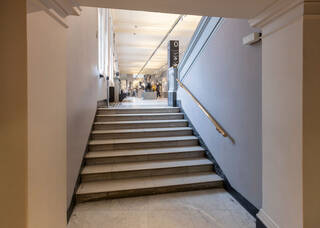
A set of eight white marble stairs leading up to the sculpture galleries. A brass handrail is on the right side of the stair, a white wall without a handrail is on the left.
Access to Hintze Sculpture Galleries from Tunnel entrance. © Victoria and Albert Museum, London

Exit the lift into Design 1900 – Now.
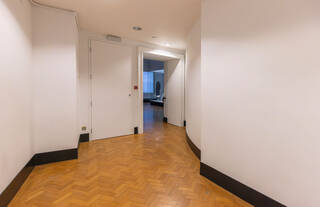
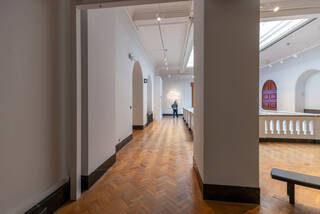
A wide corridor with white painted walls, black, high-contrast baseboards, and a wooden parquet floor. Bits of the corridor just out at slight angles. At the end of the corridor is a doorway entering to Design 1900-Now.
Entrance to Design 1900 – Now. © Victoria and Albert Museum, London

Pass through to the middle of Design 1900 – Now. When you arrive at the room with an atrium floor and pride flags, turn left.
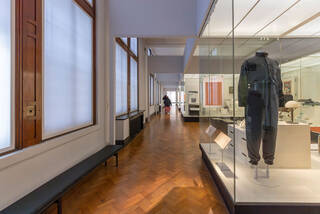
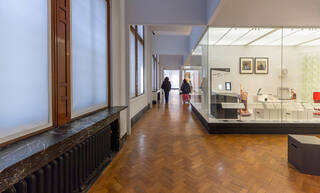
A long gallery with a series of large floor-to-ceiling glass cases on the right side of the room. The nearest case displays a headless mannequin wearing a dark grey jumpsuit. A row of shaded windows runs along the left side of the gallery. There are long black, backless benches under some of the windows. The corridor running between the cases and the windows is wide enough to accommodate a wheelchair. The floor is wood parquet.
Design 1900 – Now. © Victoria and Albert Museum, London
A view from the midpoint of the first Design 1900-Now gallery. On the left side of the wall under the windows is a long black radiator built into a black marble mantle. On the right side the gallery opens up into a wide area with mobile seating. The seats are black modular cubes without arms or backrests. Two visitors can be seen in the distance, walking through the gallery.
Design 1900 – Now. © Victoria and Albert Museum, London
The atrium space between the two Design 1900-Now galleries. A large square support column dominates the right side of the picture. An arched doorway leading to the quiet space is on the left-hand side. A white parapet-style railing borders the atrium opposite the doorway.
Entrance to Quiet Space via lift corridor (left). © Victoria and Albert Museum, London
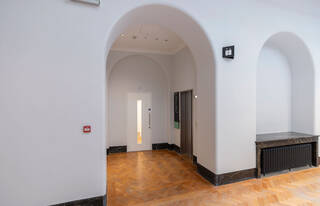
A large white arched doorway leading to a corridor with a lift on the right side and a closed white door at the end of the corridor. The flooring is wood parquet.
Entrance to the Quiet Space. © Victoria and Albert Museum, London

Asking for help

You can ask for help at the information desk in the Cromwell Road entrance or you can ask staff in the galleries. They can help with finding step-free routes or where the museum may be quieter.
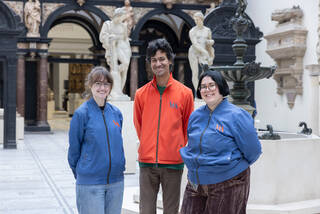
V&A staff
V&A staff. © Victoria and Albert Museum, London

Borrowing mobility aids

You can borrow a wheelchair or walking stick from the information desk in the Cromwell Road entrance. We recommend booking at least 24 hours in advance by filling in this accessibility aid form.
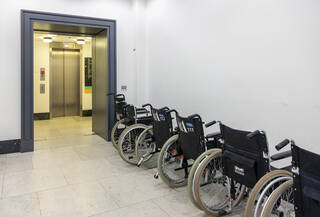
Wheelchairs at  the Cromwell Road entrance.
Wheelchairs at the Cromwell Road entrance. © Victoria and Albert Museum, London

Galleries and exhibitions

The V&A South Kensington contains 145 galleries showcasing over 5,000 years of human creativity. Our galleries are arranged by types of objects, such as fashion or furniture; materials and techniques, such as painting or metalwork; and places, such as South-Asia or Korea.

The museum also hosts a number of free temporary displays and paid-for exhibitions.

Some galleries may have low light levels – this is to protect the objects on display.

Places to sit and portable stools are available near gallery entrances.
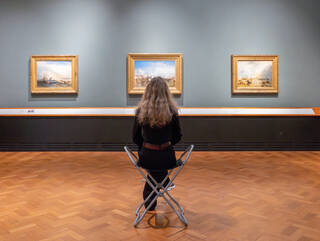
Portable stools
Portable stools. © Victoria and Albert Museum, London

Look out for:

  • Large print guides and resources
  • Interactives, such as audio handsets and digital screens
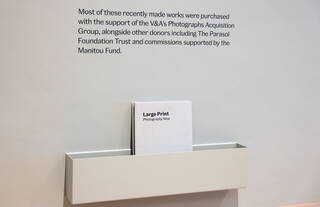
Large Print Guides
A large print guide. © Victoria and Albert Museum, London

Visiting exhibitions

You will need to show your ticket at the exhibition entrance. You can buy tickets online or at the information desk in the Cromwell Road and Exhibition Road entrances.

You may have to queue at busy times.
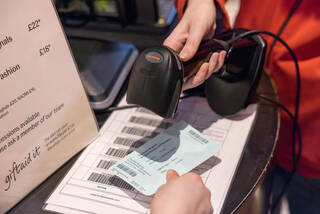
tickets
© Victoria and Albert Museum, London

Dos and do nots

Do

  • Do feel free to sketch in the galleries
  • Do take photographs (personal use only), but please be respectful of the people around you

Do nots

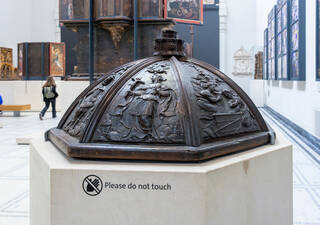
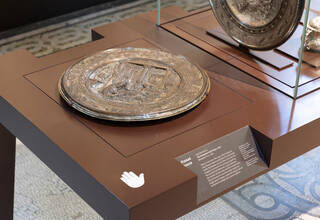
  • Do not touch a museum object unless a sign says you can
  • Do not eat or drink in the galleries
do not touch
Please do not touch. © Victoria and Albert Museum, London
Please touch
Please touch. © Victoria and Albert Museum, London

Noise levels

The museum is often busy and noisy.

Some gallery spaces contain audio or video that play out loud.

You might find a live performance or workshop taking place in a gallery.
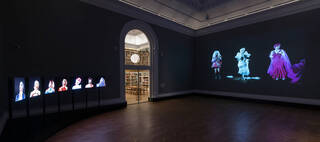
Gallery digital projection
Gallery digital projection. © Victoria and Albert Museum, London

There are two loud announcements when the museum closes.

You can ask a member of staff to be directed to a quieter space.

Ear defenders can be borrowed from exhibition entrances, the Learning Centre and information desks. These are available on a first-come-first-served basis.

Food and drink

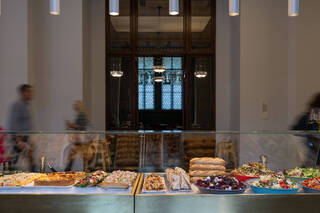
The Main Café serves hot and cold food and drink. Pick up a tray and queue at the relevant counter. Pay at a separate till.

You cannot consume your own food and drink in the Café, but you can in the museum garden.
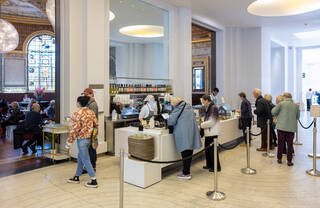
Main Cafe
Main Café. © Victoria and Albert Museum, London
Main Café
Main Café. © Victoria and Albert Museum, London

Shop

There is a Main V&A Shop and smaller shops near the exhibition spaces, that sell a range of products inspired by our collections and current exhibitions.
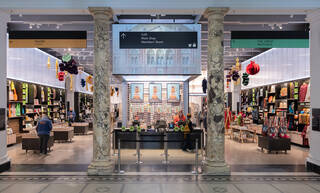
Main Shop
Main V&A Shop. © Victoria and Albert Museum, London

The John Madejski Garden

The John Madejski Garden is open from 10.00 – 17.00 Monday to Sunday. Please note we will begin to close the garden from 16.40.

This hidden oasis in the centre of the building is a fantastic location to rest and reflect during your visit.

To keep the garden at its best we ask that you:

  • Use the pond responsibly and respect our lawns
  • Do not feed the birds
  • Do not smoke or vape
  • Use the bins provided
  • Do not tamper with the water jets in the pond
  • Do not use buckets, spades, and water toys
  • Always accompany children

Visitors are welcome to refresh their feet in the pond, however running, splashing, swimming, and sitting in the water are not permitted. Users of the garden must remain fully clothed.
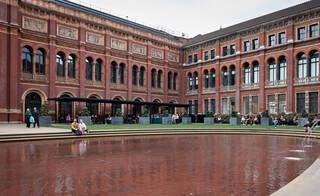
The John Madejski Garden
The John Madejski Garden. © Victoria and Albert Museum, London

Exit

You can exit the building the same way you came in, via Cromwell Road, Exhibition Road or the Tunnel. The Tunnel entrances sometimes closes early.

We hope you enjoy your visit!

Header image:
© Victoria and Albert Museum, London