A V&A Collections Christmas dinner

The V&A collections are vast. You can explore over 5,000 years of creativity through its 2.9 million objects and discover anything from a pair of Egyptian socks to a mosquito emoji, Shakespeare's First Folio or a 35-metre-high plaster cast of Trajan's column. As a recent V&A Marketing campaign announced, If you're into it, it's in the V&A. Like many others, we look forward to a traditional Christmas roast, and so we've set ourselves the challenge of assembling a 'classic' three course Christmas dinner using only objects from the collections as ingredients.

When we say 'classic', we are of course referring to a very specific family tradition. Christmas, and especially the annual feast, is a highly ritualised affair with strong opinions as to what should or shouldn't be served.

But ultimately I think we can all agree with this sentiment:
Starter: Prawn cocktail

The 'king of starters' and the perfect precursor to the main event is, of course, the prawn cocktail. It was the most popular hors d'oeuvre in Britain from the 1960s to the late 1980s and still retains that top spot in our house.

Prawns

Here we have a watercolour of a prawn and three fishes – a beautiful example of a Kalighat painting, which was a unique genre of 19th and early 20th century Indian painting recognised for its use of brilliant colour, simplified images and swift brushstrokes.
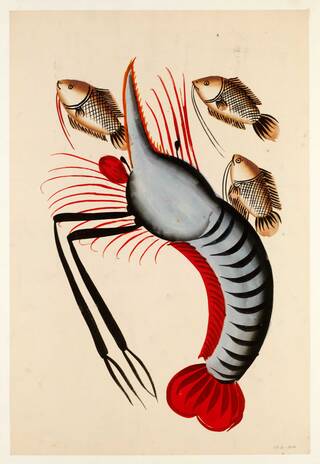
‘Prawn with three fishes’, watercolour painting, by unknown maker, about 1940, Calcutta, India. Museum no. IS.2-1954. © Victoria and Albert Museum, London

Marie Rose sauce

Not to forget the accompanying Marie Rose sauce – a classic British condiment made, in its simplest version, by mixing together mayonnaise and tomato ketchup.
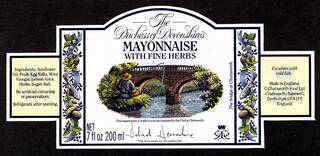
Proof of mayonnaise label for Duchess of Devonshire's sauces, designed by Ian Logan Design, 1986, Britain. Museum no. E.660-1994. © Victoria and Albert Museum, London

Here we have a limited-edition Heinz Tomato Ketchup 'Tattoo Edition' bottle, inspired by musician Ed Sheeran's tattoo of the condiment's label. Released in 2019 for Heinz's 150th birthday, the bottles were given away to fans, auctioned for charity or donated to galleries.

Ed Sheeran X Heinz Tomato Ketchup, Tattoo Edition, designed by Kevin Paul, 2019, Britain. Museum no. S.624:1 to 5-2019. © Victoria and Albert Museum, London

Lemon and paprika

For a more complex flavour profile, we're also adding a squeeze of lemon and a light dusting of paprika.
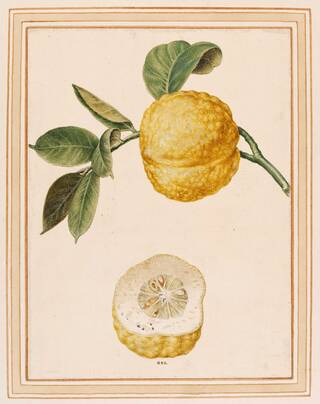
(Left to Right:) 'Citron-lemon, Citrus limonimedica', drawing, by Vincenzo Leonardi, 17th century, Italy. Museum no. E.733-1949. © Victoria and Albert Museum, London; 'Paprika', woman's rectangular poncho, designed by Simonetta Visconti, 1967, Paris, France. Museum no. T.482-1996. © Victoria and Albert Museum, London

Lettuce

All served on a neat bed of crisp fresh lettuce – the type that Beatrix Potter enjoyed sketching in the kitchen garden at Fawe Park in the Lake District, which was a favourite retreat of hers and inspiration for the setting of Mr. McGregor's garden in The Tale of Benjamin Bunny (1904).

Lettuce bed in the garden at Fawe Park, Cumbria, background study for The Tale of Benjamin Bunny (1904), by Beatrix Potter, July 1903, England. Museum no. LC 24/A/1. © Victoria and Albert Museum, London, courtesy Frederick Warne & Co Ltd.

Main course: Roast turkey

Although turkeys were first introduced to Britain from North America in the early 16th century (King Henry VIII was said to be one of the first to eat one), it wasn't until the 1950s that they replaced the roasted goose to become the choice of bird at Christmas.

Turkey

This splendid specimen is a turkey cock that was presented to the Mughal emperor Jahangir in 1612 as part of a consignment of exotic birds and animals. In his memoirs, Jahangir notes that "these animals appeared to me to be very strange, I both described them and ordered that painters should draw them … so that the amazement that arose from hearing of them might be increased".
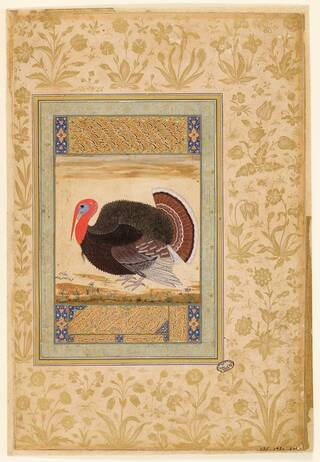
Painting, turkey cock, by Mansur, about 1612, Mughal Empire. Museum no. IM.135-1921. © Victoria and Albert Museum, London

Roast potatoes

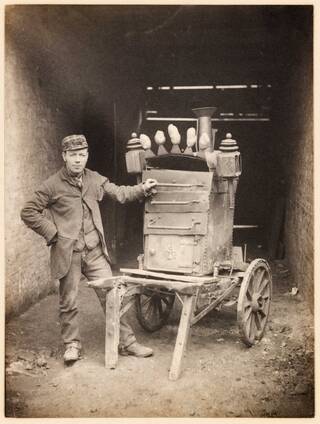
An absolute must.

(Left to Right:) National Photographic Record and Survey, a street hawker selling baked potatoes in London, photograph by Edgar Scamell, 1892, London, England. Museum no. E.3602-2000. © Victoria and Albert Museum, London; 'Joe White and his 'teddie' pit, Batworthy Farm, Chagford 1982', photograph, by Chris Chapman, 1982, Dartmoor, England. Museum no. PH.135-1985. © Victoria and Albert Museum, London

Roast parsnips

Another absolute must.
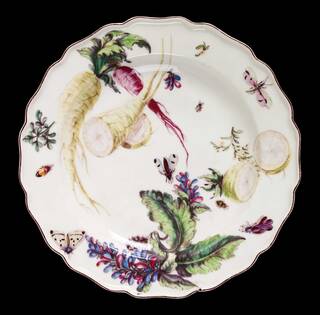
Plate, Chelsea Porcelain Factory, about 1755, London, England. Museum no. C.46-1944. © Victoria and Albert Museum, London

Carrots

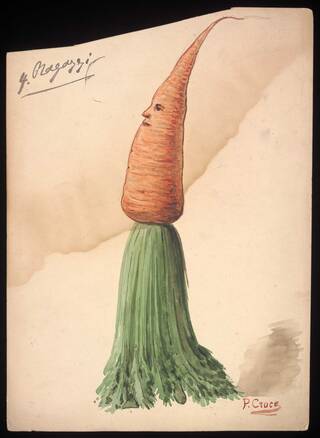
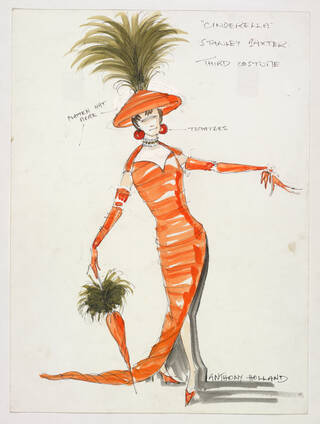
Also roasted.

(Left to Right:) Costume design for a carrot in the ballet in 'Amor', designed by P. Croce, late 19th century, Italy. Museum no. S.231-2000. © Victoria and Albert Museum, London; Costume design, by Anthony Holland, for Stanley Baxter as an Ugly Sister in Cinderella, King's Theatre, Edinburgh, 7th December 1979, London. Museum no. S.550-2000. © Victoria and Albert Museum, London

Brussel sprouts

It doesn't matter if you don't like them, it's a Christmas dinner, you have to have sprouts, it's tradition. Whilst some fry their sprouts with pancetta, drizzle with honey and sprinkle with parmesan, we prefer ours slightly undercooked, as is traditional.
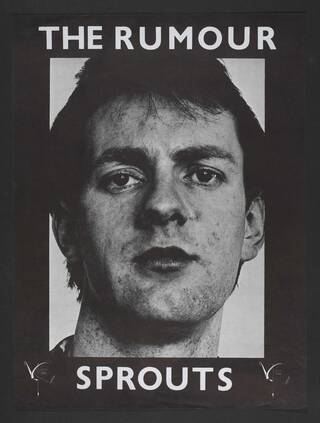
Poster advertising a recording of 'Sprouts' by the music group The Rumour, designed by Barney Bubbles, 1979, Britain. Museum no. S.4686-1995. © Victoria and Albert Museum, London

Pigs in blankets

This baked dish of sausages wrapped in bacon is a firm favourite. Here we have a string of sausages from a Punch and Judy show and a photograph of the painter, Francis Bacon by John Deakin. "That's the way to do it!"
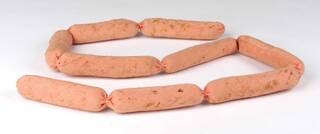

(Left to Right:) String of sausages from a Punch and Judy show, unknown maker, early 20th century, Britain. Museum no. S.1061-2011. © Victoria and Albert Museum, London; Francis Bacon, photograph, by John Deakin, 1952, Britain. Museum no. PH.100-1984. © Victoria and Albert Museum, London

Yorkshire pudding

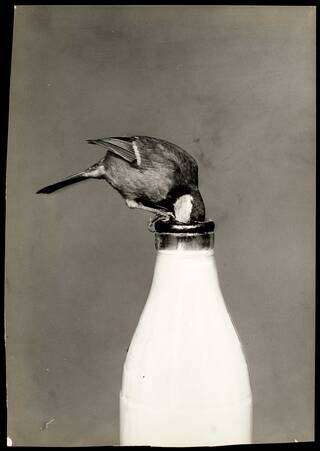
Another firm favourite is the mighty Yorkshire pudding – a delicious crispy baked pudding made from a batter of eggs, flour, and milk (or water).
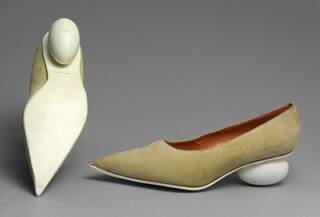
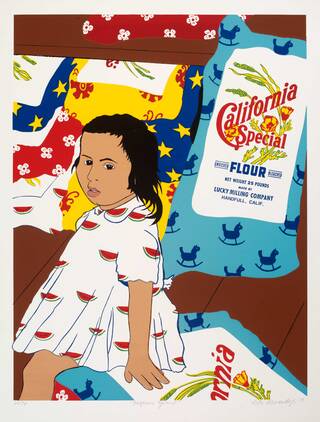
(Left to Right:) Pair of woman's 'Egg Heel' shoes, designed by Johnny Moke for Adeline André, 1986, Britain. Museum no. T.235&A-1990. © Victoria and Albert Museum, London; 'California Special', print, by Ester Hernandez, 1988, San Francisco, United States. Museum no. E.3361-2018. © Victoria and Albert Museum, London; 'Tit Drinking Milk', photograph by John Markham, 1920s – 50s, England. Museum no. RPS.2961-2023. © Victoria and Albert Museum, London

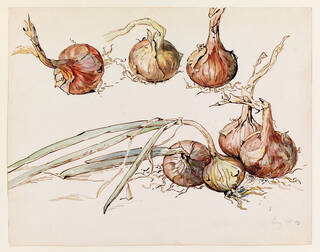
Pork, sage and onion stuffing

Stuffing has its origins in Roman times as a way to help cook the meat more evenly and add flavour. The earliest documentary evidence is from the Roman cookbook, Apicius' De Re Coquinaria, which contains recipes for stuffed chicken, dormouse, hare, and pig.

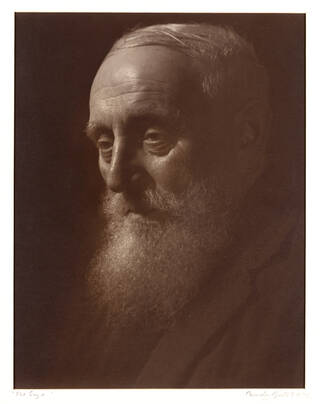
(Left to Right:) Jug with drinking cup in the form of a pig, unknown maker, late 19th century, Rye, England. Museum no. CIRC.187&A-1957. © Victoria and Albert Museum, London; 'The Sage', photograph, by Pamela Booth, 1948. Museum no. RPS.888-2023. © Victoria and Albert Museum, London; Studies of onions, watercolour, by Beatrix Potter, 1903, Britain. Museum no. BP.481(D). © Victoria and Albert Museum, London / courtesy of Frederick Warne & Co. 

Gravy

As a rule, Christmas dinner should be wet and not dry. Lots of gravy, especially over the turkey, Yorkshire puddings and stuffing. This gravy jug by Josiah Wedgwood and Sons is made of creamware, which was renamed 'Queen's Ware' by Josiah Wedgwood I after he had received the patronage of Queen Charlotte in 1765. If you are prone to producing lumpy gravy, this 18th-century silver straining spoon might come in handy.

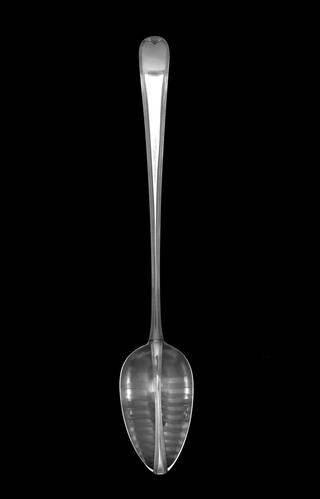
(Left to Right:) Gravy jug, Queen's ware, Josiah Wedgwood and Sons, about 1820, Stoke-on-Trent, England. Museum no. WE.4378-2014. © Victoria and Albert Museum, London; Silver strainer spoon, made by John Dalrymple, 1789, Dublin, Republic of Ireland. Museum no. 107-1905. © Victoria and Albert Museum, London

And finally, cranberry sauce

The perfect condiment companion to a Christmas turkey.
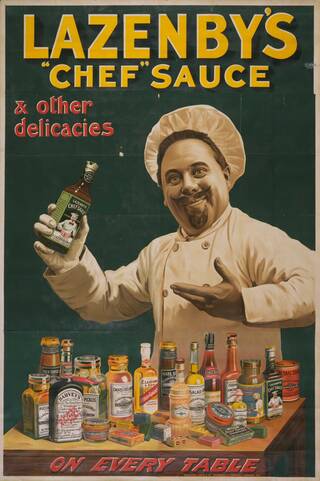
'Lazenby's "Chef" Sauce & other delicacies on every table', poster, designed and printed by Nathaniel Lloyd & Co., 1910, London, England. Museum no. E.67-1973. © Victoria and Albert Museum, London

Dessert: Christmas pudding

Christmas pudding

And so, to the final course – the dense, moist, dark, rich, fruity, boozy, spiced Christmas pudding. This majestic pud has graced our bowls since medieval times, with many households producing their own recipes, which are handed down through families for generations.

Here's British singer and actor, Sir Cliff Richard mixing a giant one at a J.Lyons factory in 1958.
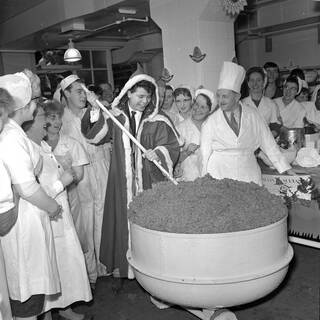
Cliff Richard mixing a giant Christmas pudding at J.Lyons, Cadby Hall, with Charlie Drake, photograph, by Harry Hammond, 1958, England. Museum no. S.14253-2009. © Victoria and Albert Museum, London

Custard

There are many things you could have with your Christmas pudding – brandy butter, rum butter, brandy sauce, rum sauce, ice cream, single cream, double cream, clotted cream, lemon cream, sweetened béchamel, a slice of aged cheddar cheese (for a traditional savoury pairing) or combinations of the above. But we're having custard.
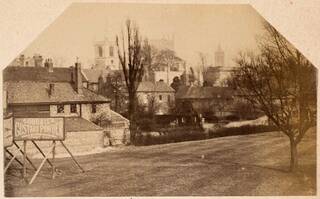
View of York Minster with advertisment for Goodalls Custard Powder in foreground, Jackson family, about 1880s, York, England. Museum no. E.1951:129-1995. © Victoria and Albert Museum, London

Challenge completed! Three courses and 23 ingredients all sourced from the V&A collections pantry.