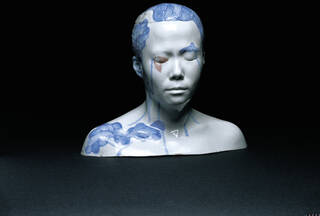
Please introduce yourself and your creative practice. Where do you find inspiration?
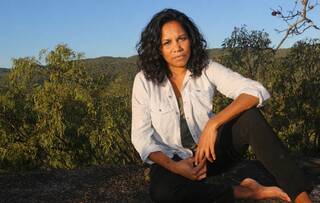
I come from a tiny community of Coen, with a population of 300 people. It is located in Far north Queensland (Australia) from a region known as Cape York Peninsula. This is my Traditional Lands – my mother’s country surrounds the township of Coen, they are the Kaantju people (Karn-ju), and my father’s country borders this area – they are the Umpila people (oom-pil-a) on the east coast of Cape York Peninsula. My Umpila country goes out to sea and includes sea country on the Great Barrier Reef.
I have always created things. I have always had strong feelings to make marks and tell our story from a First Nation person speaking from a First Nation place, even as a young child. Many of my elders and ancestors were creative, they were storytellers. We are very creative in the expression of our culture. Art is culture.
I have a very strong cultural background with our deep connections to country through customs, language, stories and spiritual connections. This is my inspiration. I am inspired by the need to tell my story, authentically, as first nation woman. I tell my story through the artistic mediums of painting, photography and ceramics.
Can you tell us more about your sitters? Who are they and where are they from?
I have a connection to all the sitters. They are all from Coen and we have a connection through family and/or through a cultural connection to places on our country. So we are all well known to each other. These men live a contemporary traditional lifestyle, in the bush, on their country. Nature is all around us and we engage with it everyday. It guides us, provide for us, shelters us, and give us our identity.
Why are they decorated with flowers? What do these flowers portray? Are the types of flowers important to the work?
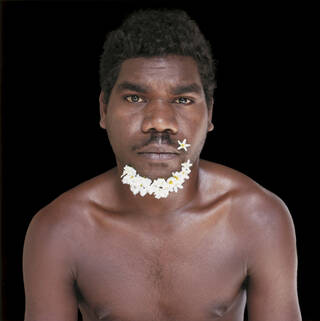
Men have attached seasonal ground flowers to their beards as body adornment for thousands of years. Depending on the family group, the flowers have different meanings: some groups use the flowers in ceremonies – to make something good happen; some use them for introducing themselves to ancestral beings when they visit special sites on their country. They are indicators of what is happening around us, they are a sign. Flowers are highly symbolic to us.
I am also attributing the attachment of endemic flowers to express beauty and love and to show a side of our men and boys that counters perceptions of First Nations men. These are family men, with feelings. There is a sense of vulnerability but at the same time, strength.
What is the significance of your sitters being bare-chested?
With this series, this is the way I wanted our identity to be expressed, to be proud of the colour of our skin. We are First Nation people, but we are also Black people. There is no shame here, only pride, and we wanted to strongly express that.
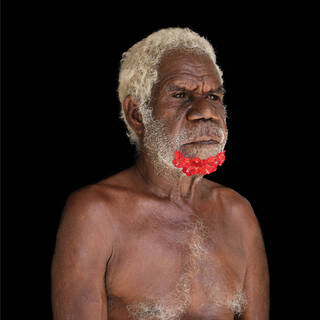
Is the gaze/stance of the sitters of importance?
This is left to the sitter and is largely determined by their specific relationship to me. In my culture, the level and type of interactions we all have with one another is completely determined by our cultural relationship. For example, related through family ties, or country, or an uncle, nephew, brother, cousin, or a grandparent relationship, or great grandparent relationship. We know this between us, and it determines how we interact and interface with each other. It guides and instructs our body language.
Can you tell us more about the choice of plain black or white backgrounds.
The background choice allows the absolute focus to be on the sitter – the sitter is the subject.
What do you want the viewer to take away from your images? Do you think there is added weight in the message your photography conveys to a European audience?
Of course I want the viewer to take away a positive feeling about us and reflect on our cultural practises. Just as importantly, I want the viewer to reflect back on themselves, their own histories, and to develop a consideration to our deep relationship with nature that all people once had.