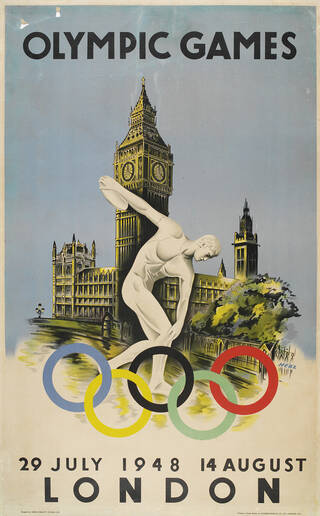
The choices made during the early years of recovery would alter the look and feel of cities and towns across the nation. Britain was a country of custom and tradition. But rather than favour continuity over modernity, many post-war designers looked to Britain's future, spurred on by cultural events like the London Olympics (1948) and Festival of Britain (1951), which helped to lift public spirits and redefine the shape and style of British innovation. Over the following decades, designers responded to shifting economic, political and cultural forces, as well as the devlopment of new materials, maufacturing techniques and global economies. The boom in mass-produced consumer goods, the advent of pop and punk, and space-age anxieties left their mark on everything from clothing to graphic design and architecture.
The Olympic Games, 1948
The 1948 Olympic Games, hosted in London, became known as the 'Austerity Games', a tribute to the 'make-do-and-mend' attitude that had prevailed in Britain during the war. The Games took place at a time of economic crisis in a city devastated by bombing – no Olympic village was built – athletes were housed in RAF camps and colleges, teams practiced outdoors in Hyde Park, and Wembley Stadium was fitted with a temporary running track rather than build a new venue. But the Games were also a platform for reconstruction, and The British Olympic Committee wanted a symbol which would represent "a good example of British craftsmanship".
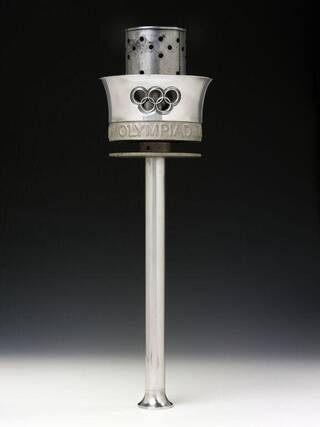
The tradition of bringing a flame from Greece to the Olympic stadium had remained an integral aspect of the Games since 1936. Architect Ralph Lavers was chosen to design the 1948 Olympic torch holder. Lavers was interested in classical architecture and archaeology, and his design paid tribute to traditional forms while also fitting the brief of being "inexpensive and easy to make".

The Festival of Britain, 1951
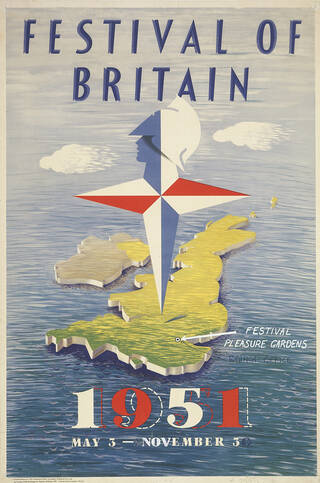
Six years after the end of the war, and exactly 100 years since the famous Great Exhibition of 1851, Britain played host to another national display of strength and fortitude. The Festival of Britain was meant to provide a remedy for the beleaguered country, a 'tonic for the nation'. The main festival site, on London's South Bank, was visited by 8.5 million people, while events held across the UK showcased the collective and individual achievements of British people in the fields of industry, science and the arts.
A patriotic, yet modern symbol was created for the Festival by Abram Games, one of the most influential graphic designers of the 20th century. His now-iconic artwork graced posters, guides and leaflets, enticing the public to visit one of the many exhibitions and events nationwide.
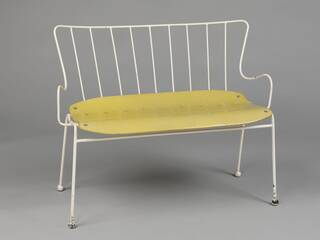
The Festival became a beacon for British manufacturing, showcasing achievements in architecture, furniture, and product design. Utility furniture, a stable of wartime practicality, was replaced by exciting and stylish steel-rod chairs such as Ernest Race's 'Antelope' and 'Springbok' seating and the plywood furniture of Robin Day. Lucienne Day debuted several of her abstract textile and wallpaper designs, which gained huge popular appeal, while labour-saving gadgets and new technologies captured all the futuristic aspirations of the coming space age.
1950s design
As Britain's economy recovered after the war, mass-production made this the era of a new consumerism. The middle class were as style-conscious as they were affluent, prompting a rise in innovative furnishings and gadgets to suit their new post-war, open-plan homes – from the heavy Dynatron televisions of the early '50s to the portable Bush radios available by the end of the decade.
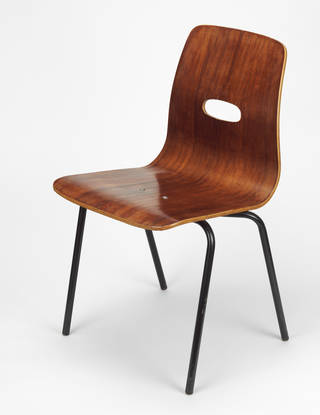
Designers responded with elegant concepts, often looking to Europe, especially Scandinavia, for inspiration. British companies such as Ercol, G-Plan, Hull Traders and Edinburgh Weavers experimented with new designs and promoted creative partnerships with artists. Hugely influential furniture designers such as Robin Day in the UK and Charles and Ray Eames and Eero Saarinen in the United States, found ways to engage with the new materials in creative ways. Day's Q-stak chairs made of 7-ply plywood and tubular steel, for instance, were an example of practical, low-cost, mass-produced seating that was well designed and appealed to a wide audience.
The explosion of pop culture in Britain during the 1960s and the quest for a 'new look' gave the design world a significant jolt. Gone was the austere pragmatism held over from wartime mindsets, as the swinging sixties lifestyle took hold. 'Switched-on' consumers embraced disposable, 'flat-pack' and 'throwaway' – youthful and daring ideas often with an injection of space age inspiration in the mix.
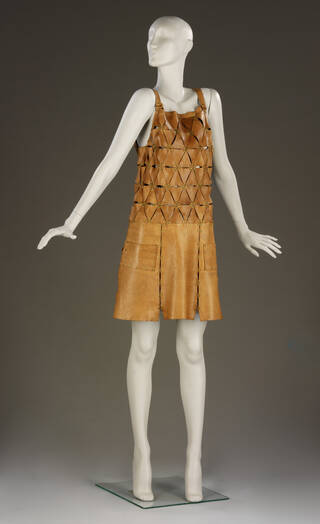

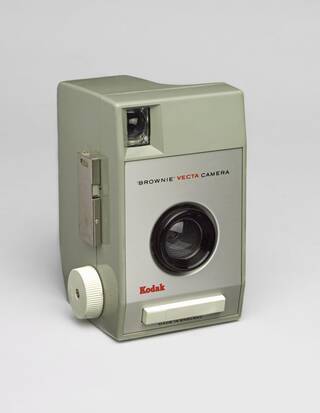
Fashion designers such as Mary Quant and Ossie Clark, along with Pierre Cardin and Paco Rabanne, pioneered radical experimentation with sculptural dresses and futuristic footwear in unconventional materials. New or advanced technologies – in radios, cameras, calculators and kitchen appliances – transformed British manufacturing and became symbols of modern 'good design'. Kenneth Grange's Vecta camera, and the Chefette kitchen blender and mixer, for example, combined practicality with streamlined elegance.

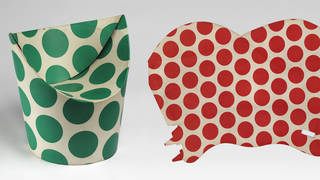
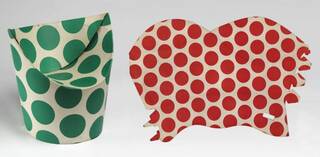
Revolutionary trends were led by young designers such as Terence Conran, whose store Habitat made good design aspirational and affordable. Furniture that could be inflated, knocked down or thrown away – such as Peter Murdoch's flat-pack cardboard chairs, stools and tables, with their £1 price-tag – highlighted the sixties' fondness for replaceable goods. Pop icon Max Clendinning's Maxima chairs would 'slot together', while Robert Welch's flat, Scandinavian-inspired tableware mass-produced in affordable stainless steel added to the informality of the decade.
Design in the 1970s and beyond
The disposable culture boom of the previous decade met with stiff resistance in the 1970s, and the focus of design moved from reconstruction to revolution. The world was once again shrouded in violence, in Vietnam and closer to home in Northern Ireland. Cynicism crept into the happy hippy culture, as energy crises, strikes and picket lines replaced the free-wheeling materialism of the 1960s. For designers, a growing focus on sustainability and ethical, ecological living led to a revival of handmade craft.
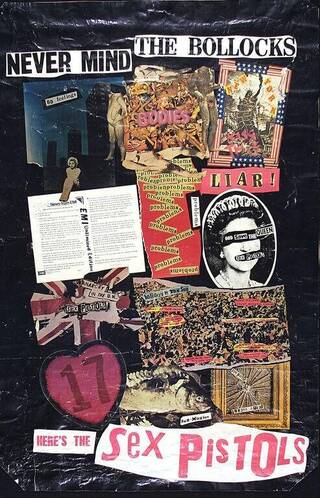
A rebellion was also brewing among art school students, as graduates became suspicious of traditional hierarchies. A distrust of authority created an edgy, underground culture that filtered into the consumer market. The boundary-bashing ideology of punk, embodied by artistic icons such as Vivienne Westwood and Malcolm McLaren, used provocative products to create a shocking 'anti-style'. Jamie Reid and John Varnom's artwork for the Sex Pistols, featuring images and words of anarchy and rebellion rather than a photograph of the band, perfectly conveyed this concept.
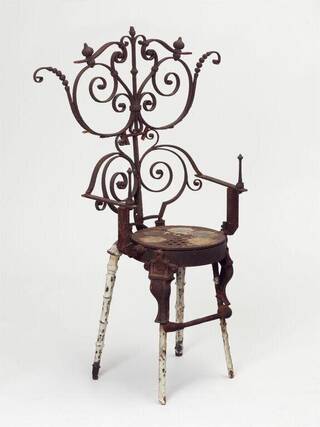
The subversive spectacle that was the 1970s faded during the Margaret Thatcher years, but the resilience and malleability of British design continued. Despite the closure of factories and the rapid decline of manufacturing, young designers sought originality and substance among corporate commercialism. Tom Dixon, Nick Jones and Mark Brazier-Jones emerged as designer-makers in the early 1980s with Creative Salvage, a collective that welded together furniture and objects from scrap metal and recycled elements. The furniture, labelled 'functional artefacts', alluded to historic motifs while residing within their own design genre.
The post-war era signalled a rapid transformation from pragmatic, utilitarian and functional products to design for design's sake. This attitude crescendoed towards the end of the 20th century, as Postmodernist designers shattered established ideas about art and design, bringing a new self-awareness about style.