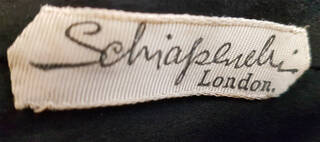
Why Mayfair made sense
When Schiaparelli opened her London premises, she was already familiar with Britain having lived there briefly as a young woman and having sourced textiles from British manufacturers for many years. Scottish wool, Irish linen and tweed appeared in many of her collections.
A Mayfair address was prestigious and convenient, with many couturiers and dressmakers located within a few minutes' walk of each other. For British clients, it also made buying Schiaparelli clothing less expensive than in Paris because they avoided the import duties levied on imported French couture.
Schiaparelli secured 6 Upper Grosvenor Street through personal contacts. Her relationship with Henry Spence Horne led to an introduction to his brother, Sir Allen Horne, who owned the building but was no longer living there.
Establishing a reputation
Schiaparelli moved comfortably within the social circles of the women she dressed and understood the sartorial requirements of the British social season. Country visits, sporting pursuits, dinners, balls and presentations at court demanded extensive wardrobes of tailored day suits, clothing for sport and evening gowns. Surviving garments show that she offered some of her most striking designs via her London premises.
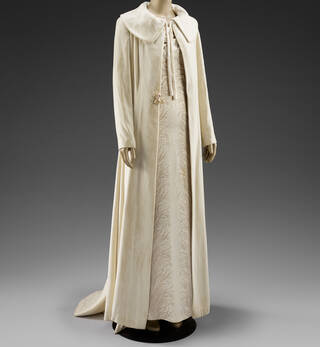
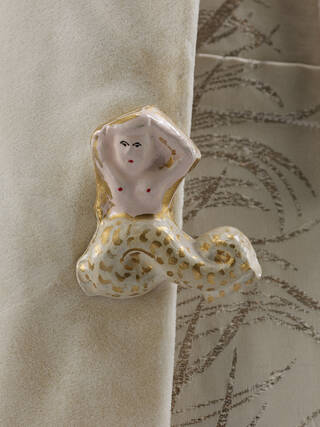
Exemplifying the designer’s subversive spirit is an ensemble worn to the coronation of King George VI in 1937. The event was an important showcase for British fashion. While most guests wore British designers, Jane Clark, wife of National Gallery Director Kenneth Clark, chose a gown and coat from Schiaparelli. The gown’s cream coloured textile is woven with a pattern of silver fronds. Its corresponding silk velvet coat features a provocative button, shaped as a bare-breasted mermaid. This irreverent detail demonstrates Schiaparelli's talent for combining elegance with humour.
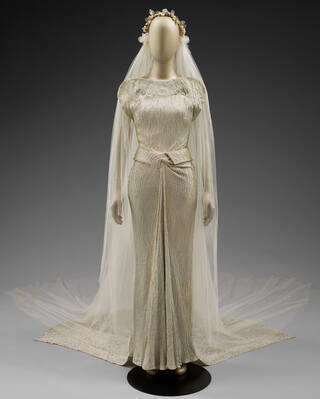
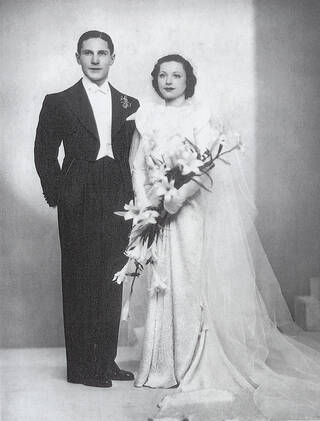
At the same time, Schiaparelli was also a top choice for style conscious British brides. Rosalind Gilbert chose a Schiaparelli design to wear for her wedding at London’s Golders Green Synagogue. Removable sleeves (now lost) allowed Gilbert to later wear the wedding gown as an evening dress. Gilbert ran a wholesale fashion house and, with her husband Arthur, amassed a renowned art collection now held at the V&A. Hers is the only Elsa Schiaparelli wedding dress known to have survived.
Schiaparelli’s elevated status within British fashion was formalised in 1935 when she helped establish the Fashion Group of Great Britain, an organisation which supported people working in the sector. Other founding designers included Norman Hartnell, Digby Morton, Victor Stiebel and Elspeth Champcommunal of Worth. Schiaparelli remained a member until May 1939.
Schiaparelli’s London fashion presentations were entertaining, must-see events. They took place in her Mayfair couture salon before audiences seated around the room’s perimeter in rows of gilt chairs. Attendees recalled cigarette smoke, quiet conversation and models emerging rapidly through a small doorway. Tea was served. Guests included actress Heather Thatcher, Wallis Simpson Duchess of Windsor, French tennis star Suzanne Lenglen and Lady Alexandra Haig, who later donated her Schiaparelli garments to the V&A.
Schiaparelli London showstoppers
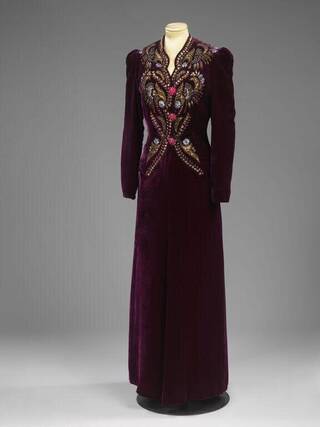
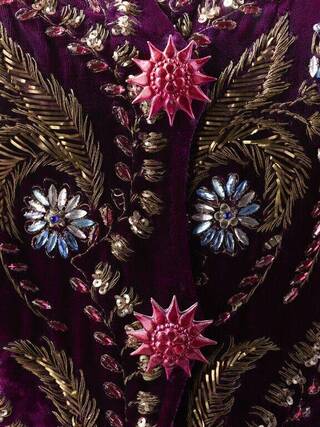
A particularly fine Schiaparelli ensemble belonging to Lady Haig is a burgundy silk velvet evening suit. It typifies the vibrant designs popular with the designer’s London clients. The suit jacket is elaborately embroidered with metal strip, silver-gilt thread, crystals and sequins. The embroidery placement around the collar and down the centre front is a nod to the habit à la française, the most formal and luxurious man’s attire of the late 18th century. Sculptural buttons of shocking pink metal heighten the jacket’s theatricality.
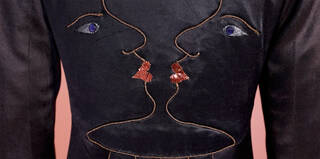
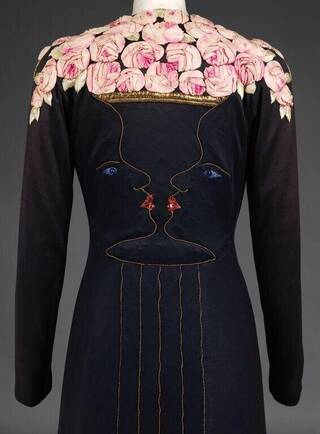
Another notable Schiaparelli London garment is an evening coat with an illusionistic design conceived by the artist and filmmaker Jean Cocteau. The coat’s embroidered image of mirrored, kissing faces in profile also traces an urn of roses. The tour de force embroidery was probably produced in Paris by Maison Lesage. The garment pieces would then have been sent to London to be finished and fitted on the client, Viscountess Castlerosse, by staff in the Upper Grosvenor Street workroom, which employed around 80 people.
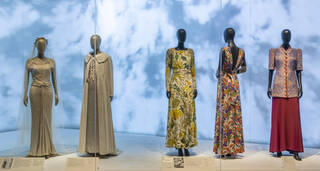
Two outstanding Schiaparelli London printed dinner dresses feature fluid, flattering silhouettes. They formed part of the wardrobe of British art collector Maud Russell who defied convention both through her avant‑garde taste and secret wartime work for the British Naval Intelligence Division. The dresses’ lush floral patterns show how the couturier used textiles as an expressive design element.
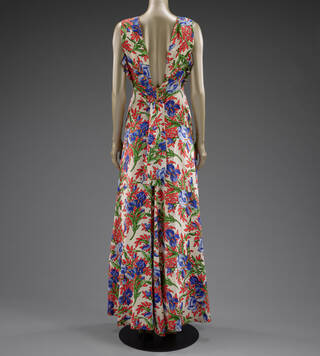
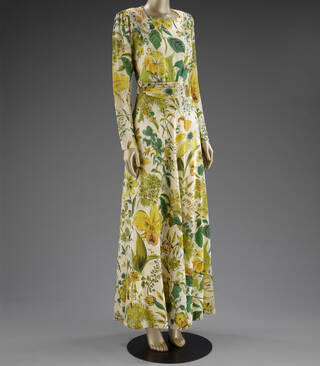
These vibrant, engaging and unmistakably Schiaparelli garments suggest that British clients were as receptive to bold statements, luxurious materials and striking prints as their French counterparts.
Copycats and closure
In London, as in Paris, copying was a significant concern for fashion designers. Between 1935 and 1939, Elsa Schiaparelli registered dozens of designs with the British Board of Trade's Designs Registry for copyright protection. They ranged from day dresses, to tailored suits to eveningwear.
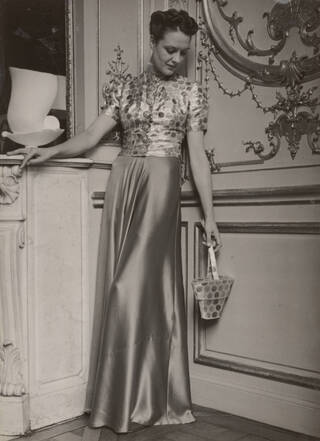
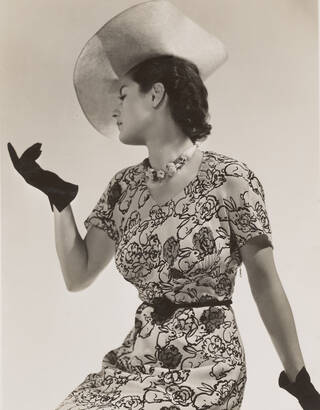
Registering her designs allowed Schiaparelli to take legal action against those copying them without permission. The photographs show the types of images the fashion house submitted as part of this process. Some are functional, with models placed in front of mirrors for multiple views. Others are repurposed studio photographs with stylish poses and artful lighting. These images, gathered into two albums held by the V&A, are available to view by appointment in the museum’s Prints and Drawings Study Room. Although no evidence has yet been found of copyright lawsuits brought by Schiaparelli in Britain, registering designs was part of her approach to doing business in London.
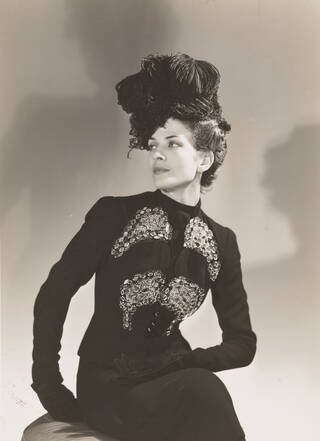
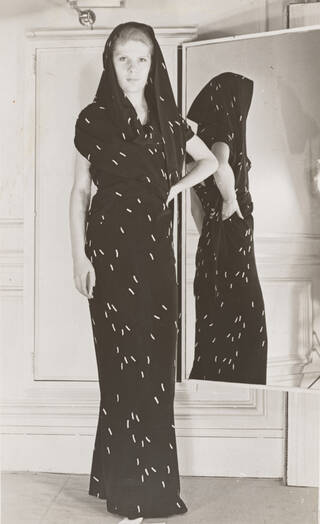
Elsa Schiaparelli abruptly closed her London premises in July 1939. The designer blamed the copyists who replicated her designs. The tradition of British clients buying on account (and often delaying settling their bills) may have played a part. Undoubtedly, the growing threat of war would have compounded the difficulties of running an international couture house.
Although the London chapter of Schiaparelli’s career was brief, the surviving garments and photographic records chronicle the skilled craftsmanship, subversive chic and business approach of Schiaparelli London Ltd.