Dan Leno: The original pantomime dame (1860 – 1904)
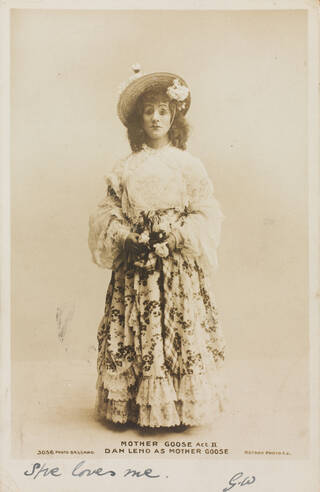
Before drag queens and female impersonators were bringing the razzle-dazzle to television screens, superstar comedian, Dan Leno, was bringing unforgettable performances as a pantomime dame in Victorian music halls.
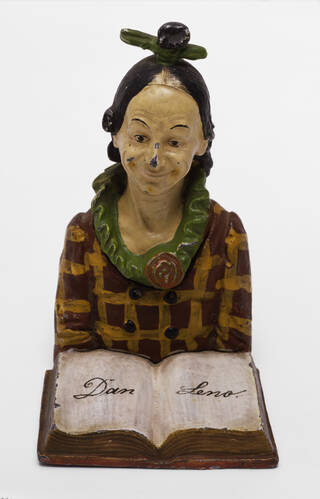
Leno’s exaggerated rubber face made his hilarious, clownish characters come alive. Some of his most iconic roles included Mother Goose and Widow Twankey. He was so adored, an inkwell was even created in his image.
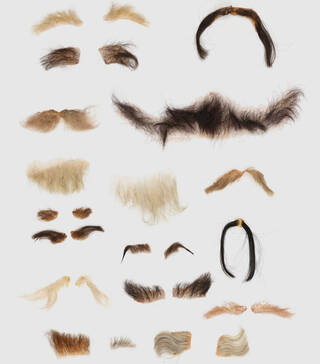
His stage makeup was a mixture of thick tallow (rendered animal fat) set with white chalk powder. He would boldly draw on eyeliner, eyebrows and overline his lips for a maximum pouty effect under the music hall lights. His wigs were giant structures of hair topped with an ill-fitting bonnet for that extra laugh from the audience.
Leno helped establish the tradition of making female impersonations as entertainment in London’s theatre, Drury Lane. He was so hugely popular, King Edward VII nicknamed him ‘The King’s Jester’. Leno’s extravagant costumes and larger-than-life persona helped pave the way for modern drag.
Danny La Rue: The original star of British drag (1927 – 2009)
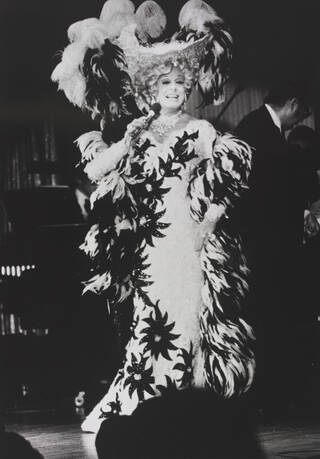
Before the global superstars of RuPaul’s Drag Race, one of Britain’s biggest entertainers was a man in a fabulous frock, Danny La Rue. Irish-born La Rue was a household name in the 1960s and 70s, bringing glamour and sparkle to the nation’s living rooms.
La Rue preferred to call himself a ‘female impersonator’ or ‘comic in a frock,’ rather than a drag queen. He combined music hall comedy with Old Hollywood glamour, often impersonating film stars such as Elizabeth Taylor and Judy Garland. People remember him fondly for his over-the-top gowns, swishing and swaying on stage in a mass of feathers and rhinestones.
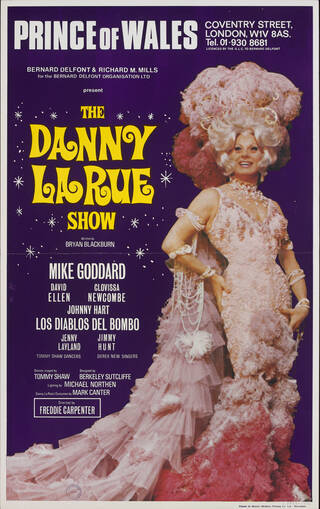
La Rue applied his own makeup expertly, often wearing heavy blue eyeshadow with fluttery lashes. His special skill was being able to get ready for stage in six minutes flat!
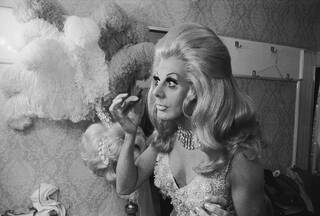
La Rue paved the way for other performers, making drag and female impersonation increasingly part of family friendly Friday night entertainment.
Dame Edna Everage: The housewife who became a global star (1934 – 2023)
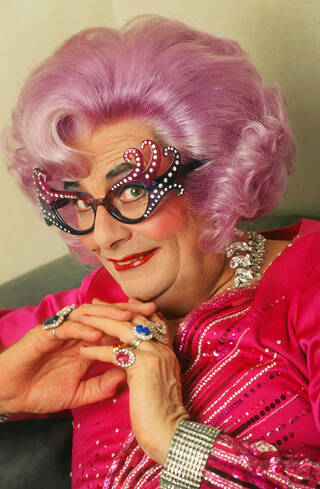
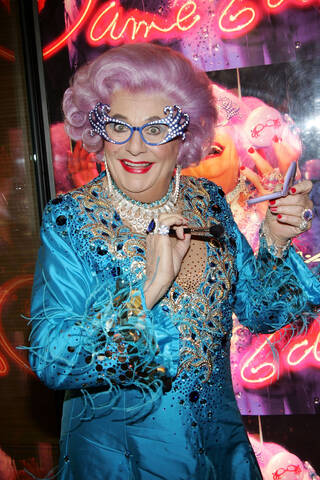
Created by Australian comedian Barrie Humphries, Dame Edna’s towering lilac hair, glittering glasses and fondness for calling her audience ‘possums’ was an ordinary housewife longing for the life of glamour. Soon she was a ‘squillionaire,’ travelling the world, making sure she had gladioli in every hotel room.
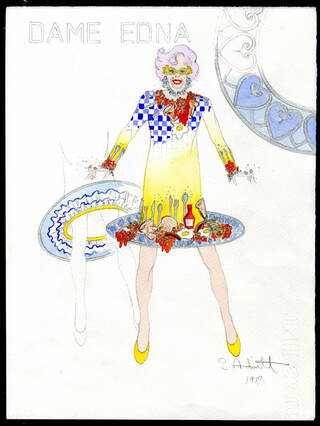
Her outrageous outfits added to the punchy persona, like the ‘breakfast dress,’ worn in 1997, designed by Stephen Adnitt, who Humphries worked with regularly on Edna’s eccentric ensembles. The dress design is based on a gingham tablecloth with a cooked breakfast and cutlery. Dame Edna wore this to a baked bean factory for an episode of the BBC television programme Dame Edna's Work Experience – proof that even breakfast can become high fashion in the world of drag.

Dame Edna released her own makeup range in 2009 in collaboration with MAC Cosmetics, which included lilac compact sets complete with rhinestone accents.
Lily Savage: The queen of outrageous comedy (1955 – 2023)
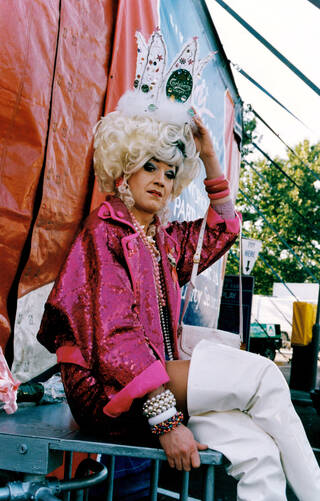
Before Paul O’Grady became one of Britain’s best-loved television presenters, his drag persona Lily Savage was tearing up stages in the late 20th century with her peroxide blonde hair and acerbic Liverpudlian tongue.
Savage emerged from London’s gay club scene in the 1970s, blending biting satire and working-class humour with trashy glamour excess. By the 1990s, she was a household name, bringing a new wave of irreverent drag comedy into homes.
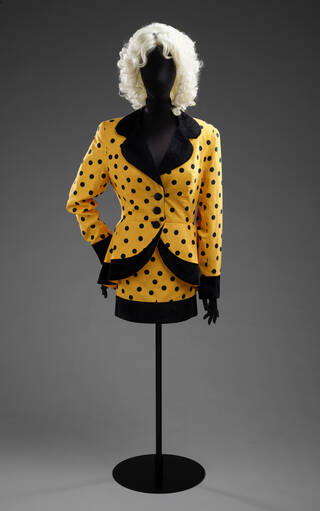
Her style was all about bright colours and animal prints, including a fabulous costume designed by O’Grady himself and made by Martin Owen-Taylor around 1995.
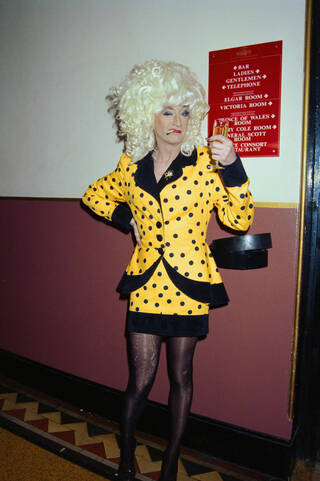
Savage's desired makeup look was “embalmed” with a thick pan foundation base and high, thin, arched eyebrows that were achieved by glueing down O'Grady's actual eyebrows and drawing Savage's on in a black pencil. The routine took roughly three hours to achieve her “Scouse sex worker” look.
Betty Legs Diamond: The queen of Blackpool cabaret
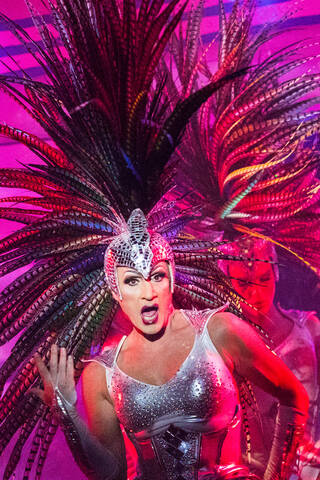
Blackpool has a long history of spectacular seaside entertainment and Betty Legs Diamond is no exception. Dancer and choreographer Simon Green created his glitzy drag persona, Betty, becoming the star of Blackpool’s famous cabaret show, Funny Girls in 1994.
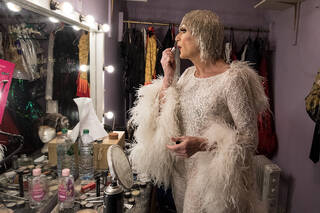
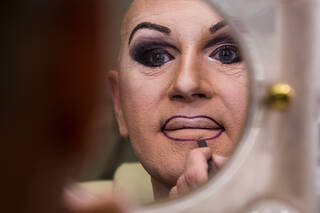
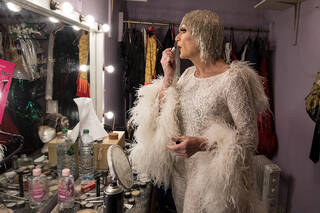
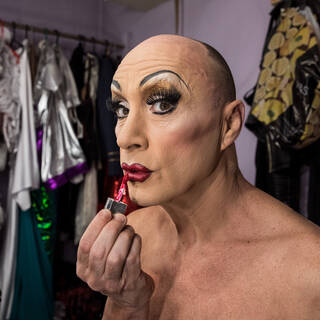
In 2017, the V&A documented life behind the scenes of Funny Girls, capturing costume fittings and makeup routines of the performers. Green’s transformation into Betty Legs Diamond came with a lot of lip-liner, lip-gloss, arched eyebrows and hair. As with all drag and female impersonation, the amount of work and effort that goes in is incredible, as shown in the behind-the-scenes shots.
Lola from Kinky Boots: Taking the West End by storm
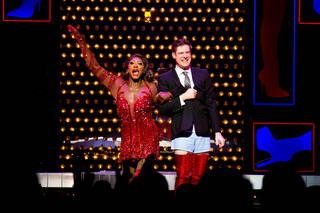
Actor Matt Henry played the iconic role of Lola in the theatre show Kinky Boots, a musical about a struggling shoe factory facing bankruptcy until it partners with a cabaret drag queen to make high-heeled boots.
Henry won the Olivier Award for Best Actor in a Musical in 2016, while costume designer Gregg Barnes also won an award for his spectacular designs. To receive the award, Henry wore a red dress encrusted with glass beads paired with red, patent, thigh-high boots
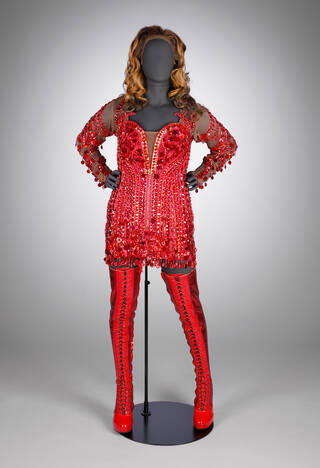
Henry sported a caramel blonde wig on stage and makeup more associated with modern day drag looks, such as those frequently seen on RuPaul’s Drag Race. Through costume, performance and character, Lola challenges ideas about masculinity, acceptance and what it means to be yourself.
The evolution from pantomime dame to drag superstar has been quite the journey over the last 150 years, proving that the route to a powerful form of self-expression takes a lot of heart and personality, as well as plenty of sequins and lashes!