Kaleidoscope
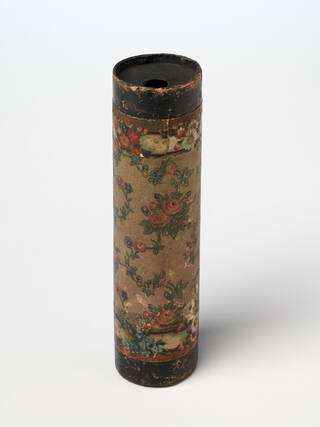
What is so exciting about a little cardboard tube? Well, peeking through a kaleidoscope is like looking into another universe. A gentle twist of a kaleidoscope reveals dazzling colours and ever-changing geometric patterns: a vision into future.
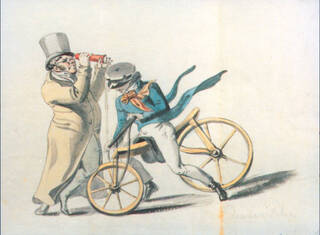
Sir David Brewster’s invention captivated Victorian Britain in 1816. Kaleidoscopes were so popular, people stared through them in the street, completely unaware of their surroundings – sometimes colliding with a cyclist or two, not unlike modern smartphone use today!
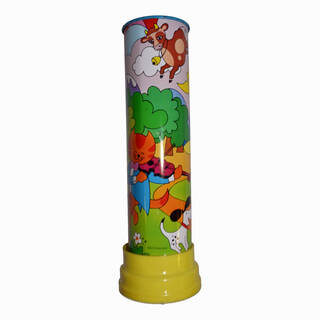
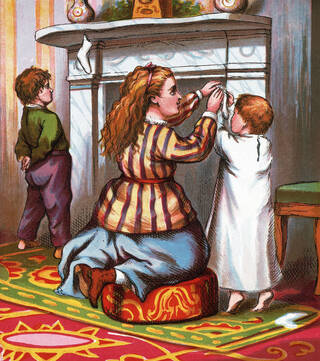
Any child would have been thrilled to pull one of these out of a Christmas stocking and be mesmerised by the fractal light, just as adults were. Kaleidoscopes not only became hugely popular children’s toys, but they also inspired carpet, fabric and wallpaper designs and had a revived craze during the 1960s. They remain a popular fixture of childhood and have some beautiful designs like the 1970s Chad Valley Company kaleidoscope with it's brightly coloured farm scenes.
Skipping rope
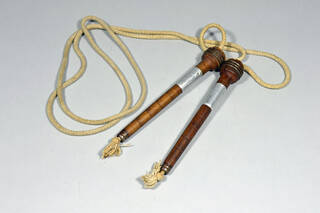
The humble skipping rope’s origins can be traced back to Ancient Egypt, with depictions of humans jumping over vines and ropes in artworks throughout the ages. Skipping ropes were used for training and fitness, gaining popularly in the 19th, mainly as a boy’s activity. Soon, they were also adopted by girls, who would make up songs and chants in time with the skipping, bringing a fun, social element to the game.
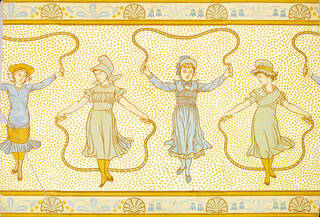
Families could buy skipping ropes with beautifully hand-carved wooden handles or make their own. By the late 19th century, most skipping ropes were industrially produced, and many had the metal bands around the handles for durability. Today skipping ropes are enjoyed by all and remain a very popular way to past the time.
Marbles
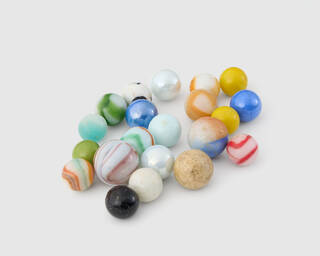
The oldest known toys were a hugely popular feature of Victorian Christmas stockings. Marbles were highly collectible and each child had their own personal collection, often trading for other prized marbles to use in their games. There were many games to be played with marbles, including “Ring Taw” and “Keepsies”, which promoted Victorian morality teachings, improving not only dexterity, but fairness skills.
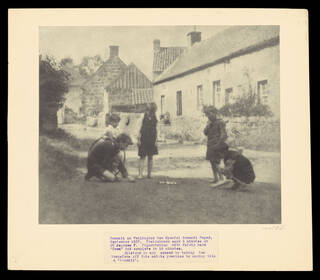
The colourful swirling balls of glass would be thrown and flicked together, causing eventual pitting and wearing down like pebbles on a beach. They could also be made at home from clay or rocks, making them a versatile and all-consuming stocking filler.
Dolls
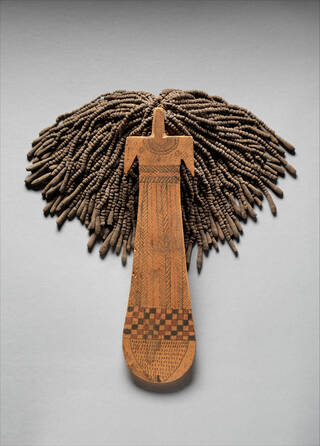
The oldest known dolls are Egyptian paddle dolls from 2100 – 2000 BC, but many ancient cultures created doll-like figures. Paddle dolls were made from wood and had tightly wound linen 'hair'.
Mass manufacturing of dolls began in 15th century Germany, and by the Victorian era, these comforting companions were found in children’s Christmas stockings.
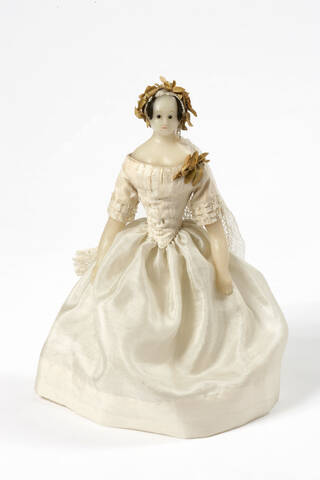
Many dolls were made from wood until industrial advancements saw these little humanoids composed of china, porcelain, bisque and wax. Royal family members as dolls were extremely popular, like the 'Queen Victoria as a princess' doll in her glorious ivory gown. These new dolls were mostly enjoyed by middle- and upper-class children, with handmade wooden dolls still being the norm for many working-class children.
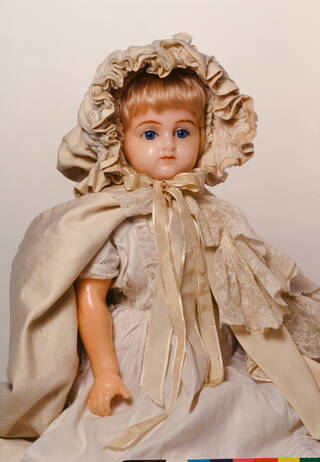
Up until 1850, dolls represented adults – then came the baby dolls. These childlike dollies were extremely popular and by the beginning of the 20th century, were ubiquitous, making their adult-like counterparts more ornamental collectibles.
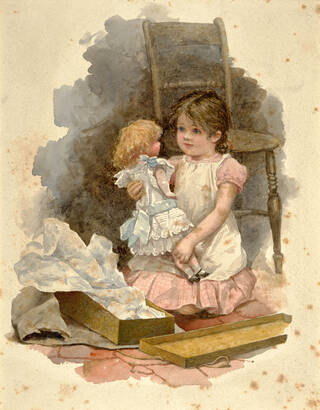
Dolls played an important role in Victorian society to prepare a little girl for what was expected of womanhood. That all changed of course several decades later with the arrival of a glamorous blonde…
Illustrated books
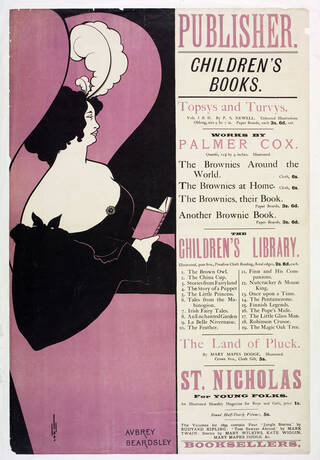
It is a common misconception that fairytales were created for children when in fact, they were morality tales for adults. Children’s books as we know them today are a recent emergence in the world of literature. There were instructional, religious, educational books for children as early at the 15th century – until John Newbery, the “Father of Children’s Literature” began publishing books specifically for children in 1740.
From the 19th century, children’s literature became a recognised genre, bringing stories, magazines, poems and illustrated books into Victorian Christmas stockings to capture the imagination of children everywhere.
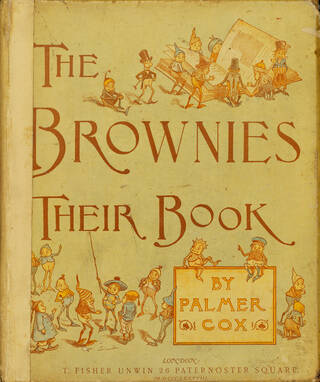
The Brownies was a series of publications by Canadian author and illustrator, Palmer Cox. His stories were based on English and Scottish folklore that Cox heard from his grandmother as a little boy. These little fairy/goblin-like creatures became the first recognised North American comic characters to be merchandised, like this book.
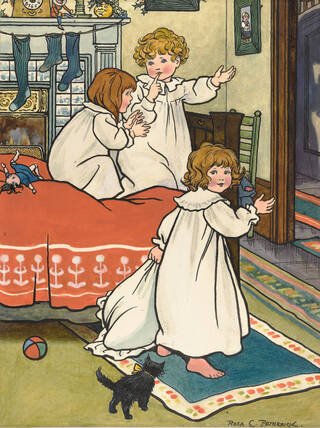
Finally, Victorian stocking fillers which are still popular today, comprised of fruits, chocolates and nuts. Christmas wouldn’t be Christmas without these tempting treats – nor would they stay in the stocking long as children creep out of their beds at night to sneak a few before festivities begin!