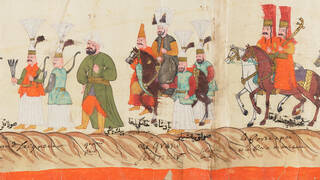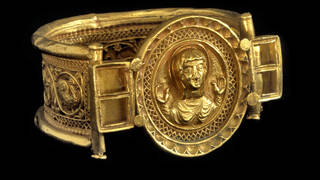
The city once called Constantinople and now called Istanbul was the imperial and religious capital at the heart of two successive empires: the Byzantine (AD 330 – 1453) and the Ottoman (1453 – 1922), and the exhibition explores their distinct yet connected traditions of art and design, built across 16 centuries. It follows changes in patronage and production that reflect the ups and downs of the city’s history, and the lasting impact its creative output had in the Christian and Islamic worlds.
The exhibition showcases over 200 objects across four main sections, including rarely seen decorative arts, such as fine silks and textiles (including historical dress), ceramic tiles, mosaics and tableware, precious metalwork and jewellery, as well as sculpture and architectural furnishings, works on paper, manuscripts and paintings.
Roman Beginnings
Roman Beginnings explores Constantinople’s refounding in AD 330 as the capital of a unified Roman Empire under Constantine the Great. It introduces the city’s strategic location and the infrastructure that underpinned its success, from advanced water systems to fortified walls whose power was reinforced by icons and relics. The section also evokes the Hippodrome, the social and political centre of the city, where chariot races served as imperial spectacle and propaganda.
Heaven and Earth
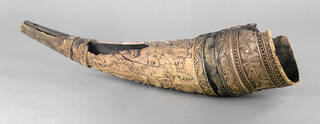
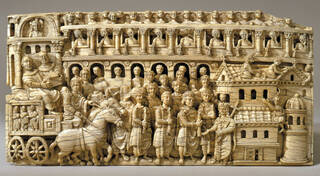
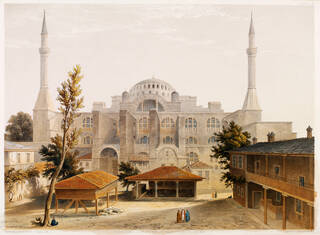
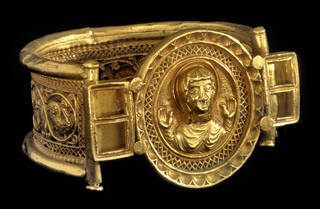
The exhibition’s second section, Heaven and Earth, explores how art and architecture were put into service of Christianity and how Byzantine emperors adopted sacred imagery to project power and authority, while ensuring the survival of classical art and ideas.
Power and Reach
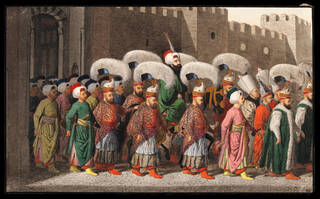
Power and Reach examines how the Ottoman court projected authority in peace and war through visual spectacle. It highlights the role of luxury materials such as silk, precious stones, ivory, silver and gold in shaping imperial identity, brought to life through grand public processions.

Life in the City
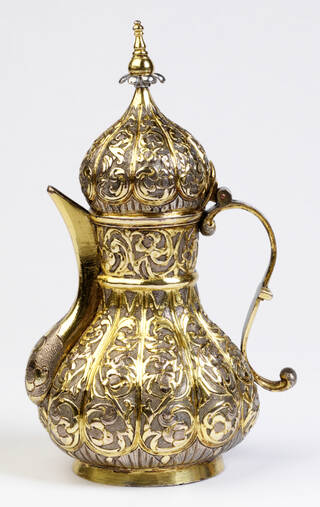
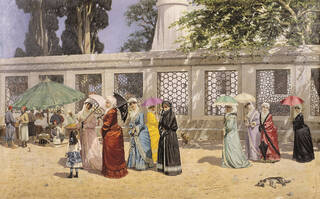
The final section, Life in the City, explores the city as a cosmopolitan centre of diverse languages, faiths and artistic traditions. It brings together rare objects to reveal both religious coexistence and the rhythms of urban life, from coffee houses and bathhouses to music and leisure. This section also traces shifting tastes in the 19th century, when Parisian and other styles increasingly shaped fashion, design and modern identity of Istanbulites.
The exhibition concludes with the influence of Byzantine and Ottoman art on 19th-century Europe, highlighting prints, textiles and mosaic examples from the V&A’s collection, including work by William Morris.