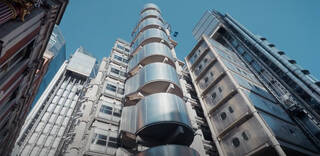
The Grade I listed Lloyd’s Building, opened in 1986, was the very first high-tech building in London. Its unique, futuristic design, featuring pipes, ducts and glass elevators on the outside, was created by British architect Lord Richard Rogers who had just put his stamp on the world with the famed Pompidou Centre in Paris. Although early reviews of the innovative 'inside-out' building were mixed, it is now heralded as an architectural icon.
Making waves at the same time was Rogers' close friend and fellow high-tech pioneer Sir Norman Foster, known for the HSBC building in Hong Kong, completed in 1983. By the turn of the millennium, the London skyline was punctuated with groundbreaking designs such as 30 St Mary Axe ('The Gherkin'), The Leadenhall Building ('The Cheese Grater'), 20 Fenchurch Street ('The Walkie-talkie', designed by Rafael Viñoly), The Shard (designed by Renzo Piano), and the Millenium Dome.
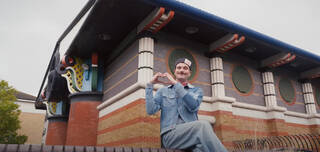
Come along with Reece Davey, V&A East's resident architecture expert, as he ascends glass elevators at the Lloyd's Building, climbs the roof of the O2 and gazes out of the top floor of The Gherkin, to find out exactly what it is that makes these now legendary buildings so ‘high tech’.
Watch more episodes from 'Reece’s Alternative Guide to Architecture'.
Discover more from our Architecture Collection.