It was not until the early 19th century that dressing rooms became an essential part of a theatre’s architecture. Before then, actors often dressed in communal changing rooms behind the stage, referred to as the ‘tiring house’ (attiring house). Little attempt was made to achieve historical accuracy or realism in either makeup or costuming because early stage lighting – provided by candles and later by oil lamps – was dim and ineffectual, leaving crude attempts at makeup to pass unnoticed.
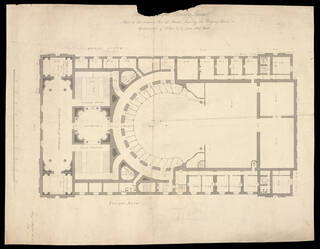
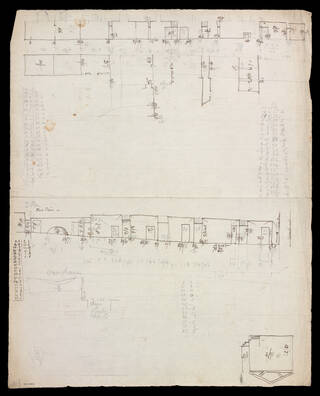
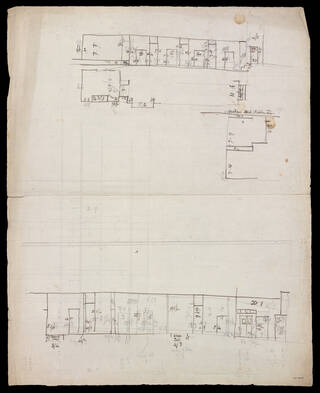
On the 6th of September 1817, gas lighting was extended at the Theatre Royal, Drury Lane, London, from the audience area to the stage, making it the first British theatre to be gaslit throughout. With the introduction of gas, limelight and finally electric lights into theatres, came the demand for new makeup materials, more skilled techniques of application, and spaces for actors to prepare accordingly. In a series of architectural drawings, draughtsman James Winston detailed the dressing rooms that James Wyatt incorporated in his designs for Drury Lane when it was rebuilt in 1812. These drawings depict the backstage spaces as they remain at the theatre over 200 years later.
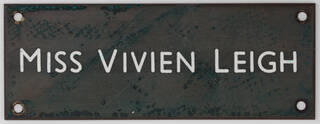
To this day, supporting cast members and the ensemble share dressing room spaces, often grouped by gender or production requirements. For example, actors with quick costume, wig or makeup changes will be assigned rooms closest to the stage wings. Whilst star performers and principal members of the cast will be provided private rooms in which to prepare. These are ordinarily referred to as ‘Dressing Room One’ but a plaque or sign baring the actor’s name may also be attached to the door, to prevent anyone walking in whilst the actor prepares.
An actor’s toolkit
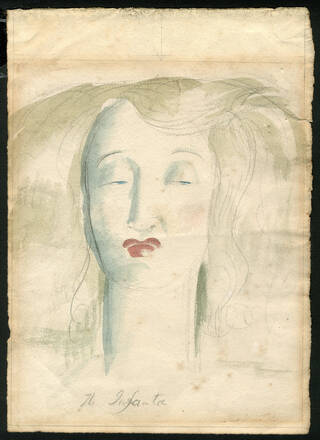
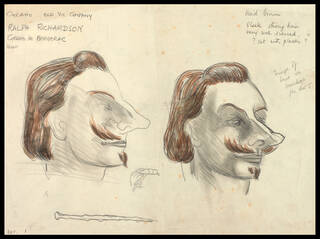
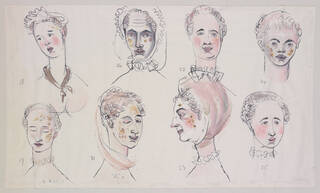
It is in the dressing room that actors begin their working day as theatre practitioners. Before opening night, working from sketches made by costume designers, makeup supervisors will build a visual reference chart or ‘makeup plot’ for each character. From then on, many actors are responsible for the daily execution of makeup during the running of a show.
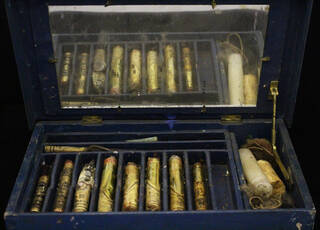
In the late 19th century, non-toxic greasepaint sticks, commercialised by opera singer Ludwig Leichner (1836 – 1912), made the application of makeup much easier.
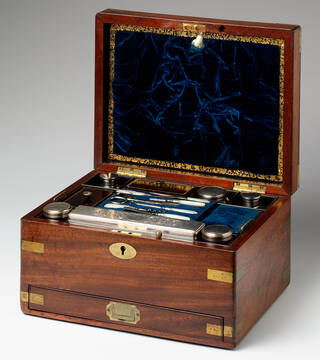
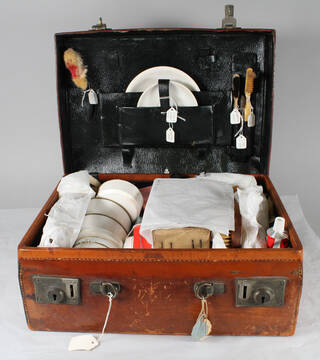
Portable makeup kits became and remained an essential tool for actors travelling from dressing room to dressing room. The leading music hall comic and pantomime dame Harry Randall (1860 – 1932) stored his makeup in silver-lidded jars kept in a wooden case lined with blue velvet and leather. Whilst English playwright, composter and actor Noël Coward (1899 – 1973) carried a case fitted with leather compartments each filled with an assortment of his makeup, medicines, brushes, sponges and toiletries.
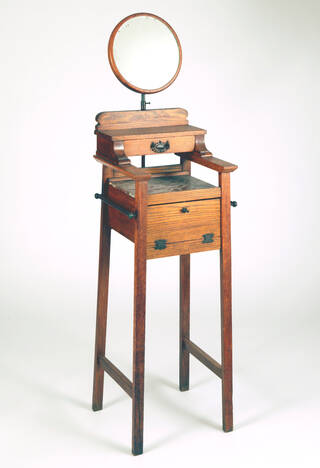
This Edwardian actor’s dressing table was also built to be portable. It has a drawer under an adjustable mirror, and another compartment under a marble shelf to store makeup and toiletries. Towels could be hung on the metal rails either side. Its height suggests that it was designed to be used while the actor was standing up. Given the basic nature of many theatre dressing rooms, a portable stand like this would have been particularly useful.
Behind the scenes
In the dressing room, performers undergo an intriguing process of transformation that many artists and photographers have sought to capture.
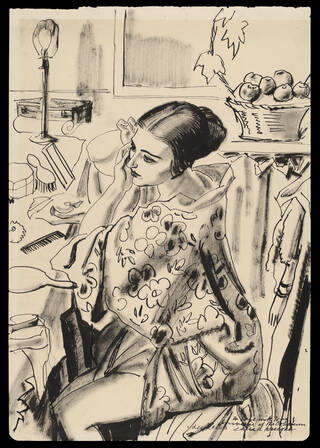
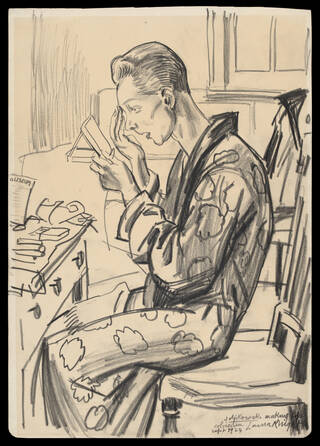
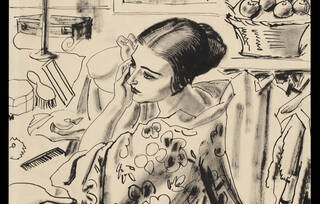
Laura Knight (1877 – 1970) made paintings, drawings and prints depicting dressing room scenes. Her pen and ink portraits captured dancers who performed with Diaghilev’s Ballets Russes applying makeup in their dressing gowns.
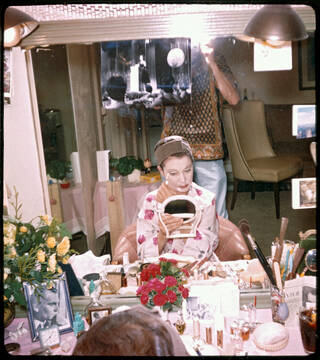
Vivien Leigh (1913 – 67) is one of the most celebrated actors of the 20th century and was frequently photographed on set and on stage, but this photograph was taken in her dressing room in 1960. The image is particularly intimate, taken by her partner and fellow actor Jack Merivale whose reflection can be seen in the mirror. Despite her recent divorce from Laurence Olivier, a framed black-and-white photograph of him sits on the left of her dressing table as she applies her own stage makeup.
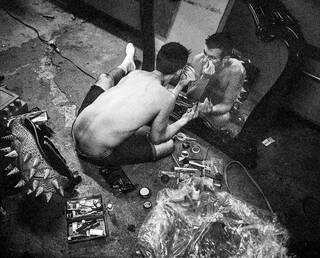
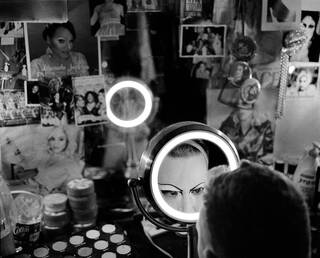
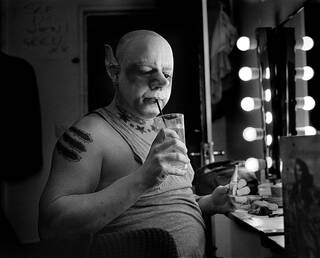
A series of offstage photographs by photographer Magnus Arrevad (b.1981) document an international scene of male performers in the world of 'Boylesque'. From New York to London, Copenhagen, Berlin and Paris, Arrevad captured these ‘other selves.’ The photographer shows that by donning makeup and costume, these performers were often removing a mask, not putting one on.
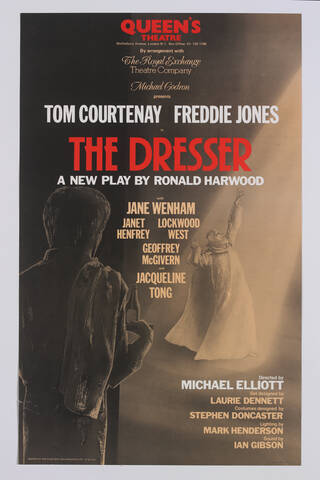
Films including All About Eve and John Cassavete’s Opening Night, as well as plays such as Ronald Harwood’s The Dresser, depict the vulnerability of performers in their dressing rooms.
In Harwood’s play, the titular dresser Norman struggles to prepare an aging actor, known as Sir, for his performance as King Lear. The actor’s incoherent ramblings and wandering mind become more focused when Norman gets him to concentrate on the ritual of applying his makeup and remembering his lines.
The original 1980 production starred Tom Courtney as Norman and Freddie Jones as Sir, with later productions starring Nicholas Lyndhurst and Julian Glover (2005), and Reece Shearsmith and Ken Scott (2016).
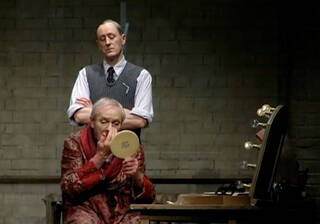
Both a functional backstage space and a fascinating site of transformation, the dressing room is the centre of a performer’s process of becoming, embodying and ‘making up’ a character.