London, 2024
Audio time: 2 minutes and 15 seconds
Hello, I’m Bryony Shepherd and I’m the Head of Interpretation at the V&A.
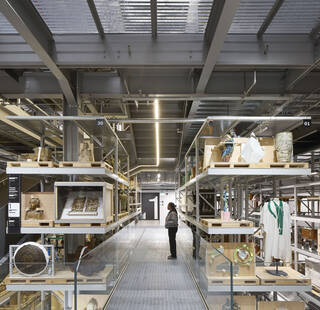
Can you imagine what Storehouse would sound like if every maker of the 360,000 objects stored here could speak their story?
Audio is a vital interpretation device we use to tell the stories and communicate the meaning of our objects to visitors.
When deciding what audio to use or create, we ask ourselves:
- How can we use sound to give context to an object when the places and people it has come from are gone?
- What sounds reflect the making, life or meaning of an object?
- Which voices are relevant to the object’s story?
- How can we excite visitors’ senses and emotions through sound?
Soundscapes are one audio tool that we use. Listen to this, what can you hear?
[Sounds of an owl hooting, birds chirping and the pitter patter of rain falling]
Did you hear the hoot of an owl or the pitter patter of rain falling? We use these sounds at Young V&A in Bethnal Green to get people thinking about what objects in a display represent, and to bring the objects to life while stimulating a sense in visitors different from sight.
We also record interviews with artists, makers and owners of objects to communicate their histories through personal voices.
We think about background music to use in films or exhibition spaces, and we create audio descriptions of objects and spaces for blind and partially sighted visitors.
As you are moving around Storehouse today, have a think, if you were interpreting the Storehouse using only audio, what would you do? How would you want visitors to feel? And what stories would you tell? What sounds would or could you use?
[sounds of crackling paper as objects are packed, the spraying of a mini humidifier, the scrape of fabric being cut, voices of people in V&A East Storehouse, and the beep beep of a pallet truck moving]
