Please note: Due to the extreme heat, we have temporarily closed some of our galleries. We advise that you check for updates regarding gallery closures before your visit.
This trail takes around 30 minutes. Click on the links to locate the objects on our digital map.
Stop 1: Figure of Cupid
Map link: Britain Galleries, Room 58, Level 1
Flying between the cold moon and the Earth,
Cupid all armed. A certain aim he took
At a fair vestal thronèd by the west,
And loosed his love-shaft smartly from his bow
As it should pierce a hundred thousand hearts.
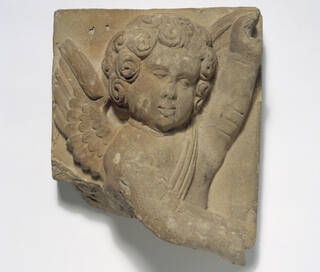
We begin our journey in the 16th century. Find the winged cupid in this room, whose certain aim will point us to our next stop. This terracotta relief was produced for the exterior of Suffolk Place, the home of the Dukes of Suffolk, situated near what would become the site of the Globe Theatre.
Stop 2: The 'Old Palace'
Map link: Britain Galleries, Room 58, Level 1
Double double toil and trouble; Fire burn and cauldron bubble.
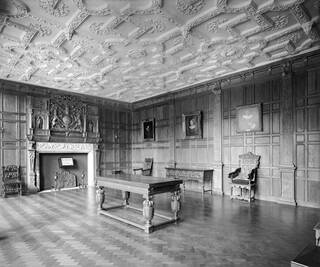
The Bromley-by-Bow room was built in the first years of the reign of King James I (1566 – 1625). Tradition says that the house was used by the king as a hunting lodge. Macbeth was written just three years after James’ accession to the throne, possibly inspired by his own obsession with witches.
Stop 3: Embroidered pillow
Map link: Britain Galleries, Room 58, Level 1
Yet marked I where the bolt of Cupid fell.
It fell upon a little western flower,
Before, milk-white, now purple with love’s wound,
And maidens call it “love-in-idleness”.
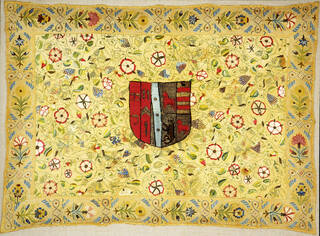
The ‘little western flower’ pierced by Cupid’s arrow is a pansy. In A Midsummer Night’s Dream pansies have magical powers – touch someone’s eyes with the flower and they will fall in love with ‘the next live creature’ they see. Titania dotes on Bottom, while Lysander and Demetrius become besotted with the wrong partner.
See if you can find pansies on this embroidered pillow.
Stop 4: Ring
Map link: Britain Galleries, Room 58, Level 1
Alas, poor Yorick! I knew him, Horatio: a fellow of infinite jest, of most excellent fancy, he hath borne me on his back a thousand times; and now, how abhorred in my imagination it is!
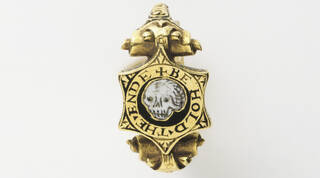
Holding up the skull of Yorick, Hamlet is reminded of the brevity of life. Find the skull on this betrothal ring, which was made to both celebrate a marriage and act as a ‘memento mori’, a reminder that death is inevitable. Look closely to see the inscription ‘BE HOLD THE ENDE’.
Stop 5: The Great Bed of Ware
Map link: Britain Galleries, Room 57, Level 1
Are you sure
That we are awake? It seems to me
That yet we sleep, we dream.

In Shakespeare’s plays characters often find themselves caught between illusion and reality. Dreams can be ‘happy’ or ‘fearful’, prophetic or nightmarish.
Whether the sleepers in the Great Bed of Ware would have had a dreamless good night’s sleep is debatable. The famous bed, believed to have been made for an innkeeper as a visitor attraction, could accommodate eight people or more. Shakespeare mentions it in Twelfth Night when Sir Toby Belch describes a sheet of paper as "... big enough for the Bed of Ware!"
Discover more about the Great Bed of Ware.
Stop 6: Ship pendant
Map link: Britain Galleries, Room 57, Level 1
Full fathom five thy father lies
Of his bones are coral made.
Those are pearls that were his eyes. Nothing of him that doth fade
But doth suffer a sea change
Into something rich and strange.
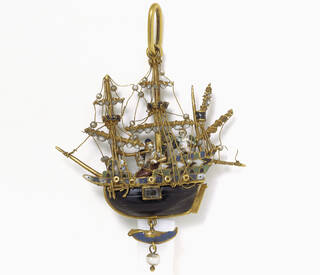
Find the precious ship adorned with pearls. The Tempest opens with a dramatic storm summoned by the magician Prospero, which wrecks ‘a brave vessel’. Later, the ‘airy spirit’ Ariel describes a drowned man who has been transformed.
This ship pendant was given to Queen Elizabeth I by her cousin Lord Hunsdon, Henry Carey, nephew of Anne Boleyn.
Stop 7: The Oxburgh Hangings
Map link: Britain Galleries, Room 57, Level 1
What have we here? A man or a fish?
Scale of dragon, tooth of wolf,
Witch’s mummy, maw and gulf
Of the ravin’d salt-sea shark,
Root of hemlock digg’d i’ the dark
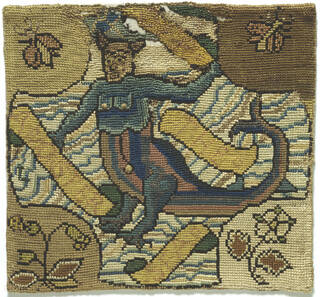
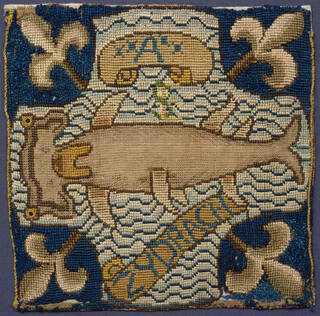
The Queen o’ th’ sky
Whose wat’ry arch and messenger am I,
Bids thee leave these, and with her sovereign grace,
Here on this grass-plot, in this very place,
To come and sport. Her peacocks fly amain.
‘The imperious seas breed monsters’
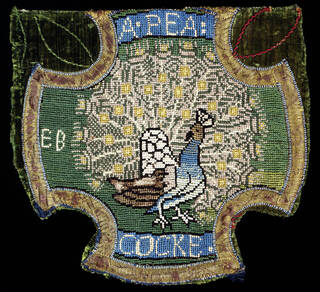
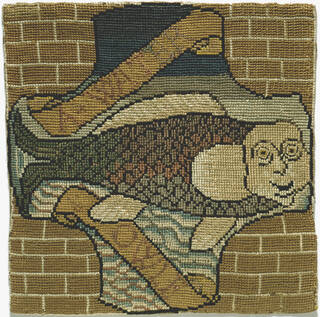
Spot the four panels which match these magical Shakespearean quotes. The embroideries were made by Mary, Queen of Scots, and Elizabeth Talbot, Countess of Shrewsbury. Mary was a prisoner in England, under house arrest on the orders of her cousin Queen Elizabeth I.
Stop 8: Ewer and basin
Map link: Britain Galleries, Room 56, Level 1
Since once I sat upon a promontory
And heard a mermaid on a dolphin’s back Uttering such dulcet and harmonious breath That the rude sea grew civil at her song
And certain stars shot madly from their spheres To hear the sea-maid’s music.
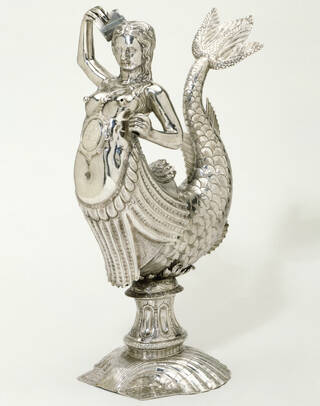
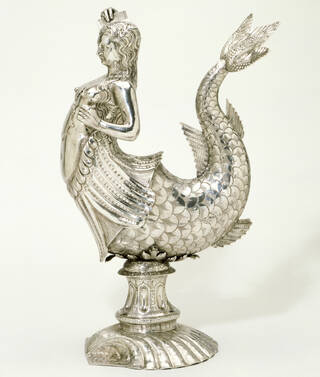
This mermaid-shaped ewer ( jug) and basin were used for washing hands during and after a meal in the 17th century. To the Elizabethans, mermaids were dangerous creatures. The beauty of the mermaid’s song could enchant sailors, causing them to sail their ships onto rocks.
Stop 9: Doublet
Map link: Britain Galleries, Room 56, Level 1
I prithee, and I’ll pay thee bounteously,
Conceal me what I am, and be my aid
For such disguise as haply shall become
The form of my intent.
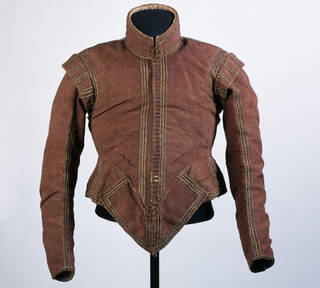
When Viola is shipwrecked and alone in a strange country in Twelfth Night, she dresses herself as a young boy to enter the court of Count Orsino. Shakespeare regularly used clothing to disguise female characters as male, in plots which play with gender ambiguity and mistaken identity. The doublet in this room dates from around the end of Shakespeare’s life (died 1616).
Imagine how you might dress or disguise yourself in the 17th century.
Stop 10: Dagger and sheath
Map link: Britain Galleries, Room 56, Level 1
Is this a dagger which I see before me,
The handle toward my hand? Come, let me clutch thee.
I have thee not, and yet I see thee still.
Art thou not, fatal vision, sensible
To feeling as to sight? or art thou but
A dagger of the mind, a false creation, Proceeding from the heat-oppressed brain?
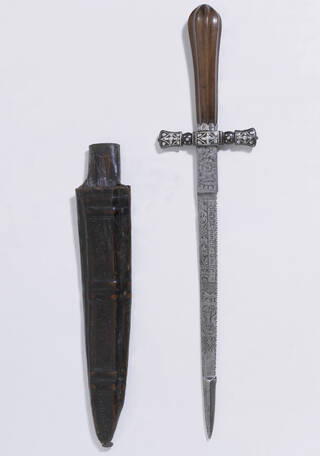
Haunted by his conscience, Macbeth imagines a floating dagger moments before he murders King Duncan.
This object is called a ‘Buckingham’ dagger, since its popularity coincided with the ascendancy of George Villiers, 1st Duke of Buckingham (1592-1628) and favourite of James I.
Stop 11: Mirror
Map link: Britain Galleries, Room 54, Level 1
Give me the glass, and therein will I read. No deeper wrinkles yet? Hath sorrow struck So many blows upon this face of mine, And made no deeper wounds?
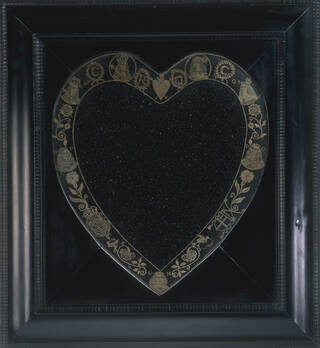
Find your reflection in this heart-shaped looking glass. Does it show what you expect?
When the deposed King Richard II looks in a mirror, he cannot believe that the reflection shows him as he really is. The figure in the mirror seems an illusion, untouched by trouble, unlike the man in the real world.
Stop 12: Margaret ‘Peg’ Woffington
Map link: Britain Galleries, Room 53a, Level 1
But Shakespear’s Magick could not copied be,
Within that Circle none durst walk but he.
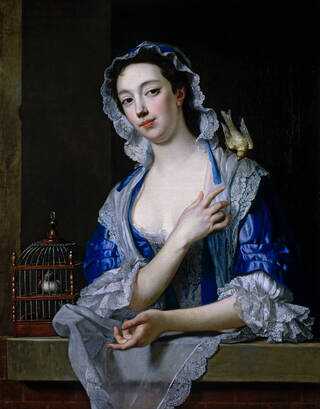
Shakespeare’s plays have never lost their popularity, and in the 18th century were adapted to suit tastes of the time. Roles that Shakespeare wrote for boy actors were now played by women. The Tempest was reworked as The Enchanted Island, featuring a new female character called Dorinda. This portrait shows actress Margaret ‘Peg’ Woffington, who had great success in the role.
Stop 13: William Shakespeare
Map link: Britain Galleries, Room 52e, Level 1
Some are born great, some achieve greatness, and some have greatness thrust upon ‘em.
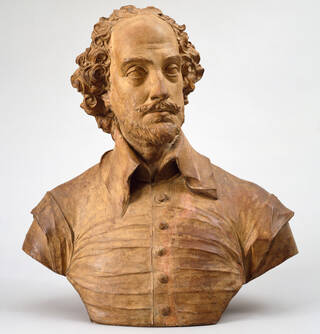
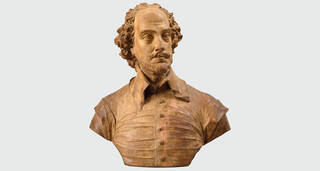
This is a terracotta version of a stone bust of Shakespeare that stood in the Temple of the Worthies at Stowe, a stately home in Buckinghamshire, UK. The Worthies were significant historical figures in British history. Who would you choose to join Shakespeare today?
Discover the secrets of a 400-year-old copy of Shakespeare's First Folio – the first collected edition of Shakespeare's plays.
Check out more of our themed, self-guided trails.
Explore more in our Books and Theatre and Performance collections online, or visit the National Art Library.


