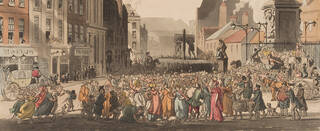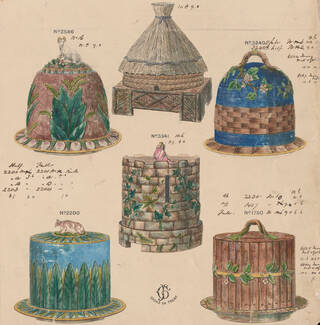
Majolica was one of the hottest pottery trends of the 19th century. Mintons Ltd developed this new type of brightly coloured, lead-glazed pottery to display at The Great Exhibition of 1851, where it became an instant success. Over the decades to come, other pottery companies, such as Josiah Wedgwood & Sons and George Jones & Sons, rushed to make their own increasingly unusual designs, competing for the attention of their wealthy customers.
Over the course of the V&A Wedgwood Collection’s ongoing Majolica Project, funded by the Majolica International Society, a number of weird and wonderful majolica patterns have been uncovered...
1: Monkeys
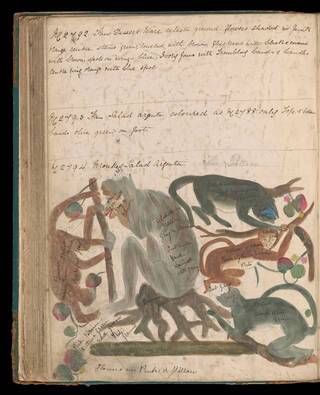
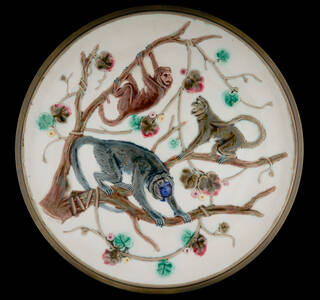
At the peak of majolica’s popularity, naturalist Charles Darwin (1809 – 82) published his book On the Origin of Species (1859), which became a topic of widespread discussion. His Theory of Evolution captured the Victorian public’s imagination and sparked a country-wide interest in natural science. British artists and manufacturers were quick to jump on this trend, producing wares inspired by animals in a wide variety of styles, majolica included. Depictions of monkeys, like those found in Wedgwood’s majolica pattern books, were particularly common, as artists latched on to Darwin’s idea of ‘men made from monkeys’.
2: Sardine boxes
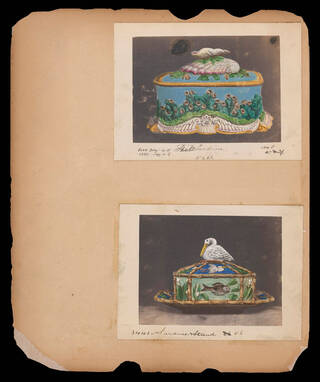
Sardines were a popular novelty food during the Victorian era, as new preservation and canning techniques allowed them to be easily transported for the first time. They were often served at parties, not in their original tins but in highly decorative dishes called ‘sardine boxes’. Sardine boxes, like these majolica examples by the Stoke-on-Trent manufacturer George Jones & Sons, were often inspired by the sea, with lids shaped like fish, shells, or birds.
3: Window jugs
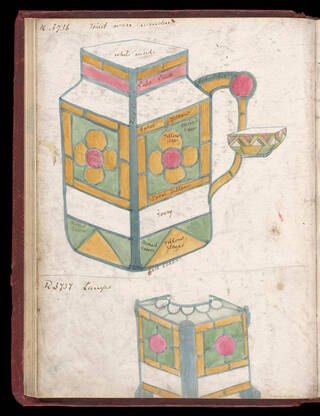
The late 19th century marked the birth of the Arts and Crafts movement, an artistic response that emphasised traditional craftsmanship over the mass production that followed the industrial revolution. Artists, like William Morris (1834 – 96), aimed to raise the status of hand-made crafts and revitalise dying artforms such as hand-weaving, metalwork, and stained glass. By focusing on aesthetics and quality, these artists demonstrated that humans could produce beautiful objects in ways that machines couldn't.
The bright colours and shiny glazes of majolica lent themselves well to this stained glass ‘window’ pattern, produced as an attempt to keep majolica relevant in the face of changing tastes.
4: Stilton cheese stands
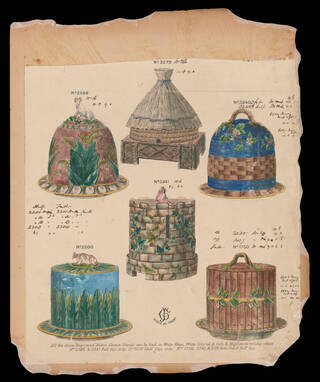
The Victorians considered stilton to be the ‘King of English Cheese’, and it was a popular delicacy at dinner parties. The cheese course was served just before dessert in a range of decorative cheese dishes, stands, and bells. These lidded dishes stopped the cheese from drying out and kept the Stilton’s strong smell from putting dinner guests off their other courses.
George Jones & Sons created a wide variety of Stilton stands, like those depicted in the company’s majolica pattern books, to keep up with public demand.
5: Dragon pots
Europeans have been fascinated with East Asian art and culture since trade between the continents began in the 16th century. In the 17th century, an aesthetic movement called Chinoiserie became popular, where artists imitated iconography from Chinese, Japanese, and Indian art indiscriminately to make their products seem more elegant and exotic.
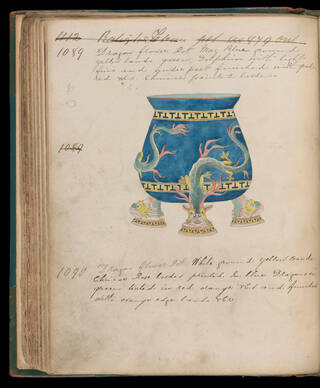
When Japan opened its trade routes in the 1850s, it rekindled the Victorians’ enthusiasm for Asian art, and created a new movement called Japonisme. To appeal to Victorian audiences, majolica manufacturers often included Asian iconography in their designs, like this Wedgwood dragon pot with a ‘Chinese’ border.
6: Animal compotes
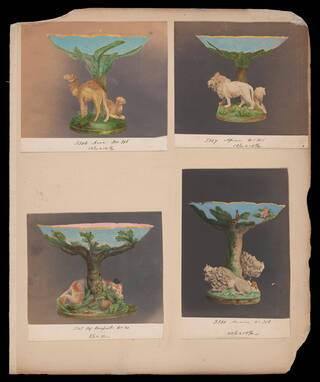
The Great Exhibition of 1851, where majolica was first introduced to the British public, is also credited with the popularisation of another artform, taxidermy. Preserving an animal's body had, until this point, been mainly for scientific interest, but now they were being displayed as art – capturing the beauty of exotic animals that hadn't previously been seen by the public before.
Manufacturers, catering to the British public’s new-found interest in nature, began producing beautiful ceramic animals from around the world, like these dishes depicting mammals from Asia, Africa, and America by George Jones & Sons.
7: Dolphin-handled pots
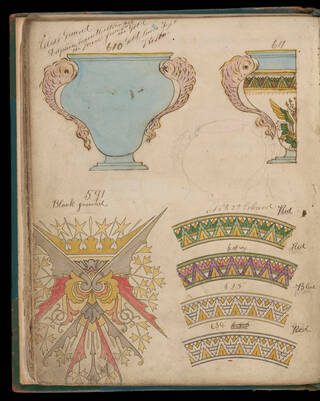
Majolica was originally designed to mimic a type of vividly coloured, tin-glazed earthenware from the Italian Renaissance called ‘maiolica’. Because of this historical connection, majolica designers often took inspiration from other ancient artwork from Italy, Greece, and Rome.
Used as pot handles in this pattern, dolphins often featured in majolica designs due to their associations with Roman art. Dolphins commonly appeared in Roman depictions of Neptune and Cupid, but they didn’t look like the dolphins we recognise today. Roman dolphins were often made to look like fish, sharks, or sea monsters – perhaps because Roman artists had never seen dolphins themselves and were relying on descriptions from sailors.
8: Kate Greenaway umbrella stands
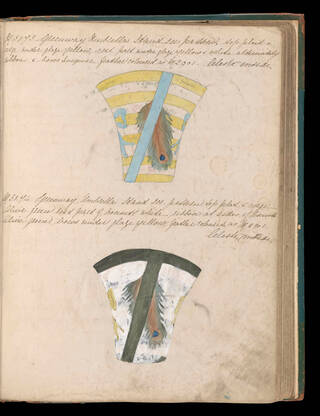
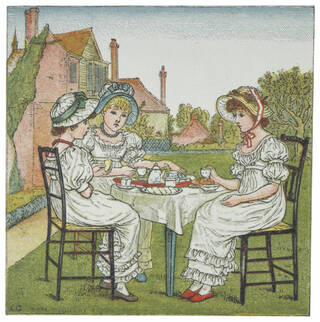
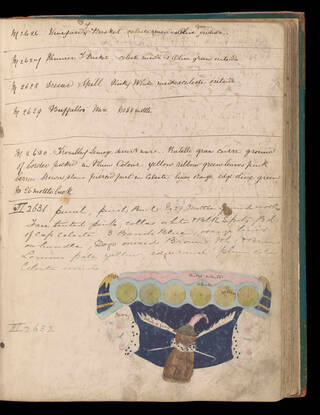
Kate Greenaway (1846 – 1901) was an English artist and writer who was well known for her children’s book illustrations during the 1880s and ’90s. She was a prolific artist, whose work was recognisable for the way her characters dressed – boys in smock frocks and girls in straw bonnets.
Inspired by this well-known artist, Wedgwood designed and produced a series of flowerpots and umbrella stands shaped like bonnets, complete with feathers and ribbons.
9: The Tortoise and the Hare
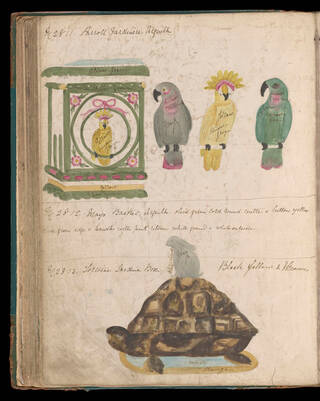
Victorians had strict moral values that prioritised hard work and religious piety. During the Victorian era, children were often told stories that taught strong moral lessons, such as Aesop’s Fables. Aesop was a storyteller from ancient Greece (about 620–564 BCE). Most Victorian children would have known Aesop’s Fables well, and pottery depicting characters from these stories were used as easy conversation starters at dinner parties.
Wedgwood capitalised on this popularity by designing a sardine box inspired by The Tortoise and the Hare, one of Aesop’s most well-known fables, that taught children the importance of perseverance and warned of the dangers of over-confidence.
10: Punch punch bowls
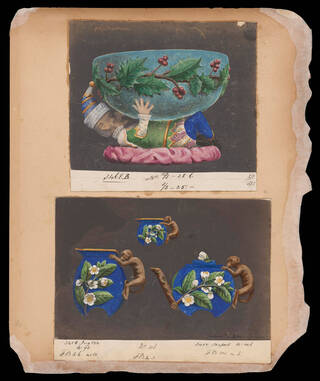
Mr Punch is a well-known figure in English entertainment. Punch and Judy puppet shows in various forms have existed since the 17th century, but they became very popular during the Victorian era when their audience changed from adults to children.
Majolica speaks a language of visual puns, and the 'Punch' punch bowl is a brilliant example of this. This bowl, covered in its recognisable characters would have been the perfect display piece for a Victorian party.