1940s
Snow White and the Seven Dwarfs

Walt Disney’s 1937 film adaptation of the fairy tale Snow White and the Seven Dwarfs by the Brothers Grimm was their first full length animated feature and remained the highest-grossing animated film for over 55 years. The British Chad Valley toy company was one of several who were licensed to make Disney merchandise and this set of Snow White and the dwarfs (Bashful, Doc, Dopey, Grumpy, Happy, Sleepy, and Sneezy) became bestsellers globally, earning the company the Royal Warrant as 'Toymakers to H.M. The Queen'.
Self-locking building blocks

In the 1930s, Hilary Page of Kiddicraft introduced the moulded plastic Interlocking Building Cube as part of a range of 'sensible' toys. Initially, a special company was formed to produce them because experimentation with plastic toys was considered by his co-directors to be too much of a business risk. His design was patented in 1940 and exhibited at the Toy Fair in London's Earls Court in 1947. They went on to become 'must-have' toys in post-war Britain and were extremely popular. Having received a sample of the Kiddicraft building blocks from a UK supplier of an injection moulding machine, Danish company LEGO went on to produce 'Automatic Binding Bricks', based on Page's earlier design, from 1947.
Pelham Puppets
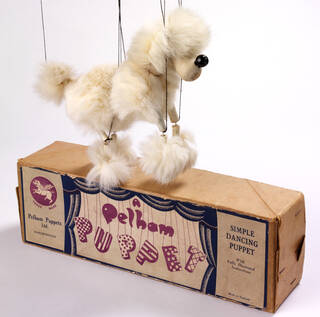
This marionette poodle puppet was made by Pelham Puppets Ltd. Founded by Bob Pelham in 1947, the puppets were of a simple wood and string construction – Pelham had always been interested in the way string toys moved. Typically painted in bright colours and wearing brightly-coloured felt clothes, many of the puppets produced by Pelham were characters from well known children's stories like Hansel and Gretel, and Little Red Riding Hood and provided colourful fun in the aftermath of the Second World War. Exporting to over 40 countries meant that the company became a huge international success. Still covetable today, Pelham Puppets are sought after by collectors.
Dinky Toys
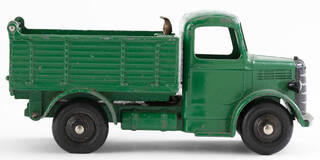
After a period of non-production during the Second World War, owing to the French factory being occupied by the Germans and to allow the Liverpool-based factory to produce items to support the war effort, Dinky Toys (manufactured by Meccano Ltd) resumed production in 1946, focusing on military and utility vehicles and aeroplanes. Scarcity during the war coupled with post-war innovation triggered renewed demand – the now hugely popular die-cast collectibles were prized for their quality and detailing. This Bedford End Tipper, made between 1948 – 54 features a crank-operated tipping body and opening tailgate.
1950s
Mr. Potato Head
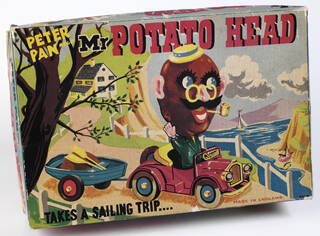
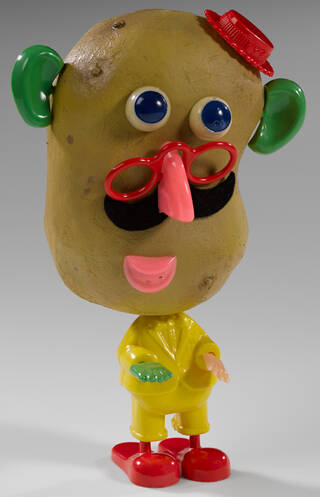
Mr. Potato Head was originally launched in the US in 1952 and was the first toy to be advertised on television. It saw huge success owing to an outbreak of polio, which meant that children were spending large amounts of time indoors. Designed by George Lerner and produced by Hasbro, the original toy consisted of various facial features, feet, a body, and accessories that could then be stuck into a potato to make a 'funny face character'. However, complaints about rotting vegetables led to the production of a plastic head and body in 1964.
Our Mr. Potato Head, made by Peter Pan Playthings Ltd. for the UK is taking a sailing trip – included in the set is a car and boat in which you can sit your funny creation!
Space Race toys
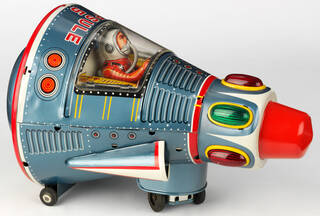
Capsule 5 is just one of the many space-themed toys in the V&A collections dating from the mid-1950s. On the 5 August 1955, the Soviet Union (USSR) and the United States entered into the ‘Space Race’ – a two-nation battle to dominate space exploration and technological advances. Beginning with the successful launch of the USSR’s Sputnik 1 in August of the same year, this contest would continue for 20 years until 1975 when the cooperative Apollo and Soyuz spacecraft missions officially ended the race.
Toy producers worldwide responded to this intense galactic interest by creating space ships and rockets, satellites, moon explorers, astronauts and even wind-up space dogs! Japanese manufacturer Masudaya specialised in battery-operated toys and led the market with their innovation, detailing and build quality.
LEGO
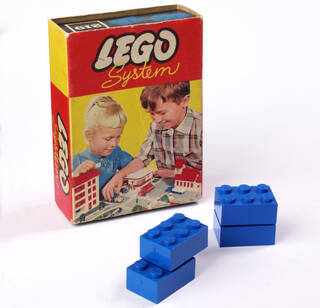
Having acquired a plastic injection moulding machine and made ‘Automatic Binding Blocks’ in 1949, LEGO bricks were officially launched in 1955 with the name ‘LEGO’ moulded into every block. The LEGO System in Play series of products meant that building possibilities were endless, as long as you had enough bricks to fulfil your imagination and its popularity took off. Founder Ole Kirk Kristiansen’s son, Godtfred, said that, “Our idea has been to create a toy that prepares the child for life – appealing to their imagination and developing the creative urge and joy of creation that are the driving forces in every human being”. The stud and tube coupling system, which solved previous issues with instability, was patented in 1958.
Woppit
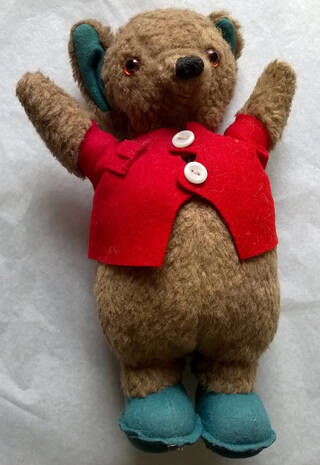
The original Woppit was a bear-like character that featured in the extremely popular children’s comic Robin in the 1950s, alongside other characters such as Andy Pandy. In 1956, the British soft toy manufacturer, Merrythought, produced three Robin characters as toys, including Woppit. This character became famous because one was given to Donald Campbell, the land and water speed record holder, who used it as his mascot. He called it Mr Whoppit and it famously survived his fatal crash on Coniston Water, Cumbria, in 1967.
Risk
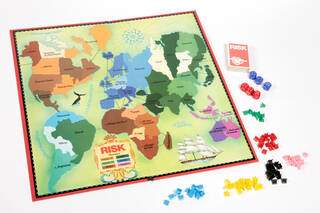
Invented and released in France in 1957 by film director Albert Lamorisse under the original name La Conquête du Monde (The Conquest of the World), this board game involved capturing territories on a map of the world using ‘armies’ of playing pieces and rolls of a dice. Often taking hours to complete, the game required strategic thinking and more than a bit of luck. Relaunched as Risk by US game company Parker Brothers in 1959, the game went on to become one of the most popular of the year, selling over 100,000 units. Since then, Risk has gone on sell millions of copies and is considered to be one of the most popular board games of all time.
Barbie
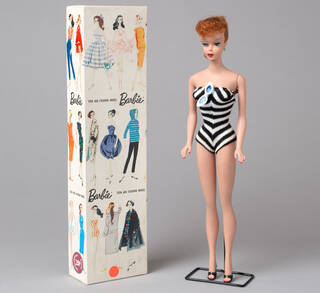
Barbara Millicent Roberts, AKA Barbie, was designed by Ruth Handler having observed her young daughter Barbara give grown-up personalities to her dolls. The inaugural doll was launched on March 9, 1959 at a New York Toy Fair by Mattel, Inc., the toy company co-founded by Ruth Handler and her husband, Elliot. The first-edition Barbie wore a black and white striped swimsuit and came with sunglasses, black open-toed stiletto heels and pearl earrings. She was packaged in a box featuring fashion illustrations of different outfits and the words ’teen age fashion model’. Mattel's groundbreaking television advertising through Disney's The Mickey Mouse Club triggered a demand that they were unable to fulfil for the first three years after launch.
Since launch, Barbie has had thousands of outfit changes and well over two hundred jobs, including scientist, astronaut, veterinarian, film director and president.
1960s
Corgi toys
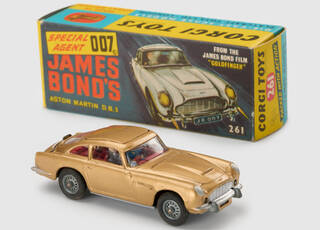

These die-cast toy vehicles began as direct competition to Meccano's Dinky Toys cars. Manufactured by Mettoy in the UK between 1956 and 1983, they were exported worldwide, selling in large numbers. Many of the most popular models were licensed versions of cars made famous by 1960s television shows and films, such as The Man from U.N.C.L.E. and James Bond. James Bond's Aston Martin DB5 car was one of the best selling toys of 1965 and was that year's Toy of the Year, awarded by the British Association of Toy Retailers.
Most models featured specific innovative functions, such as windscreen wipers that moved when the car wheels turned, or 'Trans-o-lite' headlamps and rear lights that, when light shone through components on the car roof, made the lamps appear to light up.
Sindy
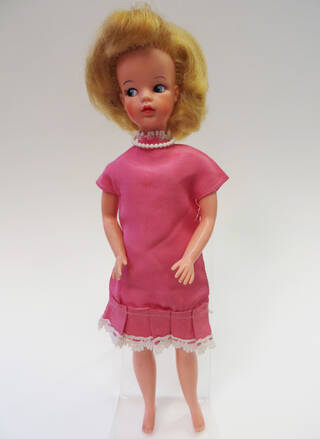
Sindy was Britain’s answer to the Barbie doll. Launched in September 1963 by Pedigree Dolls & Toys Ltd., she was one of many teenage fashion dolls reflecting wider popular culture. Designed to be a fashionable, aspirational, and relatable British teenage doll, Sindy had everything a teenager of the 1960s could wish for. As a keen follower of fashion, she had a huge wardrobe of designer clothes and accessories, including outfits designed by legendary womenswear label Foale & Tuffin and fashion icon Vivienne Westwood. Sindy was the best selling toy in Britain in 1968 and 1970.
G.I. Joe
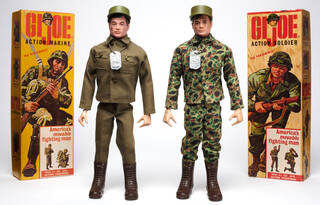
G.I. Joe was first launched by Hasbro in 1964 during the Vietnam War and was an instant hit. There were originally four versions representing the real American heroes of the US Army, Navy, Air Force and Marine Corps. 'G. I. Joe Action Marine’ had moveable limbs and could be manipulated into ‘action positions’. Inside the box was an instruction booklet, stickers and a recruitment leaflet, asking children to 'Join the G.I. Joe club!'. In 1966, the same figures were launched in Britain under the name of 'Action Man'.
By the late 1960s, however, the war in Vietnam had caused unprecedented casualties on both sides and as the public began to protest about the war and America's involvement in it, G.I. Joe lost his broad public appeal.
Space Hopper
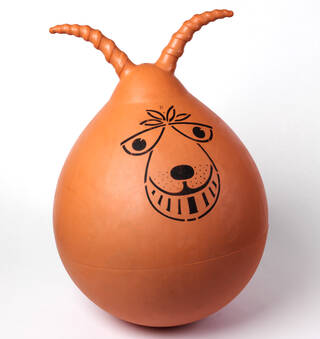
The original Space Hoppers were introduced to the UK by Mettoy in 1968. They came in different sizes and the first ones produced were blue, but the most popular and iconic is the orange 'kangaroo' version. They became a huge craze of the 1970s. The hopper has been remade in many different forms and in recent years the popularity for 'retro' toys has seen the original orange hopper, with its smiley face and horns/ears, make a return to the market.
Hot Wheels
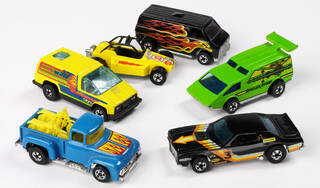
Introduced in 1968 at the New York Toy Fair with immediate success, Hot Wheels were the US competitor to Matchbox. Although there are roughly 10,000 models to date, the brand is famous for its exaggerated custom hot rods and muscle cars. Elliot and Ruth Handler, co-founders of Mattel, wanted to make a range of cool cars for children. One of the design team members was Harry Bradley from General Motors. When Elliot first saw Bradley's classic Southern California hot rod in the parking lot he said, "Man, those are some hot wheels", and so the Hot Wheels brand name was born.
1970s
Weebles
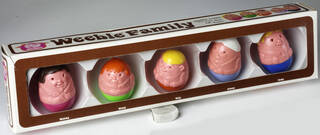
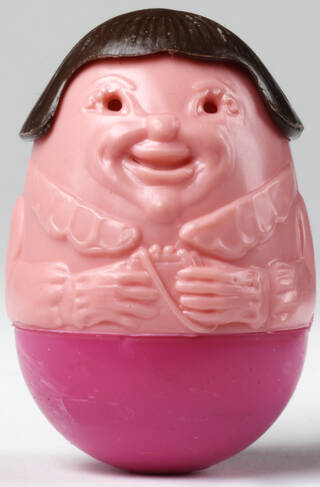
“Weebles wobble but they don’t fall down” was the catchy and memorable brand slogan of these egg-shaped characters. Launched in the early 1970s by Playskool in the US and Airfix in the UK, and designed for preschool children, they are weighted inside at the bottom so they will always right themselves. They were quickly established as major competitors to Fisher-Price's Little People and were considered an iconic toy of the '70s.
Rubik's Cube
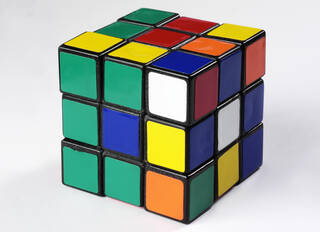
Originally called the ‘Magic Cube’, the Rubik’s Cube was invented in 1974 by Hungarian Ernő Rubik. Initially selling only in toy shops in Budapest, it first went on sale in the UK in 1978 through Pentangle Puzzles, ahead of worldwide release two years later. It went on to become the most sold puzzle game in the world. There is even a World Cube Association who organise events for ‘speedcubers’ to attempt to break world records for solving the puzzle and returning each side of the cube to a single colour in the fastest time. At the time of writing, the current world record stands at a blisteringly fast time of 3.05 seconds! Other world records are held for single-handed solving (7.72 seconds), blindfold solving (14.05 seconds), and non-human solving (0.38 seconds).
Star Wars – Millennium Falcon
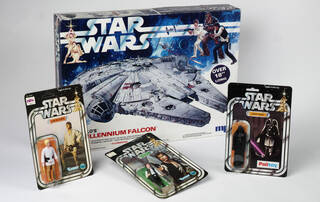
Designed by model maker Joe Johnston for the blockbuster film Star Wars in 1977, the Millennium Falcon brief from George Lucas was to “think of a flying saucer”. The resulting vessel has since been seen speeding through hyperspace in no less than eight feature films in the series, and a number of spin-offs. Officially licensed by MPC of Fundimensions, the ‘highly detailed’ model of this iconic freighter is over 18 inches long and an authentic replica of the ship from the 1977 film, complete with illuminated cockpit, retractable landing gear and mini seated figures of Han Solo, Luke Skywalker and Chewbacca. Owing to its accuracy of detail and timely launch, the kit achieved massive commercial success amongst the fan base.
Atari T600
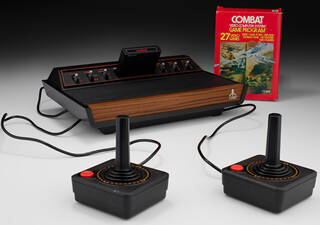
The Atari 2600 is a home video game console developed and produced by Atari, Inc. It was released in North America in September 1977 and manufactured until 1992. It popularised microprocessor-based hardware for home gaming, enabling the design of a format for games on swappable cartridges. It was packaged with a pair of joystick controllers, a pair of paddle controllers, and for the first four years of its manufacture, a tank battle game called Combat.
The Atari home release of Taito’s arcade smash Space Invaders (1980) enjoyed huge success, selling over 6 million copies over three years, with the console becoming widespread in North American, Western European, Australian and Brazilian households. This led to the formation of the first third-party game manufacturers, including some of today’s giants, such as Activision.
However, poor management decisions led to heavy investment in licensing properties, such as Pac-Man (1982) and E.T. the Extra Terrestrial (1982), considered by many as one of the worst video games of all time. The subsequent drop in profits alarmed investors and led to the North American video game crash of 1983, nearly finishing the industry until Japan’s Nintendo brought the Nintendo Entertainment System to the US in 1985. The console has, nevertheless, been retrospectively acknowledged as the foundation of the game industry today.
1980s
Care Bear

Care Bears started life in 1981 as characters on greetings cards created by artist Elena Kucharik and produced by the American Greetings Cards Corporation. They proved so popular that they were soon transformed into a television cartoon series and feature films with spin-off soft toys and miniatures. Initially, there were ten bear characters which soon grew to 18 (nine male and nine female). There were also 11 Care Bear Cousins (six male and five female).
During the peak of their success between 1983 and 1987, over 40 million plush toys were sold. Other popular merchandise included clocks, toothbrushes, story books and annuals, as well as audio tapes and vinyl records.
He-Man
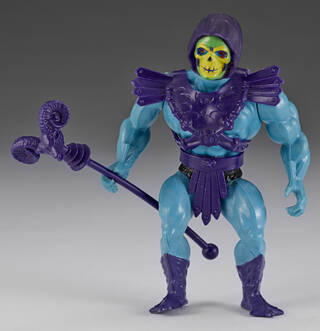
“By the Power of Greyskull!”
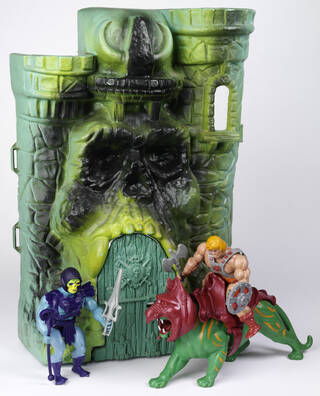
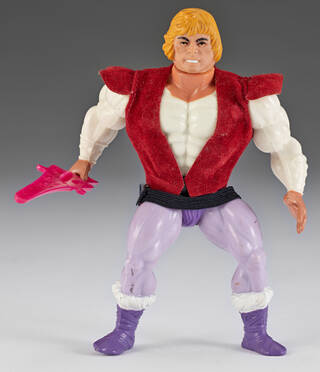
The alter ego of Prince Adam, He-Man (designed by Roger Sweet) is the musclebound, barbarian defender of the secrets of Castle Greyskull on planet Eternia from his mortal enemy, Skeletor. Created by Mattel in 1983, the Masters of the Universe franchise comprised of toys, an animated series, comics and a feature film. The action figures quickly became the must-have toys of the decade, with their success being largely credited to the animated series acting as an advert for the toy line. Sales of He-Man toys towards the mid-80s reportedly outstripped Barbie, generating enormous revenue.
My Little Pony

Another unforgettable advertising jingle helped to make My Little Pony toys the most sought after of the decade. Over 150 million ponies were sold between launch in 1982 and 1990. The toy range was accompanied by two animated television series and a feature-length film. The ponies each had luscious long manes in a rainbow of colours and little symbols on their flanks. They were loved by both parents and children for the positive messages and engaging plot lines in their TV appearances!
Cabbage Patch Kids

First produced in 1982 by Coleco Industries, these distinctive dolls had soft, material bodies and plastic heads and wore detailed outfits. Each one came with a birth certificate and adoption papers, which included details of the doll’s name and ‘date of birth’ (manufacture). Sales of Cabbage Patch Kids broke multiple records in the 1980s and they became famous for pre-Christmas riots in the US as parents fought to buy one for their children.
Teenage Mutant Ninja Turtles

The pizza-gorging Teenage Mutant Ninja Turtles (or Hero Turtles as they were previously known in the UK) Michelangelo, Leonardo, Donatello and Raphael, were trained by their Sensei, Master Splinter (a rat), to become skilled Ninja warriors. They fought criminals and alien invaders from their home in the New York sewer system. Although they fought many different enemies throughout the series, their consistent archenemy was Shredder, a villainous ninja master.
They originated in an American comic book published by Mirage Studios in 1984, but became extremely popular after the TV series launched in 1987. These action figures were made by Playmates Toys during the peak of their popularity in 1988. By the early 1990s Ninja Turtles merchandise was everywhere and they had become firmly rooted in pop culture history.
1990s
Sega Mega Drive
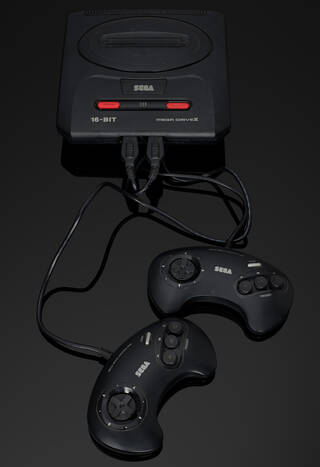
The 1990s would become known as the decade of the ‘console wars’ as tech companies Sega and Nintendo battled for supremacy over the North American and European markets. Released in the US in 1989 and in Europe the following year, the Mega Drive was Sega’s most successful console, selling over 29 million units worldwide. A combination of targeted marketing at a younger, ‘cooler’ audience, coupled with a portfolio of popular arcade and sports games ensured its global success. One game, in particular, helped Sega to compete with its main rival and remains a much-loved household name to this day – Sonic the Hedgehog.
Game Boy
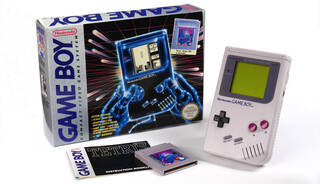
The Nintendo Game Boy launched in the UK in 1990 having seen unprecedented, sell-out success in both Japan and North America. The relatively affordable handheld games console came pre-bundled with the hugely popular Tetris game – a decision made by Nintendo to ensure appeal for both boys and girls. Further bolstered by a stellar games library including Mario Bros., Donkey Kong and later Pokémon, it became another 90s craze – particularly at Christmas. By 1997, the original Game Boy and its later monochrome updates had sold almost 60 million units.
Playstation
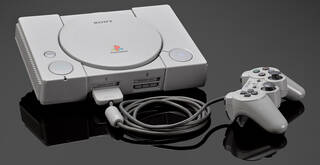
The PlayStation was intentionally named to be the opposite of ‘work station’. First produced by Sony in 1994 and released in the EU in 1995, it went on to be the first video games console to sell over one hundred million units. Featuring CD-ROM technology, it was cheaper to manufacture and so could be offered at a lower price to the consumer. This made it more affordable than direct rival Nintendo’s Game Boy. The best-selling game on this console was Gran Turismo which sold over 10 million copies.
Tamagotchi
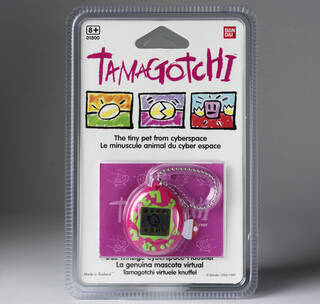
Tamagotchi, loosely translated as ‘egg watch’ in Japanese, was one of the biggest toy fads of the late-1990s. The small, handheld video game device featured a digital pet that required regular care from the moment that their egg hatched. Sleepless nights were had whilst players fed, trained and cleaned up after their pets around the clock, prompted by on-screen graphics. The creature’s development was directly impacted by the quality of care that they received. Between 1996 and Spring 1998, manufacturers Bandai had sold nearly 40 million Tamagotchi globally.
Buzz Lightyear
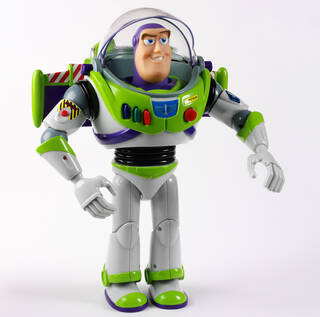
Star Command Space Ranger Buzz Lightyear is one of the main characters in Disney's Toy Story (1995) – the first full-length computer animated film. One of the many toys owned by Andy, Buzz thinks he’s a superhero capable of flight and high-tech combat. The endearing and often humorous film resulted in lots of spin-off merchandising, with Canadian manufacturer Thinkway Toys believing that the heroic cowboy character Woody would be the toy most in demand. However, Buzz proved far more popular and in the run up to Christmas in 1996, supply could not meet the insatiable demand. Buzz was consequently voted ‘Most Elusive Toy of the Year’.
Tickle Me Elmo
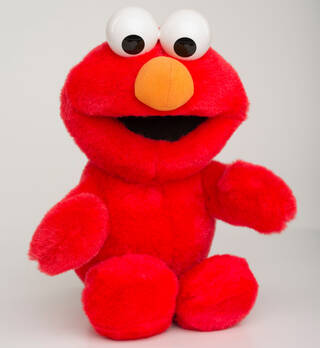
Elmo is a Muppet character from the long-running US television show Sesame Street. Much-loved by pre-schoolers for his infectious giggle, this toy version by Tyco Toys giggles when you squeeze him and shakes and vibrates when squeezed three times. In the run up to Christmas in 1996, lack of availability resulted in a ‘shopping frenzy’ during which violence erupted amongst shoppers, with some Elmo’s reportedly changing hands for thousands of pounds.
Furby
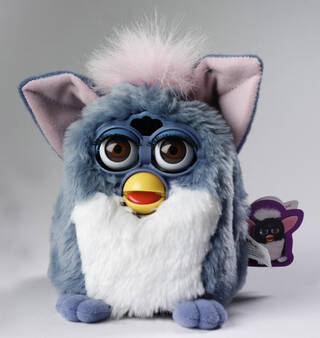
The Furby won Toy of the Year 1998, awarded by the British Association of Toy Retailers. Resembling a cross between a bush baby and Mogwai from the Gremlins movie, the Furby was an interactive robotic toy that spoke only in ‘Furbish’ when fresh out of the box but gradually began to ‘learn’ simple words in the language that it was programmed in. It featured moving eyes, mouth and ears and was capable of basic movement which lifted it up off a surface. Furbies were able to communicate with each other using the infrared device between their eyes. Released in 1998 by Tiger Electronics, they caused yet another 1990s festive toy frenzy. Over 40 million Furbies were sold in the first three years of production.
2000s
Bratz Dolls
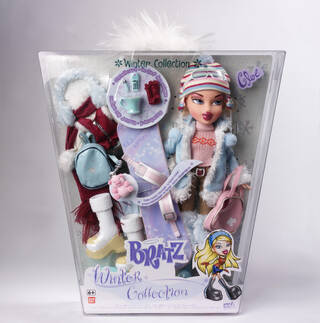
The Bratz fashion dolls Cloe, Yasmin, Jade, and Sasha were released in 2001. With their edgy, urban style, focus on inclusion and diversity, and social media #BratzChallenge campaign on TikTok and Instagram, they took the doll market by storm. By 2005, over 125 million dolls had been sold, and Bratz were rivalling Barbie to the top slot – even out-selling her in the UK in the early 2000s. Since their launch, many different designs have been released, including this example of the Winter Collection, with many selling out completely. There is a huge amount of merchandise associated with the Bratz brand and they’ve also had their own television series, web series, live-action film and an album.
Cranium
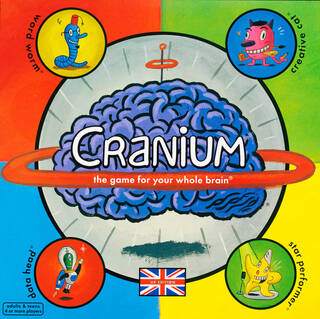
Although Cranium was first launched in 1998, its popularity suddenly exploded in 2000. By 2003, it had won multiple industry awards, including Game of the Year by the Toy Retailers Association in 2003. In 2008, global sales of the game had hit over 44 million. Designed for playing at parties or with large groups of people, it was heralded as 'the game for your whole brain’. Unlike other board games, it included a wide range of activities, testing four different area of skill: artistic, trivia, language and performance.
Light Saber
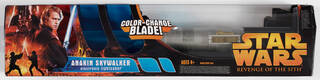
George Lucas's six Star Wars films (released between 1977 and 2005) captured the public imagination and paved the way for the merchandising that accompanies many films today. A huge range of toy figures, spacecrafts and vehicles became available, as well as costumes, stationery, bedroom accessories and slippers.
This lightsaber was produced by Hasbro Inc in 2005 for the final film, Episode 3: Revenge of the Sith – the same year that the original hilt used by Luke Skywalker in the first two released films achieved over $200,000 at auction. The design of the toy lightsaber allows the user to play as either a character from ‘the dark side’ or the ‘good’ as it has a colour changing blade as well as electronic sounds. As the concluding film of the prequel trilogy, the final film triggered a renewed love of the franchise and a demand for quality replicas of Star Wars merchandise.
Nintendo Wii
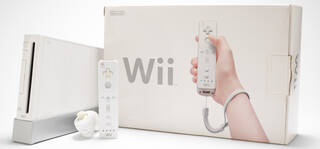
Nintendo’s Wii gaming console was first released in 2006. The Wii was set apart from designs by rivals Sony and Microsoft when the decision was made to focus on novel gameplay rather than computational power. The console’s unique controller design uses motion sensing designed to both recognise gestures and as a pointing device at the television screen – ground-breaking in domestic use at the time.
The system was sold with a game, Wii Sports, which showcased the ingenuity of using motion controls in an easy to gauge format. It’s simple controls got people to play a variety of sports through use of motions that were recognisable to how they were played in real life, breaking down barriers that games with complex controls often created and hugely expanding the game industry’s demographic reach. Not only popular with children and young people, Wii Sports and the console became popular among older people as well – the game’s simple gameplay and social elements being particularly suited to use in retirement home communities.
Within it’s 11 years of production, in different forms, Nintendo sold over 101 million Wii consoles, making it the 4th bestselling console of all time.
Transformers
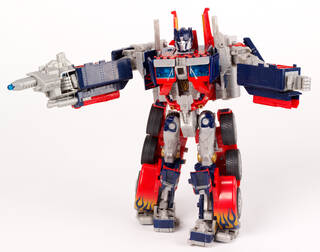
Originally a Japanese concept, Transformers (robots that can transform into things such as cars, animals and planes and vice versa) were first launched as a toy by American company Hasbro in 1984 and became very popular. The toys were accompanied by comic books, animated cartoons, and loyal communities of fans. However in 2007, the first feature film was released, and this both rekindled a nostalgia for the "robots in disguise" and a sizeable fresh new audience.
To supplement the release of the film, an extensive range of Autobot and Decepticon toys were produced. This Optimus Prime Transformer toy can change from a robot into a truck, and features a firing projectile missile and electronic sounds.
2010s
Nerf Vortex


Featuring an electronic scope, removable magazine, and a special power-up trigger, the Nerf Vortex Nitron Blaster was released in 2011 and was the first to shoot disks, instead of the usual foam and rubber-tipped bullets. In addition to the innovative ammunition, this blaster boasted a range of 60 metres, which far exceeded its rivals.
Its popularity meant that it was named as one of the Top 12 Toys of the Year by the Toy Retailers Association in 2011, and subsequently used in the Museum of Childhood's War Games exhibition in 2013.
Lego Ninjago

Also entering the hall of fame as one of the Toy Retailers Association’s Top 12 Toys of the Year in 2011 was this LEGO Ninjago Fire Temple construction kit. Featuring a fire-breathing dragon that emerged from the Temple when a secret sword was pulled, this kit contained 1174 pieces, ensuring that any Spinjitzu Master was kept busy for many hours!
The popularity of the Ninjago LEGO kits was fuelled by the accompanying animated television series featuring six ninja heroes with elemental powers who underwent epic battles to defeat the forces of evil. Initially released as two pilot episodes on Cartoon Network, incredibly strong performance of both the series and LEGO kits meant that Ninjago was still going strong over a decade later having also been adapted into a feature film, multiple spin-off mini-movies, Legoland rides, books and video games.
Doggie Doo

Almost entirely fuelled by children’s endless fascination with toilet humour (although allegedly designed to educate and encourage responsible dog ownership), Doggie Doo was also named as one of the Top 12 Toys of the Year in 2011 by the Toy Retailers Association. The game involves feeding the Dachshund dog lumps of clay ‘food’, rolling the dice, and pumping the lead while listening to increasingly louder digestive sounds until the dog ‘poops’. Players then have to scoop it up, and the first one to collect three ‘poops’ wins!
Frozen
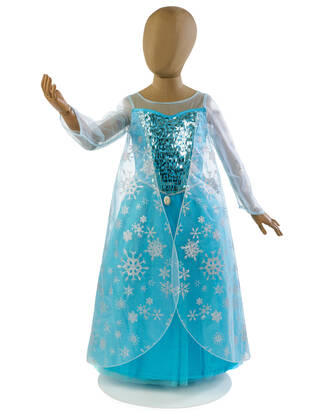
The Disney character, ‘Elsa’, the Snow Queen from the animated film Frozen, was incredibly popular with children. With multiple Oscar-winning earworm soundtrack and relatable characters, the film quickly became Disney’s highest-grossing animated franchise ever. Since its launch in 2013, Disney and its licensees have sold millions of ‘Elsa’ costumes worldwide. In the run up to Christmas in 2014, the limited supply versus high demand instigated bidding wars on online auction sites with dresses being sold for almost 10 times their retail price.
Minecraft
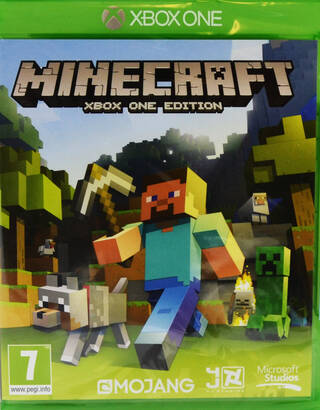
Formally released in 2011, Minecraft’s meteoric rise in game sales and active users saw it become the world’s bestselling game of all time (over 350 million games sold as of 2025). As a ‘sandbox game’, players enjoy creative freedom with no real instruction or end point. The endless possibilities for game play, construction, imagination and collaboration with others fuelled mass appeal, encouraging forums and fandoms, endless YouTube tutorials and even its use in education.
Nintendo Switch
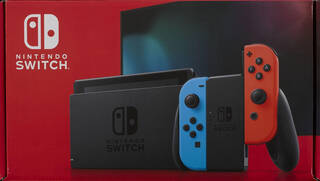
Nintendo’s Switch gaming console was first released in 2017 and by the end of the year, had become the fastest-selling game console in history. As a hybrid system, it can be docked for playing on a large screen or used with its own built-in touchscreen for portability. It has a pair of controllers, known as JoyCons, that can attach to either side of the console when portable or be removed and used as wireless game controllers, either by one person or shared for two-player social play. It is a ground-breaking example of games console design, combining years of development across portable and home console developments.
The system’s touchscreen technology, inspired by a decade of smartphone design, enables interaction with games when used in portable mode and can be placed into the dock to seamlessly transfer gameplay to a television screen. The system’s JoyCons contain several sensors and feedback mechanisms, including gyroscopes, motors with an unbalanced weight that produces haptic feedback, and one contains an infrared camera for sensing light and dark reflections. They can sense movement, velocity, and move of their own volition if used in certain ways. These functions produce many different ways of being immersed in and interacting with games.
Barbie Fashionistas
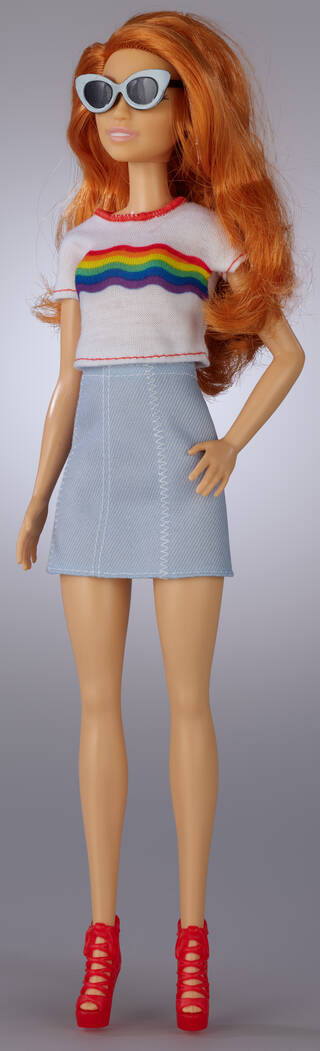
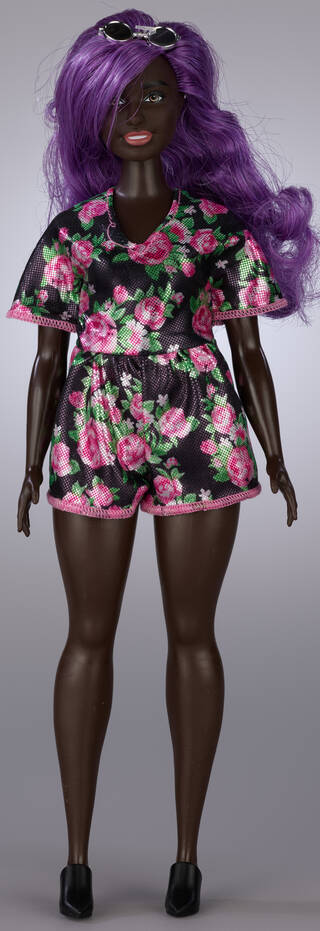
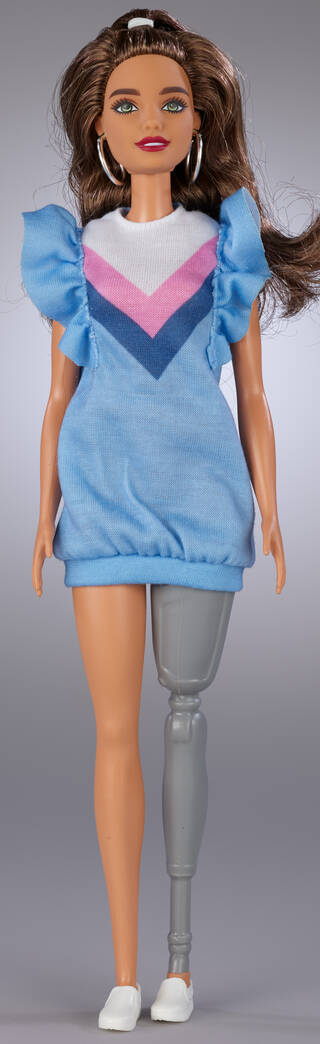
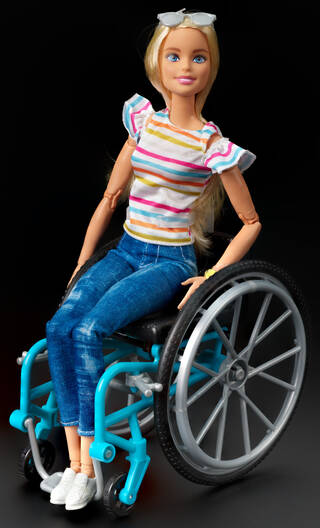
For many years, Barbie dolls have divided opinion and faced criticism for projecting negative messages about beauty standards and body image to pre-teen children, as well as for the lack of diversity within the range.
In 2009, Mattel launched the Fashionistas range of dolls, originally focusing on representing different personality traits. However in the 2010s, competition from rivals who were producing more inclusive ranges of dolls that reflected real people meant that Mattel had to make strategic decisions about the future of Barbie. Fashionistas gradually diversified to include more realistic representations of ethnicities, skin tones, body shapes, disabilities, and conditions and in doing so, became extremely popular. At the time of writing, female Barbie dolls are available with 22 skin tones, 94 hair colours, 13 eye colours and 5 body types.
Young V&A is a museum where children, young people and families can imagine, play and design.
Visit Mused and feed your curiosity with our fun, creative quizzes and videos that celebrate art, design, fashion, film, music, pop culture trivia and more.